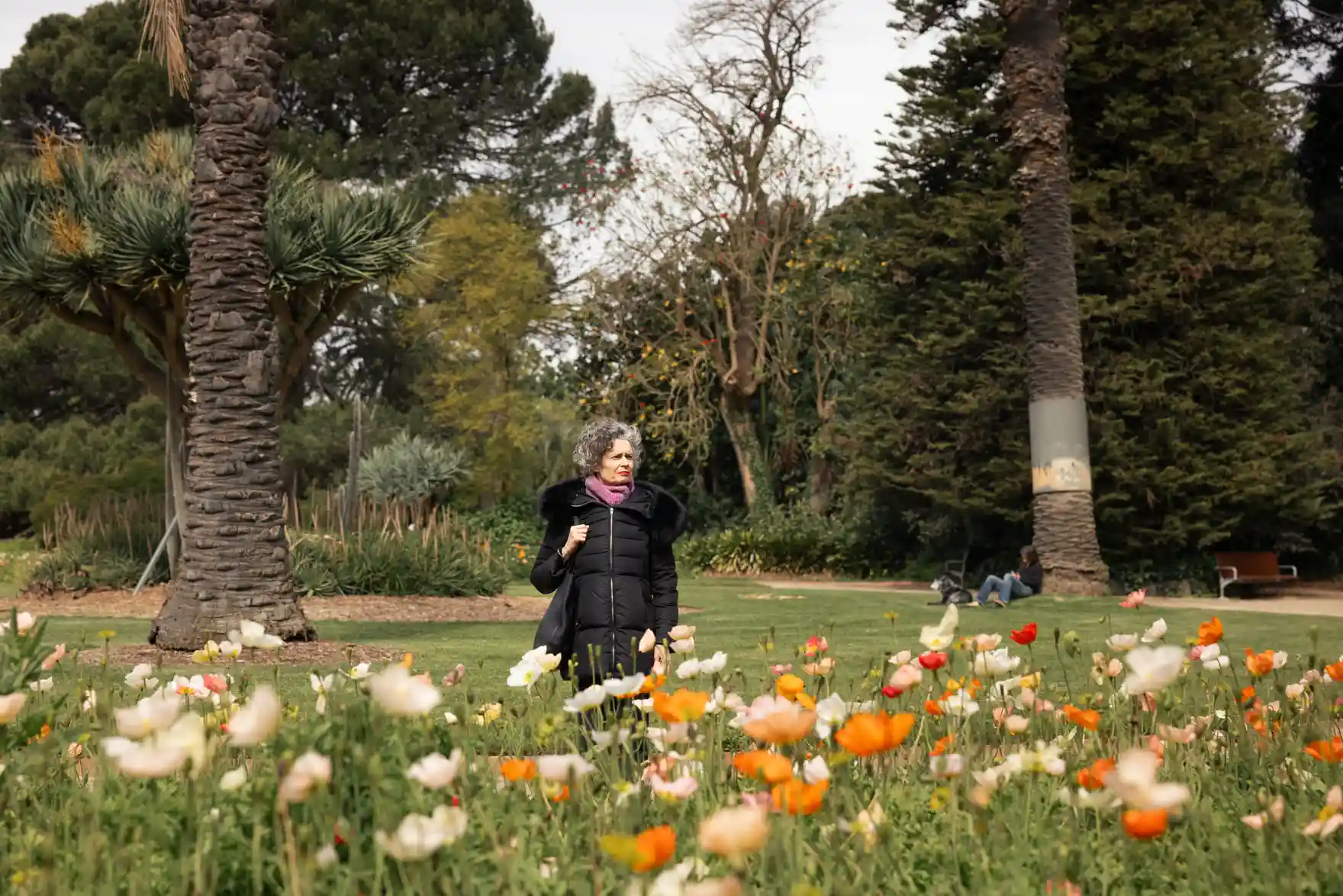
Australian comedian Judith Lucy is confronting a Breast Cancer diagnosis with characteristic humour while preparing for a double mastectomy. As she reflects on decades of turning personal struggles into comedy, the 58-year-old performer is rethinking her relationship with work, wellness, meditation and the pressure to find a punchline in every difficult experience.
For Australian comedian Judith Lucy, humour has long been a way to navigate life’s most challenging moments. From complicated family relationships and heartbreak to health concerns and professional exhaustion, she has built a celebrated career by transforming personal experiences into material that resonates with audiences.
Now, following a breast cancer diagnosis, Lucy is preparing for a different kind of challenge. The comedian was diagnosed three weeks before her planned double mastectomy, just as she was getting ready to release her latest book, Well Well Well: My Wellness Odyssey From Psychics to Psychedelics and Beyond.
The timing was difficult to ignore. A project that began as an entertaining exploration of alternative therapies, spirituality and the wellness industry had gradually become a deeply personal investigation into what it means to feel healthy. After years of relentless work and severe burnout, Lucy was already trying to find a more sustainable way of living when the cancer diagnosis changed her immediate priorities.
Although she has continued to approach the situation with her trademark wit, she has also expressed a desire to step away from the habit of turning every painful experience into a performance. For someone who has spent decades finding comedy in life’s most uncomfortable situations, that may prove to be one of her biggest personal changes yet.
Judith Lucy’s Breast Cancer Diagnosis and Planned Double Mastectomy
Lucy received her breast cancer diagnosis approximately three weeks before the double mastectomy she was preparing to undergo. In the days leading up to the operation, she had to attend a medical consultation to discuss the results of scans and confirm that surgery could proceed as planned.
According to her account, the scans showed no evidence that the cancer had appeared elsewhere. Her medical team was also concerned about avoiding an infection or other complication before surgery, as a compromised immune system could disrupt the planned procedure.
The medical appointment interrupted an arranged walk through Melbourne’s St Kilda Botanical Gardens. Instead, the conversation took place at Lucy’s home, where she was preparing for the operation and organising the paperwork associated with her hospital stay.
When asked how she was feeling, Lucy delivered a response that reflected the comedic timing audiences have come to recognise: “Well, I’ve got cancer!”
The remark captured her instinct to respond to uncomfortable situations with humour. However, making a joke about a serious diagnosis does not mean that the experience is straightforward. A cancer diagnosis can bring uncertainty, difficult treatment decisions and concerns about the future, even when someone appears calm or upbeat.
Lucy had not originally intended to announce her diagnosis publicly. However, the news arrived just before the release of her new book, making it difficult to discuss her wellness journey without acknowledging what was happening in her own life.
She suggested that, without the book’s publication schedule, she might have waited until after treatment to discuss the experience. Instead, she chose to be open about the situation rather than pretending nothing had changed.
Her willingness to speak candidly about cancer is consistent with a career built around personal storytelling. Nevertheless, she has made it clear that she does not necessarily want the illness to become another subject she must immediately transform into comedy.
Why Judith Lucy Is Approaching Her Double Mastectomy With Acceptance
One of the most striking aspects of Lucy’s account is her relatively matter-of-fact attitude towards the planned removal of both breasts.
For her, the priority is addressing the cancer. She has suggested that when the choice involves protecting her life, the prospect of losing her breasts becomes less overwhelming.
Lucy also said she was not planning to undergo breast reconstruction at that point. She acknowledged that her decision might have been different five years earlier, but her perspective has changed as she approaches her 59th birthday.
Her comments highlight an important aspect of breast cancer treatment: women can have very different feelings about mastectomy, reconstruction and changes to their bodies.
For some patients, breast removal can involve grief, concerns about body image or a profound sense of loss. Others may feel acceptance, relief or a combination of emotions. Some choose reconstruction, while others decide against it or prefer to postpone the decision until they have recovered.
There is no single correct emotional response to mastectomy. Each person’s circumstances, medical needs and personal preferences are different.
Lucy’s approach reflects her own priorities and should not be interpreted as a recommendation for other patients. Her experience instead demonstrates why conversations about breast cancer treatment should allow room for individual choices without imposing expectations about how women should feel about their bodies.
A Long Career of Turning Personal Struggles Into Comedy
Judith Lucy has spent decades drawing on her personal life to create comedy. She became a household name in Australia through The Late Show in the early 1990s and went on to build a career spanning stand-up comedy, radio, television, film and writing.
Her work has frequently combined sharp observations with a willingness to discuss subjects that can be difficult, embarrassing or emotionally complicated. Projects such as Judith Lucy’s Spiritual Journey explored questions of belief and meaning, while her appearances on The Weekly with Charlie Pickering included a role as a resident wellness expert.
Lucy has also published three memoirs since 2008 and appeared in Samuel Beckett’s play Happy Days in 2023. Throughout her career, her ability to turn personal experiences into relatable stories has helped establish her distinctive comedic voice.
However, the same instinct that made her a compelling performer also appears to have contributed to a pattern of pushing herself through difficult periods rather than stepping back to recover.
In her latest book, Lucy recalls discovering at the age of 25 that she had been adopted following a painful family confrontation on Christmas Day. She began writing a comedy routine about the experience within a month.
She also describes continuing to work after her father disowned her by fax and died six weeks later. Rather than taking time away from her career, she wrote a show about the experience and toured it around the country.
Years later, when she discovered that a former partner had been stealing money from her, she eventually transformed that experience into another performance.
These examples reveal how closely Lucy’s professional identity has been connected to her personal life. Comedy gave her a way to process difficult experiences, communicate complicated emotions and turn painful events into something an audience could understand.
But repeatedly converting personal distress into material can also become exhausting. Lucy is now questioning whether she has spent too much of her life looking for the story, the hook or the punchline before giving herself enough time to process what has happened.
Burnout Changed Her Understanding of Wellness
Lucy’s cancer diagnosis came after a period of serious burnout that had already forced her to reconsider her lifestyle.
In 2022, she announced her retirement from stand-up comedy and moved back to her hometown of Perth. The decision followed years of professional commitments and a growing awareness that her previous approach to work was no longer sustainable.
She has described a long history of insomnia, irritable bowel syndrome and recurring chest infections, followed by a period of burnout that she experienced as particularly severe.
In Well Well Well: My Wellness Odyssey From Psychics to Psychedelics and Beyond, Lucy examines the pursuit of wellbeing through her experiences with alternative therapies, spiritual practices and unconventional approaches to health.
Initially, the subject offered plenty of opportunities for comedy. The wellness world contains an enormous range of claims, rituals and products, some of which can appear strange or difficult to reconcile with conventional medical thinking.
However, as Lucy’s own health concerns became more difficult to manage, the project took on a different meaning. She was no longer simply observing wellness culture for material. She was looking for answers that might help her feel better.
Lucy has explained that she approached some experiences with genuine hope, even when she remained sceptical about the claims surrounding them. If a treatment or approach failed to deliver, she often found herself turning the disappointment into comedy.
Her experience reflects a broader challenge for people navigating the wellness industry. When someone is struggling with persistent symptoms or emotional exhaustion, the promise of a new treatment can be appealing. Yet the existence of a treatment or a compelling personal testimonial does not establish that it is safe or effective.
Alternative therapies vary considerably in their evidence, risks and potential benefits. People considering them should be cautious about unsupported claims and should not delay appropriate medical assessment or treatment for serious health concerns.
Lucy’s story does not prove that any particular therapy caused or resolved her health problems. Rather, it illustrates the complicated relationship between hope, scepticism and the search for relief when wellbeing becomes a major concern.
Why She Is Tired of Turning Every Difficult Experience Into Material
Perhaps the most revealing part of Lucy’s reflections is her growing reluctance to turn her cancer diagnosis into another comedy project.
For much of her career, she has been able to transform personal pain into material for an audience. That ability has helped define her public identity, but she is now questioning whether she wants to continue following the same pattern.
“My whole life’s been really good fucking gear and I’m a bit over getting so much material out of my life,” she said.
She added that she would welcome a year or two in which she had nothing to say.
The comment is humorous, but it also reveals a deeper frustration. When a performer draws heavily on personal experiences, there can be an expectation that every major event will eventually become part of the act.
Audiences may appreciate honesty and vulnerability, but constantly sharing private experiences can make it difficult to maintain boundaries between public performance and personal recovery.
Turning pain into comedy can be empowering. It may help people find perspective, communicate difficult emotions and connect with others who have experienced similar challenges. But humour is not a requirement for coping with illness, and every difficult experience does not need to become a story.
Lucy appears to be giving herself permission to approach her cancer diagnosis differently. Rather than immediately thinking about how to make it entertaining, she wants to focus on what is happening and allow herself time to recover.
That shift may be particularly important after a period of burnout. When someone has spent years responding to stress by working harder, the prospect of slowing down can feel unfamiliar. Choosing not to produce something from every experience can become an important boundary.
Nature, Movement and Time With Friends Are Her New Priorities
After years of exploring different wellness approaches, Lucy is turning towards simpler habits as she thinks about the next stage of her life.
She has identified nature, movement, downtime, spending time with friends and quieting her mind as priorities. These choices reflect a move away from continually searching for a dramatic solution and towards creating more space for everyday wellbeing.
Lucy has also acknowledged that she previously sacrificed too much in the name of work. She now wants to move away from a lifestyle in which professional commitments routinely took precedence over rest and personal relationships.
Her experience highlights the importance of recognising that wellbeing is not always about adding another task to an already demanding schedule.
For people experiencing burnout, the pressure to optimise every aspect of life can become another source of stress. Strict routines, ambitious targets and endless self-improvement projects may leave little room for recovery if they are approached without flexibility.
Rest, social connection and manageable physical activity can form part of a broader approach to wellbeing, although individual needs vary. Anyone experiencing persistent physical symptoms or severe exhaustion should seek appropriate medical advice rather than assuming that lifestyle changes alone will resolve the problem.
Lucy has described hearing the word cancer as a reminder to be more mindful and make the most of each day. Her reflections suggest that the diagnosis has sharpened concerns she was already considering after burnout.
Rather than measuring success solely through professional output, she appears increasingly interested in having the time and energy to enjoy her life outside work.
Judith Lucy’s Interest in Buddhism and Meditation
Spirituality has been a recurring theme throughout Lucy’s work. Her 2011 television series, Judith Lucy’s Spiritual Journey, explored questions of faith and belief, including a demanding experience of Vipassana meditation.
Although Lucy says her Catholic upbringing means she does not expect to become involved in an organised religion, she continues to find value in certain Buddhist ideas about the mind and personal experience.
She is particularly interested in the principle of examining things for oneself rather than accepting every claim without question.
“The Buddha was big on saying, ‘See for yourself,’” she explained, describing the importance of working out what an experience means to the individual rather than simply taking someone else’s word for it.
That attitude has parallels with her approach to wellness. Lucy has explored a wide range of practices while remaining aware that personal experiences do not necessarily establish universal truths.
Meditation will remain part of her life, too. She has booked a 10-day silent retreat over Christmas, although she expects this experience to be more relaxed than the strict retreat she previously undertook for television.
The upcoming retreat will allow participants to go on walks, providing opportunities for movement alongside periods of silence and reflection.
Meditation is not a substitute for cancer treatment or other necessary medical care. However, some people find mindfulness practices helpful for managing stress, developing greater awareness of their thoughts and creating moments of calm during demanding periods.
For Lucy, the appeal appears to lie in exploring practices that help her understand herself and her experiences rather than following a rigid system of beliefs.
Preparing for Surgery: Small Changes at Home and Humour Along the Way
In the days before her planned operation, Lucy was making practical preparations for her hospital stay and the recovery period that would follow.
She had moved cups and teabags into a lower kitchen drawer because reaching high cupboards would not be possible for a while after surgery. She was also organising paperwork, attending appointments and packing for what she described humorously as a glamorous hospital stay.
These small details offer a glimpse of the practical side of preparing for surgery. Beyond the medical procedure itself, patients may need to consider how everyday tasks will be managed while they recover.
Depending on the operation and individual medical advice, this may involve arranging help at home, preparing easy-to-reach essentials and discussing pain management and follow-up care with the treatment team.
Lucy continued to find humour in the situation. A pink box of cupcakes decorated to resemble breasts sat on her kitchen counter, and she joked about taking a photograph with them before surgery.
Such moments demonstrate how humour can coexist with the seriousness of a medical diagnosis. A joke cannot eliminate uncertainty, but it can help someone express their personality and maintain a sense of normality during an unfamiliar experience.
Lucy also mentioned using prescribed and non-prescribed THC oil while resting before surgery. This was a description of her personal experience, not a recommendation for others.
Anyone using cannabis-derived products before an operation should tell their surgeon and anaesthetist. These products may have side effects or interact with medicines, and the medical team needs accurate information to plan safe care.
For Lucy, the immediate priority was preparing for the operation and allowing herself to take things slowly in the days beforehand.
Could Her Next Book Be About Finally Feeling Well?
A friend suggested that Lucy could write a follow-up to Well Well Well documenting the next stage of her life. The proposed title was The Wellness Years, with one important difference: this time, the story would follow her attempt to actually feel well.
Lucy liked the idea, although she joked that a book about a quieter life might not make the most exciting reading.
Still, the suggestion appears to capture something she wants for herself. After decades of finding material in family upheavals, relationships, health concerns and personal disappointments, she is considering the possibility of a chapter that does not revolve around constant struggle.
There is no guarantee that recovery from cancer or burnout will be straightforward. Medical treatment can bring uncertainty, and a serious diagnosis does not automatically provide clarity or a positive lesson. People respond to illness differently, and nobody should feel obliged to turn a difficult experience into an inspiring story.
Lucy’s reflections instead suggest a more modest goal: making room for a life that is not defined entirely by work, personal crises or the pressure to keep producing new material.
For someone whose career has been built around telling audiences about the most complicated parts of her life, the freedom to experience something without immediately turning it into a performance could represent a meaningful change.
What Judith Lucy’s Cancer Journey Reveals About Burnout and Wellbeing
Judith Lucy’s story brings together several issues that extend beyond the entertainment industry: the consequences of prolonged overwork, the search for better health, the appeal of alternative wellness practices and the difficulty of separating personal experiences from professional identity.
Her breast cancer diagnosis arrived while she was already reconsidering the cost of her previous lifestyle. The planned double mastectomy introduced an immediate medical challenge, but her desire to slow down had begun before the diagnosis.
Her experience also underlines the importance of distinguishing personal stories from medical evidence. Wellness practices can offer comfort or support, but claims about treatments should be evaluated carefully. A cancer diagnosis requires individual medical assessment and informed discussions with qualified healthcare professionals.
Perhaps the most important message in Lucy’s reflections is that people do not have to turn every hardship into something productive.
A difficult experience does not need to become a book, a comedy routine or a lesson for an audience. Sometimes, it is enough to focus on treatment, accept support and allow time for recovery.
As Lucy looks towards the next stage of her life, she is prioritising nature, movement, friendship and rest. Whether those experiences eventually become material for another book is a question for another day.
For now, she appears ready to explore a different definition of success: not having another story to tell, but having more time to live beyond the demands of her career.
About Judith Lucy’s New Book
Well Well Well: My Wellness Odyssey From Psychics to Psychedelics and Beyond by Judith Lucy is published by Scribner, with a listed price of $36.99.
The book explores Lucy’s experiences with alternative therapies, spiritual practices and the wellness industry, combining personal anecdotes with the humour and scepticism that have shaped her career.
Mental Health Support Resources
People experiencing emotional distress may benefit from speaking with a qualified professional or contacting a support service. The following services were listed in the original report:
- Australia: Beyond Blue, 1300 22 4636; Lifeline, 13 11 14.
- United Kingdom: Mind, 0300 123 3393.
- United States: Call or text 988, or visit 988lifeline.org.
Disclaimer: This article discusses a public figure’s reported personal experiences and is intended for informational purposes only. It is not medical advice. Anyone diagnosed with breast cancer should consult their healthcare team about treatment options, surgery, recovery and individual medical needs.
For breaking news and live news updates, like us on Facebook or follow us on Twitter and Instagram. Read more on Latest Lifestyle on thefoxdaily.com.





COMMENTS 0