Stress does not always arrive through a major life crisis. Sometimes, it builds quietly through everyday decisions, financial responsibilities, traffic, workplace deadlines and the constant pressure to keep up with other people’s lives online. In a culture that celebrates productivity and being busy, even moments meant for relaxation can become another source of distraction.
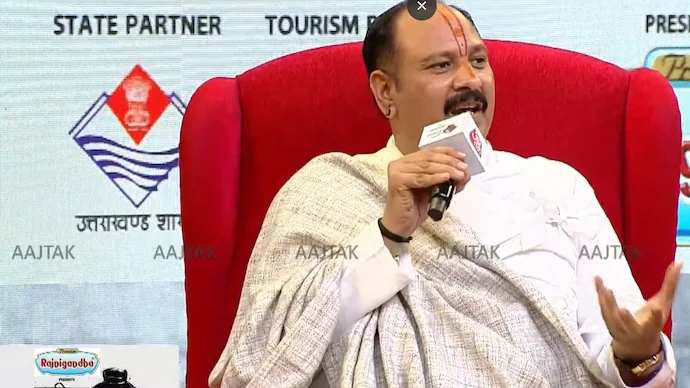
Against this backdrop, a simple question about stress relief has gained relevance: what can people do when their minds feel overwhelmed? At Sahitya AajTak 2026, spiritual speaker Pandit Pradeep Mishra offered a straightforward answer. When asked to choose between chanting mantras, observing silence and visiting a temple, he recommended silence as a way to find peace of mind.
His remarks came during a session titled The Shiva Way: Stress Ke Daur Mai Man Ki Shanti, where he discussed the pressures of modern life, digital comparisons, interpersonal conflicts and the growing interest among young people in spirituality.
His message was not about abandoning technology or withdrawing from worldly responsibilities. Instead, he encouraged people to reconsider how they respond to everyday situations and how much mental energy they spend on matters that may not deserve it.
Why Did Pandit Pradeep Mishra Recommend Silence for Stress Relief?
During the discussion, Mishra was asked which of three practices could offer the easiest route to peace of mind: chanting mantras, remaining silent or visiting a temple. He chose silence and said, “For peace of mind, observe silence.”
The suggestion places attention on a simple activity that does not require special equipment, elaborate arrangements or a particular location. Silence can create an opportunity to pause, step away from constant stimulation and observe one’s thoughts before reacting to them.
In everyday life, people are frequently responding to something. A message needs an answer, a deadline requires attention, a financial decision demands consideration or a social media post triggers an emotional reaction. When these demands overlap, the mind may have little opportunity to slow down.
Observing silence can offer a temporary break from this cycle. It may help a person avoid reacting immediately to every frustration or feeling compelled to fill every quiet moment with conversation or digital content.
However, Mishra’s recommendation should be understood as a spiritual perspective rather than a medical treatment for stress. Silence may be a useful personal practice for some people, but it cannot independently resolve serious financial difficulties, ongoing workplace pressure or persistent mental health concerns.
Silence Does Not Have to Mean Isolation
There is an important difference between choosing a quiet moment and withdrawing from people altogether. Observing silence can simply mean setting aside a few minutes without unnecessary conversation, notifications or other distractions.
For someone with a busy schedule, this might involve sitting quietly before beginning the day, taking a break without looking at a phone or spending a few moments reflecting before responding to a difficult situation.
The purpose is not to avoid communication or ignore responsibilities. It is to create a little distance between an experience and the reaction that follows it.
This distinction matters because healthy communication remains important in relationships and daily life. Silence can be useful when it provides space for reflection, but refusing to discuss problems can make misunderstandings and conflicts harder to resolve.
Everyday Decisions Can Become Unexpected Sources of Stress
One of the interesting points in Mishra’s discussion was his observation that people often experience numerous small internal conflicts throughout the day.
He referred to ordinary situations such as deciding what to wear in the morning or repeatedly honking while stuck in traffic. These may appear to be minor inconveniences, but they can become emotionally draining when people keep arguing with themselves or reacting intensely to circumstances they cannot immediately change.
Consider the process of choosing an outfit. A person may spend unnecessary time wondering whether a particular choice is right, whether someone will approve of it or whether another option would have been better. The decision itself may be simple, but repeatedly questioning it can consume attention.
Traffic offers another example. Being delayed is frustrating, particularly when someone has an appointment or a demanding work schedule. However, repeatedly honking or becoming angry cannot necessarily make the road clear faster.
Mishra’s broader message was that people should learn to trust their choices rather than constantly second-guessing themselves.
Why Repeated Overthinking Can Feel Exhausting
Overthinking often turns a small decision into an extended mental debate. Instead of making a reasonable choice and moving forward, a person repeatedly considers alternatives and imagines possible negative outcomes.
This can happen with everyday decisions as well as important matters involving work, money or relationships. The result may be a feeling of mental fatigue, even when the person has not completed particularly demanding physical work.
One practical way to reduce unnecessary decision-related stress is to distinguish between choices that require careful consideration and those that do not. Important financial, professional or personal decisions deserve attention. Minor routine choices may not need the same amount of mental effort.
For example, deciding what to wear for an ordinary day does not usually require the same level of analysis as deciding whether to accept a new job. Recognising this difference can help people avoid spending too much energy on low-stakes decisions.
Social Media Comparison Is Adding to Digital Anxiety
Social media was another major theme in Mishra’s conversation. Platforms such as Instagram expose users to a continuous stream of photographs, short videos and updates about other people’s lives.
Although this content can be entertaining and informative, it can also encourage comparison. People may see images of expensive holidays, professional achievements, attractive homes or apparently perfect relationships and begin measuring their own circumstances against what appears on the screen.
The difficulty is that social media usually presents selected moments rather than the complete reality of someone’s life. A photograph may show a celebration without revealing the difficulties that came before it. A professional achievement may appear effortless even when it required years of work.
Comparing an ordinary day with another person’s carefully selected online highlights can create unrealistic expectations.
Mishra did not recommend abandoning social media altogether. Instead, he encouraged people to change how they engage with digital content. Referring to Instagram Reels, he said, “We’re also watching reels on Instagram. Why not watch them? Watch and learn from them.”
The suggestion reflects a more balanced approach: digital platforms can be used for entertainment and learning without allowing every post to influence a person’s sense of self-worth.
How to Use Social Media Without Constant Comparison
People do not necessarily need to delete their accounts to reduce the emotional pressure associated with social media. A more deliberate approach to viewing and sharing content may help.
- Recognise curated content: Remember that posts usually show selected moments, not the full details of someone’s life.
- Follow useful accounts: Give more attention to content that supports learning, creativity, hobbies or genuine interests.
- Avoid measuring personal progress against online highlights: Different people have different circumstances, responsibilities and starting points.
- Take breaks when scrolling becomes stressful: If certain content repeatedly affects mood, stepping away can help create distance.
- Use digital platforms with a purpose: Decide whether the aim is to learn something, relax or connect with someone instead of scrolling automatically.
The important distinction is between using social media as a tool and allowing it to become a constant source of comparison. The same platform can provide useful information and entertainment while also creating unnecessary emotional pressure, depending on how it is used.
Being Blocked or Removed From a Group Can Also Trigger Anxiety
Mishra also addressed a modern form of social anxiety: the emotional reaction people experience when someone blocks them or removes them from a group.
Digital relationships have made it easier to communicate, but they have also created new situations in which people can feel excluded. Being removed from a messaging group or blocked on a social platform may lead someone to question what happened, whether they offended another person or whether a relationship has changed.
For some people, the uncertainty can become more stressful than the original incident. They may repeatedly check their accounts, revisit old conversations or imagine reasons for the other person’s decision.
Mishra suggested that people should avoid dwelling on such incidents and instead communicate to resolve differences where possible.
This advice highlights the importance of addressing misunderstandings rather than allowing assumptions to grow. A direct conversation can sometimes clarify what went wrong and whether a relationship can be repaired.
At the same time, communication is not always possible or appropriate. If another person has clearly chosen to end contact, repeatedly trying to reach them may create further tension. In such situations, respecting boundaries and focusing on one’s own well-being may be more constructive.
Why Is Gen Z Becoming More Interested in Spirituality?
Another important part of the discussion focused on the growing interest among young people in spiritual practices. From attending religious gatherings and kathas to exploring meditation and mindfulness, some members of Gen Z are looking for ways to find calm amid demanding routines.
This interest raises an interesting question: why are young people, who have grown up with smartphones, digital entertainment and rapid access to information, also exploring traditional spiritual practices?
Mishra connected the search for peace with the experience of the COVID-19 pandemic. He suggested that the crisis exposed the limitations of material wealth and reminded people that financial resources alone cannot guarantee peace of mind.
The pandemic disrupted everyday life and brought uncertainty into areas that people may previously have taken for granted. In that context, spiritual gatherings and reflective practices may offer some individuals a way to think about purpose, uncertainty and personal priorities.
However, the discussion does not establish that all young people are turning towards religion or that spirituality is replacing other forms of support. Gen Z is not a single group with identical beliefs. Interest in spirituality can vary according to family background, personal experiences and individual preferences.
Young People Are Looking Beyond Elaborate Religious Rituals
Mishra described today’s youth as independent thinkers who, in his view, appreciate simpler spiritual practices rather than elaborate rituals or religious display.
This perspective suggests that some young people may be drawn to the personal and reflective aspects of spirituality rather than its outward expressions alone.
Practices such as meditation, quiet reflection, prayer or attending a spiritual discourse can provide structured moments to step away from routine pressures. For some, these activities may also create a sense of community by bringing together people with shared interests and beliefs.
Spirituality can mean different things to different individuals. For one person, it may involve religious devotion. For another, it may mean mindfulness, self-reflection or developing a clearer sense of purpose. The common element can be the search for meaning and mental balance.
Can Spirituality Fit Into a Modern Lifestyle?
An important aspect of Mishra’s message was that finding peace does not require giving up everyday pleasures or modern technology.
He did not suggest that people should stop using smartphones, avoid social media or withdraw from ordinary responsibilities. Instead, his approach allows people to enjoy modern conveniences while being more thoughtful about their habits and reactions.
This is particularly relevant for younger people who may be balancing education, career ambitions, financial responsibilities and relationships. A spiritual practice does not necessarily have to compete with these goals.
For example, someone can continue using a smartphone while choosing not to check notifications during every quiet moment. A person can pursue career growth while making time for reflection. Someone can enjoy entertainment online without treating another person’s lifestyle as a measure of personal success.
The idea is to maintain a balance between external activity and internal calm. Spirituality, in this sense, becomes one possible way of approaching daily life rather than an instruction to reject it.
Simple Ways to Practise Silence and Reduce Daily Stress
For people interested in applying Mishra’s suggestion, observing silence can be introduced gradually. It does not need to involve long periods of isolation or complicated routines.
Begin the Day Without Immediate Digital Distractions
Many people reach for their phones soon after waking up. Messages, news updates and social media can quickly fill the mind with information before the day has properly begun.
Setting aside a short period without checking notifications may create an opportunity to start the morning more calmly. The time can be used to sit quietly, organise thoughts or prepare for the day.
Pause Before Reacting to Frustrating Situations
When stuck in traffic or dealing with an irritating situation, an immediate emotional reaction may increase frustration. Taking a brief pause before responding can help people consider what is actually within their control.
This does not mean ignoring genuine problems. It means avoiding unnecessary reactions that do not improve the situation.
Make Time for Quiet Reflection
A few moments of quiet reflection can help people review their thoughts and recognise what is causing stress. Some may prefer prayer or meditation, while others may simply sit without using a phone or engaging in conversation.
The most useful approach is one that feels manageable and can be practised consistently without becoming another demanding task.
Talk About Problems When Silence Is Not Enough
Silence can provide space to think, but it should not become a way of avoiding difficult conversations. Financial worries, workplace problems and relationship conflicts may require practical decisions and open communication.
Discussing concerns with someone trustworthy can help people understand their options and feel less alone. If stress becomes persistent or interferes with daily functioning, seeking support from a qualified mental health professional may also be appropriate.
Can Silence Alone Solve Financial and Workplace Stress?
Although observing silence may offer a moment of calm, it cannot remove the practical causes of stress. Salary concerns, loan repayments, EMIs, job insecurity and demanding work schedules require more than a change in attitude.
Someone struggling to meet monthly expenses may need to review their budget, understand repayment options or seek appropriate financial guidance. A person experiencing workplace pressure may need to discuss expectations, manage workloads or consider changes to their working arrangements.
Similarly, ongoing relationship difficulties may require honest conversations and, in some cases, professional support.
This distinction is important because stress is not always the result of overthinking or an inability to remain calm. Sometimes, it is a response to real circumstances that need to change.
Spiritual practices can complement practical action by giving people space to reflect before making decisions. They should not be treated as substitutes for financial planning, medical care or professional mental health support when these are needed.
The Bigger Message: Finding Peace Without Giving Up Modern Life
Mishra’s remarks at Sahitya AajTak 2026 offer a simple perspective on a complicated problem. Modern life creates multiple sources of pressure, from professional expectations and financial responsibilities to digital comparisons and changing social relationships.
His recommendation to observe silence focuses on something people can introduce into ordinary routines without giving up their responsibilities. His comments on social media also suggest that the goal should not necessarily be to reject technology, but to use it more consciously.
The growing interest in spirituality among some young people reflects another part of this search for balance. For those who find meaning in religious gatherings, meditation or reflective practices, spirituality can offer a way to step back from constant activity and reconsider personal priorities.
Ultimately, there is no single method that works for everyone. Silence may help create a pause, but lasting stress management can also involve healthier routines, practical problem-solving, supportive relationships and professional help when necessary.
The simplest takeaway from Mishra’s message is that peace of mind does not always require a dramatic lifestyle change. Sometimes, it begins by spending a little less time reacting to every notification, comparison or inconvenience and giving yourself a moment to think before moving on.
For breaking news and live news updates, like us on Facebook or follow us on Twitter and Instagram. Read more on Latest Lifestyle on thefoxdaily.com.



COMMENTS 0