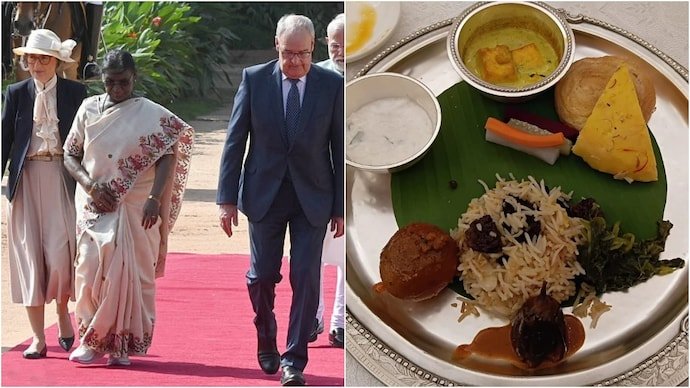
President Droupadi Murmu hosted Swiss President Guy Parmelin and First Lady Caroline Parmelin at a special banquet at Rashtrapati Bhavan, where the menu celebrated the distinctive flavours and culinary heritage of Jammu and Kashmir and Ladakh.
The carefully curated feast brought together an assortment of regional delicacies, showcasing the diversity of India’s northernmost culinary traditions. From nadur kebab and chaman qaliya to traditional beverages such as kahwa and gur gur chai, the banquet offered the Swiss presidential couple an introduction to flavours deeply connected with the region’s food culture.
Beyond the formal setting of a state banquet, the menu served as a cultural presentation, using food to highlight India’s regional diversity and hospitality.
President Murmu Welcomes Swiss President Guy Parmelin
The banquet at Rashtrapati Bhavan formed part of the official hospitality extended to Swiss President Guy Parmelin and First Lady Caroline Parmelin. President Murmu’s decision to showcase dishes from Jammu and Kashmir and Ladakh added a distinct regional character to the occasion.
State banquets traditionally provide an opportunity for visiting dignitaries to experience aspects of the host country’s culture beyond official meetings and diplomatic discussions. Cuisine can be an especially effective way of introducing visitors to a country’s traditions because ingredients, preparation methods and eating customs often reflect centuries of regional history.
In this case, the menu moved away from a generic Indian spread and focused specifically on culinary traditions associated with the Himalayan regions.
A Kashmiri-Ladakhi Menu Takes Centre Stage
The banquet menu featured dishes from Jammu and Kashmir and Ladakh, two regions known for distinctive ingredients, cooking techniques and food traditions shaped by their geography and climate.
The selection included vegetarian and non-vegetarian preparations, along with traditional accompaniments and beverages. The dishes reflected the variety within northern Indian cuisine rather than presenting it as a single uniform culinary tradition.
The inclusion of Kashmiri and Ladakhi food also gave the banquet a strong regional identity. Guests could experience dishes associated with local kitchens while dining in one of India’s most prominent official residences.
What Was on the Menu?
| Dish or Beverage | Culinary Tradition |
|---|---|
| Nadur Kebab | Kashmiri cuisine |
| Chaman Qaliya | Kashmiri cuisine |
| Kahwa | Kashmiri traditional beverage |
| Gur Gur Chai | Ladakhi/Himalayan tea tradition |
Nadur Kebab: Lotus Stem in a Kashmiri Avatar
Nadur refers to lotus stem, an ingredient that holds an important place in Kashmiri cuisine. It is used in a variety of traditional preparations and is valued for its distinctive texture.
Nadur kebab offers a different interpretation of the ingredient, turning it into a preparation suitable for a celebratory menu. Its presence at the Rashtrapati Bhavan banquet highlighted the way regional ingredients can be transformed into refined dishes without losing their cultural identity.
For international guests unfamiliar with Kashmiri food, a dish such as nadur kebab can also provide an introduction to ingredients that may not commonly appear in Western cuisine.
Chaman Qaliya Brings Kashmiri Vegetarian Flavours
Another highlight was chaman qaliya, a traditional Kashmiri preparation featuring paneer cooked with aromatic spices. Kashmiri vegetarian cuisine has its own distinctive character, with carefully balanced spices and gravies playing a central role.
Chaman qaliya demonstrates how Kashmiri cooking can create depth of flavour without relying entirely on meat. Its inclusion ensured that the banquet represented more than one aspect of the region’s culinary heritage.
For a formal international banquet, dishes such as this also offer a way to introduce guests to the subtler side of Indian cuisine, where aroma and spice balance can be as important as heat.
Kahwa Adds a Traditional Kashmiri Touch
No Kashmiri-inspired feast would feel complete without kahwa, the aromatic traditional beverage associated with the region.
Kahwa is generally prepared using green tea along with ingredients such as saffron, cardamom and nuts, although recipes can vary. It is traditionally served warm and is closely associated with Kashmiri hospitality.
Its presence on the banquet menu added a beverage with both culinary and cultural significance. Rather than functioning simply as a drink after the meal, kahwa helped reinforce the Kashmiri identity of the feast.
Gur Gur Chai: A Taste of Ladakh
The menu also featured gur gur chai, a traditional butter tea associated with Ladakh and other Himalayan regions.
Unlike the sweet milk tea familiar across much of India, gur gur chai is known for its distinctive savoury profile and preparation using tea, butter and salt. The drink has historically been associated with the food culture of high-altitude Himalayan communities.
Its inclusion alongside Kashmiri dishes created a broader representation of the culinary traditions of India’s northern mountain regions.
Why Food Matters in Diplomacy
Food often plays an understated role in international diplomacy. A formal banquet can communicate hospitality while also presenting aspects of a country’s history, geography and cultural diversity.
For visiting leaders, a regional menu can offer an experience that cannot be replicated through formal meetings alone. Ingredients and recipes can introduce a country’s traditions in a direct and memorable way.
The Rashtrapati Bhavan banquet for the Swiss presidential couple therefore carried a cultural dimension alongside its formal diplomatic setting.
Jammu And Kashmir and Ladakh Through Cuisine
The menu also demonstrated how geography influences food. The Himalayan environment has historically shaped what communities grow, store and consume, while local traditions have developed distinctive methods of preparing ingredients.
Kashmiri cuisine is known for its aromatic preparations, while Ladakhi food traditions reflect the demands of life in a high-altitude environment. Bringing elements from both traditions together created a culinary narrative spanning different parts of the Himalayan region.
For international visitors, such a menu can provide a compact introduction to that diversity.
Rashtrapati Bhavan Becomes a Culinary Showcase
The setting itself added significance to the occasion. Rashtrapati Bhavan is not only the official residence of India’s President but also a venue where visiting heads of state are welcomed during important diplomatic engagements.
A banquet held there combines protocol with cultural presentation. The food served on such occasions can therefore become part of the larger experience of the visiting delegation.
By focusing on Kashmiri and Ladakhi cuisine, the banquet offered a regional story within an important national setting.
Swiss President Guy Parmelin Gets a Taste of India’s Regional Diversity
For President Guy Parmelin and First Lady Caroline Parmelin, the banquet offered an opportunity to experience a selection of Indian food traditions that may be less familiar internationally than popular dishes such as butter chicken, biryani or dosa.
The menu demonstrated that Indian cuisine cannot be reduced to a handful of nationally recognised dishes. Every region has its own ingredients, techniques and traditions, with Himalayan cuisine forming a particularly distinctive part of that culinary landscape.
The Cultural Story Behind the Feast
The choice of food can be read as a form of cultural storytelling. Nadur kebab introduces a characteristic Kashmiri ingredient, chaman qaliya showcases vegetarian cooking, kahwa reflects Kashmiri hospitality and gur gur chai brings in a taste associated with Ladakh.
Together, the dishes create a menu that moves from food to geography and from geography to cultural identity.
That makes the banquet more than a formal meal. It becomes an opportunity to showcase the depth and variety of India’s culinary heritage to an international audience.
Key Highlights of the Rashtrapati Bhavan Feast
- Hosts: President Droupadi Murmu.
- Guests: Swiss President Guy Parmelin and First Lady Caroline Parmelin.
- Venue: Rashtrapati Bhavan.
- Culinary focus: Jammu and Kashmir and Ladakh.
- Featured dish: Nadur kebab.
- Vegetarian highlight: Chaman qaliya.
- Traditional beverage: Kahwa.
- Ladakhi beverage: Gur gur chai.
Why the Menu Stands Out
The significance of the banquet lies not simply in the variety of dishes but in the deliberate regional focus. Instead of presenting an assortment of generic Indian favourites, the menu told a more specific story about the country’s Himalayan culinary traditions.
Such an approach can make a diplomatic banquet more memorable for visiting guests. A dish carries more than flavour: it can reflect local ingredients, historical influences, climate and traditions passed through generations.
The Kashmiri-Ladakhi feast at Rashtrapati Bhavan brought those elements together in a setting designed to celebrate an international relationship.
Conclusion: A Diplomatic Feast With a Himalayan Flavour
President Droupadi Murmu’s banquet for Swiss President Guy Parmelin and First Lady Caroline Parmelin offered more than a formal meal. By drawing from the culinary traditions of Jammu and Kashmir and Ladakh, the occasion presented a flavourful snapshot of India’s regional diversity.
From the distinctive nadur kebab and chaman qaliya to the fragrant kahwa and savoury gur gur chai, each selection contributed to a menu rooted in the food culture of the Himalayan regions.
In the elegant surroundings of Rashtrapati Bhavan, the feast brought together diplomacy, hospitality and cuisine, demonstrating how a carefully chosen regional menu can become a memorable expression of India’s cultural richness.
For breaking news and live news updates, like us on Facebook or follow us on Twitter and Instagram. Read more on Latest Lifestyle on thefoxdaily.com.




COMMENTS 0