Some of the most memorable stories in cinema begin long before the cameras start rolling. Behind every iconic character is often a struggle that audiences never see: the rejected scripts, the uncertain auditions, the financial pressures and the difficult decisions that determine whether an idea will ever become a film. Sylvester Stallone’s journey to making Rocky is one such story. Before Rocky Balboa became one of Hollywood’s most recognisable underdogs, Stallone was an aspiring actor struggling to find meaningful opportunities in an industry that was reluctant to see him as a leading man.
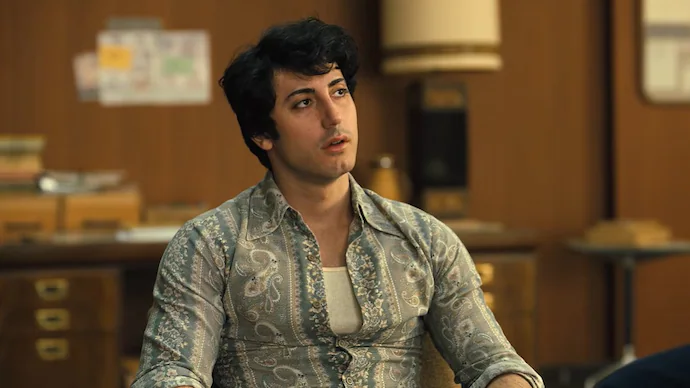
Directed by Peter Farrelly, I Play Rocky revisits that defining chapter in Stallone’s life. Starring Anthony Ippolito as the young actor and screenwriter, the film follows his determination to turn a screenplay about an unlikely boxing contender into a feature film without giving up the right to play its central character. The decision puts his already uncertain future at risk, but it also becomes the defining test of his belief in his own abilities.
Featuring AnnaSophia Robb, Matt Dillon, Toby Kebbell, PJ Byrne and Jay Duplass, the film is both a biographical account of Stallone’s early struggles and a tribute to the creative determination behind the original Rocky. It draws an obvious connection between the man and the fictional boxer he created. Both are underestimated, both face formidable obstacles and both are determined to prove that they deserve a chance.
That parallel gives I Play Rocky an engaging foundation. While the film occasionally leans too heavily on familiar moments from the original, Ippolito’s performance and its portrayal of Stallone’s refusal to compromise make this an enjoyable celebration of one of Hollywood’s most enduring underdog stories.
I Play Rocky Plot: Sylvester Stallone’s Fight to Play Rocky Balboa
The story takes place during a period when Stallone is struggling financially and professionally. Despite his ambitions as an actor and writer, he finds it difficult to convince the film industry to offer him the kind of leading role he wants. Rather than accept the limited opportunities available to him, he begins working on a screenplay that could give him a chance to create the character and performance he has been waiting for.
Part of the inspiration comes from the 1975 heavyweight boxing match between Muhammad Ali and Chuck Wepner. Wepner was not considered an equal match for the reigning champion, but he managed to remain in the fight until the 15th round before losing by technical knockout. His determination against a much more celebrated opponent offered a compelling starting point for a story about an ordinary man receiving an extraordinary opportunity.
Stallone develops that idea into Rocky, the story of a small-time boxer who gets an unexpected chance to fight heavyweight champion Apollo Creed. The screenplay attracts the attention of producers Irwin Winkler and Robert Chartoff, who recognise its potential. However, the interest comes with a significant condition: the producers want an established actor to play the lead role.
For Stallone, this is not simply a casting disagreement. He believes that the character he has written is inseparable from his own understanding of the story. Selling the screenplay while allowing someone else to play Rocky would mean giving up the opportunity he has been fighting to secure. He refuses to surrender that right, even though the decision could cost him the deal and worsen his financial difficulties.
This conflict becomes the central dramatic engine of I Play Rocky. The question is not merely whether the film will get made, but whether Stallone can convince people with far greater financial and professional power to take a chance on him.
Anthony Ippolito Delivers the Film’s Strongest Performance
Anthony Ippolito carries I Play Rocky with a performance that goes beyond imitating Sylvester Stallone’s recognisable speech patterns and mannerisms. He captures the uncertainty of a struggling actor who knows he has something to offer but cannot be certain that the industry will ever give him the opportunity to demonstrate it.
His portrayal is particularly effective during the conversations in which Stallone has to defend his decision to play Rocky. These exchanges reveal the vulnerability beneath his stubbornness. He is not a successful star confidently dictating terms to a studio. He is a financially insecure performer negotiating with people who have the resources to walk away from the project without suffering the same consequences.
Ippolito makes that imbalance visible without reducing Stallone to a figure of helplessness. His character understands the risks but remains convinced that accepting a different arrangement would undermine the very reason he wrote the screenplay. That mixture of insecurity and determination gives the performance its emotional appeal.
The challenge of playing a well-known public figure is that audiences arrive with established expectations. Stallone’s distinctive voice, physical presence and screen persona are already deeply associated with Rocky Balboa. Ippolito has to suggest the beginnings of that familiar personality while also presenting a younger man who is still struggling to discover his place in Hollywood.
He succeeds most convincingly when the film allows him to focus on the character’s internal conflict rather than simply recreating recognisable mannerisms. His performance gives the story a human centre and makes Stallone’s eventual gamble feel like the culmination of a difficult personal journey.
Peter Farrelly Finds the Connection Between Stallone and His Creation
Director Peter Farrelly approaches the material with an evident affection for the Hollywood underdog story. Known for Green Book, which won the Academy Award for Best Picture, Farrelly understands the appeal of characters who find themselves underestimated and must fight to be recognised.
In I Play Rocky, that idea operates on two levels. Stallone is struggling to establish himself as an actor, while the character he has created is a boxer who receives an opportunity that few people expect him to make the most of. Their circumstances are not identical, but the emotional similarities are clear.
Peter Gamble’s screenplay uses this parallel to connect the making of Rocky with the film’s central character. Both stories revolve around the possibility of being dismissed before getting a fair chance. Stallone’s refusal to give up the lead role mirrors Rocky Balboa’s determination to remain standing in the ring.
The comparison is an obvious one, but it gives the biopic a coherent narrative structure. Rather than presenting the making of a famous film as a sequence of unrelated production incidents, the screenplay frames it as a personal struggle in which the creator’s ambitions become closely connected to the character’s journey.
Farrelly’s affectionate approach also makes the film accessible to viewers who already know the history of the original Rocky. However, that familiarity occasionally becomes a limitation, particularly when the narrative relies on the audience recognising famous scenes rather than developing new dramatic perspectives.
AnnaSophia Robb’s Sasha Czack Provides Emotional Grounding
One of the most affecting aspects of I Play Rocky is its portrayal of Sasha Czack, played by AnnaSophia Robb. At a time when Stallone is facing repeated professional rejection, Sasha recognises his potential and encourages him to create his own opportunity rather than wait indefinitely for the industry to offer him one.
Her role is important because the film needs more than the professional disagreement between Stallone and the producers to sustain its emotional narrative. Without a personal relationship that reveals what is at stake for him, the story could easily become a prolonged account of a struggling actor arguing over a casting decision.
Sasha provides that emotional grounding. She understands the uncertainty surrounding their circumstances but continues to support his ambitions. Her encouragement helps establish that Stallone’s decision is not simply about pride or a desire for recognition. It is also about believing in the work he has created and having the courage to stand behind it when others remain unconvinced.
During one conversation, Sasha tells him, “I would rather be an optimist and be wrong than a pessimist and be right.” The line captures the optimism that sustains Stallone through a period when success is far from guaranteed.
It also reflects the larger philosophy of the film. Optimism is not presented as a guarantee that everything will work out. Instead, it becomes a willingness to take a risk despite knowing that failure remains possible. Sasha’s support helps make that belief feel personal rather than merely inspirational.
The Orson Welles Reference Creates a Meaningful Rocky Connection
Another thoughtful detail in the film is Sasha’s reference to Orson Welles. Welles received Academy Award nominations for both acting and writing for Citizen Kane, demonstrating how a filmmaker could establish a lasting creative identity through more than one role in a production.
The reference becomes especially relevant when viewed alongside Stallone’s ambitions. He is not simply trying to sell a screenplay or secure an acting opportunity. He wants to retain control over the relationship between the character he has written and the performance he believes he can deliver.
Stallone would eventually receive Academy Award nominations for both Best Actor and Best Original Screenplay for Rocky. The parallel with Welles gives the earlier conversation an additional layer of meaning. What initially sounds like an encouraging comparison becomes a reminder of how unusual Stallone’s ambition was and how significant its eventual success would be.
The film uses this connection to underline the importance of creative ownership. For a struggling actor, writing a screenplay can be a way to create opportunities that conventional casting processes may not provide. But insisting on playing the lead also requires accepting the possibility that the people financing the project may refuse to take that risk.
How the Ali-Wepner Fight Inspired the Original Rocky
The real-life boxing match between Muhammad Ali and Chuck Wepner forms an important part of the story behind Rocky. In 1975, Wepner entered the ring against Ali as a significant underdog. While the reigning heavyweight champion was expected to dominate, Wepner managed to stay in the contest until the 15th round, when the fight ended by technical knockout.
For Stallone, the bout offered an idea that extended beyond boxing. It was an opportunity to explore what happens when someone who is not expected to succeed receives a rare chance to compete against a much more celebrated opponent.
That emotional premise became the foundation of Rocky Balboa’s story. The character is not introduced as an established champion or an athlete destined for easy victory. He is an ordinary boxer whose opportunity to face Apollo Creed gives him a chance to prove his worth.
I Play Rocky benefits from revisiting this real-world inspiration because it helps explain why Stallone connected so strongly with the character. The story of Wepner and Ali also reinforces the parallel between the fictional boxer and the screenwriter trying to convince Hollywood to take him seriously.
Rather than treating Rocky as a story that emerged from nowhere, the biopic shows how an actual sporting event could inspire a larger narrative about determination, self-belief and the desire to be recognised.
Behind the Scenes: The Physical Challenges of Making Rocky
The film also explores some of the practical difficulties involved in producing the original Rocky. The production operated under financial and scheduling constraints, making the physical demands of filming particularly challenging.
One memorable example involves the butcher-shop sequence in which Rocky punches slabs of meat. The scene is associated with Stallone’s physical commitment to the role, and the biopic recounts how he injured himself while filming it, including breaking his hand.
These production details help show that the making of Rocky was not simply a matter of finding financing and assembling a cast. The filmmakers had to work within practical limitations, while Stallone was expected to perform physically demanding scenes as the central character.
Another behind-the-scenes anecdote involves Stallone contracting the flu after filming the iconic kiss with Adrian, played by Talia Shire, who was already ill. The story adds another small detail to the account of a production in which the demands of completing the film continued despite personal discomfort.
Such moments are entertaining, particularly for viewers interested in film history. They also give the biopic an opportunity to explore the less glamorous side of filmmaking: the physical strain, limited resources and compromises that can shape a production.
Supporting Cast Adds Familiar Faces to the Making of Rocky
The supporting cast helps maintain the film’s momentum, particularly when the story moves beyond Stallone’s personal struggle and into the practical process of getting Rocky made.
Toby Kebbell and PJ Byrne portray producers Robert Chartoff and Irwin Winkler, respectively. Their characters represent the industry figures who recognise the screenplay’s potential but have reservations about allowing an inexperienced actor to take on the lead role. The disagreement gives the story its central professional conflict, even as the producers’ perspective reflects the financial risks involved in making a film.
Jay Duplass appears as director John G Avildsen, adding another important figure to the account of the original film’s production. His presence helps connect Stallone’s struggle to the wider group of creative professionals who would eventually bring the story to the screen.
Matt Dillon plays Stallone’s father, Frank Stallone Sr. His lack of faith in his son’s ambitions offers another source of emotional tension. The relationship helps contextualise why Stallone is so determined to prove himself. Professional rejection is difficult enough, but doubt from someone close to him adds a more personal dimension to his struggle.
While the principal cast gives the film a solid supporting foundation, not every character receives enough attention. Kiki Seto, Robert Morgan and Scot Teller, who play Talia Shire, Burgess Meredith and Carl Weathers, respectively, are given limited screen time. Their characters are associated with some of the most memorable elements of the original Rocky, so their relatively brief presence may leave viewers wanting more.
Where I Play Rocky Falls Short
For all its affection for the original film, I Play Rocky has a limitation that becomes more noticeable as the production of Rocky moves forward. The narrative increasingly depends on the audience’s familiarity with the original movie and its iconic moments.
There is an understandable appeal in seeing how famous scenes were created and learning about the challenges behind their production. For cinephiles, these details can be especially enjoyable. However, recognising a familiar moment is not the same as discovering a new perspective on the people responsible for making it.
The film is strongest when it explores Stallone’s uncertainty, his negotiations with the producers and his determination to retain the lead role. These are the moments in which the audience can understand the personal and professional risks behind the making of Rocky.
When the story shifts towards production trivia and recreations of well-known sequences, it occasionally loses some of that dramatic urgency. The audience already knows that the original film became a success, which makes it important for the biopic to create suspense through the personal journey rather than rely on the eventual outcome.
The supporting characters also deserved more room to develop. Greater attention to the people who helped shape the original film could have made the production story richer and provided a broader view of the creative collaboration behind its success.
With a runtime of two hours and eight minutes, the film has room to explore its central relationships in greater detail. Instead, some potentially interesting characters remain on the margins.
Is I Play Rocky Worth Watching?
I Play Rocky is most engaging when it returns to the uncertainty that defined Stallone’s early career. His decision to refuse the screenplay deal unless he is allowed to play Rocky is not simply an act of professional defiance. It is a wager on his own understanding of the character and his ability to bring that character to life.
That decision gives the film its dramatic stakes. Stallone is not fighting an opponent in a boxing ring, but he is confronting a system in which other people have considerably more influence over his future. His screenplay gives him an opportunity, but insisting on the lead role threatens to take that opportunity away.
Anthony Ippolito’s performance makes this struggle believable, while AnnaSophia Robb’s Sasha provides the emotional support that keeps the story from becoming a straightforward account of Hollywood negotiations. Farrelly’s direction brings warmth to the material, even when the film relies too heavily on familiar moments from the original movie.
For viewers who love cinema, there is something particularly satisfying about watching a story in which a struggling actor refuses to separate the character he has created from the opportunity to play him. It is also a reminder that films now regarded as classics can have uncertain and difficult beginnings.
The biopic does not entirely escape the conventions of the inspirational Hollywood story. Some supporting characters could have been developed further, and its reliance on familiar production anecdotes occasionally limits its originality. Nevertheless, its central performance and its portrayal of Stallone’s determination make it an engaging watch.
I Play Rocky Review: Final Verdict
I Play Rocky may not deliver a completely fresh take on the making of a Hollywood classic, but it succeeds in capturing the determination that made Sylvester Stallone’s journey worth telling. Anthony Ippolito anchors the film with a performance that balances vulnerability and stubborn ambition, while AnnaSophia Robb adds emotional warmth as Sasha Czack. Peter Farrelly’s direction celebrates the underdog spirit behind the original Rocky, even if the film occasionally leans too heavily on nostalgia and familiar behind-the-scenes details.
Ultimately, the most compelling part of the story is not the recreation of iconic boxing scenes but the struggle that came before them. Before Rocky Balboa stepped into the ring to prove himself, Stallone had to fight for the chance to play the character he had created. That personal battle remains the heart of this spirited biopic.
I Play Rocky theatrical release: November 13, 2026, in India.
For breaking news and live news updates, like us on Facebook or follow us on Twitter and Instagram. Read more on Latest Reviews on thefoxdaily.com.






COMMENTS 0