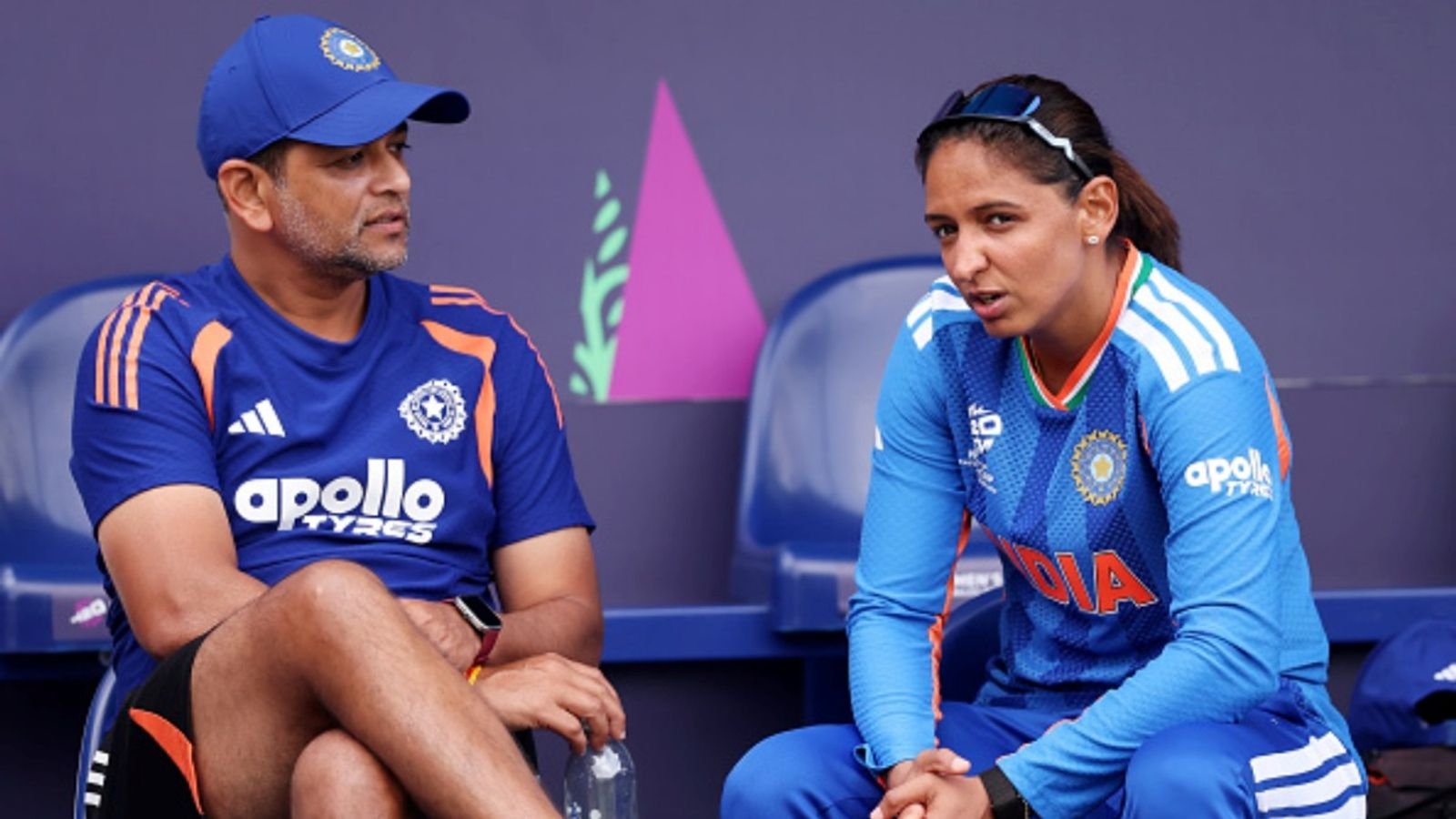
The India Women’s T20 World Cup 2026 exit has sparked one of the biggest debates in Indian Women’s Cricket in recent years. Following disappointing defeats to Australia and South Africa that prevented India from reaching the knockout stage, former India captain Diana Edulji has called for significant changes to the team’s T20I structure.
Rather than focusing solely on the tournament’s results, Edulji believes India’s campaign exposed deeper issues surrounding leadership, tactical decision-making, team selection, coaching philosophy, and player workload. Her recommendations include appointing a new T20I captain, restructuring the coaching staff, and building a squad of format-specific specialists as India begins preparations for future ICC tournaments and the Los Angeles 2028 Olympics.
While Edulji remains an admirer of Harmanpreet Kaur as a batter, she believes the time has arrived for a fresh leadership approach in the shortest format.
Why Diana Edulji Wants a New T20I Captain
Diana Edulji’s comments are not a criticism of Harmanpreet Kaur’s contribution to Indian cricket as a player. Instead, they focus specifically on leadership in the T20 format.
According to the former India captain, Harmanpreet’s captaincy has reached a stage where tactical innovation has slowed. Edulji believes modern T20 cricket demands proactive decision-making, flexible bowling changes, aggressive field placements, and quick adaptability during pressure situations.
She argued that India now requires a captain capable of introducing fresh tactical ideas while continuing to build on the team’s established strengths.
Importantly, Edulji has not suggested removing Harmanpreet from the playing XI. Instead, she believes the experienced batter should continue contributing with the bat while allowing another player to lead the side.
India’s T20 World Cup Campaign: Where It Went Wrong
India entered the Women’s T20 World Cup with expectations of challenging for the title, but inconsistent performances prevented them from progressing beyond the group stage.
Losses against two major rivals—Australia and South Africa—ultimately proved decisive.
Throughout the tournament, several areas emerged as recurring concerns:
- Inconsistent batting partnerships.
- Missed opportunities during key moments.
- Tactical decisions under pressure.
- Poor fielding standards.
- Failure to capitalize on winning positions.
At the highest level, tournaments are often decided by small margins. India’s inability to consistently execute basic skills proved costly across multiple matches.
Fielding Became One of India’s Biggest Weaknesses
Among the most concerning aspects of India’s campaign was its fielding performance.
Multiple dropped catches during the group stage not only gave opposition batters additional chances but also shifted momentum at critical stages of matches.
In T20 cricket, where every over can influence the outcome, fielding standards frequently separate title contenders from teams that fall short.
Recognizing this issue, Edulji has questioned the effectiveness of the current fielding setup and believes improvements in this department should become an immediate priority.
Calls for Changes in the Coaching Structure
Edulji’s recommendations extend beyond captaincy.
She has suggested that India’s coaching structure should also evolve, particularly in the T20 format.
While acknowledging Amol Muzumdar‘s contributions, she believes India could benefit from a different coaching approach in T20 internationals while allowing continuity in the ODI format.
This reflects a growing trend in international cricket, where several countries increasingly appoint format-specific coaches to address the unique tactical demands of Test, ODI, and T20 cricket.
Should India Separate ODI and T20 Squads?
One of Edulji’s most significant suggestions involves creating greater distinction between India’s ODI and T20 squads.
Rather than relying on largely identical player groups across formats, she believes selectors should identify genuine T20 specialists capable of excelling in the faster-paced version of the game.
Modern T20 cricket rewards explosive batting, innovative bowling variations, athletic fielding, and tactical flexibility.
Not every successful ODI cricketer automatically becomes an equally effective T20 player.
Developing format-specific squads could therefore improve both performance and player workload management.
| Area | Current Concern | Suggested Reform |
|---|---|---|
| T20I Captaincy | Need for fresh tactical ideas | Appoint a new captain while retaining Harmanpreet as a player |
| Coaching | Tactical consistency questioned | Consider separate T20 coaching leadership |
| Fielding | Multiple dropped catches | Improve coaching standards and accountability |
| Squad Selection | Similar players across formats | Develop specialist T20 players |
| Player Workload | Heavy multi-format schedules | Rotate players and manage workloads more effectively |
Leadership Transition Is a Common Phase in International Cricket
Every successful international team eventually faces decisions about leadership succession.
Changing captains does not necessarily reflect failure. Instead, it often signals the beginning of a new strategic cycle.
Several international teams have successfully separated leadership responsibilities while retaining experienced senior players who continue contributing as match-winners.
If India decides to appoint a new T20I captain, Harmanpreet’s experience could still remain invaluable within the dressing room.
Balancing Experience with the Next Generation
One of India’s greatest strengths in women’s cricket is its growing talent pool.
Domestic competitions and age-group cricket continue producing promising players capable of competing at the international level.
Successfully integrating those players requires careful planning rather than wholesale changes.
The challenge for selectors will be balancing experienced campaigners with emerging talent while maintaining competitiveness in major tournaments.
Workload Management Could Become Increasingly Important
Another important issue raised by Edulji concerns player workload.
Modern international cricketers frequently participate in bilateral series, ICC events, domestic competitions, and franchise leagues.
Playing all formats continuously increases physical and mental demands, particularly for senior players.
Introducing greater squad rotation and format specialization could help reduce injuries while ensuring players remain fresh for major tournaments.
Many leading cricket nations have already adopted similar approaches across both men’s and women’s cricket.
What Lessons Can India Take from the World Cup?
India’s campaign offers several valuable lessons beyond the final standings.
- Tactical flexibility remains essential in knockout-level tournaments.
- Fielding standards require significant improvement.
- Leadership succession planning should begin before major tournaments.
- Specialist T20 players can strengthen squad balance.
- Player workload must be monitored throughout the international calendar.
Addressing these areas could help India become more consistent in future ICC competitions.
Attention Now Turns Toward the Los Angeles 2028 Olympics
Women’s cricket will feature at the Los Angeles Olympics in 2028, making the next two years particularly significant for India’s T20 development.
The Olympic tournament provides another global opportunity for India to compete for a historic medal.
Building a settled leadership group, refining tactical approaches, and identifying specialist players over the coming seasons could prove crucial to India’s Olympic ambitions.
The decisions taken following the 2026 World Cup may therefore shape the team’s direction well beyond the immediate future.
Will the Selection Committee Make Bold Decisions?
Whether the selectors implement Edulji’s recommendations remains uncertain.
Selection committees typically evaluate performances over extended periods rather than reacting solely to one tournament.
However, India’s group-stage exit is likely to prompt a comprehensive review involving leadership, coaching, player development, and long-term planning.
Any changes will need to balance continuity with the desire for renewed momentum ahead of upcoming ICC events.
Conclusion
Diana Edulji’s comments have intensified the discussion surrounding the future of India’s women’s T20 team following its disappointing World Cup campaign. Her recommendations extend beyond replacing a captain or coach—they propose a broader structural shift involving tactical innovation, specialist squads, improved fielding standards, and smarter workload management.
Whether the Board of Control for Cricket in India chooses gradual evolution or significant change, the coming months are likely to be pivotal for the national team. With major ICC tournaments and the 2028 Olympics on the horizon, the decisions made now could define the next chapter of Indian women’s cricket and determine whether the team can finally convert its immense talent into consistent global success.
For breaking news and live news updates, like us on Facebook or follow us on Twitter and Instagram. Read more on Latest Sports on thefoxdaily.com.






COMMENTS 0