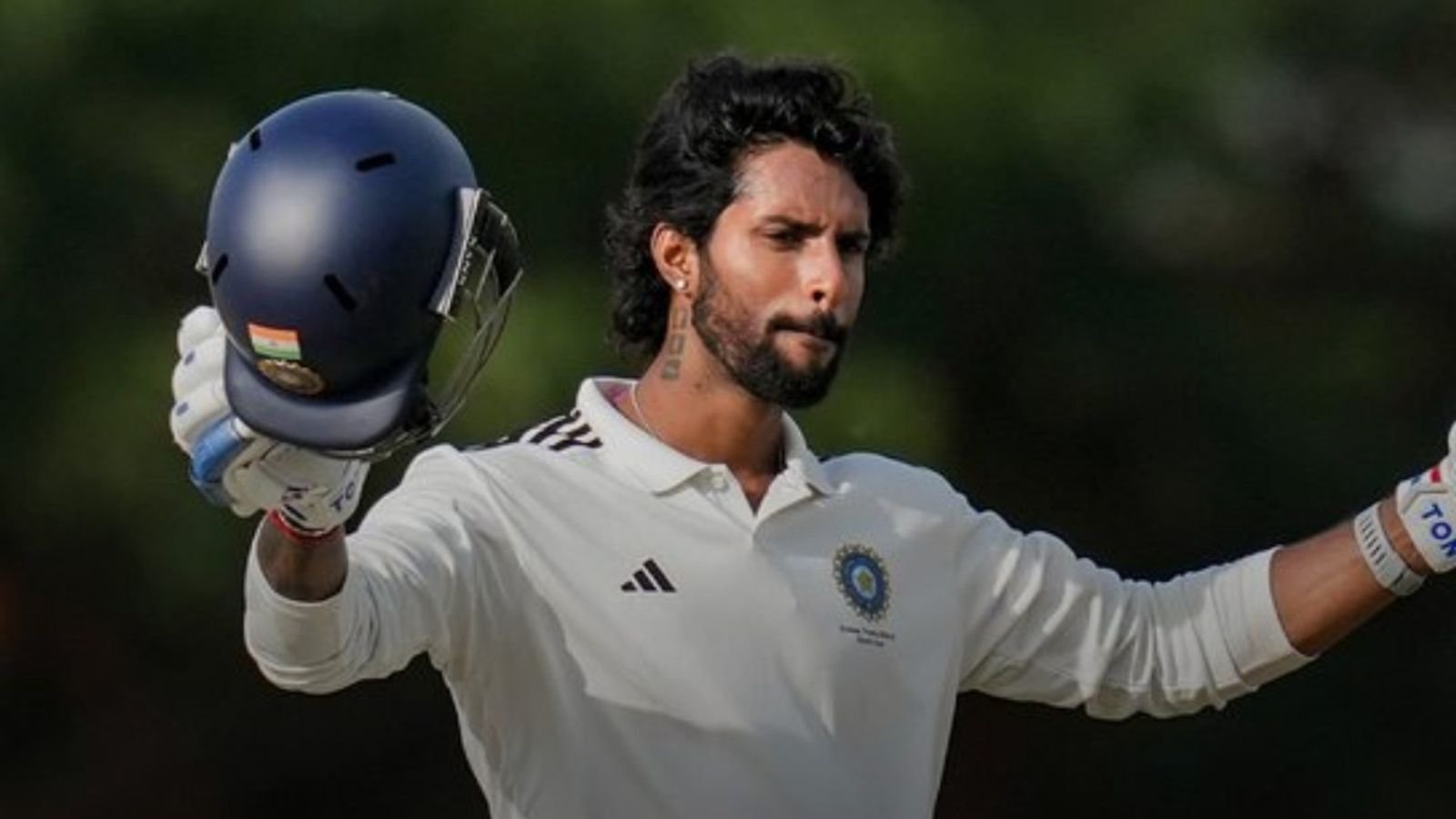
Duleep Trophy 2026 has reached its decisive stage, with South Zone securing a place in the final after defeating North Zone by seven wickets in a one-sided semifinal contest in Bengaluru. Led by an impressive all-round contribution from captain Tilak Varma, South Zone successfully chased a target of 179 runs on the final day and completed the victory in 43.1 overs.
The result underlined South Zone’s control across the four-day contest. After taking a substantial first-innings lead, the team’s bowlers kept North Zone from building an imposing target in the second innings before the batters completed the job without serious difficulty.
South Zone will now face East Zone in the Duleep Trophy 2026 final on September 6 at the MA Chidambaram Stadium in Chennai. The title match is scheduled to run for five days, with the first-innings lead becoming the deciding factor if the final ends in a draw.
South Zone’s Route to the Duleep Trophy Final
South Zone’s semifinal victory was built on three major phases: a strong response after North Zone’s first innings, a significant contribution from Tilak Varma with the bat, and a disciplined bowling effort when North Zone attempted to recover.
North Zone won the toss and chose to bat first, but the decision did not produce the advantage they would have hoped for. Their first innings ended at only 195, leaving South Zone with an opportunity to establish control before the match progressed too far.
South Zone took full advantage. Their reply reached 312, giving them a valuable 117-run first-innings advantage. That lead eventually became one of the most important factors in determining the direction of the semifinal.
Tilak Varma played the leading role in that first-innings response, producing a superb 116. Shreyas Gopal also made a major contribution with 87, helping South Zone move well beyond North Zone’s total.
| Match Stage | South Zone | North Zone | Key Development |
|---|---|---|---|
| North Zone 1st innings | — | 195 | North Zone failed to establish a strong platform |
| South Zone 1st innings | 312 | — | Tilak Varma scored 116 and Shreyas Gopal made 87 |
| North Zone 2nd innings | — | 297 | Sanat Sangwan and Ayush Doseja provided resistance |
| South Zone chase | 181/3 | — | South Zone won by seven wickets |
Tilak Varma Leads From the Front
The defining feature of South Zone’s semifinal was the performance of their captain. Tilak Varma contributed at a crucial stage in the first innings and then returned to guide the chase when his team needed to finish the contest.
His first-innings century of 116 gave South Zone the platform to take a substantial lead. Rather than allowing North Zone to dictate the middle phase of the match, Tilak’s innings helped South Zone turn a modest first-innings deficit situation into a commanding advantage.
He then delivered another important performance in the final innings, remaining unbeaten on 51 from 79 balls. His fifty contained eight boundaries and reflected a controlled approach to the chase.
For a captain, the value of such a performance extends beyond the runs themselves. Tilak contributed at two different stages of the match and helped maintain South Zone’s momentum when North Zone were attempting to fight back.
South Zone Chase Without Major Trouble
North Zone’s second innings was considerably better than their first. They reached 297, setting South Zone a target of 179 and giving themselves a chance to put pressure on the chasing side.
However, South Zone’s first-innings advantage meant that North Zone could not completely erase the damage caused earlier in the match. The target remained manageable, and South Zone’s batting depth ensured that the chase never developed into a major crisis.
Narayan Jagadeesan provided the foundation at the top of the chase with a patient 43 from 83 balls. His innings included four boundaries and gave South Zone stability during the early stages.
Abid Mushtaq eventually ended Jagadeesan’s resistance. The spinner drew the batter out of his crease, allowing wicketkeeper Kanhaiya Wadhawan to complete the stumping.
That dismissal, however, did not change the overall direction of the contest. Tilak Varma remained in control, while Smaran Ravichandran supplied the acceleration required to close out the match.
Smaran Ravichandran Adds Finishing Touches
While Tilak was the central figure, Smaran Ravichandran played an important supporting role in the successful chase. He scored 32 from 42 balls, striking four boundaries and a six.
His innings was particularly useful because it prevented the chase from becoming unnecessarily prolonged. Once the required run rate was comfortably under control, Smaran’s attacking approach helped South Zone move rapidly towards the finishing line.
The partnership between experience, patience and controlled aggression was a key feature of the chase. Jagadeesan absorbed pressure early, Tilak anchored the innings, and Smaran provided the late acceleration.
MD Nidheesh Breaks North Zone’s Resistance
North Zone’s second innings was powered by valuable contributions from Sanat Sangwan and Ayush Doseja. Sangwan scored 76, while Doseja added 52, giving their side hope after the disappointment of the first innings.
But South Zone’s bowling attack eventually prevented North Zone from converting that recovery into a match-changing total.
Fast bowler MD Nidheesh delivered the crucial breakthrough performance, finishing with five wickets for 56 runs. His five-wicket haul ensured that North Zone’s lower order could not add enough runs to transform the chase into a difficult proposition.
The contrast between the two innings was significant. North Zone managed only 195 in the first innings but improved to 297 in the second. Even so, South Zone’s earlier 117-run lead meant that the improvement was not enough to change the semifinal’s overall equation.
Why the First-Innings Lead Mattered So Much
The semifinal demonstrated one of the most important characteristics of long-format domestic cricket: a strong first innings can influence the match several days later.
South Zone’s 312 gave them a 117-run advantage. That cushion effectively reduced the pressure created by North Zone’s improved second innings.
Had North Zone managed to secure a significant lead in the first innings, the final target could have been dramatically different. Instead, South Zone entered the final chase needing only 179 runs.
This is why the performances of Tilak Varma and Shreyas Gopal in the first innings were arguably as important as the final batting display. Their runs did not merely increase South Zone’s score; they changed the mathematical structure of the semifinal.
Tilak Varma’s Leadership Adds Another Dimension
The semifinal victory also strengthens the significance of Tilak Varma’s leadership role in the tournament. Captaining a knockout match brings a different level of pressure because one poor session can end a team’s title hopes.
Tilak responded with runs in both innings and helped South Zone remain composed during North Zone’s second-innings recovery.
His unbeaten 51 in the chase was particularly valuable because South Zone needed someone to control the tempo rather than simply attack from the beginning. By staying at the crease until the victory was secured, the captain provided stability at the most important moment.
For young players involved in domestic cricket, performances in tournaments such as the Duleep Trophy can carry significance beyond the immediate result. Strong displays in red-ball cricket provide an opportunity to demonstrate consistency, temperament and the ability to perform under pressure.
South Zone vs East Zone: Duleep Trophy Final Awaits
South Zone’s victory sets up a final against East Zone, with the championship match scheduled for September 6 at the MA Chidambaram Stadium in Chennai.
The final will be played over five full days, making it a different challenge from the semifinal. Teams will have more time to recover from difficult sessions, but they will also need greater discipline because a single poor day can have consequences later in the match.
The playing conditions and the longer duration could make batting patience, bowling workloads and first-innings strategy especially important.
| Duleep Trophy 2026 Final | Details |
|---|---|
| Finalists | South Zone vs East Zone |
| Date | September 6, 2026 |
| Venue | MA Chidambaram Stadium, Chennai |
| Format | Five-day first-class final |
| Draw scenario | First-innings lead decides the champion |
What South Zone Must Get Right in the Final
South Zone will enter the final with confidence after controlling the semifinal, but East Zone will provide a fresh challenge. The team cannot rely solely on its performance against North Zone.
The biggest positive is South Zone’s balance. They demonstrated the ability to score a large first-innings total, build pressure through the bowling attack and chase a modest target efficiently.
Tilak’s form will naturally attract attention, but the final could be decided by the contributions around him. Shreyas Gopal’s 87, MD Nidheesh’s five-wicket haul and the useful efforts during the chase show that South Zone have multiple players capable of influencing a match.
That depth could become crucial in a five-day final, where fatigue and changing match situations often test every part of a squad.
Why the Duleep Trophy Final Matters
The Duleep Trophy remains an important platform for domestic cricketers because it provides a high-level first-class environment where players are tested over multiple days rather than short-format situations.
For batters, long innings offer an opportunity to demonstrate concentration and technique. For bowlers, extended spells test control, stamina and the ability to create chances even when conditions are not immediately favourable.
The tournament can also provide valuable competitive exposure for players looking to strengthen their credentials in the domestic red-ball system. A strong final can therefore become an important individual statement as well as a team achievement.
South Zone’s Biggest Advantage Heading Into the Final
The biggest advantage for South Zone may be their recent experience of handling pressure. In the semifinal, they were able to respond strongly after North Zone improved in the second innings.
Instead of allowing the target to create unnecessary tension, South Zone approached the chase with clarity. Jagadeesan gave them a stable start, Tilak controlled the middle phase and Smaran accelerated when the finish was close.
The same formula could be useful in the final, although the quality and pressure of the opposition will be different.
Final Verdict: South Zone One Step Away From the Trophy
South Zone’s seven-wicket victory over North Zone was not simply a successful chase; it was the result of sustained control across the semifinal. Their 117-run first-innings advantage, Tilak Varma’s century and unbeaten fifty, Shreyas Gopal’s 87 and MD Nidheesh’s five-wicket haul combined to create a convincing team performance.
North Zone showed greater resistance in their second innings through Sanat Sangwan and Ayush Doseja, but their improved batting effort could not overcome the deficit created earlier in the contest.
Now, the focus shifts to Chennai, where South Zone will meet East Zone in the Duleep Trophy 2026 final. With the title to be decided over five days and a first-innings lead holding major importance in a drawn match, the final promises to test patience, planning and consistency.
For Tilak Varma and South Zone, the semifinal has created the perfect platform. The challenge now is to turn an emphatic knockout victory into championship glory.
For breaking news and live news updates, like us on Facebook or follow us on Twitter and Instagram. Read more on Latest Cricket on thefoxdaily.com.






COMMENTS 0