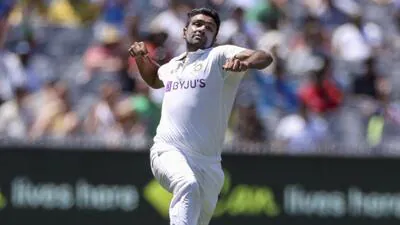
For decades, India’s greatest strength in Test cricket has been its exceptional spin bowling tradition. From the famous spin quartet of the 1960s and 1970s to the legendary partnerships of Anil Kumble and Harbhajan Singh, followed by Ravichandran Ashwin and Ravindra Jadeja, India has consistently produced world-class spinners capable of winning matches on any surface, particularly at home.
However, Indian cricket now finds itself at a crossroads. Ravichandran Ashwin’s retirement has left an enormous void, while Ravindra Jadeja, despite continuing to perform at the highest level, is approaching the latter stages of his career. The question facing India’s selectors, coaches, and cricket administrators is no longer whether talented spinners exist, but whether the country has a structured succession plan to ensure its dominance continues in the next decade.
The ongoing tour of Sri Lanka provides more than just another overseas Test assignment. It offers India an invaluable opportunity to evaluate emerging spin talent under conditions that closely resemble home pitches, making it one of the most important testing grounds for the future of India’s red-ball bowling attack.
Why Spin Bowling Has Always Been India’s Greatest Test Weapon
India’s success in Test cricket has historically been built around quality spin bowling.
Unlike many nations that relied primarily on fast bowlers, India developed generations of elite spinners capable of controlling matches across five days. Their ability to exploit deteriorating pitches, build pressure, and consistently take wickets transformed home conditions into one of the toughest assignments in world cricket.
Legendary names such as Bishan Singh Bedi, Erapalli Prasanna, Bhagwat Chandrasekhar, Anil Kumble, Harbhajan Singh, Ravichandran Ashwin, and Ravindra Jadeja became symbols of India’s bowling excellence.
What made Indian cricket unique was not simply producing great bowlers—it was producing them continuously across multiple generations.
The Seamless Generational Transition That Defined Indian Cricket
One of Indian cricket’s greatest strengths has been its ability to replace legendary players with equally capable successors.
| Era | Leading Spin Bowlers | Legacy |
|---|---|---|
| 1960s–1970s | Bishan Singh Bedi, EAS Prasanna, Bhagwat Chandrasekhar | Established India’s spin identity. |
| 1990s–2000s | Anil Kumble, Harbhajan Singh | Dominated both home and overseas Tests. |
| 2010s–2024 | Ravichandran Ashwin, Ravindra Jadeja | Created one of Test cricket’s greatest spin partnerships. |
Each generation inherited responsibility from the previous one without creating prolonged transition periods. That continuity has been central to India’s remarkable consistency in Test cricket.
Why the Current Situation Is Different
For the first time in many years, India’s succession plan appears uncertain.
Ashwin retired after building one of the finest records in Test cricket, leaving behind hundreds of wickets, countless match-winning performances, and years of tactical expertise.
Replacing such a bowler is not simply about finding another off-spinner. It involves identifying someone capable of becoming the leader of India’s bowling attack for the next decade.
Meanwhile, Jadeja continues to perform brilliantly but cannot be expected to shoulder that responsibility indefinitely.
Recent Home Series Raised Important Questions
India’s home dominance has traditionally depended on its spinners outperforming visiting attacks.
However, recent home Test series have highlighted areas of concern.
In matches where opposition spin bowlers matched or even surpassed India’s own slow bowlers, questions emerged regarding the depth of India’s spin resources.
These performances demonstrated that relying solely on past reputation is no longer sufficient. Continuous development remains essential.
Kuldeep Yadav: India’s Most Underutilized Match-Winner?
Among India’s current spin options, Kuldeep Yadav remains one of the most debated selections.
Despite consistently demonstrating his wicket-taking ability whenever opportunities arise, he has often found himself outside the playing XI.
Former India spinner Maninder Singh believes that inconsistent selection has prevented Kuldeep from establishing himself as India’s primary attacking spinner.
Confidence plays a crucial role in a bowler’s development. Extended periods outside the team can disrupt rhythm, reduce confidence, and slow tactical growth, particularly in Test cricket where experience becomes invaluable.
Why Wrist Spin Offers Something Different
Kuldeep’s left-arm wrist spin provides India with a rare attacking option.
Unlike conventional finger spinners, wrist spinners generally generate greater variation, sharper turn, and more opportunities to dismiss well-set batters.
Having such diversity within the bowling attack can become particularly valuable against quality batting lineups capable of negotiating traditional spin.
Should India Prioritize Specialists Over All-Rounders?
Modern Test cricket increasingly values players capable of contributing in multiple disciplines.
However, several former cricketers argue that India’s search for batting depth should not come at the expense of selecting genuine wicket-taking bowlers.
The debate reflects an important strategic question:
- Should India select bowlers primarily for wicket-taking ability?
- Or should batting contributions influence selection equally?
Finding the right balance remains one of the biggest selection challenges facing the team management.
Manav Suthar Emerging as a Bright Prospect
Among India’s younger left-arm spinners, Manav Suthar has attracted considerable attention.
His impressive debut performance demonstrated encouraging qualities beyond simple statistics.
Observers have praised his control, consistency, and ability to generate wickets even without relying excessively on turning surfaces.
These characteristics are particularly valuable because successful overseas spinners often succeed through accuracy and patience rather than dramatic turn alone.
The Off-Spin Challenge After Ashwin
If replacing Jadeja appears difficult, replacing Ashwin may prove even more challenging.
India has produced several promising slow bowlers in recent years, yet identifying a long-term off-spin leader remains an ongoing challenge.
Saransh Jain currently represents one of the available options, but selectors also understand that long-term planning requires investing in younger bowlers capable of serving Indian cricket for many years.
Washington Sundar’s Future Role
Washington Sundar remains an important part of India’s red-ball plans despite injury setbacks.
His control and discipline have earned praise, but experts believe developing greater variation and sharper revolutions could further improve his effectiveness in Test cricket.
Modern Test bowling requires not only accuracy but also the ability to consistently challenge batters through drift, dip, bounce, and spin.
Why Sri Lanka Is the Perfect Testing Ground
The current Test tour offers ideal conditions for evaluating India’s spin resources.
Sri Lankan pitches traditionally reward patient, skillful spin bowling while demanding technical excellence from batters.
Rather than relying solely on domestic performances, selectors can observe how emerging bowlers perform under international pressure in similar conditions to those found at home.
What an Effective Succession Plan Should Include
Replacing legendary cricketers requires more than identifying talented individuals.
| Priority Area | Why It Matters |
|---|---|
| Consistent Selection | Allows bowlers to build confidence and experience. |
| Specialized Coaching | Improves technical development and tactical awareness. |
| Long-Term Investment | Supports players through form fluctuations. |
| International Exposure | Accelerates learning against elite opposition. |
| Clear Role Definition | Helps bowlers understand expectations. |
Without these elements, even highly talented players may struggle to fulfill their potential.
Why Test Cricket Demands a Different Mindset
Former cricketers frequently emphasize that succeeding in Test cricket requires patience unlike any other format.
T20 cricket rewards innovation and quick impact, whereas Test cricket demands consistency over long spells, tactical planning, and the ability to dismiss batters through sustained pressure.
Developing elite Test spinners therefore requires a different developmental pathway from producing successful white-ball bowlers.
Expert Analysis: India’s Biggest Challenge Isn’t Talent—It’s Planning
India continues to produce numerous talented spin bowlers through domestic cricket, academies, and age-group competitions.
The greater challenge lies in providing those bowlers with sufficient opportunities, clear developmental pathways, and consistent backing from selectors.
Successful succession planning rarely occurs by accident. It requires identifying future leaders early, investing in their development, and allowing them to learn through experience—even during occasional setbacks.
Countries that consistently dominate international cricket typically excel not because they avoid transition periods, but because they prepare for them years in advance.
Who Could Form India’s Next Spin Core?
Looking ahead, several bowlers could become central to India’s future Test attack.
- Kuldeep Yadav
- Ravindra Jadeja
- Manav Suthar
- Saransh Jain
- Washington Sundar (upon full recovery)
Whether these players become India’s next great spin unit will depend largely on opportunities, continuity, and long-term planning rather than raw talent alone.
Future Outlook
India’s dominance in Test cricket has always rested on strong foundations built over generations. Maintaining that legacy now depends on successfully navigating one of the country’s most important transition periods.
The Sri Lanka series represents an opportunity not only to win matches but also to evaluate future match-winners. If India’s selectors successfully identify and nurture the next generation of elite spinners, the team can continue competing at the highest level for years to come.
Conclusion
India’s search for successors to Ravichandran Ashwin and eventually Ravindra Jadeja is one of the defining challenges facing its Test team. While talented options such as Kuldeep Yadav, Manav Suthar, Saransh Jain, and Washington Sundar provide encouraging signs, building another world-class spin attack will require patience, consistent selection, and a clearly defined long-term strategy.
History shows that India’s greatest strength has never been producing one legendary spinner—it has been creating generations of them. Whether that remarkable tradition continues will depend on the decisions made today, making the current transition one of the most significant chapters in the future of Indian Test cricket.
For breaking news and live news updates, like us on Facebook or follow us on Twitter and Instagram. Read more on Latest Cricket on thefoxdaily.com.






COMMENTS 0