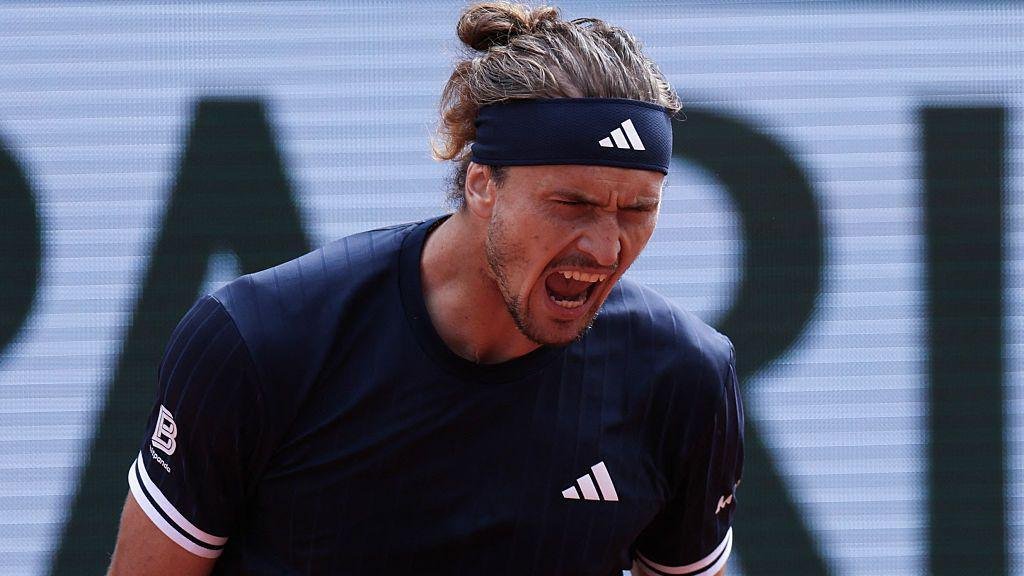
Alexander Zverev won his maiden Grand Slam title at the French Open on June 7. Days later, he ended an interview with L’Equipe when a journalist raised questions about past allegations against him. The exchange was brief. The debate it reignited was considerably longer.
When Victory and Accountability Occupy the Same News Cycle
Winning a first Grand Slam title is one of the most significant moments in any tennis player’s career. The French Open, on clay, against the world’s best, over the course of two weeks and seven matches, is the kind of achievement that demands recognition on its own terms. Alexander Zverev’s victory on June 7 was exactly that: a genuine, hard-earned sporting landmark for a player who has been ranked among the world’s elite for years and who now has the major title to accompany that standing.
But sport does not exist in isolation from everything else, and the professional lives of elite athletes do not pause at the gates of Roland Garros. In the days following his victory, Zverev sat down with the French sports publication L’Equipe. When a journalist raised past allegations that have followed him through his career, he cut the interview short. The exchange was curt, the exit was abrupt, and both the manner of the response and the act of ending the conversation generated significant commentary across sports media and social platforms.
What the moment raises, beyond its immediate specifics, is a set of questions about how sports journalism handles conduct-related topics when they intersect with major victories, and what responsibilities sit with athletes, journalists, and media organisations in those moments.
What Happened: The Exchange in Zverev’s Own Words
The L’Equipe interview took place after Zverev’s victorious French Open campaign. When the journalist raised the subject of past allegations, Zverev responded in clear terms.
“Hold on, first of all, this isn’t that kind of interview. Secondly, you know that the accusations have been proven false? This is the second time you’ve asked me about them.”
Alexander Zverev, L’Equipe interview
As the conversation continued, Zverev insisted his innocence before ending the interview.
“That wasn’t my decision. I did everything I could, and my innocence has been proven. I don’t know. I think we should stop, it’s better that way.”
Alexander Zverev, L’Equipe interview
Two things are happening simultaneously in this exchange. Zverev is making a factual claim about the outcome of legal and institutional processes. And he is ending a journalistic interaction he does not want to continue. Both elements are worth examining separately.
The Legal Context: What the Record Actually Shows
Zverev’s claim that “the accusations have been proven false” and that “my innocence has been proven” requires careful contextualisation, because the legal record is more nuanced than either of those statements fully conveys.
The first set of allegations, raised by his ex-girlfriend Olga Sharypova in 2020, was investigated by the ATP over a 15-month period. The ATP concluded there was insufficient evidence to support the accusations. That is a procedural finding about evidence, not a judicial determination of truth or falsehood. The absence of evidence sufficient to act upon is not the same thing as proof that allegations are false, a distinction that legal systems maintain precisely because the two outcomes have different implications.
In 2023, a separate set of allegations from his ex-girlfriend Brenda Patea, with whom he shares a daughter, resulted in a German criminal court issuing a penalty order carrying a fine of approximately 450,000 euros. This ruling was made because the court found what German law describes as compelling evidence. Zverev chose to appeal and go to trial, which was subsequently concluded through a settlement requiring a payment of 200,000 euros.
At the time of that settlement, the court was explicit about what it did and did not represent. It told the BBC directly that “the decision is not a verdict and it is not a decision about guilt or innocence.” Zverev’s legal team maintained the settlement was entered into solely to shorten the proceedings.
The gap between what the legal record contains and what Zverev’s L’Equipe statement claims is real and meaningful. A settlement that a court explicitly characterised as not a verdict on guilt or innocence is not the same as innocence being proven. Stating otherwise, in a high-profile interview shortly after winning a major tennis tournament, is a claim the record does not straightforwardly support.
The Journalism Question: Is a Victory Press Conference the Right Moment?
The decision to raise conduct-related questions in a post-victory interview is one that different journalists, editors, and media organisations answer differently, and the disagreement is genuine rather than simple.
The case for asking the question, which L’Equipe’s journalist clearly made, rests on a basic principle of editorial journalism: a public figure’s conduct outside their professional role is legitimate subject matter when that conduct has been publicly documented, legally processed, and remains a matter of active public discussion. The fact that Zverev won a Grand Slam does not suspend that principle. The timing of a major victory is precisely when public attention is highest and when the widest possible audience is exposed to whatever coverage follows.
The counter-argument, which Zverev articulated through his framing that “this isn’t that kind of interview,” is that the context of a post-victory interview carries an implied scope, and that questions of a fundamentally different nature from the sporting achievement being discussed are a violation of that implied agreement between interviewer and subject. This is a position that some journalists accept and some reject, and there is no universal standard that resolves it cleanly.
What makes the specific exchange notable is Zverev’s claim that this was “the second time” the journalist had asked him about the allegations within the same interview. If accurate, that detail changes the texture of the interaction somewhat. A single question about past proceedings in the context of post-victory coverage is a defensible journalistic choice. Returning to the same topic after receiving a response, within the same interview, is a more aggressive editorial decision that reasonable people can disagree about.
The Online Reaction: What the Debate Revealed About Different Audiences
The online response to the interview clip divided broadly along two lines. One constituency argued that Zverev was right to end the interview, that the journalist was behaving inappropriately by raising sensitive matters in what should have been a celebratory sporting context, and that his characterisation of the legal outcomes was essentially accurate. Another constituency argued that a major champion using a high-profile interview to make contested claims about his legal record, then ending the conversation before those claims could be examined, was a concerning use of media access.
Both reactions contain elements of legitimacy, and the fact that neither cleanly prevailed in online discourse reflects the genuine complexity of the situation. Sports coverage of athlete conduct exists in a space where the norms are inconsistently applied, where the public appetite for accountability varies significantly based on the athlete’s profile and popularity, and where media organisations make editorial decisions that can be simultaneously defensible in isolation and questionable in their broader pattern.
The Broader Question: How Sports Media Handles Champion Status and Conduct History
The Zverev L’Equipe moment is one instance of a recurring structural tension in sports journalism. Elite athletes who win major events receive enormous coverage that is, by the nature of the occasion, predominantly celebratory. The journalistic infrastructure around a Grand Slam victory is built for celebration: the post-match press conferences, the feature interviews, the broadcast retrospectives.
When an athlete with a contested personal history wins such an event, the celebratory infrastructure does not automatically accommodate the conduct history. It has to be deliberately introduced, which means a journalist has to make an active choice to bring it in. That choice is almost always uncomfortable, frequently contested, and sometimes handled clumsily, which then becomes its own story distinct from the underlying question the journalist was trying to raise.
There is no clean answer to how this should work. The model in which conduct-related questions are only asked in specifically designated accountability contexts is unrealistic. The model in which every post-victory interview becomes an accountability hearing ignores the legitimate purpose of sports coverage. The negotiation between those two poles is where most sports journalism actually operates, and the Zverev interview is a reminder that the negotiation rarely produces outcomes that satisfy all parties.
What the Moment Did Not Do: Produce Resolution
The most important observation about the L’Equipe interview exchange is what it failed to produce. Zverev’s response, a contested claim followed by an abrupt ending, did not close the conversation. It reopened it, added new dimensions to it, and ensured that the coverage of his French Open victory would include not just the tennis but the press conference moment.
If the goal was to limit discussion of a topic he found unwelcome, ending the interview achieved the opposite. Had he provided a measured, detailed response that engaged with the complexity of the legal record, the story would have been considerably more difficult to sustain as a controversy. By cutting the interview short after making a claim that the record does not fully support, he supplied every element needed for the story to continue.
That observation is not a criticism of how he chose to handle a difficult moment. It is simply a description of how press conference dynamics work. The decision to leave is, in media terms, always a decision to create rather than end a story.
Conclusion: A Champion’s Interview and an Unfinished Conversation
Alexander Zverev won the French Open. He then ended an interview when a journalist raised questions he did not want to engage with. The legal record attached to his name is more complicated than his characterisation of it suggests. And the journalistic choices made in and around that interview are legitimately debatable from multiple editorial perspectives.
None of those things resolves neatly. The French Open title is real. The legal history is real. The gap between his claimed characterisation of that history and what the record actually shows is real. And the discomfort of holding all of those things simultaneously, without a clean conclusion, is the condition that serious sports journalism operates in when it does its job properly.
The conversation that Zverev tried to end on June 9 is still ongoing. That is, in its own way, the story.
The 2026 French Open produced one of tennis’s most significant first Grand Slam victories and one of its most discussed post-tournament media moments. Both deserve to be understood on their own terms.
For breaking news and live news updates, like us on Facebook or follow us on Twitter and Instagram. Read more on Latest Sports on thefoxdaily.com.






COMMENTS 0