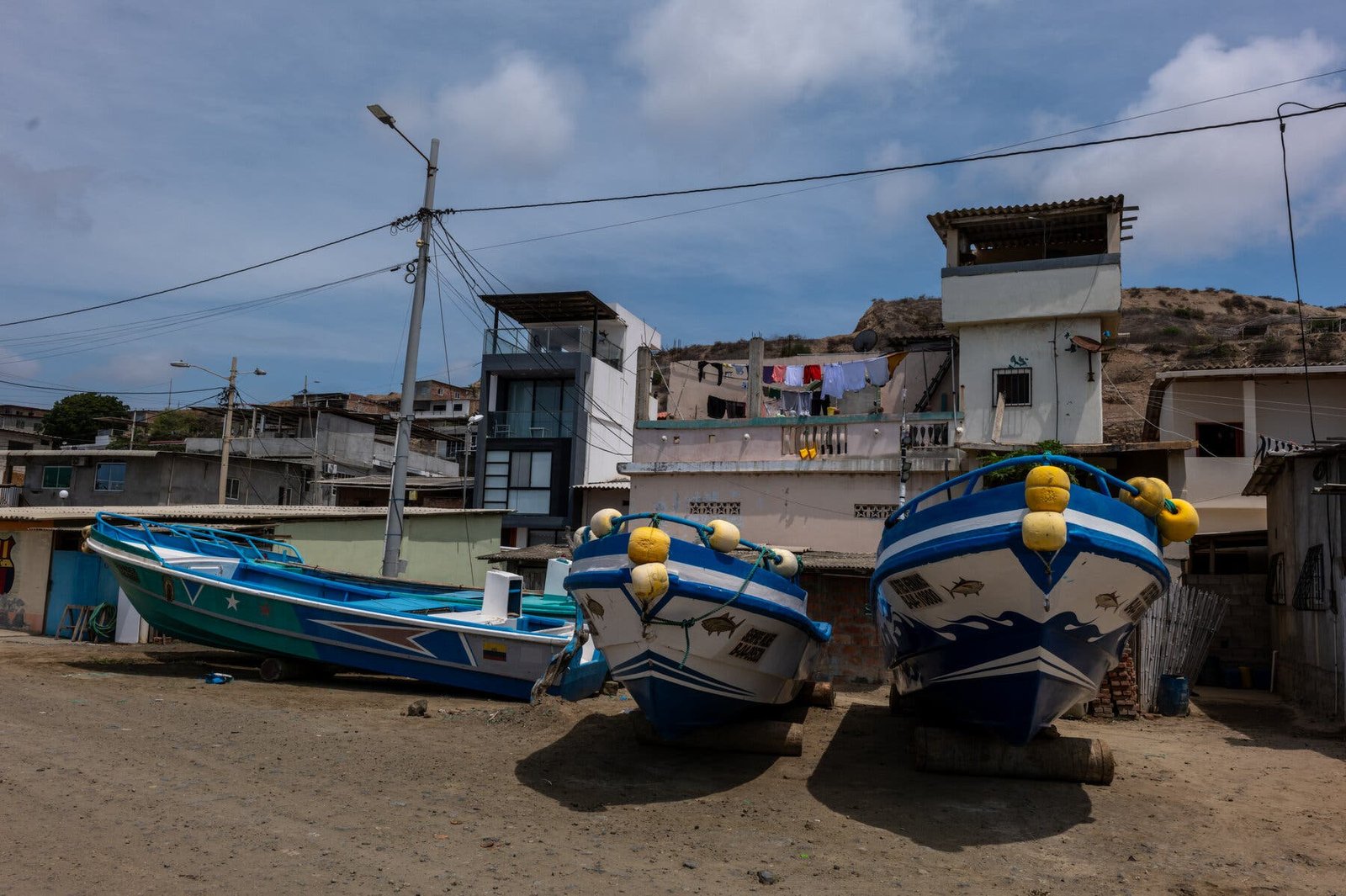
A group of Ecuadorian fishermen has taken the United States government to court over a mysterious drone attack that destroyed their fishing boat in the Pacific Ocean and left several crew members injured. The lawsuit concerns the March 17 sinking of the La Negra Francisca Duarte II in waters within Ecuador’s exclusive economic zone near the Galápagos Islands.
The fishermen allege that two armed rotor drones carrying explosives attacked their vessel while they were at sea. They claim the operation was carried out by US forces and are seeking compensation for physical injuries and financial losses, alongside an order requiring Washington to stop similar lethal attacks on boats in the Pacific and Caribbean.
The lawsuit was filed on Monday in federal court in the Western District of Pennsylvania by attorneys Dan Kovalik and Jorge Chiriboga Dávalos. It names the United States of America as the defendant and seeks $5 million in damages.
The case raises questions about the circumstances surrounding the attack, the identity of those responsible and the legal basis for US military operations targeting vessels suspected of drug trafficking. The US government has previously denied involvement in the March 17 incident.
What Happened to La Negra Francisca Duarte II?
According to the fishermen’s account, La Negra Francisca Duarte II was operating in the Pacific near the Galápagos Islands when it was struck by two small explosive-laden rotor drones on March 17.
The attack allegedly caused an explosion and fire that forced the crew to abandon the vessel. All the fishermen survived, but some reportedly suffered serious injuries. The boat was destroyed, leaving the crew without the vessel they depended on for their livelihood.
The fishermen maintain that they were engaged in fishing rather than transporting illegal drugs. Their lawyer, Dan Kovalik, said the Ecuadorian Navy had boarded and inspected the vessel just hours before the alleged attack and cleared the crew of wrongdoing.
That inspection is an important part of the plaintiffs’ argument. They contend that the boat had already undergone a check by Ecuadorian authorities and that there was no justification for treating the fishermen as participants in drug trafficking.
However, the circumstances of the strike and the identity of the operators remain disputed. The US government has not publicly accepted responsibility for the incident.
Why Are the Fishermen Accusing the United States?
The fishermen’s lawsuit alleges that the attack involved drones operated by the United States. Kovalik told reporters that the legal team had evidence linking the US to the operation.
He also claimed that the survivors were subsequently taken aboard another vessel by people identified as members of the US Navy and US Coast Guard. According to the lawyer, at least one of the two drones involved in the attack was American.
These allegations form a central part of the legal case, but they have not been established through a court finding. The US Department of Defense has previously denied involvement in the attack, and the incident has not been included among the strikes the US has publicly acknowledged.
The distinction is important because Washington has admitted conducting numerous lethal operations against vessels it describes as being involved in drug trafficking. However, acknowledging a wider campaign does not establish responsibility for every reported attack in the region.
What Are the Fishermen Demanding in the $5 Million Lawsuit?
The lawsuit seeks $5 million in damages for the losses suffered by the crew. The fishermen are seeking compensation for physical injuries, economic damage and the destruction of their fishing vessel.
For fishing families, the loss of a boat can have consequences beyond the immediate cost of replacing equipment. A vessel is often the foundation of an entire crew’s livelihood, allowing fishermen to travel to fishing grounds, bring back catches and earn money for their households.
The plaintiffs are also asking the court to issue an injunction requiring the United States to end its deadly strikes against boats in the Pacific and Caribbean. This request seeks relief beyond compensation for the March 17 incident, challenging the broader practice of conducting lethal operations against vessels in the region.
The lawsuit therefore has two central objectives: obtaining compensation for the fishermen and seeking judicial intervention against similar operations in the future.
US Has Acknowledged Other Lethal Strikes on Suspected Drug Boats
The case comes amid an expanding US campaign targeting vessels suspected of involvement in drug trafficking across the Pacific and Caribbean. The US government has acknowledged dozens of lethal attacks on boats it says were connected to criminal organisations.
Washington has described its operations as efforts to counter designated terrorist organisations and groups involved in drug trafficking. The Pentagon has also announced operations targeting organisations designated as terrorist groups in the region.
However, La Negra Francisca Duarte II is not among the publicly acknowledged incidents. The fishermen argue that their vessel was attacked despite having no connection to drug trafficking.
The dispute highlights a difficult question surrounding Maritime Security operations: how authorities identify targets and establish whether vessels are involved in criminal activity before using lethal force.
For the fishermen, the central issue is whether a civilian fishing crew was wrongly targeted. For the US government, the legal proceedings could bring further scrutiny to the circumstances and accountability surrounding its operations at sea.
Three Ecuadorian Fishing Boat Attacks Raise Further Questions
The March 17 attack was not the only unexplained incident involving Ecuadorian fishing crews earlier in 2026. It is one of three reported attacks or disappearances involving fishing vessels operating in the region.
The incidents have raised concerns among fishing communities and prompted questions about the safety of civilian vessels operating near the Galápagos Islands and surrounding Pacific waters.
Human rights organisations have also examined the incidents. Human Rights Watch reported that survivors from La Negra Francisca Duarte II and another Ecuadorian fishing vessel described attacks involving armed drones and subsequent encounters with personnel they believed were American. However, the organisation said it could not independently establish who carried out the strikes or identify the vessel that took the survivors aboard.
The lack of publicly established responsibility has made the incidents particularly difficult to assess. The fishermen’s lawsuit could provide a formal legal forum for examining their accounts and the evidence they say connects the United States to the attack.
Could the CIA Have Been Involved in the Attack?
The lawsuit is also expected to examine whether the Central Intelligence Agency (CIA) played a role in the March 17 operation. Attorney Jorge Chiriboga said the legal team would ask the court to investigate possible CIA involvement.
The question follows reporting by The Washington Post, which said mysterious attacks on Ecuadorian fishing boats near the Galápagos Islands were part of a covert CIA programme. The report cited people familiar with the operation and described the alleged involvement as a secret US action whose details were not publicly acknowledged.
Such reporting has added another dimension to the controversy, but it does not establish that the CIA carried out the specific attack on La Negra Francisca Duarte II. The agency’s alleged role remains a matter for investigation, and the lawsuit will seek to examine the available evidence.
If the court considers the allegations, the proceedings could draw attention to the distinction between publicly acknowledged military operations and covert activities conducted by intelligence agencies.
US-Ecuador Security Cooperation Under Scrutiny
The dispute also comes against the background of security cooperation between the United States and Ecuador. The two countries have worked together on efforts to combat organised crime, drug trafficking and criminal networks operating across the region.
Ecuador has faced growing security challenges linked to organised criminal groups and the movement of illegal drugs through its territory and maritime routes. Cooperation with international partners has formed part of the government’s response to those challenges.
However, the fishermen’s lawyer argues that security agreements between the two countries cannot justify what he describes as an attempted murder of civilians. The plaintiffs maintain that cooperation against drug trafficking does not remove the obligation to distinguish suspected criminals from ordinary fishing crews.
The case could therefore raise questions about the limits of security cooperation, the use of force at sea and the protections available to civilians during international operations.
What Happens Next in the US Court Case?
The lawsuit will now move through the US federal court system. The fishermen will seek to support their claims with evidence concerning the attack, the drones allegedly involved, the subsequent treatment of the crew and the losses they suffered.
The US government will have an opportunity to respond to the allegations through the legal process. The court will need to consider the claims and the applicable legal questions before deciding whether the plaintiffs are entitled to compensation or other relief.
The request for an injunction could also become a significant part of the proceedings because it seeks to challenge the broader use of lethal force against vessels in the Pacific and Caribbean.
For now, the lawsuit represents the fishermen’s allegations rather than a judicial determination that the United States carried out the strike. Establishing responsibility will depend on the evidence presented and the court’s assessment of the case.
Why the Case Matters Beyond One Fishing Boat
The lawsuit involving La Negra Francisca Duarte II goes beyond the destruction of a single vessel. It raises questions about civilian safety, accountability for military operations and the treatment of fishing crews operating in waters where international security operations take place.
For the 16 fishermen, the immediate concern is compensation for their injuries and lost livelihood. Their legal challenge also seeks answers about who attacked their boat and why.
The case could become an important test of how allegations involving lethal maritime operations are examined in US courts. Until responsibility is established, the March 17 strike remains a disputed incident, but the fishermen’s lawsuit has brought renewed attention to the unexplained attacks near Ecuador’s Galápagos Islands.
For breaking news and live news updates, like us on Facebook or follow us on Twitter and Instagram. Read more on Latest World on thefoxdaily.com.





COMMENTS 0