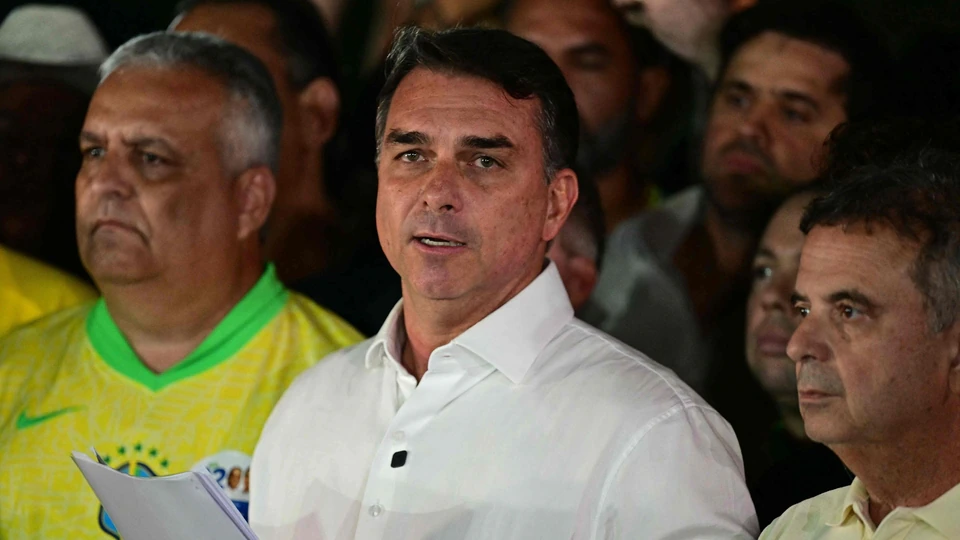
Brazilian presidential candidate Flávio Bolsonaro has refused to accept President Luiz Inácio Lula da Silva’s victory in the presidential election, announcing plans to seek annulment of the results over a controversial extension of voting hours.
Speaking briefly in Brasília on Sunday, Flávio Bolsonaro described the decision to extend voting as unacceptable and alleged that it was an attempt to manipulate the election. His announcement challenges the outcome of a closely contested presidential runoff in which Lula secured another term with 51.8% of the vote.
According to official results cited in the report, Lula defeated Bolsonaro with a margin of nearly 4.4 million votes. The dispute centres on a Brazilian Supreme Court ruling that extended voting by two hours beyond the scheduled closing time after requests from both candidates over disruptions affecting voters in different regions.
Flávio Bolsonaro says he will seek election annulment
Flávio Bolsonaro announced his intention to challenge the election outcome during a brief speech in Brasília. He said it was impossible to recognise the results and vowed to request that the election be annulled.
According to AFP, Bolsonaro called the extension of voting hours “unacceptable” and described it as a “dirty trick”. He presented the decision as grounds for challenging the outcome, although the supplied report does not establish that the extension changed the result or provide details of a formal legal filing.
The dispute comes after Lula secured 51.8% of the vote against Bolsonaro’s 48.2%. The difference amounted to approximately 4.4 million votes, according to the official figures cited in the report.
Bolsonaro’s announcement places the election procedure at the centre of the post-election dispute. However, his objections to the extended voting period remain allegations, and the information provided does not establish that election officials manipulated the result.
Why were voting hours extended in Brazil?
The controversy followed a ruling by Brazil’s Supreme Court that extended voting hours by two hours beyond the scheduled closing time. The decision came after both candidates requested additional time in response to disruptions that affected voters in different parts of the country.
Lula had sought an extension after reporting that buses used to transport voters had been withdrawn from service in several cities. He argued that the disruption could prevent people from reaching polling stations and exercising their right to vote.
Flávio Bolsonaro also requested an extension in some regions, citing heavy rainfall. The requests from both candidates formed part of the circumstances surrounding the court’s decision to allow additional voting time.
Despite having sought an extension in certain areas, Bolsonaro later criticised the final decision and said he would challenge the election outcome. The supplied report does not explain why he considered the broader extension unacceptable despite his own request for additional voting time in some regions.
The distinction between the requests made by the candidates and the final ruling is important. The report indicates that the extension followed concerns about access to polling stations, but it does not provide the full court order, detailed regional voting records or evidence demonstrating that the decision favoured either candidate.
Lula wins a closely contested presidential runoff
Lula’s victory came in a tightly contested election, with the official results showing him receiving 51.8% of the vote compared with Bolsonaro’s 48.2%. The margin of nearly 4.4 million votes separated the two candidates.
The result gave Lula an unprecedented fourth presidential term, according to the supplied report. His victory was the central outcome of the runoff, but Bolsonaro’s announcement of a planned annulment request has shifted attention toward the procedures governing the vote.
Election disputes can involve questions about the administration of polling, access to voting locations and compliance with election rules. In this case, the immediate issue raised by Bolsonaro concerns the additional two hours of voting authorised by the Supreme Court.
However, the existence of a dispute does not itself establish that the election result is invalid. The supplied material does not include a judicial finding that the extension violated election law, nor does it provide evidence that the additional voting period altered the final result.
What happens next in Brazil’s election dispute?
Bolsonaro has said he intends to seek annulment of the election, but the supplied report does not confirm that a formal petition has been filed or that a court has accepted his argument. The next steps therefore remain unclear based on the available information.
A challenge to an election result would require consideration of the grounds presented and the applicable legal procedures. The controversy over voting hours raises questions about the circumstances behind the Supreme Court’s ruling, including the reported transport disruptions and requests from both candidates.
Any assessment of the challenge would also need to distinguish between allegations made by a candidate and evidence establishing a violation that could affect the result. The report provides Bolsonaro’s objections but does not include a legal determination supporting his demand for annulment.
The dispute highlights the importance of transparent election procedures and clear explanations of decisions that affect access to polling stations. It also demonstrates why the details of the court’s ruling and the evidence presented in any formal challenge will be significant in determining how the matter proceeds.
Key questions surrounding Bolsonaro’s challenge
Several important details remain unresolved in the supplied account. These include whether Bolsonaro has formally submitted an annulment request, what specific legal grounds he intends to invoke and how authorities will respond to his objections.
The report also does not establish whether the additional voting hours had any measurable effect on turnout or the final vote margin. Without that information, it is not possible to conclude from the reported allegations alone that the extension changed the outcome.
For now, the central facts are that Lula won the runoff with 51.8% of the vote, the Supreme Court extended voting hours by two hours following requests from both candidates over regional disruptions, and Bolsonaro subsequently announced that he would seek annulment of the results.
The election dispute will depend on the arguments formally presented and the decisions made through Brazil’s relevant legal processes. Until further information is available, Bolsonaro’s claims should be treated as allegations rather than proof that the presidential election was improperly decided.
For breaking news and live news updates, like us on Facebook or follow us on Twitter and Instagram. Read more on Latest World on thefoxdaily.com.


COMMENTS 0