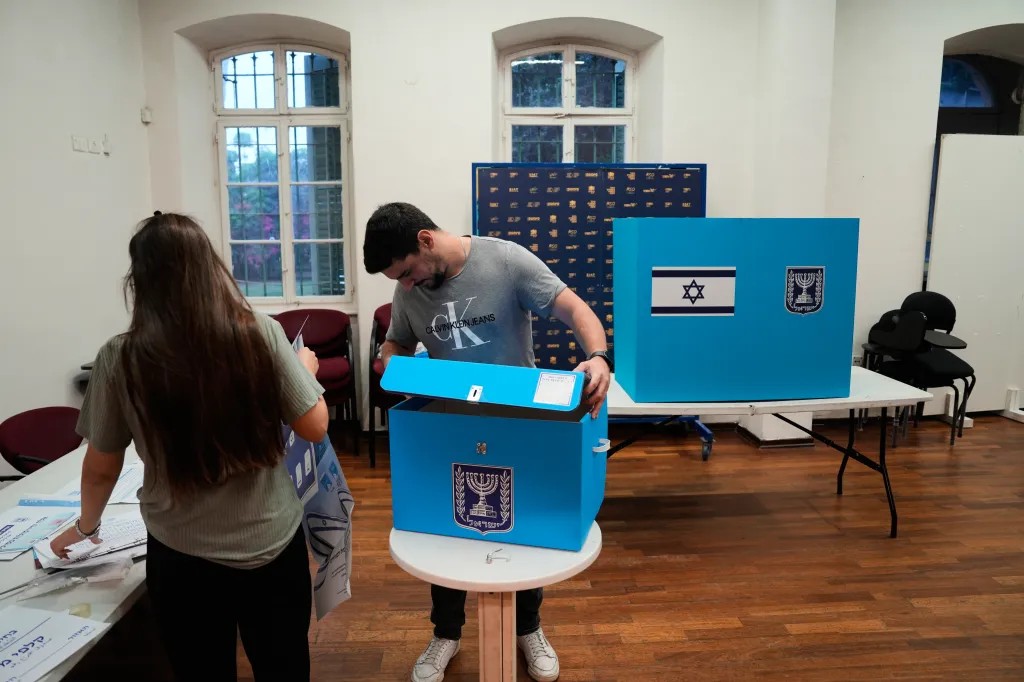
As Israelis voted to elect the 26th Knesset in the 2026 Israel election, Yaniv Ashtamker, a community leader from Kiryat Gat, entered the contest seeking to bring the concerns of Indian-origin Jews into the country’s national Parliament.
Ashtamker is placed third on the Tzomet Beit Yisrael party’s list. His candidature comes four decades after an earlier attempt to secure independent political representation through the July 1984 election failed to win a parliamentary seat.
Although that campaign did not succeed, the question of how Indian-origin Jews could translate their presence in Israeli society into national political representation has persisted. The community’s political journey stretches back to the migration of Indian Jews to Israel, their struggle for religious recognition and early efforts to organise through local and national elections.
The history begins with the Bene Israel, the largest Indian-origin Jewish community, whose roots are concentrated largely in Maharashtra, particularly along the Konkan coast. Their experiences in Israel help explain the background to the continuing search for political representation.
The Bene Israel and the struggle for religious recognition
Following the establishment of Israel in 1948, thousands of Bene Israel migrated from Maharashtra to the newly formed state. However, their arrival was followed by disputes over their religious status and recognition within Israeli society.
The Bene Israel had maintained Jewish traditions in India for generations. Yet, after migrating to Israel, members of the community encountered questions about their Jewish identity, leading to protests against the treatment they received.
A research paper by Suraj Rajan Kadanthodu, titled Migration, Discrimination and Assimilation in the State of Israel, describes a protest in Jerusalem involving almost 2,000 Indian-origin Jews.
According to the paper, the demonstrators demanded an end to what they called “religious fascist rule” and expressed frustration that a community that had lived as Jews in India for approximately 2,000 years was facing discrimination after arriving in Israel.
The protest highlighted the difficulties that some Indian-origin Jews encountered as they sought recognition in their new homeland. Their experience became an important part of the community’s broader history of integration into Israeli society.
A significant development came in August 1964, when the Israeli Parliament adopted a resolution affirming that members of the Bene Israel community were Jews in every respect.
The resolution marked an important milestone in the community’s struggle for religious recognition. However, recognition of religious identity and representation in national politics are separate questions. The latter would require a different kind of organisation and electoral participation.
Dimona becomes a centre of community activism
Dimona, a city in southern Israel where many Indian-origin Jews settled, became an important centre of community activism. As the community established itself locally, political organisation emerged as a way to seek representation and address shared concerns.
According to Kadanthodu’s account in The Times of Israel, Bene Israel activists established a municipal party called Kiddum Dimona in 1980. The party won a seat on the city council, demonstrating that a community-based political initiative could secure representation at the local level.
The municipal achievement encouraged activists to pursue a national platform. Four years later, the movement backed Shiluv, a Hebrew word meaning “integration”, in an effort to bring Indian-origin Jewish representation into the Knesset.
Shiluv contested the election to Israel’s 11th Knesset in July 1984. Rather than relying on established political parties to represent the community, it sought to offer Indian-origin Jews an independent political platform.
The campaign represented a significant attempt to move beyond local activism and secure a place in national politics. However, the party faced the challenge of attracting enough votes to qualify for parliamentary representation under the electoral rules in force at the time.
Why Shiluv failed to enter the Knesset
Shiluv received 5,499 votes in the 1984 election, accounting for approximately 0.3 per cent of the total vote. This was insufficient to meet the 1 per cent electoral threshold that applied at the time.
As a result, the party won no seats in the Knesset and soon faded from the political scene.
The outcome demonstrated the difficulty of building a national political party around a relatively small community. Even when voters share a common background and concerns, their numbers may not be enough to secure parliamentary representation through an independent party.
The experience also raised a question that remains relevant to the 2026 election: should Indian-origin Jews seek representation through a dedicated political party, or should candidates pursue positions on the lists of established or broader political groups?
Shiluv attempted the first approach by seeking to represent the community independently. Yaniv Ashtamker’s candidature on the Tzomet Beit Yisrael list reflects a different route, with representation linked to the electoral performance of a broader party.
Eli Ben Menachem: An India-born politician in the Knesset
Although Shiluv failed to secure a seat, Indian-born politicians have served in the Knesset through mainstream political parties. One prominent example is Eli Ben Menachem, who was born in Bombay, now Mumbai, in 1947.
Ben Menachem moved to Israel with his family in 1949 and later entered national politics. He served in the Knesset from 1988 to 2006, representing the Alignment, the Labour Party and the One Israel alliance during his parliamentary career.
His work extended beyond serving as a legislator. He held government positions, including deputy minister of Housing and Construction and deputy minister of Industry and Trade. He also served as a deputy speaker of the Knesset.
His career illustrates how politicians with Indian roots have participated in Israel’s national political institutions through established parties.
However, the election of an India-born politician is not necessarily the same as sustained representation of Indian-origin Jews as a distinct community. The broader question of how the community’s shared concerns can find a place in national politics has continued beyond individual political careers.
How many Indian-origin Jews live in Israel?
According to the Indian Embassy in Tel Aviv, approximately 85,000 Indian-origin Jews live in Israel. The community includes groups with different historical backgrounds and migration experiences.
These include the Bene Israel community from Maharashtra, Cochin Jews from Kerala, Baghdadi Jews and more recent immigrants from northeastern India.
The groups reflect the diversity of Jewish history in India and the different routes through which people of Indian origin have made their way to Israel. Despite their distinct origins, many have maintained a connection to their Indian heritage while becoming integrated into Israeli society.
Rafi Bhonker, an Indian-origin Israeli who chairs the Indian Jewish Heritage Centre, which represents Jewish communities from India, has said that the community has generally remained less involved in politics.
“Indian-origin Jews in Israel take immense pride in their Indian heritage but they are very well-integrated into Israeli society,” Bhonker said.
The community’s integration helps explain why Indian-origin Jews do not necessarily operate as a single political bloc. Like other Israeli citizens, they may support different parties and prioritise national issues alongside questions connected to their heritage.
October 7 attacks shape the election debate
The 2026 election takes place after the October 7 attacks, which Bhonker identified as a major consideration for Israeli voters, including those of Indian origin.
“This marks first election after the attacks of 7th October and as such, for most Indian origin Jews, like any other Israeli citizen, this is a paramount national issue that will factor in heavily while casting their vote,” Bhonker said.
His comments underline the importance of wider national concerns in understanding the community’s voting behaviour. Although Indian-origin Jews share historical and cultural connections to India, their decisions at the ballot box are also shaped by developments affecting Israel as a whole.
This creates a challenge for candidates seeking to represent the community. They must engage with issues that matter to Indian-origin Jews while also operating within a national political environment where security and other countrywide concerns influence electoral choices.
The available information does not establish how Indian-origin Jewish voters will divide their support among political parties in 2026. However, Bhonker’s comments indicate that the consequences of the October 7 attacks are an important consideration for many members of the community.
Why Indian-origin Jews have limited visibility as a political bloc
Despite an estimated population of approximately 85,000, Indian-origin Jews have generally remained less visible as a distinct political force in Israel.
Bhonker has described the community as relatively less involved in politics, while Revital Moses, who moved to Israel in March 2020, has pointed to its small numbers as a factor affecting political outreach.
According to Moses, political parties have not mounted targeted campaigns specifically aimed at Indian Jewish voters because the community represents a relatively small section of the overall electorate.
This presents a challenge for efforts to secure community-specific representation. Political parties seeking to maximise their support may prioritise larger constituencies, while a small community may find it difficult to attract sustained attention unless its concerns overlap with broader political issues.
At the same time, the community’s integration into Israeli society means that its members can participate in politics through mainstream parties rather than organising around a separate identity.
Consequently, the question is not simply whether Indian-origin Jews participate in elections. It is also whether their shared historical experience and concerns can be organised into a constituency with sufficient influence to shape party decisions or secure parliamentary representation.
How Israel’s electoral system affects community representation
Israel’s Knesset consists of 120 members elected through a nationwide proportional representation system. Parties must secure at least 3.25 per cent of the valid vote to enter Parliament.
Under this system, an independent party focused on a relatively small community faces a significant electoral challenge unless it attracts support beyond its core electorate.
The threshold is higher than the 1 per cent requirement that applied when Shiluv contested the 1984 election. The comparison illustrates the structural difficulty facing small parties that seek representation on the strength of a limited voter base.
A community-based party would need to appeal to a wider section of Israeli voters to reach the current threshold. Without that broader support, it could struggle to win seats even if it has strong backing within the community it seeks to represent.
Running candidates on a broader party list offers another route. A candidate can seek election as part of a party with a wider national support base, potentially creating an opportunity for representation without requiring the community to establish an independent party capable of crossing the threshold.
However, a candidate’s position on a party list does not automatically guarantee a seat. The outcome depends on how many votes the party receives and how many seats it secures under the proportional representation system.
What Yaniv Ashtamker’s candidature means
Yaniv Ashtamker’s placement at number three on the Tzomet Beit Yisrael list has brought renewed attention to the longstanding effort to secure a stronger political voice for Indian-origin Jews.
His candidature differs from the Shiluv campaign of 1984 because it places the representation effort within a broader party rather than relying on a separate party focused on Indian-origin Jews.
This approach offers a way to pursue representation through a wider political platform. However, Ashtamker’s position on the list alone does not establish whether he will enter the Knesset. That depends on the party’s performance in the election and the number of seats it wins.
His campaign also takes place within a community that is diverse in its origins and well-integrated into Israeli society. Indian-origin Jews may share cultural connections and aspects of their historical experience without necessarily holding identical political priorities.
Ashtamker’s attempt therefore brings together two issues: the continuing importance of Indian-origin Jewish identity and the practical challenge of securing representation within Israel’s electoral system.
The election outcome will determine whether his candidature results in a parliamentary seat. Regardless of the result, the campaign has renewed attention to a question that has remained relevant since Indian-origin Jewish activists first sought an independent national platform in the 1980s.
From religious recognition to political representation
The political journey of Indian-origin Jews in Israel has developed over several decades. For the Bene Israel, the early struggle centred on religious recognition after migration from Maharashtra. The 1964 parliamentary resolution affirming their Jewish identity marked an important milestone.
Community activism subsequently moved into electoral politics. Kiddum Dimona secured a seat on the Dimona city council in 1980, while Shiluv’s unsuccessful 1984 campaign sought to extend that representation to the national Parliament.
The career of Eli Ben Menachem demonstrated that India-born politicians could serve in the Knesset through mainstream parties. However, the broader effort to secure a distinct political voice for Indian-origin Jews has continued.
Today, the community’s diversity, its integration into Israeli society and the requirements of the electoral system all influence its political options. An independent party must attract support beyond a small community, while a candidate on a broader party list depends on that party’s electoral performance.
Ashtamker’s candidature in the 2026 election represents the latest chapter in this history. It reflects the continuing effort to translate a longstanding presence in Israeli society into parliamentary representation while navigating a political system shaped by nationwide parties and proportional representation.
Whether the campaign secures a seat remains dependent on the election result. The longer story, however, extends beyond a single candidate: it is about how Indian-origin Jews have pursued religious recognition, built community institutions and sought a place in Israel’s national political life.
For breaking news and live news updates, like us on Facebook or follow us on Twitter and Instagram. Read more on Latest World on thefoxdaily.com.






COMMENTS 0