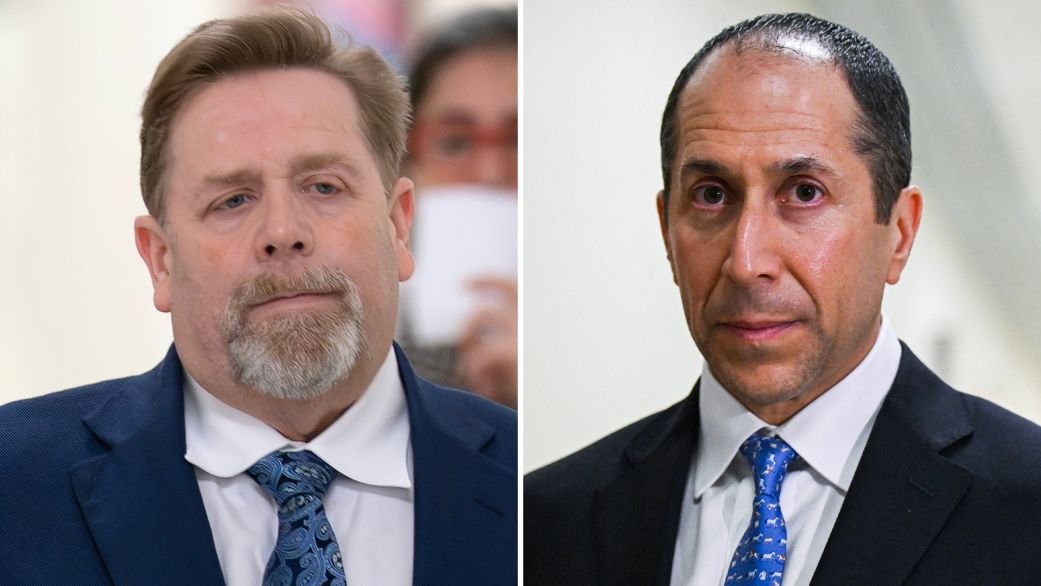
Federal investigators are reportedly examining the activities of two of Jeffrey Epstein’s closest longtime advisers, Darren Indyke and Richard Kahn, in a development that could bring renewed scrutiny to the network surrounding the convicted sex offender.
The reported investigation is significant for survivors who have spent years pressing authorities to examine not only Epstein’s own conduct but also the people and institutions that may have helped him maintain his operations. Indyke, Epstein’s longtime lawyer, and Kahn, his longtime accountant, occupied positions that gave them extensive access to the financial and legal affairs of Epstein’s businesses and estate.
The Wall Street Journal first reported that federal authorities had opened an investigation involving the two men. A source who was interviewed by investigators earlier this year about Epstein told CNN that investigators have also been speaking with potential witnesses, including survivors who had dealings with Epstein.
According to the source, federal officials from several agencies, including the US Attorney’s Office for the Southern District of New York, have sought documents connected to Epstein. The requested material reportedly includes emails, checks and other records that could shed light on his financial and Business activities.
The investigation has not been publicly confirmed by federal authorities. A Justice Department spokesperson declined to comment on whether an investigation exists, while a spokesperson for the Southern District of New York also declined to confirm or comment on the matter.
Why Darren Indyke and Richard Kahn are under scrutiny
Indyke and Kahn were not peripheral figures in Epstein’s professional life. They were longtime advisers who dealt with important aspects of his legal and financial affairs.
That history makes their reported examination particularly consequential. Investigators are reportedly interested in areas that the two men would have been positioned to understand, including Epstein’s use of companies and financial structures.
The source who spoke to CNN said investigators appeared interested in a broad range of subjects involving Epstein’s shell companies, including the Florida Science Foundation. The nonprofit was created in November 2007. Multiple survivors have previously told CNN that Epstein abused them at the foundation while he was also serving jail time.
The reported focus on corporate entities and financial records could therefore provide investigators with another way to examine how Epstein’s activities were organized and sustained over time.
At this stage, however, the reported investigation should not be treated as proof that Indyke or Kahn committed a crime. Both men have previously denied wrongdoing and said they had no knowledge of or involvement in Epstein’s sex trafficking operation.
Federal authorities have not confirmed the investigation
The lack of an official confirmation is an important part of the story.
A Justice Department spokesperson said the department does not comment on the existence or absence of investigations. The department has previously maintained that it would investigate if evidence emerged warranting further action.
The Southern District of New York also declined to confirm the reported investigation.
That means the details currently available come primarily from reporting and sources familiar with the inquiry rather than from a public charging document or formal announcement by prosecutors. No criminal charges against Indyke or Kahn have been announced in connection with the reported investigation.
The distinction matters because federal investigations can examine allegations, financial records and potential witnesses without necessarily resulting in criminal charges. Investigators may also pursue multiple lines of inquiry before determining whether there is sufficient evidence to take further action.
Survivors have sought accountability beyond Epstein
For survivors of Epstein’s abuse, the reported investigation touches a longstanding demand: that scrutiny should extend beyond Epstein himself to the broader network that surrounded him.
Epstein died in federal custody in 2019 while awaiting trial on federal sex trafficking charges. His death ended the criminal case against him before a trial could take place.
Since then, survivors and their advocates have continued to push for investigations into people who may have assisted, enabled or otherwise facilitated Epstein’s activities. In the United States, Ghislaine Maxwell is the only person from Epstein’s circle who has been prosecuted in connection with his sex trafficking operation.
The limited number of criminal prosecutions has remained a central source of frustration for survivors and advocates who argue that Epstein could not have operated for so long without assistance from people around him.
Lauren Hersh, co-founder of World Without Exploitation, an organization that works with Epstein survivors, said Epstein’s crimes were enabled by a wider network of people and institutions.
Hersh welcomed reports of an investigation into Indyke and Kahn and said survivors deserve a complete accounting of how Epstein and people around him were able to operate for such a long period.
Indyke and Kahn’s roles in Epstein’s estate add another layer
The scrutiny surrounding Indyke and Kahn extends beyond their work for Epstein during his lifetime. After his death, the two men became co-executors of his estate.
They are also among the first beneficiaries in line to receive millions of dollars from Epstein’s trust if the trust ultimately pays out.
That combination of responsibilities has drawn criticism from Epstein survivors and their attorneys, particularly because the estate has faced civil litigation from people who allege that Epstein’s conduct was enabled by others around him.
The estate has also paid for the legal defense of its co-executors in civil lawsuits seeking damages connected to allegations about their roles in Epstein’s activities.
The arrangement has prompted questions about whether Indyke and Kahn could face a conflict between their responsibilities as estate fiduciaries and their potential financial interests in the estate.
Class-action lawsuit puts their roles under additional scrutiny
The legal pressure surrounding Indyke and Kahn has increased in recent months with litigation brought by Epstein survivors.
A class-action lawsuit filed in August alleges that both men played roles in enabling Epstein’s crimes by providing legal and financial support for his sex trafficking operation.
Those allegations remain claims made in civil litigation and have not been established as criminal findings against either man.
Their positions as both estate co-executors and potential beneficiaries have also become an issue in the legal proceedings. Attorneys representing survivors have argued that those overlapping roles could create an inherent conflict of interest when the estate is defending itself against claims that could potentially involve the actions of its own representatives.
Jennifer Freeman, an attorney representing Epstein victims, raised the issue during a recent settlement hearing in Manhattan. The judge dismissed the argument, but the dispute illustrates the unusual position Indyke and Kahn occupy in the continuing legal aftermath of Epstein’s death.
They were among Epstein’s closest professional advisers during his life and now have responsibilities connected to resolving claims against his estate after his death.
Both advisers deny knowledge of Epstein’s crimes
Indyke and Kahn have consistently rejected allegations that they knowingly assisted Epstein’s sex trafficking operation.
Indyke testified before lawmakers earlier this year that he had no knowledge of Epstein’s wrongdoing and rejected any suggestion that he assisted or facilitated his former client’s crimes.
Kahn likewise told congress that his relationship with Epstein was strictly professional. He said he never observed sexual abuse or trafficking involving women and girls and never received a complaint about such conduct from an Epstein victim or anyone else.
Their attorneys have also addressed questions surrounding their potential inheritance from Epstein’s trust. Lawyers Daniel Weiner and Daniel Ruzumna said the estate’s probate process could take at least three more years and that neither Indyke nor Kahn had received money from the estate.
They said any funds the two men might eventually receive from the 1953 Trust would only be distributed after claims against the estate were resolved and the estate had been fully probated.
Their public statements provide an important counterpoint to the allegations raised by survivors in civil litigation and to the questions reportedly being examined by investigators.
The investigation could bring renewed attention to Epstein’s financial network
One potentially significant aspect of the reported federal inquiry is its apparent focus on documents and business structures.
Epstein maintained a complicated network of companies and financial arrangements during his lifetime. Investigators’ reported interest in emails, checks and corporate entities could help establish how money moved through those structures and who was involved in managing them.
Such records can also provide a timeline for business Relationships and transactions. They may show who authorized payments, communicated about particular entities or handled administrative responsibilities. But the existence of such records alone would not establish criminal conduct.
The reported attention to the Florida Science Foundation is also notable because survivors have previously connected the organization to allegations of abuse. Establishing what happened at particular locations and how Epstein’s operations were managed would require investigators to examine both testimony and documentary evidence.
Millions of Epstein documents remain part of the transparency debate
The reported investigation comes amid a broader effort to make records concerning Epstein publicly available.
Survivors and advocates have repeatedly called for greater transparency about the information collected by government agencies during years of investigations into Epstein and his associates.
A law passed last year required the Justice Department to release millions of documents connected to Epstein. Even after those releases, millions of additional records remain in the department’s possession and have not been made public, according to the supplied reporting.
That continuing debate has made access to records a major part of the survivors’ broader campaign for accountability. Public disclosure can help establish what authorities knew, when they knew it and what investigative steps were taken, although sensitive information involving victims and witnesses may require protection.
The tension between transparency and privacy is especially significant in a case involving sexual exploitation. Survivors can have legitimate reasons to seek accountability while also needing protection from the unnecessary disclosure of deeply personal information.
What the reported federal inquiry could mean for survivors
For survivors, the significance of the reported investigation is not simply whether Indyke or Kahn ultimately face charges. It also lies in the possibility that investigators are examining how Epstein’s wider operation functioned and whether people around him played roles that have not previously resulted in criminal prosecution.
The reported interviews with potential witnesses and requests for documents suggest investigators are examining information from people who had direct dealings with Epstein and his advisers. If the inquiry continues, documentary evidence and witness testimony could help prosecutors determine whether there is a basis for further action.
At the same time, an investigation does not establish guilt. Any criminal case would require prosecutors to present evidence meeting the applicable legal standards, while allegations in civil lawsuits would be evaluated separately through the court process.
A new phase in the long aftermath of Epstein’s crimes
The reported federal investigation of Darren Indyke and Richard Kahn adds another chapter to the lengthy legal and investigative aftermath of Jeffrey Epstein’s crimes.
For years, survivors have argued that understanding Epstein’s operation requires looking beyond the man himself. His lawyers, accountants, business associates and other people around him had different relationships and responsibilities, and determining whether any individual knowingly enabled criminal conduct requires evidence specific to that person’s actions.
Indyke and Kahn have denied knowing about or facilitating Epstein’s abuse, while survivors have made allegations against them in civil litigation. Federal authorities have not publicly confirmed that they are investigating the two men.
What makes the reported inquiry particularly important is the combination of those competing claims with renewed examination of Epstein’s financial and corporate records. If investigators do pursue the matter further, the evidence they collect could help clarify what various people in Epstein’s inner circle knew, what responsibilities they carried and how his network operated.
For survivors and their advocates, that process represents a continuing demand for answers that has remained unresolved since Epstein’s death in 2019. The reported investigation does not provide those answers by itself, but it signals that questions surrounding the people closest to Epstein remain an active subject of scrutiny.
For breaking news and live news updates, like us on Facebook or follow us on Twitter and Instagram. Read more on Latest World on thefoxdaily.com.






COMMENTS 0