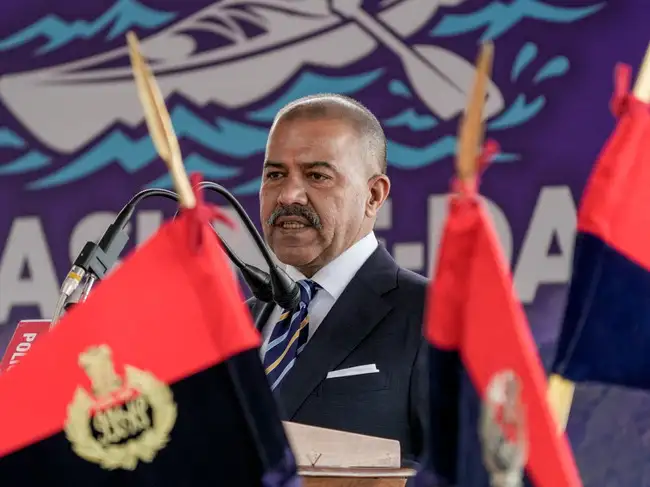
Jammu and Kashmir Police have intensified their action against alleged Pakistan-based terror networks after Director General of Police Nalin Prabhat revealed that 30 men from Reasi district, who went missing over three decades ago, had crossed the border and were now working for Hizbul Mujahideen. According to the police chief, the individuals are allegedly involved in supplying arms, ammunition and money to support attempts to revive militancy in Jammu and Kashmir.
Prabhat shared the information on November 25, 2026, stating that the men belonged to the Mahore and Chassana areas of Reasi and had reportedly gone missing between 1991 and 2003. Information received by Mahore Police Station indicated that they had crossed into Pakistan for weapons training and were subsequently operating from across the border.
The police have linked the alleged activities to a wider investigation into cross-border terrorist networks, including the supply of weapons and financial assistance, as well as efforts to radicalise local youth. Separately, the DGP has approved the attachment of land belonging to five individuals identified as Pakistan-based terror operatives under the Unlawful Activities (Prevention) Act (UAPA).
There is an important distinction in the reported numbers: the DGP’s statement identifies 30 missing men allegedly operating from Pakistan, while the separate property-attachment action concerns five individuals. The two figures should not automatically be added to suggest that 35 separate terrorists have been identified.
DGP Nalin Prabhat identifies 30 Reasi men operating from Pakistan
According to Prabhat, Mahore Police Station received information from reliable sources that 30 individuals from the Mahore and Chassana areas had crossed over to Pakistan after going missing between 1991 and 2003.
The police chief said the individuals had allegedly travelled across the border to receive training in handling arms and ammunition. Investigators believe they subsequently became associated with Hizbul Mujahideen, a Pakistan-based militant organisation involved in insurgent activities in Jammu and Kashmir.
In his statement, Prabhat alleged that the individuals were supplying arms, ammunition and money to promote Terrorism in the Union Territory. He also accused them of attempting to instigate and radicalise young people in the region to encourage their participation in militant activities.
The allegations suggest that the police are examining not only the movement of weapons across the border but also the financial and recruitment networks that could support militant operations inside Jammu and Kashmir.
However, the information released by the DGP represents the police assessment and allegations under investigation. The identification of individuals in a police statement or FIR does not, by itself, establish their guilt through a judicial finding.
Why the police are focusing on cross-border terror networks
Security agencies in Jammu and Kashmir have repeatedly highlighted the role of Pakistan-based handlers in supporting militant activity inside the Union Territory. Such networks can operate through individuals who coordinate activities from across the border while relying on contacts, financial channels and logistical support within the region.
The allegations concerning the Reasi group point to several forms of suspected support activity. These include arranging weapons and ammunition, providing money, maintaining links with local networks and encouraging young people to join militant organisations.
These activities can allow a militant organisation to maintain influence even when its members are not physically present in the areas where attacks or recruitment efforts may take place.
For investigators, identifying people allegedly operating from Pakistan is therefore only one part of the process. Authorities also need to examine how resources are transferred, whether local contacts are involved and whether property or other assets are being used to finance unlawful activities.
The Reasi investigation appears to address these financial and logistical dimensions alongside the alleged cross-border movement of the individuals.
Police attach nearly 29 kanals of land belonging to five Pakistan-based operatives
Alongside the disclosure about the 30 alleged Pakistan-based operatives, Jammu and Kashmir Police have initiated action against the property holdings of five individuals from Reasi district. The DGP approved the attachment of approximately 28 kanals and 14.5 marlas of land, equivalent to nearly 3.6 acres.
The action is connected to FIR No. 70/2024 registered at Mahore Police Station. According to the investigation, the five individuals had allegedly crossed into Pakistan for arms and ammunition training and were involved in efforts to revive terrorist activities in the region.
Police said investigators found that the individuals were allegedly attempting to sell or dispose of their land. Authorities suspected that the money generated from these transactions could be channelled towards financing terrorist activities.
The properties were consequently treated as alleged proceeds of terrorism under the relevant provisions of the UAPA. The DGP granted prior approval for attachment under Section 25 of the Act.
The five individuals whose properties are covered by the action have been identified as:
- Mohd Qayoom alias Abdul Qayoom: From Shadole in Mahore tehsil.
- Bashir Ahmad alias Masoom: From Bidder in Reasi district.
- Shokat Ali: From Hunder in Arnas tehsil.
- Manzoor Ahmad alias Manzoor Hussain: From Khanti in Thuroo tehsil.
- Imtyaz Ahmad: From Thuroo in Reasi district.
The land identified in the attachment proceedings includes properties in their respective villages. Manzoor Ahmad accounts for the largest portion, with approximately 15 kanals and 19 marlas.
Why were the properties attached under UAPA?
The Unlawful Activities (Prevention) Act is India’s principal legislation for addressing unlawful activities and terrorism-related offences. It provides legal powers to investigate terrorist organisations, terrorist activities and assets allegedly connected to such activities.
Section 25 of the UAPA provides for the seizure or attachment of property believed to be proceeds of terrorism, subject to the conditions and procedures established under the law. The provision is intended to prevent assets connected to terrorist activities from being transferred, concealed or used to support further unlawful operations.
In the Reasi case, police said the investigation indicated that the five individuals were attempting to dispose of their land and that the proceeds could be used to finance terrorist activities. The attachment action is therefore aimed at preventing the suspected conversion of those assets into funds.
The police action is linked to FIR No. 70/2024, registered under several legal provisions, including sections of the Bharatiya Nyaya Sanhita, the Explosive and Inflammable Materials Control Act and the UAPA.
Property attachment is a legal measure connected to the investigation. It should not be confused with a final conviction or a judicial determination of criminal responsibility. The allegations and the legal basis for the attachment remain subject to the applicable procedures.
How the Reasi investigation began
The case dates back to November 29, 2024, when Mahore Police Station received information about individuals from the Mahore and Chassana areas who had allegedly crossed into Pakistan over the period from 1991 to 2003.
The information indicated that the individuals were associated with Hizbul Mujahideen and were allegedly involved in activities supporting terrorism in Jammu and Kashmir. These included providing weapons, ammunition and financial assistance, as well as encouraging local recruitment.
Following the information, police registered FIR No. 70/2024 and began investigating the alleged cross-border network. The case brought together allegations of terrorist training, financial support, arms supply and attempts to influence young people in the region.
The investigation subsequently identified properties allegedly connected to five individuals. Police said the assets could be sold or transferred, creating a risk that the proceeds might be used to support terrorist operations.
The latest attachment approval represents a further step in the investigation, extending the police response beyond identifying alleged operatives to examining the assets that could potentially support their activities.
Why Reasi is important in Jammu and Kashmir’s security landscape
Reasi district is located in the Jammu region and includes areas such as Mahore and Chassana. Its geography and links with surrounding districts make security monitoring important for authorities working to prevent militant movement and maintain stability.
The district has also been part of the wider security concerns in the Jammu region, where authorities have investigated militant networks, cross-border links and attempts to establish local support structures.
The latest allegations highlight the importance of monitoring remote and mountainous areas where security agencies may face challenges related to terrain, connectivity and access to communities.
For police and security forces, the challenge is not limited to responding to individual attacks. It also involves identifying networks that may provide weapons, money, logistical assistance or recruitment support to militant organisations.
The Reasi case reflects this broader approach. By investigating alleged Pakistan-based operatives and examining their property holdings, authorities are attempting to address both the operational and financial dimensions of the suspected network.
Police target the financial infrastructure supporting militancy
The attachment of land is part of a broader strategy to disrupt the resources that can sustain terrorist organisations. Financial networks are important because militant groups require money to acquire equipment, maintain contacts, arrange logistics and support their operations.
Authorities suspect that selling property could provide a source of funds for individuals operating from abroad. If the proceeds are transferred through intermediaries or other channels, investigators may need to examine the transactions and identify any possible local connections.
By attaching assets under the UAPA, police aim to restrict the ability of the accused individuals to use or transfer the identified properties while the legal process continues.
The action also sends a message that investigations into alleged militancy-related activities can extend to financial and property interests, including assets held by individuals who are believed to be operating outside India.
However, the effectiveness of such measures depends on the quality of evidence, compliance with legal procedures and the ability of investigators to trace any financial links connected to suspected terrorist activities.
What happens next in the Reasi terror investigation?
The investigation into FIR No. 70/2024 is expected to remain focused on the alleged activities of the Pakistan-based individuals, their links with Hizbul Mujahideen and the suspected supply of arms, ammunition and money to support militancy in Jammu and Kashmir.
The attachment proceedings involving the five individuals’ properties will also continue through the legal process. Authorities will need to follow the applicable requirements governing the attachment of assets under the UAPA.
Investigators may also examine whether the suspected network has local contacts who facilitate financial transactions, recruitment or the movement of resources. Any further action will depend on the evidence gathered during the investigation.
The police have indicated that disrupting financial and logistical support structures is an important part of their efforts to prevent militant activity. The latest action in Reasi reflects that approach, with authorities seeking to restrict access to assets that they believe could be used to finance terrorism.
For now, the central development is the DGP’s disclosure about 30 men allegedly operating from Pakistan and the separate attachment action involving five individuals. The case remains under investigation, and the allegations will have to be established through the legal process.
Frequently Asked Questions
How many Reasi men has the J&K DGP identified as operating from Pakistan?
DGP Nalin Prabhat identified 30 men from the Mahore and Chassana areas of Reasi who allegedly crossed into Pakistan between 1991 and 2003 and are now associated with Hizbul Mujahideen.
Why did the 35-terrorist figure appear in reports?
The DGP’s statement identified 30 alleged Pakistan-based operatives. A separate police action involved the attachment of properties belonging to five individuals. These figures should not automatically be combined to suggest 35 separate individuals.
Which terrorist organisation are the alleged Reasi operatives linked to?
According to DGP Nalin Prabhat, the individuals are allegedly working for Hizbul Mujahideen from Pakistan and supplying arms, ammunition and money to support terrorist activities in Jammu and Kashmir.
Why have police attached land belonging to five individuals?
Police said the five individuals were allegedly attempting to sell their properties and that the proceeds could be used to finance terrorist activities. The land was identified as suspected proceeds of terrorism under the UAPA.
How much land has been attached in Reasi?
The attachment action covers approximately 28 kanals and 14.5 marlas of land, equivalent to nearly 3.6 acres, belonging to five individuals from Reasi district.
Which law allows the attachment of property linked to terrorism?
Section 25 of the Unlawful Activities (Prevention) Act, 1967, provides for the seizure or attachment of property believed to be connected with proceeds of terrorism, subject to the legal requirements of the Act.
When was the Reasi case registered?
FIR No. 70/2024 was registered at Mahore Police Station on November 29, 2024, following information about individuals who had allegedly crossed into Pakistan and were involved in activities supporting militancy.
Have the allegations against all the identified individuals been proved?
No final judicial determination is established by the police statements or property-attachment action. The allegations remain subject to investigation and the applicable legal proceedings.
For breaking news and live news updates, like us on Facebook or follow us on Twitter and Instagram. Read more on Latest World on thefoxdaily.com.






COMMENTS 0