Jordanian security forces have arrested three suspects in connection with a deadly shooting at a Greek Orthodox church in Karak governorate that killed nine people and wounded 40 others, according to state television reports on Monday. The arrests followed an armed confrontation at an abandoned house where the suspects were found hiding.
The attack took place on Friday during a funeral at Saint George’s Greek Orthodox Church in the village of Hamoud, around 120 kilometres southwest of Jordan’s capital, Amman. Gunmen opened fire inside or near the church during the gathering, with witnesses reporting that the shooting continued for several minutes.
Jordanian authorities have described the incident as an attack carried out by extremist terrorists. However, investigators have not publicly identified the suspects’ affiliations or established whether they were connected to any known militant organisation operating inside or outside the country. No group has claimed responsibility.
Three Suspects Arrested After Gunfire Exchange in Karak
Jordan’s Public Security Directorate said security forces located the three suspects early Monday at an abandoned house in Karak. According to a statement carried by state media, the suspects refused to surrender and opened fire on officers who had approached the location.
Security personnel returned fire, and all three suspects were arrested after being wounded during the confrontation. The directorate said no security personnel were injured in the operation.
Authorities also recovered several firearms and ammunition from the suspects after their arrest. The statement did not provide details about the weapons, the suspects’ identities, or the nature of any evidence linking them individually to the church shooting.
The arrests mark a significant development in the investigation into one of the rare incidents of mass violence targeting a religious gathering in Jordan. Investigators are expected to examine the suspects’ possible motives, contacts and involvement in the attack, although authorities have not publicly outlined the full scope of the ongoing inquiry.
Authorities Investigate Possible Links to Extremist Groups
Jordanian authorities have said the church attack was carried out by extremist terrorists, but they have cautioned that it remains too early to determine whether the suspects had connections to established militant groups.
The Public Security Directorate did not disclose whether the arrested individuals belonged to a specific organisation, and officials have not announced a claim of responsibility. The absence of a public claim means that the identity of any wider network behind the attack, if one exists, remains unconfirmed.
Jordan has faced security threats from Islamist militant networks over the years, but attacks of this kind are unusual in the country. Authorities have previously reported disrupting suspected militant plots, making the investigation into the church shooting particularly significant for national security agencies.
The distinction between an attack involving individuals influenced by extremist ideas and one directed by an organised militant group remains important. Investigators will need evidence to establish whether the suspects acted independently, coordinated with others, or received support from a wider network.
Interior Minister Says Authorities Will Examine Radicalisation
Jordanian Interior Minister Mazen al-Faraya said on Monday that authorities were reviewing the circumstances that led young people towards extremism. He also said anyone found to have participated in the attack would be held accountable.
The minister’s remarks indicate that the investigation will extend beyond identifying the immediate perpetrators to examining the factors that may have contributed to their radicalisation. However, officials have not yet provided specific findings about the suspects’ backgrounds, beliefs or possible motives.
Understanding those circumstances could help investigators determine whether the attack was connected to a broader extremist effort or emerged from a more localised process of radicalisation. Any conclusions will depend on evidence gathered during the investigation rather than assumptions about the suspects’ affiliations.
The Public Security Directorate issued a forceful response following the arrests, declaring that Terrorism had no place in Jordan and saying the suspects had met their “just fate”. The statement reflected the authorities’ determination to respond firmly to the attack, while questions about the suspects’ identities and alleged roles remain unresolved publicly.
King Abdullah Orders Firm Response to Church Attack
King Abdullah II has ordered Jordanian security forces to respond with an “iron fist” to the attack, according to the supplied account. The directive underscores the seriousness with which the government is treating the shooting, particularly because it targeted a funeral at a church serving Jordan’s Christian community.
Jordan is a key US partner in efforts to counter Islamist militant groups in the Middle East. Its security agencies have worked to prevent militant activity, and the country has generally avoided the scale of violence experienced in several neighbouring states.
The shooting has therefore raised concerns about the security of religious gatherings and the possibility of extremist violence affecting communities that have largely lived alongside one another in relative stability. Authorities have not, however, publicly established that the attack was part of a wider campaign against Christians.
The king’s order places pressure on security agencies to identify everyone involved and establish whether further threats exist. The investigation will also need to clarify how the attackers obtained their weapons, how they reached the church and whether any warning signs were missed, if evidence supports those lines of inquiry.
Attack During Funeral Kills Nine and Injures 40
The shooting occurred on Friday at Saint George’s Greek Orthodox Church in Hamoud, a village in Karak governorate in southern Jordan. The attackers opened fire during a funeral, turning a religious gathering into a scene of mass casualties.
Witnesses said the gunfire lasted several minutes. Nine people were killed and 40 others wounded, according to the supplied report. The attack has drawn attention to the vulnerability of gatherings where mourners assemble in a shared religious space.
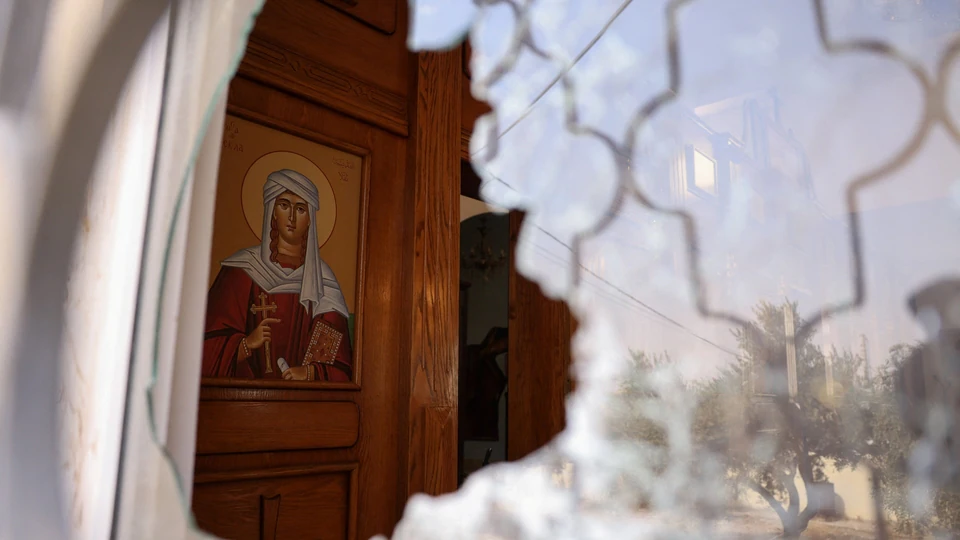
Images from the scene showed a shattered window at the church following the shooting. The available account did not provide further details about the identities of the victims, their ages, or the circumstances of each casualty.
The reported death toll and number of wounded make the incident a major security concern in a country where such violence is highly unusual. The attack also places renewed focus on protecting religious sites and public gatherings without drawing conclusions about the perpetrators’ motives before the investigation establishes them.
Jordan’s Christian Community and Religious Security
Jordan is a predominantly Muslim country with a longstanding Christian minority. Christian communities have maintained churches, schools and other institutions across the kingdom, and religious coexistence has been an important part of the country’s public life.
Violence targeting a church funeral is therefore particularly serious because it strikes at both public safety and the ability of people to gather for religious observances. The attack has prompted a strong response from Jordanian authorities, who have pledged accountability for those responsible.
At this stage, officials have not publicly established whether the church was selected because of its religious identity, whether the funeral itself was the intended target, or whether the attack arose from another motive. Those questions remain central to understanding the incident.
It is also important to distinguish the government’s description of the attack as extremist terrorism from a confirmed finding about the suspects’ organisational ties. Until investigators disclose further evidence, claims about a particular militant group or a wider anti-Christian campaign would be premature.
What Happens Next in the Investigation?
The arrest of the three suspects gives Jordanian investigators an opportunity to examine the evidence surrounding the shooting and establish the individual roles of those detained. The recovery of firearms and ammunition may form part of the inquiry, alongside any forensic evidence, witness accounts and other material gathered by authorities.
Investigators may also seek to establish whether the suspects communicated with other individuals, had links to extremist networks or planned additional violence. The authorities have not confirmed whether accomplices are being sought or whether further arrests are expected.
The government has said it will hold accountable anyone found to have participated in the attack. The next major developments will likely depend on the evidence obtained during questioning and the formal findings of the investigation. No detailed account of charges or court proceedings was included in the supplied report.
For now, several key questions remain unanswered: the suspects’ identities, their alleged motives, whether they acted alone, and whether any organised group was involved. Officials have not announced a claim of responsibility, and no militant affiliation has been confirmed publicly.
Why the Karak Church Attack Matters for Jordan’s Security
The attack presents Jordan with both an immediate criminal investigation and a broader security challenge. The government must establish who carried out the shooting while determining whether the suspects were part of a wider threat that could endanger other public or religious gatherings.
Jordan’s relative stability has helped distinguish it from parts of the region affected by prolonged conflict and militant violence. Although the country’s authorities say they have foiled Islamist militant plots over the years, the rarity of such attacks does not eliminate the possibility of serious incidents.
The government’s response will be measured not only by the arrests but also by the evidence it presents about the attack, the accountability process and any steps taken to address identified security gaps. The interior minister’s comments about radicalisation suggest that officials are also examining how young people may be drawn towards extremist beliefs.
As the investigation continues, the confirmed facts remain that nine people were killed and 40 wounded in the Friday shooting, three suspects were arrested after an exchange of fire with security forces, and firearms and ammunition were recovered. Their affiliations and the precise motive for the attack have not been publicly established.
Jordanian authorities have pledged a firm response, but the full picture of the Karak church attack will depend on what investigators can verify about the suspects, their actions and any connections to wider extremist activity.
For breaking news and live news updates, like us on Facebook or follow us on Twitter and Instagram. Read more on Latest World on thefoxdaily.com.




COMMENTS 0