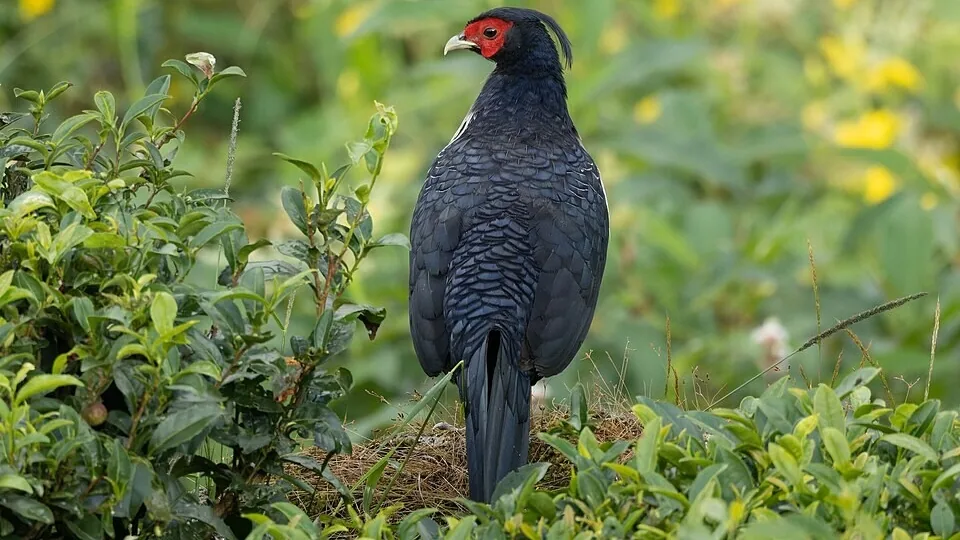
Introducing Wildlife for hunting can have consequences that extend far beyond the original purpose. In Hawaii, the release of nonnative game birds has added another layer of complexity to efforts to protect fragile forest ecosystems already under pressure from invasive species.
The Kalij pheasant, a bird native to parts of South Asia, was introduced to Hawaii to provide hunting opportunities. After its release, the population became established and spread into surrounding forests, where the birds began feeding on a variety of plants, including invasive species.
One concern is that Kalij pheasants may help disperse seeds of banana poka, an invasive climbing vine that competes with native Hawaiian vegetation for sunlight and growing space. By consuming its fruit and moving through forest habitats, the birds could contribute to the spread of the plant.
However, the ecological effects of introduced birds are not entirely negative. Kalij pheasants also consume native fruits, and research on introduced birds in Hawaiian forests has shown that some nonnative species can help disperse seeds of native plants. Understanding these competing effects is important for conservation managers deciding how to protect Hawaii’s forests.
How Kalij Pheasants Were Introduced to Hawaii
The Kalij pheasant (Lophura leucomelanos) is native to the Himalayas and other parts of South Asia. It is a ground-dwelling bird recognised by its dark plumage and long tail. Its natural diet includes fruits, seeds and small insects, allowing it to forage across a range of habitats.
In 1962, 67 Kalij pheasants were released at Puʻu Waʻawaʻa Ranch on Hawaii’s Big Island. According to the supplied information from the U.S. Fish and Wildlife Service, the introduction was intended to provide opportunities for hunting.
The birds subsequently established a breeding population and spread beyond the ranch into nearby forested landscapes. Their ability to use different food sources helped them survive in a range of environments, allowing the population to become established outside the original release area.
The introduction illustrates how wildlife brought into an area for a specific human purpose can become part of the wider ecosystem. Once a population establishes itself in the wild, its movements and feeding behaviour can affect plants and animals beyond the locations where it was originally released.
Kalij Pheasants Spread Across Different Forest Habitats
Research published in The Wilson Bulletin documented the spread of Kalij pheasants in Hawaii and estimated their dispersal rate at approximately eight kilometres per year.
The birds were recorded across a wide range of elevations and in several forest types. Their ability to consume fruits, seeds and small insects appears to have helped them use different habitats and find food in the environments they encountered.
Hawaii’s varied forest landscapes provided the pheasants with opportunities to forage and establish nesting areas. As their population spread, their presence extended beyond hunting grounds into natural habitats where native and nonnative plant species grow together.
The birds’ distribution matters because the ecological effects of an introduced species can expand as its population moves into new areas. A bird that feeds on fruit in one location may carry seeds to another, potentially influencing which plants grow in different parts of a forest.
However, the estimated dispersal rate describes the spread of the pheasants themselves. It does not establish that every plant species they consume spreads at the same rate or that the birds are solely responsible for the expansion of invasive vegetation.
How Kalij Pheasants Could Spread Banana Poka
One of the main concerns surrounding the birds’ feeding habits is their consumption of banana poka (Passiflora tarminiana), an invasive climbing vine found in Hawaii.
Banana poka produces fleshy fruits containing seeds. These fruits can attract animals that feed on them, creating opportunities for seeds to be transported away from the original plant.
The vine can grow over trees and shrubs, competing with other vegetation for sunlight and growing space. When it becomes established in forest habitats, its growth can threaten native plants by covering vegetation and altering the conditions in which other species survive.
Kalij pheasants feed on banana poka fruits and other nonnative plants. As the birds move through the forest, they may transport seeds to new locations, potentially helping invasive vegetation reach areas where it was not previously established.
This process is known as seed dispersal. Animals consume fruits, move away from the parent plant and may later deposit seeds elsewhere. If those seeds remain viable and encounter suitable growing conditions, they can germinate and establish new plants.
For invasive species such as banana poka, animal-mediated dispersal can complicate control efforts. Removing visible vines may not prevent new plants from emerging if seeds have already been transported into surrounding habitats.
Nevertheless, the presence of seeds in an animal’s diet does not automatically mean that the animal successfully spreads the plant. Seeds must survive consumption and digestion, remain capable of germination and reach a location where they can grow.
Seed Survival Determines Whether Dispersal Leads to New Growth
One important question is whether banana poka seeds remain viable after passing through the digestive system of a Kalij pheasant.
Seed viability refers to a seed’s ability to germinate under suitable conditions. Some seeds can survive passage through an animal’s digestive tract, while others may be damaged or destroyed.
Consequently, evidence that pheasants eat invasive fruit is not sufficient on its own to determine how much they contribute to the plant’s spread. Researchers would need to establish whether the seeds survive digestion, how frequently they are deposited in suitable habitats and whether they successfully produce new plants.
The same distinction applies to other invasive plants, including fire tree, whose seeds may also be transported by introduced game birds.
Understanding these processes can help conservation managers distinguish between a potential dispersal pathway and a demonstrated contribution to invasive plant expansion. It can also help identify which species and habitats require closer monitoring.
Introduced Birds Can Also Affect Native Hawaiian Plants
The ecological concerns surrounding Kalij pheasants extend beyond invasive plants. Introduced game birds can also consume native vegetation, creating potential competition with native wildlife that depends on the same food sources.
The supplied information notes that Kalij pheasants eat native plants that also provide food for the endangered Hawaiian goose, known as the nēnē.
When multiple species rely on the same food sources, changes in the abundance or distribution of one species can influence the resources available to others. The extent of any impact depends on factors such as food availability, habitat conditions and the number of animals using a particular area.
This means the pheasants’ ecological role cannot be assessed solely by looking at their consumption of invasive plants. Their interactions with native vegetation and wildlife also matter when evaluating their overall effect on Hawaiian forests.
Conservation managers must therefore consider several connected questions: whether the birds contribute to the spread of invasive plants, whether they affect the regeneration of native vegetation and whether their feeding creates additional pressure on native wildlife.
Why Introduced Birds Can Have Mixed Ecological Effects
Although introduced birds can transport seeds of invasive plants, their role in forest ecosystems may also include the dispersal of native plant species.
Research published in the Proceedings of the National Academy of Sciences examined seed dispersal by introduced birds in Hawaiian rainforests. The researchers found that introduced birds transported seeds of native plants into forests dominated by exotic vegetation, potentially helping some native understory species re-establish themselves.
The research also documented the movement of certain exotic plants into native forests, illustrating that the same general ecological process can have different consequences depending on the plant species involved.
These findings provide a broader context for understanding introduced birds in Hawaii. Seed dispersal is not inherently beneficial or harmful: its ecological consequences depend on which plants are being transported, where the seeds are deposited and whether the resulting plants affect the existing ecosystem.
However, the study does not establish that Kalij pheasants specifically caused the native-plant dispersal effects it documented. Its findings concern introduced birds more broadly and should not be treated as direct evidence of the pheasants’ individual contribution.
This distinction is important because conservation decisions require evidence about the species involved rather than assumptions based on a general pattern observed in other animals.
Why Hawaii’s Forest Conservation Efforts Face Difficult Choices
Hawaii’s forests contain native plant communities that face pressure from introduced species. Invasive plants can compete with native vegetation, while introduced animals may alter the movement of seeds and the availability of food resources.
Managing these pressures can be difficult because ecological relationships are interconnected. An introduced bird may consume invasive fruit while also eating native fruit. It may transport seeds that help an invasive plant spread, but it could also move seeds of native plants into areas where those species have become less common.
Removing or controlling one species may therefore have consequences that depend on the surrounding ecosystem. Effective management requires understanding the relationships between animals, plants and habitats rather than evaluating a species through a single behaviour.
For Kalij pheasants, the central questions include how widely the birds are distributed, which plant species they consume, whether seeds survive digestion and how much their movements contribute to the establishment of new plants.
These questions can help determine whether targeted intervention is necessary and which locations might benefit most from monitoring or invasive plant control.
What Researchers and Conservation Managers Need to Monitor
Monitoring Kalij pheasants and their interactions with Hawaiian vegetation could provide a clearer picture of their ecological impact. Several areas of investigation are particularly relevant.
- Pheasant distribution: Tracking where the birds occur and how their populations change can help identify habitats where their ecological effects may be most significant.
- Feeding habits: Studying which native and nonnative fruits the birds consume can clarify their potential role in moving plant seeds.
- Seed viability: Testing whether seeds remain capable of germination after digestion can help establish whether feeding leads to successful dispersal.
- Invasive plant spread: Monitoring banana poka and other invasive plants can help researchers determine whether their distribution changes in areas used by pheasants.
- Native vegetation: Examining the regeneration of native plants can help assess whether introduced birds contribute to seed movement or create additional pressure on native ecosystems.
Combining these observations would help distinguish the presence of a possible ecological risk from evidence of a measurable effect. It could also provide a stronger basis for decisions about whether to manage pheasant populations, control invasive plants or focus on particular forest habitats.
From Hunting Introduction to Long-Term Ecological Challenge
The release of 67 Kalij pheasants at Puʻu Waʻawaʻa Ranch in 1962 was intended to provide hunting opportunities. The subsequent establishment and spread of the population show how introduced wildlife can become part of an ecosystem in ways that extend beyond its original purpose.
As the birds spread through Hawaiian forests, their feeding habits created potential pathways for the movement of both native and nonnative plant seeds. Their consumption of banana poka has raised concerns because the invasive vine can compete with native vegetation, while their use of native fruits introduces additional questions about food resources and seed dispersal.
The available evidence supports concern about the potential ecological effects of introduced birds, but it does not establish that Kalij pheasants alone are responsible for the spread of banana poka or other invasive plants. Seed survival, successful germination and the influence of other dispersal mechanisms remain important considerations.
Conclusion
Kalij pheasants were introduced to Hawaii in 1962 to provide hunting opportunities, but the birds subsequently established a breeding population and spread through forested landscapes. Their ability to eat a variety of fruits and seeds has raised concerns about their potential role in dispersing invasive plants such as banana poka.
At the same time, research on introduced birds in Hawaiian rainforests demonstrates that their ecological effects can be mixed. Some introduced birds may transport seeds of native plants into altered forests, while also helping certain exotic plants reach new habitats.
For conservation managers, the challenge is to determine how these effects operate in specific locations and which interventions would best protect native vegetation. Monitoring bird populations, seed viability, invasive plant distribution and native plant regeneration can help provide the evidence needed to make those decisions.
The history of the Kalij pheasant in Hawaii illustrates a wider lesson about wildlife introductions: a species released for hunting can establish itself far beyond its original location, creating ecological relationships that require careful study long after the initial introduction.
For breaking news and live news updates, like us on Facebook or follow us on Twitter and Instagram. Read more on Latest World on thefoxdaily.com.



COMMENTS 0