Benin has changed dramatically over the past decade. New roads, modern buildings and ambitious industrial projects have transformed parts of the West African country, while annual economic growth has risen to levels that stand out across the region.
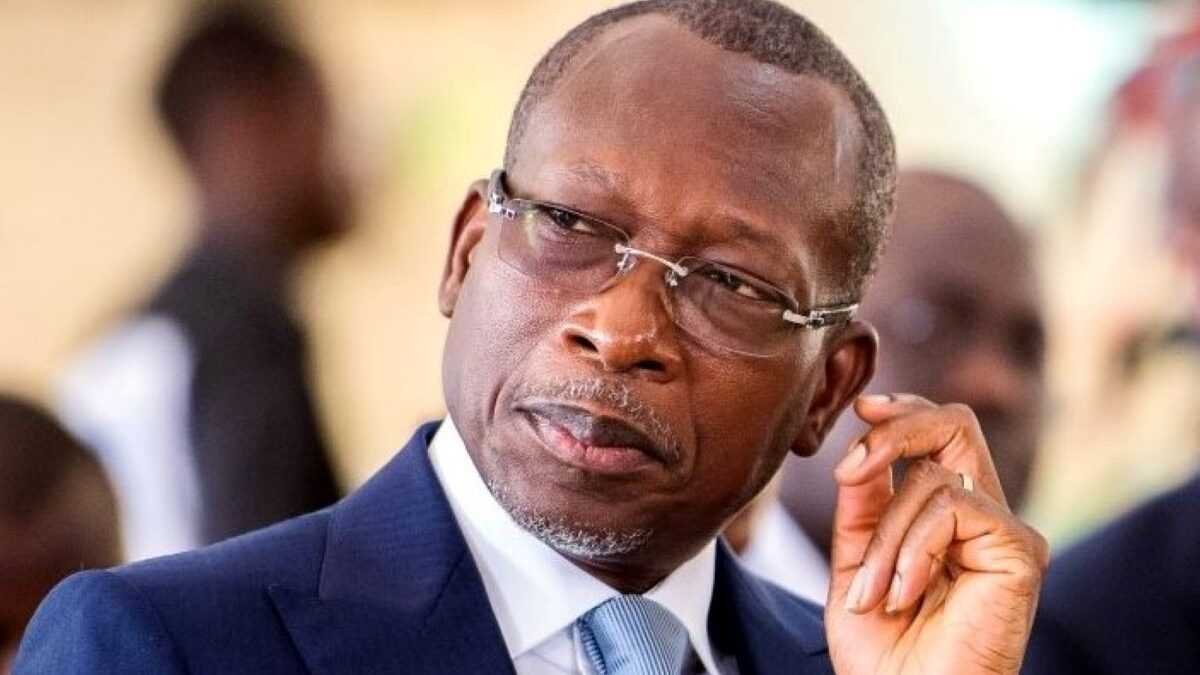
At the centre of that transformation is Patrice Talon, the businessman-turned-president widely known as the “cotton king”. During his presidency from 2016 until May, Talon pursued an aggressive development agenda aimed at turning Benin into a more industrialised and economically independent country.
But the transformation has come with a profound political cost, according to critics, opposition figures and civil society groups. Benin, once widely regarded as an example of democratic transition in West Africa, has experienced tighter political controls, restrictions on opposition parties and growing concerns about the independence of state institutions.
The result is a complicated record: stronger economic growth and visible Infrastructure development alongside a political system in which opponents have found it increasingly difficult to compete.
How Patrice Talon transformed Benin’s economy
In recent years, Cotonou, Benin’s largest city and economic centre, has experienced a major building boom. A new coastal road has also shortened travel times to Ouidah, a city known for its importance to Benin’s spiritual and cultural heritage.
The country’s annual GDP growth has risen from around 3% to about 6% over the past decade, making Benin one of the stronger performers in the region. An industrial zone launched north-west of Cotonou is intended to encourage manufacturing and help move the economy away from its heavy reliance on informal activity.
For residents who have watched the physical transformation, the changes are difficult to miss.
“Benin is now looking like a paradise,” said Savossou Stanislas, a 40-year-old tyre repairer in Porto-Novo, the country’s official capital.
The changes represent a deliberate attempt to give Benin a stronger economic identity in a region dominated by its much larger neighbour, Nigeria.
For decades, Benin had often existed in Nigeria’s economic shadow. Nigeria is roughly eight times larger in land area and has about 16 times Benin’s population. Former Beninese president Thomas Boni Yayi once joked during a visit to Abuja that Benin was the “37th state of Nigeria”.
Talon pursued a different strategy. Rather than accepting Benin’s position as a small neighbour of an economic giant, he sought to build an economy capable of attracting investment, expanding infrastructure and establishing the country as a more significant regional player.
The rise of Benin’s ‘cotton king’
Talon entered politics with an unusual background for an African head of state. Widely regarded as one of Benin’s wealthiest citizens, he built his fortune in agriculture, particularly cotton, before diversifying into areas including banking and hospitality.
His Business influence also extended into politics long before he became president. Talon financed the campaigns of both Thomas Boni Yayi and Yayi’s predecessor, Mathieu Kérékou.
When he won the presidency in 2016, he brought with him a clear economic vision. His administration sought to strengthen infrastructure, modernise key sectors and attract investment while reducing the country’s dependence on informal economic activity.
The strategy produced visible results, particularly in and around Cotonou and Ouidah. Roads, construction projects and other infrastructure became central symbols of Talon’s presidency.
But the same concentration of power that helped the government pursue long-term projects also became the focus of criticism from political opponents and civil society groups.
The Kagame model and a changing political system
Talon’s governing style has frequently been compared by critics and analysts with that of Rwandan leader Paul Kagame, who has combined an emphasis on economic and social transformation with a political system in which opposition and dissent face significant restrictions.
The relationship between the two countries also became closer during Talon’s presidency. Talon developed ties with Kagame and appointed two former Rwandan officials to sensitive government agencies in Benin.
Benin also sought assistance from Rwanda as it confronted growing insecurity along its border with Nigeria.
The comparison with Rwanda is not simply about economic development. Critics argue that Talon increasingly adopted a political model in which economic objectives were prioritised while political competition was narrowed.
By the end of Talon’s first term, new electoral rules and high registration fees had made it considerably harder for opposition groups to compete for parliamentary seats.
The 2019 parliamentary election became a major turning point. Protests erupted over the changes to the political system, and the government shut down the internet during the election period.
The restrictions on political competition were followed by growing concerns about the judiciary and the treatment of prominent government critics.
Opposition figures targeted as political space narrows
Among the most prominent cases was that of opposition leader Reckya Madougou, who was arrested and imprisoned on charges of “undermining the state”. Her case became a symbol for critics who argued that the legal system was being used against political opponents.
Journalist Hugues Comlan Sossoukpé was also among those targeted, adding to concerns about the space available for independent journalism and political dissent.
The controversy surrounding Madougou’s case intensified after Essowé Batamoussi, a judge at the Court for the Repression of Economic Offences and Terrorism, resigned in April 2021 and fled to France to seek asylum.
Batamoussi alleged that judges had been placed under pressure in Madougou’s case. He said they had received an empty file and a warning that they could be in danger if they did not imprison her.
The allegations became part of a broader debate about whether Benin’s institutions remained sufficiently independent from the executive branch.
For critics of Talon, the issue was not simply the treatment of individual opposition figures. They argued that changes to electoral rules, the judiciary and other institutions were collectively reshaping the political system.
Constitutional changes deepen concerns
The concerns became more pronounced after another controversial Constitutional Amendment was approved.
The amendment extended the presidential term from five years to seven and introduced thresholds that made it harder for opposition parties to secure representation in Parliament. It also created a senate whose members are appointed by the government rather than elected by voters.
Critics viewed the changes as another step toward concentrating political power.
Within a month of parliament approving the amendment, mutineers led by a former commander of the national guard attempted a coup. The mutineers cited Talon’s authoritarian style and dissatisfaction with the government’s handling of insecurity.
The episode added another layer to an already tense political environment, although the attempted coup did not overturn the government.
The following presidential election further demonstrated how limited political competition had become. Only one opposition candidate was approved to contest the election, while Talon’s chosen successor, Romuald Wadagni, won more than 94% of the vote.
Talon later returned to the centre of political life as president of the senate, maintaining an influential role after leaving the presidency.
How Talon’s political strategy evolved
Morgan Assogba, a geopolitical analyst based in Cotonou, described Talon as a major political actor with a strong understanding of Benin’s political system. In Assogba’s assessment, Talon had reshaped the political arena to support his broader economic programme.
Guillaume Moumouni, a professor of political science and international relations at the University of Abomey-Calavi, characterised Talon’s approach as a “carrot and stick” strategy.
In this interpretation, development projects represented the carrot: infrastructure, economic growth and improvements to public facilities were intended to deliver visible benefits. Political restrictions represented the stick, ensuring that opposition forces could not disrupt the government’s economic agenda.
Moumouni argued that the balance changed over time, with “less carrot and more stick” as political freedoms became increasingly restricted.
This tension sits at the heart of the debate over Talon’s legacy. Supporters can point to physical transformation and stronger growth, while critics argue that economic development cannot be separated from the quality of democratic institutions.
Economic growth has not benefited everyone equally
One of the clearest limitations of Benin’s economic transformation is the gap between national growth figures and the everyday financial situation of many households.
During his campaign for the April presidential election, Wadagni promised to tackle extreme poverty. The pledge was significant because it acknowledged that headline economic growth had not translated into equal improvements in living standards.
The minimum monthly wage rose from 40,000 CFA francs to 52,000 CFA francs in January 2023. Yet many workers continue to earn considerably less, particularly within the country’s large informal economy.
At the same time, living costs have increased. Rent and electricity tariffs have risen by at least 15% in recent years, while the price of fuel has almost doubled.
For families with several children, those increases can quickly outweigh the benefit of higher wages.
Stanislas, the tyre repairer, has four children of school age and said the rising cost of living was creating uncertainty as a new school term approached.
His experience illustrates a central problem for governments pursuing rapid economic growth: GDP figures can improve substantially without immediately producing a comparable increase in disposable income for ordinary households.
Infrastructure boom brings its own controversy
Much of the visible development under Talon has been concentrated in Cotonou and Ouidah, including his home town.
Opposition figures have questioned the transparency of some projects, while civil society groups have alleged that certain contracts were awarded to entities connected to Talon’s political allies and business network.
These allegations have added to concerns about the overlap between Talon’s former business interests, political influence and economic development programme.
Amnesty International reported in 2023 that four development projects resulted in mass forced evictions affecting at least 6,000 people.
Such disputes highlight the complicated social cost of rapid urban transformation. New roads, commercial buildings and public infrastructure can improve connectivity and stimulate economic activity, but construction can also displace communities when land is acquired for major projects.
The question is therefore not simply whether Benin has built more infrastructure, but who has benefited from it and who has borne the cost.
Two very different views of Benin’s progress
There is little disagreement that Benin has undergone significant physical and economic change during Talon’s years in power. The disagreement centres on how that change should be measured.
Moumouni believes Talon’s economic vision has produced net progress. In his view, ordinary people may not necessarily have experienced a dramatic increase in cash income, but they have gained from improvements in social infrastructure and the broader transformation of the country.
That assessment contrasts sharply with the position of opposition figures.
Eugène Azatassou, vice-president of the opposition Democrats party, argues that development cannot be measured simply through roads and buildings.
His argument is that economic progress should also be judged through purchasing power, employment, security, living conditions and the quality of democracy.
That distinction captures the larger debate surrounding Talon’s legacy. One measure of development focuses on infrastructure, investment and GDP growth. Another includes political freedoms, institutional independence and the ability of citizens to choose between competing political alternatives.
Benin’s difficult question: what price for progress?
Talon’s transformation of Benin has created a political and economic paradox.
The country has become more visibly developed, with stronger economic growth, major construction projects and a growing ambition to industrialise. The government has demonstrated its ability to pursue large-scale projects and reshape the physical appearance of major cities.
At the same time, political competition has narrowed considerably. Opposition candidates and parties have faced significant barriers, while critics have raised concerns about the judiciary, constitutional changes, media freedom and the independence of institutions.
The contrast is particularly striking because Benin was once regarded as one of West Africa’s notable examples of democratic transition.
The country’s experience under Talon therefore raises a broader question that extends beyond Benin: can rapid economic transformation coexist with declining political freedoms, and if so, how should the success of that transformation ultimately be judged?
For Talon’s supporters and some development analysts, the roads, industrial projects and improved infrastructure demonstrate that the country has moved forward. For opponents, those achievements cannot compensate for restrictions on democratic participation and the rising cost of living faced by ordinary citizens.
Benin now enters a new political phase with Talon no longer occupying the presidency but remaining a major political figure. His successor inherits an economy that has undergone substantial transformation, but also a political system shaped by the institutional changes of the past decade.
The lasting measure of the “cotton king’s” rule may therefore depend on whether Benin can preserve its economic momentum while reopening political space, strengthening institutions and ensuring that development reaches beyond the country’s most visible urban centres.
For breaking news and live news updates, like us on Facebook or follow us on Twitter and Instagram. Read more on Latest World on thefoxdaily.com.

COMMENTS 0