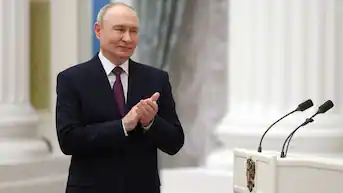
Russian President Vladimir Putin has said that future negotiations to end the war in Ukraine must focus on security guarantees for both Russia and Ukraine, alongside a broader framework for security across Europe. His remarks came on Thursday, October 22, a day after he met US presidential envoy Steve Witkoff, as Moscow signalled its readiness to resume US-mediated talks with Kyiv next month.
In an interview with Russian television, Putin said negotiations should aim to establish lasting peace rather than produce a temporary ceasefire. He argued that discussions must address the security concerns of both countries and consider the wider European security architecture.
Putin also reiterated the Kremlin’s longstanding position that Russia did not want to start a war, claiming that Moscow had encountered hostile reactions from Ukraine over issues it considered important. His comments come as diplomatic efforts to end the conflict face unresolved disagreements over territory, security arrangements and the future status of eastern Ukraine.
Ukrainian President Volodymyr Zelenskyy has also expressed readiness for negotiations, saying Kyiv supports proposals for a ceasefire, an end to the war, an energy truce and humanitarian initiatives. However, the two sides remain divided over territorial demands, particularly Russia’s insistence that Ukraine surrender the parts of the Donbas region it still controls.
Putin Says Russia Is Ready to Resume US-Mediated Talks
Putin confirmed that Russia was prepared to resume contacts with Ukraine through US-mediated negotiations next month. The Russian president said the objective should be to establish security arrangements that remain effective after a peace agreement is reached.
Explaining Moscow’s position, Putin said the talks should focus on the security of both countries following a final peace agreement rather than a temporary halt in fighting.
“The goal of these talks will be to ensure the security of Ukraine and Russia after reaching peace agreements, in their final form, not as a result of a temporary ceasefire for some short period of time. We are ready to resume these contacts to achieve this goal,” Putin said.
His remarks suggest that Russia wants negotiations to address the broader political and security questions underlying the conflict, rather than focus exclusively on stopping the fighting in the short term.
However, Putin’s statement does not establish that an agreement has been reached on the terms of renewed negotiations. Important questions remain unresolved, including territorial arrangements, the form of security guarantees and the conditions under which a lasting settlement could be implemented.
The proposed resumption of talks would provide another opportunity for Moscow, Kyiv and Washington to explore possible diplomatic options. Whether the negotiations can produce progress will depend on the positions adopted by the parties on the central disputes separating them.
Why Putin Wants a Broader European Security Framework
Alongside security guarantees for Russia and Ukraine, Putin said the discussions should address the wider architecture of European security. He indicated that Witkoff had also emphasised the importance of considering security arrangements across Europe as a whole.
“The architecture of European security as a whole. And I agree with that too. Well, let’s see how things develop in the coming days,” Putin said, describing the issue raised during his discussions with the US envoy.
The reference to European security broadens the potential scope of negotiations beyond the immediate battlefield and the terms of a ceasefire. It suggests that Moscow wants wider security concerns to form part of any discussions aimed at resolving the conflict.
However, the available information does not specify what particular measures Putin would support as part of a European security framework. It also does not provide details of any proposals discussed during his meeting with Witkoff.
The comments indicate that Russia intends to raise broader security questions during the next phase of diplomacy. Whether Ukraine, the United States and other European countries would agree to Moscow’s preferred approach remains uncertain.
Putin Says Russia Wants a Lasting Settlement, Not a Temporary Ceasefire
A central element of Putin’s remarks was his distinction between a final peace agreement and a temporary ceasefire. He said Russia remained focused on finding a solution that would end the conflict rather than pause the fighting for a limited period.
The distinction is significant because a ceasefire and a comprehensive peace agreement involve different objectives. A ceasefire can suspend hostilities without resolving the underlying political disputes, while a lasting settlement would require agreement on the conditions governing relations between the parties after the war.
Putin argued that future talks should establish security arrangements that would remain in place after a final agreement. His comments indicate that Moscow wants security guarantees to be treated as a central part of the negotiating process.
At the same time, his statement does not mean that Russia has rejected every possible ceasefire proposal. Rather, Putin presented a lasting settlement as the ultimate objective of negotiations and warned against treating a short-term halt in fighting as a complete resolution.
Ukraine, meanwhile, has said it is prepared to consider ceasefire proposals and other initiatives intended to stop the war. The challenge for negotiators will be determining whether immediate steps to reduce hostilities can be connected to a broader agreement on security and territorial questions.
Zelenskyy Says Ukraine Is Ready for Talks
Ukrainian President Volodymyr Zelenskyy has also indicated that Kyiv is prepared to participate in renewed negotiations. He met Witkoff in Norway on Tuesday and said talks could take place by early next month.
Zelenskyy said Ukraine supported a range of proposals aimed at reducing the fighting and addressing the humanitarian consequences of the conflict.
“Any proposals for a ceasefire, an end to the war, an energy ceasefire as well as humanitarian initiatives,” Zelenskyy said when describing the proposals Ukraine was prepared to support.
His remarks indicate that Kyiv is open to discussions covering several areas, including a general ceasefire, an end to hostilities, protection of energy infrastructure and humanitarian measures.
An energy ceasefire would focus on reducing attacks affecting energy infrastructure, while humanitarian initiatives could address the needs of civilians affected by the war. The supplied report does not provide further details about specific proposals or establish whether Moscow has agreed to any of them.
Although both leaders have expressed readiness for renewed talks, their public positions reveal significant differences over the desired outcome. Russia is emphasising security guarantees and territorial claims, while Ukraine has reiterated its opposition to surrendering land it currently controls.
US-Mediated Peace Efforts Had Stalled in February
The latest diplomatic statements follow an earlier interruption in US-led efforts to advance negotiations. According to the report, the process stalled in February after the outbreak of the US-Israeli conflict with Iran.
The pause left efforts to pursue a negotiated settlement of the war in Ukraine without the same level of momentum. Putin’s meeting with Witkoff and the subsequent statements from Moscow and Kyiv now point to the possibility of renewed diplomatic contacts.
The United States has been involved in efforts to facilitate discussions between Russia and Ukraine. Witkoff’s meetings with Putin and Zelenskyy form part of the latest reported diplomatic activity aimed at bringing the parties back to negotiations.
However, the resumption of talks would not automatically resolve the disputes that caused earlier efforts to stall. The parties would still need to address their differences over territory, security guarantees and the conditions of a potential peace agreement.
The available report does not specify a confirmed date, venue or detailed agenda for the proposed next round of negotiations. Putin said Russia was ready to resume contacts next month, while Zelenskyy indicated that discussions could take place by early November.
Territorial Dispute Remains a Major Obstacle to Peace
Territory remains one of the central issues separating Russia and Ukraine. Moscow is demanding that Ukraine cede all of the eastern Donbas region, while Kyiv rejects the idea of surrendering land it currently holds.
The disagreement presents a major challenge for any negotiations aimed at ending the war. Even if the parties agree to resume talks, reaching a settlement will require them to address competing positions over the status and control of the disputed territories.
Putin returned to the territorial issue in his television interview, arguing that discussions about eastern Ukraine must take account of what he described as the area’s historical connection to Russia.
“Firstly, my attitude on this matter is that this is not their territory. It’s the territory of historical Russia,” Putin said.
His remarks reflect the Kremlin’s longstanding position on the region. Putin also argued that residents of the area had voted to become part of Russia in referendums held seven months after Moscow launched its invasion of Ukraine.
The report does not provide further details about the referendums in Putin’s comments. His statement nevertheless indicates that Russia intends to maintain its historical and territorial arguments as part of any future negotiations.
Ukraine Rejects Giving Up Territory It Controls
Ukraine’s position remains fundamentally different. Kyiv rejects the idea of surrendering territory it currently holds, leaving a significant gap between the two sides’ publicly stated demands.
This disagreement complicates efforts to establish a final settlement. A ceasefire could potentially halt fighting without immediately resolving territorial claims, but a comprehensive peace agreement would need to address the disputed issues or establish a framework for managing them.
Putin’s insistence on what he calls the historical status of eastern Ukraine suggests that Moscow is unlikely to set aside its territorial arguments easily. Ukraine’s rejection of giving up land it controls, meanwhile, signals that Kyiv is not accepting Russia’s demands as the basis for an agreement.
The available information does not indicate that either side has changed its position on the Donbas region. As a result, territory is likely to remain a major issue in any renewed negotiations.
What Security Guarantees Could Mean for Russia and Ukraine
Putin’s emphasis on security guarantees places the question of post-war arrangements at the centre of Russia’s stated negotiating priorities. He said the objective should be to ensure the security of both Russia and Ukraine after a final peace agreement.
Security guarantees generally refer to arrangements intended to reduce the risk of renewed conflict or provide assurances about a country’s future security. In the context of the Ukraine war, such arrangements could become an important subject for discussion between the parties.
However, Putin did not specify the exact guarantees Russia wants or explain what form they should take. The available report also does not detail any proposed security commitments that Ukraine or the United States might be willing to support.
The wider European dimension adds another layer of complexity. Putin said the negotiations should also consider the architecture of European security as a whole, suggesting that Moscow wants the discussions to extend beyond the immediate terms of a Russia-Ukraine settlement.
Whether such a broad framework can be agreed will depend on the positions of the parties involved and the extent to which their security concerns can be reconciled.
Can the Next Round of Talks Produce Progress?
The statements from Putin and Zelenskyy indicate that both Russia and Ukraine are prepared to consider renewed diplomatic contacts. Russia has said it is ready to resume US-mediated talks next month, while Ukraine has expressed support for proposals aimed at achieving a ceasefire, ending the war and advancing humanitarian initiatives.
However, readiness to negotiate does not necessarily mean that an agreement is close. The main obstacles remain substantial, particularly the disagreement over the Donbas region and the question of what security arrangements should follow a peace deal.
Putin’s insistence that negotiations should produce a lasting settlement rather than a temporary ceasefire also raises questions about how the parties might approach an initial reduction in hostilities. Ukraine’s willingness to consider ceasefire proposals suggests that Kyiv is open to discussing immediate steps, but the report does not establish whether the two sides share a common understanding of how such measures should work.
The United States’ role as a mediator could be important in bringing the parties together and exploring possible areas of agreement. Nevertheless, the outcome will depend on whether Russia and Ukraine can find terms acceptable to both sides.
For now, the prospect of renewed talks represents a possible opening for diplomacy rather than confirmation that a peace agreement is imminent.
Key Takeaways From Putin’s Latest Ukraine War Remarks
- Russia is ready for renewed talks: Putin said Moscow was prepared to resume US-mediated negotiations with Ukraine next month.
- Security guarantees are a priority: He said future talks should address the security of both Russia and Ukraine after a final peace agreement.
- Europe-wide security is also on the agenda: Putin agreed that discussions should consider the broader architecture of European security.
- Russia wants a lasting settlement: Putin said negotiations should aim to end the conflict rather than produce only a temporary ceasefire.
- Ukraine is open to negotiations: Zelenskyy said Kyiv supported ceasefire proposals, an end to the war, an energy ceasefire and humanitarian initiatives.
- Territory remains disputed: Russia is demanding that Ukraine cede all of the Donbas region, while Kyiv rejects giving up land it currently controls.
- US-led efforts had stalled: The report said negotiations stalled in February following the outbreak of the US-Israeli conflict with Iran.
Conclusion
Russian President Vladimir Putin has said that future negotiations to end the war in Ukraine must address security guarantees for both countries and the broader security framework across Europe. His comments followed a meeting with US presidential envoy Steve Witkoff and came as Moscow signalled its readiness to resume US-mediated talks next month.
Ukrainian President Volodymyr Zelenskyy has also expressed readiness for negotiations, supporting proposals for a ceasefire, an end to the war, an energy truce and humanitarian initiatives. However, the two sides remain divided over the future of eastern Ukraine, with Russia demanding that Kyiv surrender the Donbas region and Ukraine rejecting the idea of giving up territory it controls.
The proposed resumption of talks could provide another opportunity for diplomatic engagement, but major questions remain unresolved. The future of the Donbas region, the nature of security guarantees and the scope of any wider European security framework are likely to be central to discussions as Russia and Ukraine consider the next steps towards a possible settlement.
For breaking news and live news updates, like us on Facebook or follow us on Twitter and Instagram. Read more on Latest World on thefoxdaily.com.




COMMENTS 0