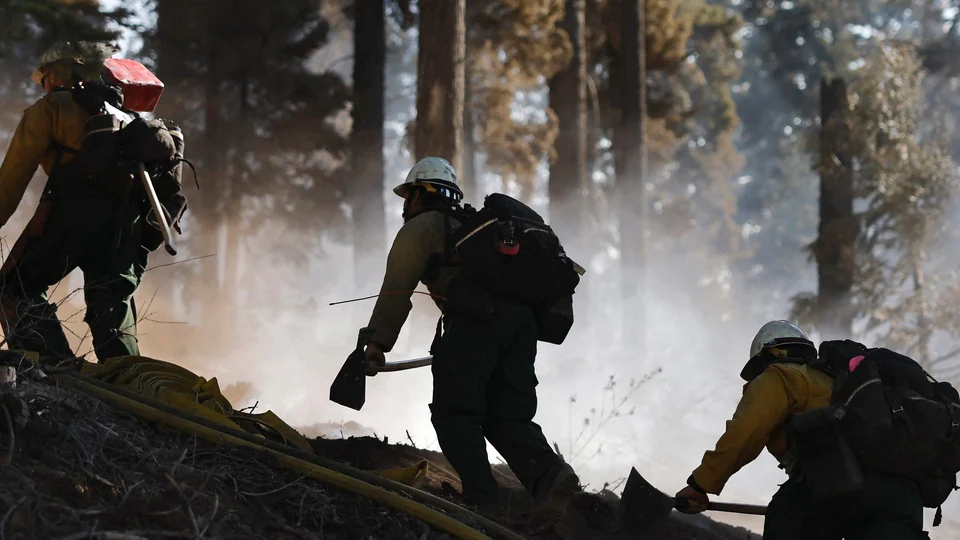
The Trump administration’s plan to overhaul the United States’ federal wildfire response system is facing fresh scrutiny after a senior official reportedly warned that rushing the changes could have serious consequences for firefighters and the public.
Michael Boren, undersecretary of agriculture for natural resources and development, cautioned that decisions made during the restructuring could prove wrong and potentially lead to catastrophic outcomes. His remarks, delivered during a private session at the Red Sky Summit in San Francisco on November 4, were reported by The Washington Post after it obtained a transcript of the discussion.
The warning comes as the administration works to consolidate federal firefighting operations into a unified service, separating wildfire response responsibilities from broader land management functions. Supporters argue that the new structure could improve coordination and give firefighters greater operational authority. Critics, however, are concerned that implementing such a major change under an aggressive deadline could weaken institutional knowledge, disrupt emergency operations and put lives at risk.
The debate has become particularly sensitive after 21 people died in wildland firefighting operations during 2026, making it the third-deadliest year for the workforce since at least 2016, according to data cited in the report.
Michael Boren Warns of Catastrophic Consequences From Rapid Restructuring
During the November 4 session at the Red Sky Summit, Boren acknowledged that the administration’s effort to reorganise wildfire response agencies would involve difficult decisions and a risk of mistakes.
“We’re going to have to make decisions, some of which will be wrong. And some of those wrong decisions will lead to catastrophe,” Boren told attendees, according to the transcript obtained by The Washington Post.
He also warned that the consequences could extend beyond administrative problems, potentially involving “big costs, big disruption in people’s lives and deaths”.
The remarks are significant because they indicate that concerns about the pace and risks of the restructuring have also been raised within the administration. While the government has presented the unified wildfire service as a way to improve emergency response, Boren’s comments highlight the possibility that a rushed transition could create new vulnerabilities.
Boren reportedly disclosed that Interior Secretary Doug Burgum wanted the reorganisation completed within five months. President Donald Trump, he said, wanted the process finished even sooner.
That timetable has raised questions about whether federal agencies can combine their firefighting responsibilities, transfer personnel and establish new operating procedures without creating gaps in emergency preparedness.
What Is the Trump Administration’s US Wildland Fire Service?
The Trump administration established the US Wildland Fire Service in January 2026 as part of an effort to bring federal wildfire response operations under a more unified organisational structure.
For decades, federal wildland firefighting responsibilities have been distributed across several government agencies. The US Forest Service has overseen the largest share of the federal firefighting workforce, while other departments and agencies have maintained their own personnel and responsibilities for responding to wildfires.
This arrangement has sometimes created administrative complexity, particularly when fires spread across different jurisdictions or require personnel and equipment from multiple agencies.
The proposed US Wildland Fire Service is intended to streamline those operations by bringing firefighting responsibilities under a unified command. The administration argues that a more centralised structure could reduce overlapping responsibilities, improve coordination and allow fire officials to make operational decisions more efficiently.
Separating Firefighting From Land Management
One of the central ideas behind the restructuring is to distinguish wildfire response from the wider responsibilities of managing public lands.
Federal land management agencies do more than fight fires. Their work can include forest conservation, habitat protection, recreation management, infrastructure maintenance and the long-term stewardship of public lands.
Wildfire response, meanwhile, requires specialised emergency planning, rapid deployment of crews, coordination of aircraft and equipment, and decisions about how to contain fires under changing weather conditions.
The administration’s proposed structure is intended to give firefighting officials greater control over these operational responsibilities rather than requiring them to work through administrative systems designed primarily for broader land management.
Supporters believe that this separation could help emergency teams respond faster and improve accountability during major incidents.
Greater Authority Over Fire Management Decisions
The proposed unified service is also expected to give fire officials more authority over decisions involving prescribed burns and wildfire containment strategies.
Prescribed burning involves deliberately setting controlled fires under carefully selected weather and environmental conditions to reduce accumulated vegetation and other combustible material. When properly planned and managed, these burns can help lower the amount of fuel available to an uncontrolled wildfire.
Fire containment decisions are equally important. Officials must assess wind speed, temperature, humidity, terrain, vegetation and the availability of firefighting resources before determining how crews should respond.
A unified command structure could make it easier to coordinate these decisions across different federal agencies. However, changing who makes decisions and how information moves through the system also creates transition risks if procedures and responsibilities are not clearly established.
Why the Five-Month Deadline Has Become a Major Concern
The most contentious aspect of the proposed restructuring is not necessarily the idea of creating a unified wildfire service, but the speed at which the administration wants to implement it.
According to Boren’s remarks, Burgum wanted the reorganisation completed within five months, while Trump was pushing for an even faster process. Such a deadline could place significant pressure on agencies responsible for managing personnel, equipment, budgets and emergency response operations.
Large government reorganisations typically involve more than changing reporting structures. They can require decisions about employee transfers, leadership appointments, training, communication systems, procurement, operational authority and coordination between departments.
In wildfire management, these changes have direct consequences for emergency readiness. Fire crews must know who is responsible for deployment, how decisions are authorised, where resources are available and which command structure applies when multiple agencies respond to the same incident.
If those responsibilities are unclear during the transition, the resulting confusion could delay decisions at critical moments.
The risks are especially serious because wildfires can change direction rapidly. A shift in wind conditions or a sudden increase in fire intensity can turn a manageable incident into a life-threatening emergency within a short period.
A poorly coordinated response could affect not only firefighters but also residents, evacuation teams, emergency medical personnel and communities located near fire-prone areas.
21 Wildland Firefighters Have Died in 2026
The restructuring is taking place against the backdrop of a particularly deadly year for wildland firefighting personnel.
According to data from the federal Lessons Learned Center cited by The Washington Post, 21 people have died in wildland firefighting operations during 2026. A review of two federal datasets by the publication found that this was the third-deadliest year for the workforce since at least 2016.
The fatalities have intensified concerns about whether major changes to firefighting operations should be introduced while agencies are already dealing with operational and staffing challenges.
Wildland firefighters routinely work in dangerous conditions. They may face rapidly spreading flames, extreme heat, smoke, falling trees, unstable terrain and unpredictable weather. Even experienced crews can encounter situations in which escape routes become unavailable or fire behaviour changes unexpectedly.
Safety depends on several factors, including reliable information, effective communication, adequate staffing, suitable equipment and the ability of commanders to make timely decisions.
For that reason, critics argue that restructuring should not weaken the systems that allow firefighters to assess danger and coordinate their response. Any transition that creates uncertainty over command responsibilities could add another layer of risk to an already hazardous occupation.
Full-Suppression Strategy Adds to the Wildfire Policy Debate
Another issue discussed during the Red Sky Summit was the administration’s support for a more aggressive approach to extinguishing wildfires, commonly described as a full-suppression strategy.
Full suppression generally refers to an approach that prioritises containing and extinguishing wildfires rather than allowing them to burn under selected conditions for ecological or land-management reasons.
The approach can be important when fires threaten communities, infrastructure, homes and human lives. However, wildfire management is more complicated than attempting to extinguish every fire as quickly as possible.
Some fires occur naturally and can play a role in maintaining certain ecosystems. In appropriate circumstances, land managers may allow carefully monitored fires to continue burning or use prescribed fire to reduce vegetation that could otherwise contribute to more severe future incidents.
Fire managers must therefore balance immediate public safety with longer-term forest and land management objectives.
The administration’s preference for a more aggressive suppression approach has raised questions about how the new service will evaluate these competing priorities. Its effectiveness will depend on whether operational decisions remain informed by local conditions, scientific assessments and the experience of firefighting personnel.
Staffing Shortages Could Complicate the Reorganisation
The proposed restructuring is also unfolding as federal agencies face workforce pressures following staffing reductions associated with the Department of Government Efficiency, commonly known as DOGE.
Federal wildfire agencies have already struggled with issues involving employee retention, compensation and administrative delays. These challenges can make it difficult to recruit and retain experienced firefighters, particularly for positions involving physically demanding work and prolonged periods away from home.
Staffing shortages are especially important during major wildfire incidents, when agencies may need to deploy large numbers of trained personnel across different regions.
Creating a unified service could potentially address some administrative problems, but it cannot automatically resolve shortages of experienced firefighters or the difficulties involved in maintaining a skilled workforce.
Indeed, a major reorganisation could temporarily add to the workload of employees who are already responsible for emergency operations. Staff may have to adapt to new reporting arrangements, procedures and leadership structures while continuing to respond to active fires.
For the restructuring to succeed, the administration will need to ensure that the transition does not undermine recruitment, training, retention or the availability of frontline personnel.
Brian Fennessy and Michael Boren Defend the Unified Wildfire Service
Despite the concerns raised in Boren’s remarks, the senior official and Brian Fennessy, director of the US Wildland Fire Service, defended the administration’s restructuring plans during the Red Sky Summit.
They argued that a unified system could improve coordination and strengthen firefighter safety by bringing operational responsibilities under a more coherent command structure.
The argument reflects a longstanding criticism of the federal wildfire management system: responsibilities spread across several agencies can complicate coordination, create administrative delays and make it harder to deploy resources efficiently.
A centralised service could potentially establish clearer lines of authority and reduce duplication. It may also help fire officials coordinate personnel and equipment across jurisdictional boundaries.
However, the benefits will depend on how the new structure is implemented. A unified organisation does not automatically guarantee better decisions, and the transition could create problems if existing expertise, local knowledge or effective safety procedures are lost.
The challenge for the administration is therefore to demonstrate that the new structure can improve emergency response without creating operational gaps during the changeover.
Firefighter Groups Criticise the Administration’s Timeline
Firefighter representatives have questioned whether the administration’s accelerated deadline gives agencies enough time to establish the new service safely.
Riva Duncan, president of Grassroots Wildland Firefighters and a former Forest Service official, criticised the emphasis on completing the reorganisation quickly.
“To hear a top official prioritize an arbitrary and ridiculous timeline, and knowingly make bad decisions, over people’s lives is unconscionable,” Duncan told The Washington Post.
Her criticism reflects concerns among some current and former wildfire personnel that administrative targets should not take precedence over the safety of employees working in dangerous environments.
Firefighter groups have long highlighted challenges involving pay, recruitment, retention and working conditions. For these workers, a successful reform would need to address practical problems on the ground rather than simply create a new organisational structure.
The central question is whether the new service will give firefighters better support, clearer command arrangements and more effective resources, or whether the transition will introduce additional uncertainty.
Michael Boren Responds to the Concerns Over His Remarks
Following the reported comments, Boren defended the administration’s approach in a statement.
He said protecting firefighters and the American public remained the government’s highest priority. He also explained that his remarks were intended to emphasise the importance of learning from losses and improving wildfire prevention and response efforts.
His response suggests that the administration does not view the restructuring as an attempt to compromise firefighter safety. Instead, officials maintain that the new service is intended to strengthen the country’s ability to manage wildfires.
Nevertheless, the comments have drawn attention to the risks associated with implementing a major institutional change under a compressed deadline.
There is an important distinction between acknowledging that mistakes are possible during a complex transition and accepting avoidable risks. The administration will need to show how it plans to identify problems, protect frontline personnel and correct operational weaknesses before they lead to serious incidents.
Congressional Approval and Unresolved Questions Remain
Not every element of the proposed reorganisation is settled. Key parts of the new structure still require further study and congressional approval, raising questions about how quickly the administration can put its plans into full operation.
Congressional involvement matters because federal wildfire management is connected to agency responsibilities, budgets, personnel arrangements and the use of public resources. Changes to these functions may require legislative action rather than administrative decisions alone.
The transition also raises practical questions about how existing Forest Service and Interior Department firefighting personnel will be integrated into the new organisation.
Among the major issues that will need to be addressed are:
- Command responsibilities: Which officials will have final authority during multi-agency wildfire emergencies?
- Personnel arrangements: How will existing firefighters be transferred, retained or assigned to the new service?
- Training and safety: Will crews receive adequate preparation for changes to operational procedures?
- Equipment and resources: How will aircraft, vehicles, communication systems and firefighting equipment be distributed?
- Congressional oversight: Which parts of the reorganisation require legislative approval or additional funding?
- Local coordination: How will federal teams work with state, local and tribal firefighting agencies?
These questions will be critical to determining whether the unified service can deliver the improvements promised by the administration.
Why the US Wildfire Overhaul Matters Beyond Federal Agencies
The restructuring is not simply an internal government administrative exercise. The way federal agencies organise wildfire response can have consequences for communities across the United States.
Federal firefighters often work alongside state and local crews during major incidents. Their responsibilities can include protecting homes, supporting evacuations, containing fires near infrastructure and preventing flames from spreading across large areas of public and private land.
When multiple agencies respond to the same emergency, coordination becomes essential. A clear command structure can help officials share information, allocate equipment and determine which areas require immediate attention.
Conversely, confusion over responsibilities or delays in resource deployment can make an already dangerous situation harder to manage.
The issue also has long-term implications for wildfire prevention. Decisions about prescribed burns, vegetation management and forest conditions can influence how severe future fires become. A system focused exclusively on emergency suppression may not adequately address the underlying conditions that allow destructive wildfires to spread.
For communities in fire-prone regions, the success of the new service will ultimately be measured by its ability to protect lives, property and public lands, not simply by how quickly the government completes its organisational changes.
What Happens Next in Trump’s Wildfire Restructuring?
The Trump administration faces the challenge of moving forward with its unified wildfire service while addressing concerns raised by firefighters, safety advocates and its own officials.
The coming months will be important in determining how responsibilities are transferred, whether Congress approves the required changes and whether the new command structure can operate effectively without disrupting ongoing firefighting work.
The administration will also need to demonstrate that the restructuring can address longstanding problems such as staff retention, compensation and administrative inefficiencies. Simply consolidating agencies will not resolve those challenges unless the new organisation has sufficient personnel, funding and operational capacity.
The 21 deaths recorded in wildland firefighting operations during 2026 add urgency to the debate. They underline the risks faced by frontline crews and the importance of ensuring that changes to emergency response systems do not compromise established safety practices.
US Wildfire Overhaul Faces a Critical Test
The proposed US Wildland Fire Service represents a significant attempt by the Trump administration to change how federal firefighting operations are organised. A unified command could improve coordination, reduce administrative complications and give fire officials greater authority over emergency decisions.
But the warning from Michael Boren has exposed a central challenge: the speed of the transition could be as important as the structure itself. His remarks about wrong decisions, disruption and possible deaths highlight the consequences of rushing changes in a field where mistakes can have immediate and irreversible effects.
With 21 wildland firefighting deaths recorded in 2026 and key parts of the restructuring still requiring further study and congressional approval, the administration faces pressure to balance its reform ambitions with operational readiness.
Ultimately, the success of the overhaul will depend not on whether the government meets its deadline, but on whether the new system makes wildfire response more effective while protecting the people who put their lives at risk to fight fires.
For breaking news and live news updates, like us on Facebook or follow us on Twitter and Instagram. Read more on Latest World on thefoxdaily.com.






COMMENTS 0