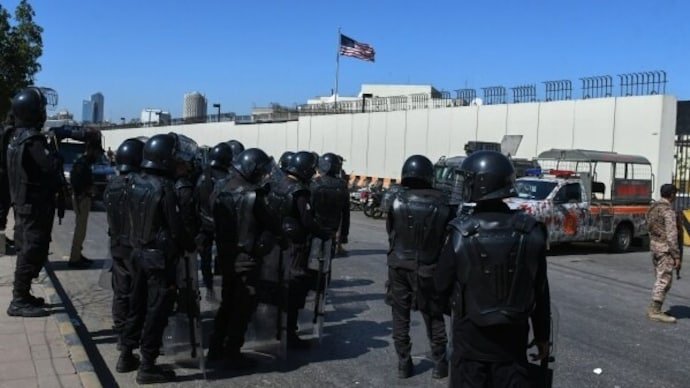
- What Happened: A Strategic Diplomatic Downsizing
- Why Peshawar Matters: A Historically Strategic Location
- The Core Reason: Security Risks and Operational Realities
- Cost Efficiency: The Financial Angle
- Part of a Bigger Strategy: Global Diplomatic Realignment
- Impact on US-Pakistan Relations
- What It Means for Khyber Pakhtunkhwa
- Comparison: Before vs After Closure
- The Afghanistan Factor: A Key Underlying Shift
- Unique Insight: The Rise of “Hub-and-Spoke Diplomacy”
- Future Outlook: What Comes Next?
- Conclusion: A Strategic Shift, Not a Retreat
The decision by the United States to proceed with the Peshawar consulate closure marks a significant shift in its diplomatic footprint in Pakistan. While officially framed as a move driven by personnel safety and resource optimization, the implications stretch far beyond administrative restructuring.
So, who is affected, what exactly is changing, when will it happen, where will operations move, why now, and how will it impact regional dynamics? This article unpacks the deeper meaning behind the move going beyond the announcement to explore its strategic, geopolitical, and economic consequences.
What Happened: A Strategic Diplomatic Downsizing
The US State Department has confirmed a phased shutdown of its consulate in Peshawar, with responsibilities transitioning to the US Embassy in Islamabad. The move is part of a broader effort to ensure diplomatic staff safety and improve operational efficiency.
While the physical presence in Peshawar is being reduced, US officials have emphasized that engagement with Pakistan especially Khyber Pakhtunkhwa will continue through alternative channels.
In practical terms:
- Diplomatic engagement shifts to Islamabad
- Consular services are centralized
- Personnel and infrastructure are relocated
This is not a withdrawal but rather a recalibration.
Why Peshawar Matters: A Historically Strategic Location
To understand the significance of the closure, one must first understand why Peshawar was important.
Located near the Afghanistan border, Peshawar has long served as a strategic outpost for US operations in the region. During the Afghanistan war, it functioned as:
- A logistical gateway for overland access
- A coordination hub for humanitarian and Military efforts
- A key contact point for Afghan-related Diplomacy
Its importance peaked during the early 2000s but has gradually declined as US involvement in Afghanistan has reduced.
The Core Reason: Security Risks and Operational Realities
The primary reason cited for the Peshawar consulate closure is the safety of diplomatic personnel.
Peshawar and the surrounding Khyber Pakhtunkhwa region have faced:
- Militant activity and insurgency threats
- Cross-border instability from Afghanistan
- Security challenges that require high operational costs
Maintaining a diplomatic presence in such an Environment demands extensive security infrastructure armoured transport, fortified compounds, and constant surveillance.
In simple terms, the cost-risk equation no longer justifies a standalone consulate.
Cost Efficiency: The Financial Angle
Another key driver behind the decision is financial efficiency.
According to estimates:
- Annual savings: approximately $7.5 million
- Closure cost: around $3 million
This reflects a broader trend in US foreign policy doing more with fewer physical assets.
Instead of maintaining multiple high-cost facilities, operations are increasingly centralized in major embassies.
Part of a Bigger Strategy: Global Diplomatic Realignment
The closure is not an isolated decision. It aligns with a wider restructuring that began during earlier US administrations aimed at reducing overseas operational costs.
Key characteristics of this strategy include:
- Consolidating smaller consulates into larger embassies
- Leveraging digital diplomacy and remote engagement
- Prioritizing high-impact geopolitical regions
In this context, the move signals a shift from physical presence to strategic flexibility.
Impact on US-Pakistan Relations
At first glance, the closure might appear as a diplomatic downgrade but that would be an oversimplification.
The US has clearly stated that its priorities in Pakistan remain unchanged, including:
- Strengthening economic ties
- Promoting regional security
- Supporting development initiatives
However, perception matters in diplomacy.
Some analysts argue that reducing presence in Peshawar could:
- Signal reduced focus on north-west Pakistan
- Limit on-ground engagement with local stakeholders
- Shift influence dynamics in the region
Others believe it reflects a realistic adaptation to changing geopolitical realities.
What It Means for Khyber Pakhtunkhwa
The immediate impact will be felt in Khyber Pakhtunkhwa, where direct access to US diplomatic services will change.
Key effects include:
- Longer travel for visa and consular services (now handled in Islamabad)
- Reduced local diplomatic visibility
- Potential slowdown in region-specific engagement
That said, modern diplomacy relies less on proximity and more on connectivity meaning the practical impact may be less severe than it appears.
Comparison: Before vs After Closure
| Aspect | Before Closure | After Closure |
|---|---|---|
| Diplomatic Presence | Physical consulate in Peshawar | Centralized in Islamabad |
| Security Costs | High | Reduced |
| Accessibility | Local access | Requires travel |
| Operational Efficiency | Fragmented | Streamlined |
The Afghanistan Factor: A Key Underlying Shift
One cannot analyze this decision without considering Afghanistan.
The Peshawar consulate was deeply tied to US operations in Afghanistan. With the US military withdrawal and reduced direct involvement:
- The need for a border-adjacent diplomatic hub has diminished
- Strategic priorities have shifted away from ground operations
- Regional engagement is now more policy-driven than logistics-driven
In essence, the closure reflects the post-Afghanistan reality.
Unique Insight: The Rise of “Hub-and-Spoke Diplomacy”
A key trend emerging from this decision is what experts call “hub-and-spoke diplomacy.”
Instead of maintaining multiple small outposts, countries operate from central hubs (like Islamabad) while engaging surrounding regions remotely or periodically.
This model offers:
- Lower costs
- Greater flexibility
- Reduced security exposure
But it also comes with trade-offs:
- Less local insight
- Reduced cultural engagement
- Dependence on digital infrastructure
The US move in Pakistan is a textbook example of this evolving model.
Future Outlook: What Comes Next?
The Peshawar consulate closure is unlikely to be the last of its kind.
Looking ahead, we can expect:
1. Increased Centralization
More diplomatic functions may shift to major embassies in key capitals.
2. Digital Diplomacy Expansion
Virtual engagement will play a bigger role in maintaining international relationships.
3. Selective Regional Presence
Physical offices will be maintained only in high-priority or stable areas.
For Pakistan, this means continued engagement but in a more centralized and strategic format.
Conclusion: A Strategic Shift, Not a Retreat
The closure of the US consulate in Peshawar is not a sign of disengagement it is a strategic recalibration shaped by security realities, financial considerations, and evolving geopolitical priorities.
While the move may reduce the US’s physical footprint in north-west Pakistan, its broader commitment to the country remains intact.
The real story here is not about one consulate shutting down it’s about how modern diplomacy is changing.
In a world where risks are higher and resources are tighter, nations are rethinking how they project influence abroad.
The question now is not whether diplomacy will continue but how effectively it can adapt without losing its human touch.
For breaking news and live news updates, like us on Facebook or follow us on Twitter and Instagram. Read more on Latest World on thefoxdaily.com.






COMMENTS 0