A damaged telecommunications cable in New Jersey triggered significant flight disruptions across the northeastern United States on Monday, September 21, after construction contractors accidentally cut a Verizon fiber line used for connectivity supporting Federal Aviation Administration operations.
The outage affected air traffic operations at five major airports: Newark Liberty International Airport, Teterboro Airport, Philadelphia International Airport, LaGuardia Airport and John F. Kennedy International Airport.
The disruption came just as diplomats and world leaders were arriving in New York for the United Nations General Assembly, increasing the potential impact on an already busy regional transportation network.
Verizon said construction contractors working near an Amtrak rail line in New Jersey dug up and severed the company’s fiber cable. The telecommunications company said it was not responsible for the damage and that its teams and partners were working to repair the line and restore connectivity.
Which airports were affected?
The FAA said it had issued ground stops and delays because of problems affecting Philadelphia TRACON, the air traffic control facility responsible for managing approach and departure traffic in the region.
The affected airports included:
- Newark Liberty International Airport
- Teterboro Airport
- Philadelphia International Airport
- LaGuardia Airport
- John F. Kennedy International Airport
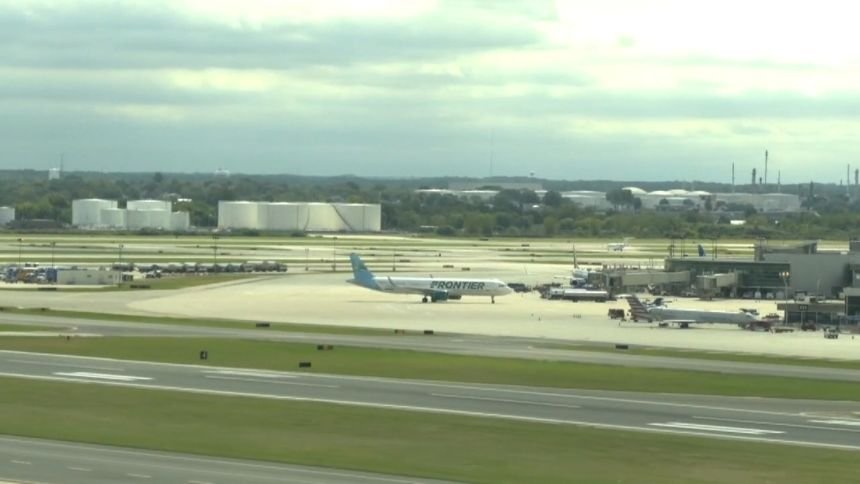
Philadelphia International Airport was among the facilities experiencing the most visible disruption, with aircraft grounded and flights delayed as authorities worked to manage traffic with reduced operational capability.
The FAA later said arrivals had resumed at Philadelphia on a limited basis. Transportation Secretary Sean Duffy also said flights were resuming at LaGuardia.
However, the FAA did not provide a specific timeline for a complete return to normal operations.
How a severed fiber cable affected air traffic
The disruption illustrates how modern air traffic control depends on telecommunications Infrastructure extending well beyond airport runways and control towers.
Philadelphia TRACON integrates radar approach control and air traffic control operations. Facilities such as this coordinate aircraft arriving at and departing from airports within their areas of responsibility, helping maintain separation between aircraft and organize traffic flows.
When communications or data connectivity used by an air traffic control facility is disrupted, controllers may have to reduce the number of aircraft they can safely handle. Ground stops and traffic-management restrictions can then be imposed to prevent more aircraft from entering an affected area than the system can accommodate.
That means a single infrastructure failure can produce delays at several airports simultaneously, particularly in a densely traveled region such as the Northeast.
The disruption was not caused by a problem with the aircraft themselves. Instead, the loss of connectivity affected the systems and communications infrastructure used to manage air traffic.
Verizon says construction crew cut the cable
Verizon said the damaged fiber cable was located alongside an Amtrak rail line in New Jersey.
According to the company’s statement, construction contractors working in the area dug up and cut the cable. Verizon specifically said the telecommunications company was not responsible for the damage.
The company said it was working with partners to repair the damaged line and restore connectivity as quickly as possible.
The incident highlights the vulnerability of buried telecommunications infrastructure to construction activity. Fiber-optic networks often run underground alongside roads, rail corridors and other infrastructure, making accurate mapping and careful excavation essential when construction projects are underway.
A damaged cable can have consequences far beyond the immediate location of the break when it carries connectivity needed by critical transportation systems.
UN General Assembly adds pressure to Northeast travel network
The timing of the outage was particularly significant because New York was preparing for the United Nations General Assembly, which brings large numbers of diplomats, government officials and international delegations to the region.
The annual gathering places additional demand on the New York area’s airports and transportation infrastructure as international and domestic travelers converge on the region.
With Newark, LaGuardia and John F. Kennedy among the affected airports, the disruption had the potential to complicate Travel during an already high-profile period.
Business aviation was also affected through Teterboro Airport, which serves the New York metropolitan area.
The combination of restricted air traffic capacity and high travel demand can cause delays to spread beyond the airport where an infrastructure problem originates. Aircraft and crews delayed at one airport can subsequently affect later flights across their scheduled routes.
Transportation secretary calls for infrastructure investment
Transportation Secretary Sean Duffy said the incident demonstrated the need for greater Investment in infrastructure supporting the country’s transportation systems.
Duffy said the outage underscored the need for additional funding to modernize aging infrastructure and reduce the risk of similar disruptions in the future.
His comments come amid continuing attention to the reliability of the systems supporting air traffic control operations in the Northeast, where several previous disruptions have raised questions about the resilience of communications infrastructure.
The latest incident is different from a conventional airport equipment failure because the immediate cause was damage to a telecommunications cable outside the airport environment. Nevertheless, the consequences reached directly into the air traffic control system.
Philadelphia TRACON has experienced previous outages
The latest disruption is not the first time Philadelphia TRACON has experienced a communications problem.
In May, Philadelphia TRACON Area C experienced a radio outage lasting approximately two seconds. That incident came only days after another outage had prompted a ground stop affecting flights bound for Newark.
Those earlier disruptions had already drawn attention to the reliability of communications systems supporting air traffic control in the region.
The Philadelphia facility was previously moved from Long Island to Philadelphia, and the FAA had said that upgrades to the facility would help reduce the risk of further outages.
The recurrence of disruptions has kept attention focused on the resilience of the infrastructure used to communicate with and manage aircraft in one of the country’s busiest aviation regions.
New fiber connection was introduced after earlier outages
Concerns about air traffic control communications also led the Department of Transportation to introduce a new fiber-optic cable between Philadelphia and New York.
The connection was intended to improve air traffic control telecommunications at the facility responsible for handling flights in and out of Newark.
The investment reflects the importance of redundant and reliable communications networks for air traffic management. When one connection fails, alternative routes or systems can help keep operations running and reduce the scale of disruptions.
The latest cable cut nevertheless demonstrates that physical infrastructure remains a potential point of failure even as transportation agencies invest in modernization.
Why ground stops are used during air traffic disruptions
A ground stop is a traffic-management measure that temporarily prevents certain flights from departing toward an affected destination or airspace.
The purpose is to prevent additional aircraft from entering an area where air traffic controllers are unable to safely accommodate normal traffic levels.
Ground stops can therefore create immediate delays at airports far from the location of the original technical problem. Once the restriction is lifted, airlines may still need time to reorganize aircraft, crews and passenger connections.
In a heavily connected aviation network, the effects of a relatively short interruption can consequently continue after the underlying technical issue has been repaired.
Limited operations resume as repair work continues
The FAA said arrivals had resumed at Philadelphia International Airport on a limited basis as authorities worked through the connectivity problems.
Flights were also beginning to resume at LaGuardia, according to Duffy. The partial restoration indicated that air traffic operations could be gradually increased as connectivity and system capacity improved.
However, officials did not immediately provide a firm estimate for when all affected airports would return to normal operations.
The timing depends not only on repairing the damaged fiber cable but also on safely restoring the systems and operational capacity affected by the outage.
Air traffic control facilities must maintain appropriate levels of communication and coordination before normal traffic volumes can resume. A cautious return to full capacity can therefore be necessary even after a physical telecommunications connection has been repaired.
The bigger issue: resilience of critical aviation infrastructure
The outage has renewed attention on the vulnerability of critical infrastructure that supports commercial aviation.
Modern air travel relies on interconnected networks for communications, radar, data exchange, navigation and traffic management. These systems are designed to support the movement of thousands of aircraft, but they also create dependencies between different facilities.
The New Jersey cable cut demonstrates how an incident occurring outside an airport can affect operations at multiple major airports hundreds of miles of combined flight routes away.
It also highlights the importance of redundancy. A resilient system needs alternative communication paths and sufficient backup capacity to maintain safe operations when a primary connection fails.
The previous investment in a fiber connection between Philadelphia and New York was aimed at strengthening that resilience. The latest disruption may prompt further questions about whether existing backup arrangements are sufficient and how quickly they can be activated when infrastructure is damaged.
What happens next
The immediate priority is restoring the damaged Verizon fiber connection and returning the affected air traffic control operations to normal capacity.
Airlines and airports will also have to manage the operational effects of the disruption, including delayed flights and potential knock-on effects for aircraft and crews later in the day.
Beyond the immediate repair, the incident is likely to add to the continuing discussion over investment in air traffic control infrastructure and the protection of telecommunications networks supporting critical transportation systems.
The FAA’s previous efforts to upgrade Philadelphia TRACON and establish additional fiber connectivity between Philadelphia and New York show that authorities have already recognized the importance of communications resilience in the region.
The latest outage underscores a basic but important vulnerability: even sophisticated aviation systems can be disrupted when a physical fiber cable is accidentally severed during construction. As air traffic continues to grow and airports operate near capacity, maintaining reliable communications infrastructure and adequate backup systems remains essential to keeping flights moving safely.
For breaking news and live news updates, like us on Facebook or follow us on Twitter and Instagram. Read more on Latest World on thefoxdaily.com.

COMMENTS 0