Microsoft is working to make Windows 11 more efficient as rising memory costs and supply constraints make higher-RAM configurations increasingly expensive for PC buyers. The company is introducing foundational improvements to its operating system (OS) to help millions of computers run more smoothly, particularly devices equipped with 8GB of RAM.
According to Microsoft’s internal testing, the latest optimisations have made Windows up to 20% more responsive, while multitasking can be up to 40% faster on PCs with 8GB of memory. The company is also reducing memory consumption across its own applications, including Microsoft 365, Outlook and Teams, with savings of up to 900MB in certain usage scenarios.
The initiative reflects Microsoft’s effort to improve everyday PC performance through software optimisation rather than relying entirely on users buying devices with more memory. The changes are particularly relevant as memory component costs remain high and 8GB configurations continue to feature in current and upcoming desktop and laptop models.
Windows 11 Update Targets PCs With 8GB RAM
Microsoft is focusing its latest Windows 11 improvements on devices with 8GB of RAM, a configuration that has become important again as the cost of memory components puts pressure on PC prices.
Although 16GB of RAM became increasingly common in mid-range and premium laptops, higher component costs have made that specification more expensive for manufacturers and consumers. As a result, 8GB configurations remain relevant across a wide range of computers.
Microsoft wants to ensure that these devices can handle everyday activities such as browsing, document editing, online meetings and multitasking without becoming unnecessarily slow.
In an official announcement, Pavan Davuluri, Microsoft’s executive vice president of Windows and Devices, described the latest improvements as an important step in the company’s ongoing optimisation efforts. He also indicated that further memory-management improvements and performance adjustments are planned.
Davuluri said more efficient memory usage would leave additional system resources available for activities such as running small businesses, collaborating at work, teaching, learning and using computers at home.
Windows 11 Could Become Up to 20% More Responsive
One of Microsoft’s main claims is that Windows 11 can be up to 20% more responsive on computers with 8GB of RAM. The improvements focus on everyday operating system interactions, including opening the Start menu, performing searches, accessing Settings and using File Explorer.
The company is changing how Windows manages available memory and prioritises applications. The operating system will work to reclaim memory when necessary and allocate resources according to the applications and tasks users are actively accessing.
Microsoft is also reconfiguring certain system interactions to reduce delays. Actions such as clicking Start, right-clicking menus, searching for files and opening File Explorer are among the areas receiving performance improvements.
These changes are intended to make the operating system feel faster during routine use, particularly on computers where limited memory can affect responsiveness when multiple applications are running.
Multitasking Performance Improves by Up to 40%
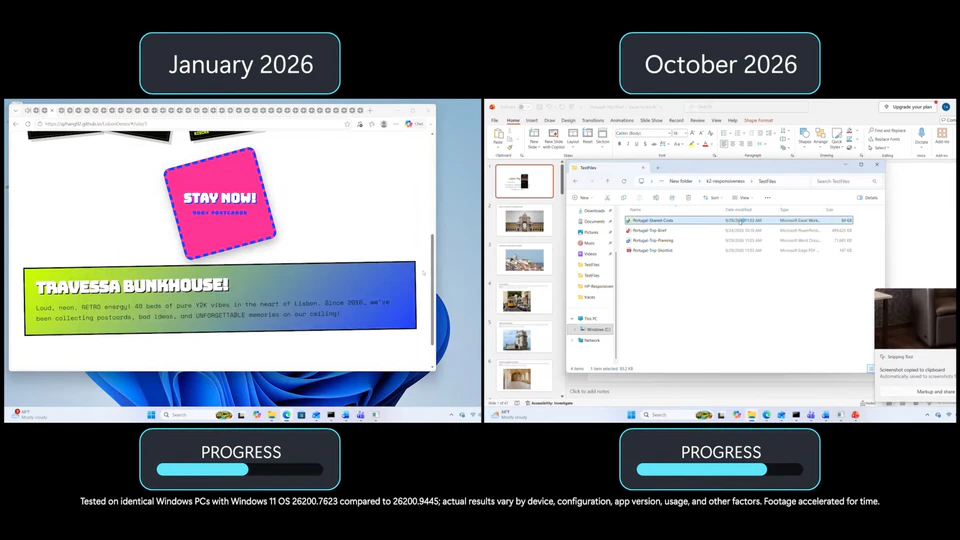
Microsoft also reported that multitasking can be up to 40% faster following the latest optimisations. The improvement is based on internal testing conducted on an HP OmniBook 3 equipped with 8GB of RAM and a Snapdragon X Plus eight-core processor.
The tests compared Windows 11 build 26200.7623 with build 26200.9445. Microsoft measured task completion times using automated user-interface validation, which confirmed that each step had been completed before the next operation began.
The company has not published the complete telemetry data or detailed performance results behind its claims. Therefore, the reported improvements should be understood as results from Microsoft’s internal testing rather than a guarantee that every PC will experience the same performance gains.
Microsoft Apps Could Use Up to 900MB Less Memory
Another important part of the optimisation programme involves reducing memory consumption across Microsoft’s software ecosystem. The company said its applications, including Microsoft 365 productivity tools, Outlook and Teams, could use up to 900MB less memory in certain usage scenarios.
Reducing the memory requirements of frequently used applications could leave more resources available for other tasks. This may be particularly useful for people who regularly switch between email, video meetings, documents and web browsing on computers with limited RAM.
The improvements also extend to Microsoft Edge and other Windows applications. By making both the operating system and its software ecosystem more efficient, Microsoft aims to improve the overall experience without requiring users to upgrade their hardware immediately.
Windows 11 Version 26H2 to Receive the Optimisations
The latest improvements build on a series of memory optimisations that Microsoft began releasing in July and continued introducing through subsequent regular Windows updates.
The changes will be available in Windows 11 version 26H2, build 26300.9818 or later versions on supported PCs. Users should check their installed Windows version and available updates to determine whether their devices have received the relevant improvements.
The rollout represents a gradual approach to improving Windows performance rather than a single isolated feature release. Microsoft is continuing to refine memory management, system responsiveness and application efficiency through successive updates.
How Microsoft Is Changing Windows 11’s Memory Management
Microsoft’s optimisation strategy focuses on three main areas designed to reduce memory pressure and improve responsiveness.
- Smarter memory management: Windows 11 will reclaim available memory and reprioritise applications based on what users are actively accessing, with particular attention to PCs running 8GB of RAM.
- Faster system interactions: The company is improving everyday operations such as opening Start, searching, right-clicking menus and accessing File Explorer.
- Lower application memory usage: Windows, Microsoft Edge and Microsoft 365 applications are being optimised to consume fewer system resources.
Together, these changes are intended to make better use of existing hardware. Instead of simply increasing memory requirements, Microsoft wants Windows 11 to manage available resources more effectively.
Microsoft Plans Further Memory Optimisations
Microsoft has indicated that its work on memory efficiency is not finished. The company plans to improve memory compression, which already helps Windows keep more information in faster system memory and reduces the need to rely on slower storage.
Davuluri said Microsoft is working to make memory compression smarter and more efficient to get better performance from available system resources.
The company is also planning to reduce duplication across applications by allowing them to share common software components rather than maintaining separate versions of similar functionality.
For example, Windows Search and Widgets are expected to share a web engine. Similarly, OneDrive and Photos will share components to reduce memory requirements across the applications.
This approach could reduce the amount of memory needed to run multiple Windows services and applications simultaneously.
File Explorer, Notepad and Paint Also Set for Improvements
Microsoft is working to improve applications built using WinUI 3, its native user-interface framework for modern Windows desktop software. The effort includes File Explorer, Notepad, Paint and the newer Windows Search experience.
These applications are being designed to launch faster and consume less memory. Since they are frequently used as part of everyday PC activities, improvements could make a noticeable difference to the overall operating system experience.
Reducing application overhead is particularly important for devices with limited RAM, where several background processes and open applications can compete for available memory.
Microsoft Working With PC and Chip Makers
The software optimisations are only one part of Microsoft’s broader effort. The company is also working with PC manufacturers and chipmakers to review how much memory computers need for their hardware components.
The objective is to reduce unnecessary hardware memory consumption and leave more resources available for Windows 11 and the applications users run.
Microsoft is also collaborating with software developers to ensure that applications take advantage of the operating system’s new optimisations. This could help extend memory-efficiency improvements beyond Microsoft’s own products.
Such cooperation will be important because overall PC performance depends on several factors, including hardware design, operating system requirements, background processes and application efficiency.
What Microsoft’s Windows 11 Optimisation Means for PC Buyers
The latest changes could be relevant for both existing computer owners and people planning to purchase new desktops or laptops. With memory costs remaining a concern, software improvements may help make entry-level and mainstream PCs more usable.
For users with 8GB of RAM, more efficient memory management could reduce performance bottlenecks during everyday multitasking. However, software optimisation does not completely replace the benefits of having additional physical memory, particularly for demanding workloads such as professional video editing, advanced gaming and intensive creative applications.
Buyers should therefore continue to consider their intended usage when choosing a PC. Microsoft’s updates may improve the experience on lower-memory devices, but the actual results will vary depending on hardware specifications, software workloads and application compatibility.
Windows 11 Outlook: More Performance From Existing Hardware
Microsoft’s latest Windows 11 improvements reflect a broader effort to make operating systems more efficient as hardware costs remain a challenge. By targeting memory management, application efficiency and everyday responsiveness, the company hopes to deliver a smoother experience on computers with 8GB of RAM.
The reported gains of up to 20% in responsiveness and 40% in multitasking performance are promising, although they are based on Microsoft’s internal testing and may vary across devices.
Further improvements to memory compression, shared application components and collaboration with hardware manufacturers are also planned. If these efforts deliver consistent results, Windows 11 could make better use of existing PC hardware and reduce the pressure on consumers to pay more for higher-memory configurations.
For breaking news and live news updates, like us on Facebook or follow us on Twitter and Instagram. Read more on Latest Business on thefoxdaily.com.






COMMENTS 0