The NEET-UG re-exam 2026 is set to take place on June 21 under unprecedented scrutiny following the cancellation of the original examination conducted on May 3. The National Testing Agency (NTA) annulled the initial test on May 12 amid allegations of a question paper leak, prompting a Central Bureau of Investigation (CBI) probe.
With millions of medical aspirants awaiting a fair opportunity, the Union Education Ministry has introduced a comprehensive strategy aimed at ensuring the re-examination is conducted with the highest levels of integrity, transparency and security.
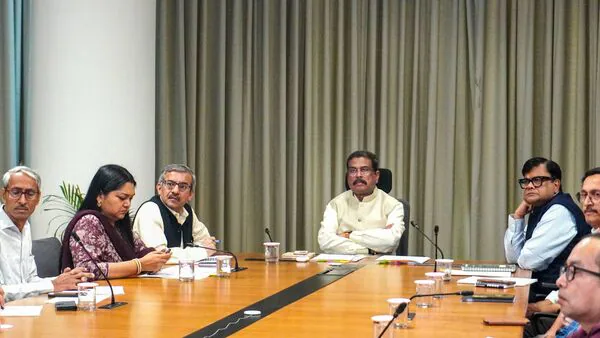
During a high-level review meeting in New Delhi, Union Education Minister Dharmendra Pradhan directed officials to strengthen coordination between central agencies, state governments, district administrations and law enforcement authorities to prevent any lapses.
Why Is NEET-UG 2026 Being Re-Conducted?
NEET-UG is India’s single largest entrance examination for undergraduate medical admissions, serving as the gateway to MBBS, BDS, AYUSH and several allied healthcare courses.
The decision to cancel the original examination was taken after allegations of paper leaks raised concerns about the credibility of the assessment process. The incident triggered widespread anxiety among students and parents, placing immense pressure on authorities to restore confidence in the country’s most important medical entrance examination.
The upcoming re-examination is not merely a repeat test—it is a critical exercise in rebuilding trust in India’s examination ecosystem.
What Did the Education Minister Propose for the Smooth Conduct of Re-NEET?
During the review meeting, the Education Minister outlined a multi-layered action plan focused on coordination, monitoring, security and candidate support.
Deployment of Ministry Officers Across States
Senior officers designated by the Education Ministry will be deployed across states to oversee preparations and coordinate with local authorities.
These officers will report directly to a central command centre led by the NTA Director General, ensuring faster decision-making and real-time issue resolution.
Strengthening State-Level Coordination
State governments have been directed to appoint nodal officers responsible for managing examination arrangements within their jurisdictions.
The nodal officers will coordinate with district administrations, police departments and examination centres to ensure seamless execution.
Enhanced Candidate Support Measures
Authorities have been instructed to provide candidates with all necessary facilities to help them appear for the examination in a stress-free environment.
This includes ensuring:
- Smooth entry and exit at examination centres
- Clear communication of guidelines
- Efficient transportation arrangements where required
- Timely grievance redressal mechanisms
- Adequate support for candidates with special needs
Robust Security Protocols
The government has emphasised strict compliance with enhanced security measures, including coordination with intelligence agencies and state police forces.
District-level coordination committees headed by District Magistrates will play a central role in monitoring examination logistics and preventing malpractice.
The focus areas include:
- Secure transportation and storage of question papers
- Real-time monitoring of examination centres
- Verification of candidate identities
- Enhanced surveillance systems
- Rapid response mechanisms for emergencies
NEET Re-Exam 2026: Key Stakeholders and Their Roles
| Authority | Primary Responsibility |
|---|---|
| Education Ministry | Overall oversight and inter-agency coordination |
| National Testing Agency (NTA) | Conducting the examination and monitoring operations |
| State Governments | Local coordination and logistical support |
| District Magistrates | Centre-level supervision and security management |
| State Police Departments | Law enforcement and anti-malpractice measures |
| Intelligence Agencies | Threat assessment and preventive monitoring |
Why This Re-Examination Matters Beyond Admissions
The significance of the NEET re-exam extends far beyond securing admission to medical colleges.
The credibility of national entrance examinations directly influences public trust in India’s education system. Any compromise in examination integrity can have long-term implications for students, institutions and policymakers.
The government now faces the challenge of demonstrating that large-scale examinations can be conducted securely despite increasing concerns about digital leaks, organised malpractice networks and misinformation campaigns.
Experts believe the lessons learned from NEET-UG 2026 could shape future reforms across other competitive examinations, including engineering, recruitment and professional certification tests.
The Growing Role of Technology and Intelligence Coordination
The NEET-UG re-examination highlights a broader shift in how high-stakes exams are managed in India.
Traditional security measures alone are no longer sufficient. Authorities are increasingly relying on a combination of technology, data analytics, intelligence inputs and multi-agency coordination to safeguard examination processes.
Future examinations may see wider adoption of:
- AI-powered surveillance systems
- Advanced digital tracking of question papers
- Biometric verification technologies
- Predictive risk assessment models
- Centralised command-and-control centres
While such measures could improve security, experts also stress the need to balance surveillance with candidate privacy and operational efficiency.
NTA Urges Students to Ignore Rumours and Focus on Preparation
As social media speculation around postponement and examination procedures continues to circulate, the NTA has issued a strong advisory urging candidates to rely only on official communication channels.
The agency has assured students that extensive arrangements are in place to ensure a safe, secure and fair examination environment.
“The integrity of this process is our highest priority, and robust, multi-layered safeguards have been put in place.”
The NTA has also warned that any attempt at malpractice will be dealt with strictly, emphasising that protecting honest candidates remains the central objective.
Students are advised to verify information only through official NTA notifications and avoid unverified claims circulating on social media platforms.
NEET Re-Exam 2026: Important Dates at a Glance
| Event | Date |
|---|---|
| Original NEET-UG Examination | May 3, 2026 |
| Cancellation Announcement | May 12, 2026 |
| High-Level Review Meeting | June 18, 2026 |
| NEET-UG Re-Examination | June 21, 2026 |
What Candidates Should Do in the Final Days Before the Exam
With only a few days remaining, experts recommend that candidates prioritise preparation over speculation.
- Follow updates only through official NTA channels
- Verify examination centre details in advance
- Keep required documents ready
- Review examination guidelines carefully
- Maintain a healthy sleep schedule
- Avoid engaging with rumours on social media
For many students, the re-examination represents a second opportunity after weeks of uncertainty. Staying focused and avoiding unnecessary distractions can make a significant difference.
Conclusion: Re-NEET 2026 Is a Test of Trust as Much as Knowledge
The NEET-UG re-exam 2026 is more than an entrance test for aspiring doctors—it is a crucial moment for India’s examination system.
The Education Ministry’s decision to deploy central observers, strengthen coordination with state authorities and implement multi-layered security measures reflects the government’s commitment to restoring confidence in the process.
Whether these reforms become a turning point for examination governance will depend on how effectively they are implemented on the ground.
For now, the message from authorities is clear: remain calm, trust official communication and focus on the examination ahead.
For breaking news and live news updates, like us on Facebook or follow us on Twitter and Instagram. Read more on Latest Careers on thefoxdaily.com.






COMMENTS 0