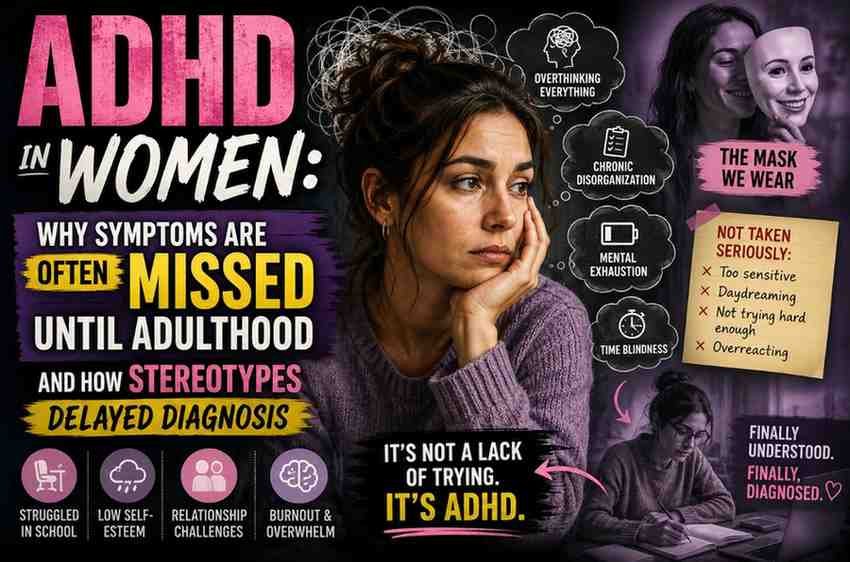
For decades, attention deficit hyperactivity disorder (ADHD) was largely viewed as a condition affecting hyperactive young boys who struggled to sit still in classrooms. This image became deeply embedded in medicine, education, and popular culture. But scientists and clinicians now recognize that this stereotype has left many girls and women overlooked, undiagnosed, and misunderstood.
Increasing awareness and evolving research are revealing a more complex picture of ADHD—one that goes far beyond restlessness and impulsive behavior. In women, symptoms may appear differently, often making diagnosis more difficult and delaying treatment until adulthood.
Experts say understanding these differences is crucial because untreated ADHD can affect education, careers, relationships, emotional well-being, and quality of life.
What Is ADHD?
ADHD is a neurodevelopmental condition characterized by persistent difficulties with attention, impulse control, and executive functioning. Although it begins in childhood, its effects often continue throughout adolescence and adulthood.
Common symptoms include:
- Difficulty maintaining attention.
- Forgetfulness.
- Disorganization.
- Impulsivity.
- Restlessness.
- Trouble completing tasks.
- Difficulty managing time.
However, not everyone experiences ADHD in the same way.
Why ADHD in Women Often Goes Unrecognized
Historically, diagnostic criteria were based largely on studies involving boys. Because boys more commonly display hyperactive and disruptive behaviors, they are more likely to attract attention from teachers and parents.
Girls, on the other hand, frequently exhibit less obvious symptoms.
Instead of physical hyperactivity, many experience:
- Daydreaming.
- Internal restlessness.
- Difficulty concentrating.
- Emotional sensitivity.
- Forgetfulness.
- Perfectionism.
- Chronic overwhelm.
These characteristics can easily be mistaken for personality traits rather than signs of a neurodevelopmental condition.
How ADHD Presents Differently in Girls and Women
ADHD symptoms often evolve over time.
Childhood
- Difficulty paying attention.
- Frequent daydreaming.
- Messy schoolwork.
- Forgetfulness.
- Emotional reactions.
Teenage Years
- Academic struggles.
- Social anxiety.
- Low self-esteem.
- Feeling “different.”
- Problems with organization.
Adulthood
- Chronic stress.
- Difficulty balancing responsibilities.
- Relationship challenges.
- Burnout.
- Problems with time management.
- Emotional dysregulation.
These symptoms can persist even in highly successful women, making ADHD harder to recognize.
The Role of Masking
One reason women are diagnosed later is a phenomenon called masking.
Many girls and women develop coping strategies to hide their struggles.
They may:
- Work excessively hard to compensate.
- Depend heavily on reminders and lists.
- Avoid situations where mistakes might occur.
- Appear organized while feeling overwhelmed internally.
- Become perfectionists.
Masking can help maintain appearances but often comes at the cost of exhaustion and anxiety.
Comparison: Traditional ADHD Stereotypes vs Reality in Women
| Common Stereotype | How ADHD Often Appears in Women |
|---|---|
| Hyperactive behavior | Internal restlessness |
| Disruptive in class | Quiet daydreaming |
| Poor academic performance | Good grades but chronic stress |
| Impulsive actions | Emotional overwhelm |
| Easy to identify | Frequently overlooked |
Why Diagnoses Often Happen in Adulthood
Many women are diagnosed only after major life changes increase demands on their executive functioning.
Triggers include:
- University.
- Starting a career.
- Marriage.
- Motherhood.
- Managing multiple responsibilities.
When coping mechanisms become insufficient, long-standing symptoms may finally come into focus.
An Insight Competitors Often Miss: ADHD Is Not a Lack of Intelligence or Motivation
Perhaps one of the biggest misconceptions about ADHD is that people with the condition simply lack discipline or motivation.
In reality, ADHD affects executive functioning the brain’s ability to organize, prioritize, and regulate attention.
Many women with ADHD are highly intelligent, creative, and ambitious. Their struggles stem not from laziness but from differences in how their brains process information and manage tasks.
This distinction is essential because years of misunderstanding can damage self-esteem and contribute to feelings of failure.
The Emotional Toll of Undiagnosed ADHD
Living for years without understanding why certain tasks feel disproportionately difficult can be emotionally exhausting.
Women with undiagnosed ADHD often report:
- Chronic guilt.
- Low self-confidence.
- Feelings of inadequacy.
- Anxiety.
- Burnout.
- Relationship difficulties.
Receiving a diagnosis later in life frequently brings relief and a new understanding of past experiences.
Hormones and ADHD: An Understudied Area
Researchers are increasingly exploring how hormonal changes influence ADHD symptoms.
Many women report fluctuations during:
- Puberty.
- Menstrual cycles.
- Pregnancy.
- Perimenopause.
- Menopause.
Scientists believe estrogen may influence neurotransmitters involved in attention and executive functioning, though much remains to be understood.
How ADHD Is Treated
Treatment is highly individualized and may involve:
- Behavioral strategies.
- Psychological support.
- Educational accommodations.
- Lifestyle changes.
- Medication when appropriate.
- Coaching and organizational tools.
Early diagnosis and support can significantly improve quality of life.
The Research Gap Is Finally Narrowing
Historically, women have been underrepresented in ADHD research. Fortunately, awareness is growing.
Scientists and clinicians are increasingly focusing on:
- Gender differences in symptoms.
- Hormonal influences.
- Adult ADHD.
- Emotional regulation.
- Late diagnosis.
- Personalized approaches to treatment.
This shift is helping challenge outdated assumptions and improve recognition.
Looking Ahead: A More Inclusive Understanding of ADHD
The future of ADHD research is likely to become increasingly personalized. Experts anticipate greater attention to sex differences, hormonal influences, and life-stage-specific challenges.
Improved awareness among parents, teachers, and healthcare professionals could lead to earlier diagnoses and more effective support.
Most importantly, understanding ADHD in women requires moving beyond stereotypes and recognizing the diverse ways the condition manifests.
Conclusion
ADHD in women has long been hidden behind outdated stereotypes and incomplete research. Because symptoms often differ from the classic image associated with the condition, many girls and women spend years struggling without understanding why.
Growing scientific awareness is helping to change that narrative. By recognizing how ADHD presents across different stages of life and challenging misconceptions about intelligence, motivation, and behavior, healthcare professionals can provide earlier diagnoses and better support.
ADHD in women is not a new phenomenon. What is new is our willingness to finally see it clearly.
For breaking news and live news updates, like us on Facebook or follow us on Twitter and Instagram. Read more on Latest Health on thefoxdaily.com.






COMMENTS 0