
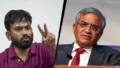
Trinamool Congress (TMC) MP Abhishek Banerjee has questioned the electoral legitimacy of the BJP government in West Bengal and called on the Supreme Court to restore the state’s previous elected government and order fresh elections within six months. His demand follows the court’s clarification that it has not yet delivered a final ruling on the legality of the Election Commission‘s use of the “logical discrepancy” category during the revision of electoral rolls.
Banerjee’s remarks have brought renewed attention to the dispute surrounding the Election Commission’s voter-verification process and the treatment of voters whose details are flagged for discrepancies. The controversy centres on the Special Intensive Revision (SIR) of electoral rolls and questions about the transparency of the procedures used to scrutinise voter information.
According to the Press Trust of India (PTI), Banerjee reacted after the Supreme Court clarified the scope of its earlier observations on the revision exercise in West Bengal. The court emphasised that its permission for the use of the “logical discrepancy” category was an interim arrangement and did not amount to a final determination of its legality.
Abhishek Banerjee Challenges the BJP Government’s Electoral Legitimacy
Reacting to a report about the Supreme Court’s observations, Banerjee questioned whether a government could claim full electoral legitimacy while concerns remained over the voter-roll revision process.
In a social media post, the TMC leader wrote: “What a convenient democracy! If a manipulated mandate can produce a full-fledged government, what remains of electoral legitimacy? By this logic, the present State Government should be treated as INTERIM.”
Banerjee’s statement challenged the BJP government’s mandate by linking the dispute over voter-roll scrutiny to the broader question of electoral legitimacy. His argument was that concerns over the exclusion of eligible voters should be addressed before the outcome of an election is treated as beyond question.
However, his description of the mandate as manipulated represents his political position. The supplied account of the court’s observations does not establish that the BJP government was elected through a manipulated process, nor does it indicate that the Supreme Court has declared the government’s mandate invalid.
Banerjee went on to demand judicial intervention, calling for the restoration of the previous elected government and fresh elections within six months.
He wrote: “The SC must restore the previous elected government in West Bengal and direct fresh elections within six months, ensuring that every eligible voter wrongfully excluded from the electoral rolls is reinstated. Otherwise, the only thing LOGICAL about this reasoning is how conveniently it overlooks the DISCREPANCIES.”
The demand places the focus on whether voters whose names or details are questioned during electoral-roll revision have access to a transparent process that protects their right to participate in elections. It also raises a separate legal question about what remedies, if any, may follow from the court’s eventual decision on the disputed category.
What the Supreme Court Said About the “Logical Discrepancy” Exercise
The Supreme Court has clarified that it has not finally adjudicated the legality of the Election Commission’s use of the “logical discrepancy” category in West Bengal. The distinction is important because permission to use a procedure on an interim basis does not necessarily settle every legal challenge to that procedure.
A bench comprising Chief Justice Surya Kant and Justices Joymalya Bagchi and V Mohana explained that its earlier order concerning West Bengal should not be interpreted as a final ruling on all questions arising from the electoral-roll revision exercise.
Justice Joymalya Bagchi addressed the issue while discussing the relationship between the proceedings concerning West Bengal and an earlier matter involving electoral-roll revision in Bihar.
According to PTI, Justice Bagchi said: “Bihar is not a final determination of every question arising in these proceedings. In Bihar, the Election Commission had not initially undertaken logical discrepancy as a category. We permitted it as an interim arrangement in West Bengal. We have not finally adjudicated upon the legality of the logical discrepancy exercise.”
The remarks clarify two key points. First, the court’s earlier decision in the Bihar matter does not automatically resolve every issue raised in subsequent proceedings. Second, the court’s interim permission for the “logical discrepancy” category in West Bengal should not be treated as a final endorsement of its legality.
The court’s position leaves the legality of the disputed exercise open for further judicial consideration. It also means that the observations cannot, by themselves, be interpreted as an order to restore the previous West Bengal government or conduct fresh elections.
How the Dispute Reached the Supreme Court
The Supreme Court made the observations while hearing a petition alleging a lack of transparency in notices issued to voters during the ongoing electoral-roll revision in Delhi, PTI reported.
The proceedings involved questions about the process followed when voters’ details are scrutinised and notices are issued. Such questions can become particularly significant when electoral authorities identify discrepancies that require clarification or verification before information is finalised on the voter list.
During the hearing, senior advocate D. S. Naidu, appearing for the Election Commission, submitted that the bench had examined every stage of the process and upheld its validity.
His submission represented the Election Commission’s position in the proceedings. The court’s subsequent clarification, however, distinguished the earlier interim arrangement in West Bengal from a final ruling on the legality of the “logical discrepancy” exercise.
The hearing therefore involved more than a general assessment of electoral-roll revision. It also highlighted the need to distinguish between the validity of different stages of an administrative process and the specific legal questions that remain unresolved.
Although the observations have become part of the political debate in West Bengal, the reported proceedings concerned a petition alleging a lack of transparency in notices issued during electoral-roll revision in Delhi. The court’s comments addressed the legal significance of its earlier orders and the status of the disputed category.
Why the “Logical Discrepancy” Category Matters
The “logical discrepancy” category is central to the current controversy because it concerns the scrutiny of information in electoral rolls. The Election Commission’s use of this category in West Bengal has raised questions about the legal basis for the exercise and how it should be applied.
Electoral-roll revision is intended to maintain accurate voter records, but scrutiny procedures must also account for the rights of eligible voters. Where information is flagged for a discrepancy, the transparency of the process and the handling of notices can become important issues.
Banerjee’s demand specifically refers to eligible voters who he says have been wrongfully excluded from electoral rolls. He has argued that such voters should be reinstated and that fresh elections should be held within six months.
The Supreme Court’s clarification does not, on its own, establish how many eligible voters may have been wrongly excluded or determine whether any particular exclusion was unlawful. The supplied report also does not provide figures for the number of voters affected by the disputed process.
Those questions should be distinguished from the broader legal issue of whether the Election Commission can use the “logical discrepancy” category in the manner adopted in West Bengal. The court has said that the legality of that exercise has not yet been finally decided.
The outcome of the legal proceedings could help clarify the status of the disputed procedure. Until a final determination is made, however, the interim arrangement should not be confused with a conclusive judgment on its legality.
Banerjee’s Demand for Fresh Elections Within Six Months
Banerjee has called for two major steps: restoration of the previous elected government in West Bengal and fresh elections within six months. He has linked both demands to his concerns about electoral legitimacy and the possible exclusion of eligible voters during voter-roll revision.
His proposal would require the Supreme Court to take action beyond clarifying the legality of the Election Commission’s procedure. It would involve the restoration of a previous administration and a direction to hold another election within a specified period.
However, the court’s reported observations do not indicate that it has granted either request. The bench clarified that it had not finally ruled on the legality of the “logical discrepancy” exercise, while the demand for restoring the previous government and conducting fresh elections was made by Banerjee.
This distinction is essential to understanding the current position. A political leader’s demand for a particular remedy does not mean that the court has ordered it, and an interim judicial arrangement does not necessarily determine the final outcome of a case.
Banerjee’s remarks therefore reflect the TMC leader’s response to an unresolved legal question rather than a reported judicial decision invalidating the BJP government’s mandate.
What Happens Next in the Electoral-Roll Dispute?
The immediate legal question remains the status of the Election Commission’s “logical discrepancy” exercise in West Bengal. The Supreme Court has explicitly stated that it has not finally adjudicated upon the legality of the category, leaving the issue open for further consideration.
The proceedings also underscore the importance of transparency in the electoral-roll revision process, particularly when notices are issued to voters whose information is questioned. The concerns raised in the petition heard by the court and Banerjee’s political response both centre on the procedures used to scrutinise voter information, although they arise in different contexts.
Further judicial consideration may clarify the legal basis and limits of the disputed exercise. The supplied report, however, does not specify when a final ruling will be delivered or whether the court will consider Banerjee’s request for restoration of the previous government and fresh elections.
For now, the court’s position is limited but significant: its earlier permission for the “logical discrepancy” category in West Bengal was interim, and the legality of the exercise has not been finally determined.
Conclusion
Abhishek Banerjee’s demand for the restoration of the previous West Bengal government and fresh elections within six months has intensified the political debate over electoral legitimacy and voter-roll scrutiny. The TMC MP argues that eligible voters who were wrongfully excluded must be reinstated, while questioning the legitimacy of the BJP government’s mandate.
The Supreme Court, however, has not declared the BJP government’s mandate invalid or ordered fresh elections in the reported proceedings. Its clarification concerns the legal status of the Election Commission’s “logical discrepancy” exercise, which it permitted as an interim arrangement but has not yet finally adjudicated upon.
The next stage of the dispute will depend on the court’s further consideration of the legal questions surrounding the voter-roll revision process. Until then, Banerjee’s demand remains a political call for judicial intervention, while the legality of the disputed exercise remains unresolved.
For breaking news and live news updates, like us on Facebook or follow us on Twitter and Instagram. Read more on Latest India on thefoxdaily.com.





COMMENTS 0