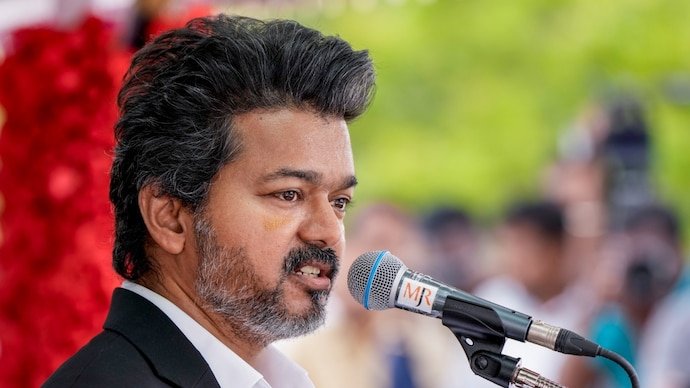
The Tamil Nadu government has shortlisted two possible locations for a new airport to serve the Chennai Metropolitan Area, just days after Chief Minister C Joseph Vijay formally abandoned the long-pending Parandur greenfield airport project.
The two sites identified by the state are Manellore and Cheyyur, according to people familiar with the government’s latest planning exercise. The locations were reportedly shortlisted within a week of the decision to drop Parandur, signalling that the government wants to keep the broader plan for a second airport near Chennai moving despite the cancellation of the earlier project.
Both sites have been recommended to the Airports Authority of India (AAI) for a feasibility study. The assessment will determine whether either location can meet the technical, environmental, connectivity and operational requirements for a major airport.
The development has added a new chapter to a long-running debate over Chennai’s aviation capacity. While the Parandur project had faced sustained resistance over its impact on agricultural land and local settlements, the state government continues to maintain that Chennai needs additional airport capacity to meet future passenger and cargo demand.
The challenge for the Vijay government is now to identify a site that can accommodate a large-scale aviation project without repeating the social, environmental and land-acquisition problems that contributed to the collapse of the Parandur plan.
Manellore and Cheyyur emerge as new airport contenders
The two locations shortlisted by the state government are Manellore and Cheyyur.
Manellore is located in the Tiruvallur region and is around 60 kilometres from Chennai, while Cheyyur, in Chengalpattu district, is roughly 100 kilometres from the city.
The locations are being considered as alternatives for the second airport that Chennai has long been expected to need as passenger traffic and cargo operations continue to expand.
The selection at this stage does not mean that either site has been finally approved for construction. The AAI feasibility assessment remains an important step, and the final choice would depend on factors including aviation safety, land characteristics, environmental considerations, connectivity, cost and the ability to develop the necessary supporting Infrastructure.
In other words, the shortlist marks the beginning of a new evaluation process rather than the end of one.
AAI to examine feasibility of both sites
The Airports Authority of India will now play a key role in determining whether Manellore or Cheyyur is suitable for the proposed airport.
A feasibility assessment for a major greenfield airport typically requires much more than examining the availability of land. Authorities must consider runway orientation, airspace compatibility, surrounding development, road and rail connectivity, drainage, environmental constraints and the long-term scope for expansion.
The proposed facility would also need to be integrated with Chennai’s wider transportation network. A new airport can only function effectively if passengers and cargo can reach it quickly and reliably from the metropolitan region and neighbouring industrial areas.
The experience with Parandur has demonstrated how complicated such a process can become when land acquisition, environmental concerns and local opposition are factored into airport planning.
Why Chennai still needs a second airport
Despite the cancellation of the Parandur project, the underlying reason for seeking a second airport has not disappeared.
Chennai International Airport serves one of India’s largest metropolitan and industrial regions. Passenger traffic has grown significantly over the years, while Chennai also acts as a major base for Automobile manufacturing, electronics, logistics, information technology and other industries that generate substantial air-cargo demand.
As the city expands, an additional airport can provide greater capacity and reduce the pressure on the existing facility.
A second airport could also support economic development in areas outside central Chennai by creating new transport links, attracting investment and encouraging the development of logistics and business clusters.
The government’s decision to continue searching for an alternative site therefore suggests that scrapping Parandur should not be interpreted as abandoning the idea of a second Chennai airport.
Why the Parandur airport project was scrapped
Chief Minister C Joseph Vijay announced the decision to abandon the Parandur greenfield airport project in the State Assembly in August.
Vijay said the project had been reconsidered because of its impact on farmers and residents living in and around the proposed airport area.
He acknowledged that Chennai needs a second airport to handle growing passenger demand, support industrial development and expand cargo transportation. However, he argued that the location must be selected in a way that causes the least possible disruption to agricultural land and residential communities.
The decision fulfilled one of Vijay’s politically significant commitments regarding the Parandur project, which had been the subject of Protests for several years.
The new search now gives his government an opportunity to redesign the project around the concerns that contributed to the earlier controversy.
Parandur had faced years of resistance
The Parandur airport proposal had been selected by the previous government after an evaluation of several potential locations around Chennai.
The proposed airport area included multiple villages and large stretches of agricultural land. Residents, particularly from villages such as Ekanapuram, had opposed the project, citing concerns about land acquisition, livelihoods and the impact on local water systems.
The protests continued even as the previous government moved ahead with land acquisition and other preliminary processes.
For the DMK, the project was presented as an important piece of Chennai’s future infrastructure. For many affected residents, however, the proposed airport represented a threat to agricultural land and established communities.
The Vijay government’s decision to abandon the site was therefore both an infrastructure decision and a response to a politically sensitive land and livelihood dispute.
Government says Parandur lacked key approvals
The Vijay government has also defended its decision by challenging the Opposition’s account of how far the Parandur project had progressed.
Energy Resources and Law Minister R Nirmal Kumar argued in the Assembly that claims that 90 per cent of the project had already been completed were incorrect.
He said only around 48 per cent of the required land had been acquired and that important environmental processes had not yet been completed.
The minister also pointed to the presence of water bodies and canals within the proposed airport area and questioned whether the project could proceed without the necessary environmental assessment and clearances.
The government’s argument was that abandoning the project at this stage would not mean cancelling a nearly completed airport. Instead, it described the decision as stopping a project that remained in the land-acquisition and approval stages.
The land requirement was a major issue
According to the state government’s account, the Parandur airport project required approximately 5,846 acres of land.
That included around 3,774 acres of private patta land, with the government stating that about 2,681 acres consisted of fertile agricultural land.
Of the approximately 1,972 acres of government land identified for the project, the government said around 1,558 acres consisted of water bodies and canals.
The scale of the proposed land requirement helps explain why the project became controversial among affected communities.
A large airport requires not only runways and terminals but also taxiways, cargo facilities, maintenance areas, roads, parking zones and future expansion space. As a result, the land footprint can extend far beyond the terminal building itself.
For rural communities, that can mean displacement, changes in agricultural patterns and the loss of common land or water systems.
DMK criticised the decision to abandon Parandur
The Vijay government’s decision has faced opposition from political parties, including the DMK, which had promoted the Parandur project during its tenure.
Opposition leaders argued that abandoning the project after years of planning and land acquisition could impose a significant economic cost on the state.
The DMK also questioned whether the government could afford to restart the airport planning process from the beginning after significant administrative work had already been carried out.
From the Opposition’s perspective, the cancellation risks delaying Chennai’s second airport at a time when additional aviation capacity is increasingly important.
The government, however, has maintained that proceeding with a location involving serious agricultural and environmental concerns would have created larger problems in the long run.
New sites must avoid Parandur’s biggest problems
The choice between Manellore and Cheyyur will be judged partly by whether either location can avoid the difficulties associated with Parandur.
The new site will need enough land for the airport without causing excessive displacement. It will also have to satisfy environmental requirements, particularly relating to water bodies, drainage and flood risk.
These considerations are especially important in Tamil Nadu, where changes to wetlands, agricultural fields and natural drainage systems can have consequences that extend beyond an airport’s immediate boundary.
A location may appear attractive from an aviation perspective but become unsuitable if environmental or land-acquisition challenges make construction excessively difficult.
The feasibility study is therefore likely to be one of the most important stages in the new airport’s development.
Distance from Chennai will matter
One of the biggest questions surrounding the shortlisted sites is their distance from the city.
Manellore is significantly closer to Chennai than Cheyyur, which could give it an advantage in terms of passenger convenience and connectivity.
But distance alone cannot determine the choice. The availability of large, suitable land parcels, airspace conditions, approach paths, road infrastructure and environmental constraints can outweigh a location’s proximity to the city.
The experience of other metropolitan airports shows that a new airport can succeed even when located well outside the traditional urban core, provided fast highways, public transport and efficient airport-access infrastructure are available.
For the Chennai project, planners will have to weigh travel time rather than simply measuring kilometres on a map.
Connectivity could make or break the new airport
One of the most important lessons from airport development around major cities is that an airport is only as accessible as the transport network connecting it to the metropolitan area.
A new airport located far from central Chennai would need high-capacity roads and potentially rail or rapid-transit connections.
Without those links, passengers may face long and unpredictable journey times, reducing the airport’s attractiveness even if its facilities are modern.
Freight operators have different requirements. Cargo movements depend on reliable highways, proximity to industrial centres and efficient connections with warehouses, ports and manufacturing clusters.
That makes connectivity a key factor in determining whether Manellore or Cheyyur can genuinely support Chennai’s future aviation needs.
The airport is expected to serve cargo as well as passengers
The proposed project is not solely about handling additional passengers.
Vijay has emphasized the importance of cargo transportation and industrial growth in explaining why Chennai needs another airport.
The region is one of India’s major manufacturing centres, with large automobile, electronics and engineering industries. Faster air-cargo connections can benefit companies transporting high-value or time-sensitive goods.
A second airport could also create additional logistics capacity, potentially reducing pressure on the existing airport and allowing passenger and cargo operations to be distributed more efficiently.
For this reason, the new facility will need to be designed around both passenger demand and freight growth.
Parandur was designed as a large-scale project
The original Parandur airport proposal envisaged a large greenfield facility developed in multiple phases, with the capacity to expand significantly as demand increased.
The project was estimated to cost tens of thousands of crores and was intended to become a major aviation gateway for Chennai in the coming decades.
Replacing such a project requires more than simply selecting another piece of land. The alternative site has to support a comparable long-term development model.
That means planners need to think several decades ahead rather than only about immediate passenger requirements.
An airport designed for today’s traffic could become inadequate within a few decades if the surrounding metropolitan region grows rapidly.
Could the new airport be built faster?
The speed with which Manellore and Cheyyur were identified has raised expectations that the state’s second-airport plan could move forward quickly after Parandur was abandoned.
However, identifying a site is only one early step in a long process.
A major greenfield airport generally requires feasibility studies, site clearance, environmental assessments, land acquisition, detailed project planning, financing arrangements and multiple regulatory approvals before construction can begin.
After construction starts, the project also needs roads, utilities, terminal systems, navigation equipment and other supporting infrastructure.
That means the new airport is unlikely to materialise simply because the state has produced a shortlist. The most important question now is whether the alternative location can move through the approval process without the disputes that slowed Parandur.
Existing Chennai airport expansion remains relevant
While the government searches for a new location, expansion of the existing Chennai International Airport remains an important part of the city’s aviation strategy.
Authorities have previously considered expanding the existing facility to handle additional passengers while the search for a second airport continues.
The dual strategy is practical because a new greenfield airport could take years to develop. Improving the current airport can provide additional capacity during the transition period.
It also reduces the immediate pressure on planners to complete the second airport before demand becomes too difficult to accommodate.
The longer-term goal, however, remains to create an additional aviation hub capable of supporting Chennai’s continued economic expansion.
What the AAI feasibility study will need to answer
The next major milestone will be the AAI’s assessment of the two shortlisted locations.
Among the most important questions will be whether the sites offer sufficient land for runways and terminals, whether aircraft can safely approach and depart, and whether nearby structures or terrain create restrictions.
Environmental factors will be equally important. Authorities will need to assess water bodies, wetlands, flood patterns and other ecological features.
Land ownership is another critical consideration. A location with fewer privately owned agricultural parcels could potentially reduce the risk of prolonged acquisition disputes.
Finally, the government will need to examine how much it would cost to connect each site to Chennai and surrounding industrial areas.
The new airport could reshape Chennai’s growth pattern
The eventual location of the airport will have consequences extending far beyond aviation.
Large airports often attract hotels, logistics parks, offices, warehouses, retail centres and residential development. New highways and other infrastructure are frequently built around them.
That means the airport could influence the direction in which Chennai’s metropolitan region expands over the next several decades.
For Manellore, a new airport could strengthen development along the northern side of the metropolitan region. Cheyyur could create a new growth corridor in the south.
The location will therefore influence not only flight access but also land values, industrial investment, transport planning and urbanisation.
Choosing the right site matters more than choosing quickly
The pressure to replace the Parandur plan quickly is understandable because Chennai’s aviation requirements continue to grow. But the experience of the earlier project shows why speed cannot be the only objective.
Parandur had already gone through significant planning before land acquisition and environmental concerns became central obstacles.
A new airport could face similar problems if the next location is selected primarily because it appears available rather than because it is technically and socially sustainable.
The government will therefore need to demonstrate that the new selection process is based on transparent feasibility criteria and long-term planning.
That could also help build greater public confidence among communities located near the shortlisted sites.
Farmers remain a key concern for the Vijay government
One of the central political arguments behind scrapping Parandur was the impact on farmers.
Vijay has emphasized that the need for a second airport should not automatically justify the large-scale disruption of agricultural livelihoods.
That position is likely to shape the selection of the new site.
If Manellore or Cheyyur requires significant acquisition of fertile farmland, the government could face the same kind of resistance it encountered at Parandur.
The administration will therefore have to balance aviation requirements with the interests of local communities from the earliest stages of planning.
Environmental safeguards will be closely watched
The Parandur dispute also demonstrated the political importance of environmental approvals.
The Vijay government criticised the earlier project over what it described as the absence of key environmental processes and highlighted the large number of water bodies and canals within the proposed area.
The new project is likely to face close scrutiny on exactly these issues.
Any future airport site will need to undergo the required environmental assessment before construction can proceed. Drainage and flood management will be particularly important because an airport covers a very large, heavily engineered surface area.
If natural drainage patterns are altered without adequate mitigation, downstream communities can face increased flood risks.
That makes environmental planning an essential component of airport design rather than a regulatory requirement to be addressed at the final stage.
Opposition’s “90% complete” claim remains disputed
The political argument over Parandur has also focused on how much of the project had actually been completed before it was scrapped.
The DMK had claimed that approximately 90 per cent of the work had been completed, a figure used to argue that cancelling the project would waste significant public investment.
The Vijay government rejected that claim and said only a portion of the required land had been acquired and that important approvals were still pending.
The disagreement illustrates why large infrastructure projects can be politically difficult to evaluate. Preliminary land acquisition, planning, surveys and administrative approvals can represent significant progress without meaning that physical construction is close to completion.
The true cost of abandoning Parandur will ultimately depend on how much of the expenditure can be recovered, repurposed or transferred to the new project.
What happens to land already acquired at Parandur?
The cancellation also leaves the government with another unresolved issue: the future use of land that has already been acquired for the abandoned airport.
Authorities will have to decide whether that land can be returned, repurposed for another public project or used for infrastructure connected to other development plans.
The issue could become politically sensitive because affected landowners have already undergone the acquisition process.
How the government handles that land could influence public confidence in the new airport plan as well. Residents near the alternative sites will be watching closely to see whether the administration responds differently to land and livelihood concerns this time.
Manellore versus Cheyyur: what could decide the choice?
At this early stage, there is no indication that either Manellore or Cheyyur has been selected as the final site.
Manellore’s relative proximity to Chennai could make it attractive from a passenger-connectivity perspective. Cheyyur, meanwhile, may offer different land and development possibilities that must be evaluated in detail.
But the final decision is likely to depend on a much wider set of factors.
The winning location will need to offer an acceptable combination of aviation safety, land availability, environmental sustainability, construction cost, connectivity and community impact.
The site that performs best across those categories will have the strongest case, regardless of which location is closer to Chennai’s city centre.
Chennai’s second airport project gets a fresh start
The shortlist of Manellore and Cheyyur effectively gives Chennai’s second-airport project a fresh start after the Parandur plan was abandoned.
For the Vijay government, the immediate political advantage is that it can show that cancelling Parandur does not mean ignoring Chennai’s growing aviation requirements.
For the city’s Economy, continuing the search is important because passenger and cargo demand are expected to expand as Chennai grows as a manufacturing, technology and logistics centre.
But the new project also carries a warning from the history of Parandur: site selection has to address environmental and social concerns at the beginning rather than attempting to resolve them after years of planning.
What comes next for Manellore and Cheyyur
The next phase will centre on the AAI feasibility study.
Once the technical assessment is complete, the state government will have a stronger basis for deciding which site should advance. Further regulatory, environmental and land-related evaluations would then be required before a final airport plan could be implemented.
At the same time, the government is expected to continue strengthening Chennai’s existing airport infrastructure so that current passenger and cargo requirements can be managed during the transition.
The process could take years, but the latest shortlist shows that the government is moving quickly to replace the Parandur proposal rather than leaving the second-airport question unresolved.
Vijay government’s airport challenge has only begun
Scrapping Parandur may have resolved one political dispute, but it has created a much larger planning challenge for the Tamil Nadu government.
The state now has to identify a location that can provide Chennai with the additional aviation capacity it needs while avoiding the land, environmental and community conflicts that surrounded Parandur.
Manellore and Cheyyur are the first two contenders in that new process. Their selection for AAI feasibility assessment is an important step, but it does not yet determine where Chennai’s next airport will be built.
The final decision will have consequences for passengers, cargo operators, farmers, local communities and the future shape of the Chennai Metropolitan Area.
The central test for the Vijay government will be whether it can combine the urgency of building a second airport with a more careful approach to land acquisition, environmental safeguards and public consultation.
Chennai still needs additional aviation capacity. The question is no longer whether the city should get another airport, but where it can be built without repeating the problems that brought the Parandur project to an end.
For breaking news and live news updates, like us on Facebook or follow us on Twitter and Instagram. Read more on Latest India on thefoxdaily.com.




COMMENTS 0