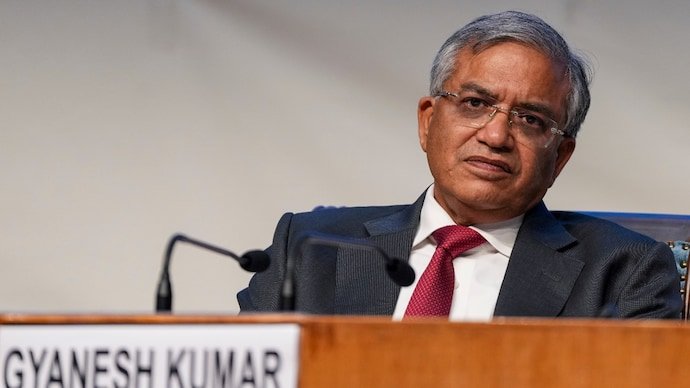
A public interest litigation has been filed in the Supreme Court seeking legal and criminal action against Chief Election Commissioner Gyanesh Kumar over decisions allegedly taken during the Special Intensive Revision of Electoral Rolls despite objections from two other Election Commissioners.
The petition places the internal decision-making of the Election Commission of India under judicial scrutiny and raises questions about the authority of the Chief Election Commissioner to take decisions concerning the SIR process without the concurrence of the full Commission.
Filed by advocate Shailendra Mani Tripathi through advocate Chand Qureshi, the plea follows a report alleging that several decisions connected with the electoral-roll revision exercise were taken despite written objections from Election Commissioners Dr Sukhbir Singh Sandhu and Dr Vivek Joshi.
The allegations concern decisions involving electoral-roll software as well as changes to provisions and procedures relating to statutory Form 6, which is used in the electoral registration process.
Petition Challenges SIR Decisions Taken Without Full Commission
The Supreme Court petition seeks a declaration that decisions, guidelines, directives and software modifications initiated, approved or implemented under Gyanesh Kumar without the concurrence of the full Election Commission are unconstitutional and legally invalid.
The petitioner has also invoked Section 18 of the Chief Election Commissioner and Other Election Commissioners Act, 2023, arguing that decisions of the Commission must comply with the statutory framework governing the functioning of the Election Commissioners.
The plea seeks to have such decisions declared ultra vires and void ab initio where they were allegedly taken without the required concurrence or contrary to the majority opinion of the Election Commissioners.
The petition therefore raises questions that go beyond the immediate SIR exercise. At its core is the issue of how the Election Commission’s institutional decision-making process should operate when members of the Commission disagree over important administrative or electoral decisions.
What Is the Special Intensive Revision?
The Special Intensive Revision, or SIR, involves a detailed exercise to review electoral rolls. Such revisions can involve verifying existing entries, identifying eligible voters and addressing changes in voter information.
The process is particularly significant because electoral rolls determine who is eligible to participate in Elections. Any changes to the rolls can therefore have a direct impact on voters, political parties and election administration.
The controversy surrounding the present SIR exercise has focused not only on the process of revising electoral rolls but also on the procedures, software and administrative decisions used to implement it.
The Supreme Court petition alleges that some of these decisions were taken without agreement among all three Election Commissioners. The allegation is now part of a legal challenge seeking judicial examination of the Commission’s decision-making process.
Form 6 Changes Also Under Challenge
One of the issues highlighted in the petition concerns amendments to provisions and procedures relating to statutory Form 6.
Form 6 is part of the electoral registration framework and is associated with applications for inclusion of names in electoral rolls. Changes affecting the procedure surrounding such applications can have practical consequences for individuals seeking registration as voters.
The petitioner alleges that changes related to the form and electoral-roll software were introduced without the concurrence of Election Commissioners Dr Sukhbir Singh Sandhu and Dr Vivek Joshi.
These allegations will have to be examined through the legal process. The filing of a petition does not by itself establish that the alleged violations occurred or that the officials named in the plea are liable for any offence.
Criminal Action Sought Against Election Officials
The PIL goes beyond seeking the cancellation of allegedly unilateral decisions. It also asks for criminal action against officials whom the petitioner alleges deliberately breached their official duties.
Those named in the request include Chief Election Commissioner Gyanesh Kumar, Senior Deputy Election Commissioner Maneesh Garg and Director General of Information Technology at the Election Commission, Seema Khanna.
The petitioner has sought action against officials allegedly found responsible for deliberate violations of their duties in connection with the disputed decisions.
The demand for criminal proceedings represents a significant escalation because the petition does not merely challenge administrative decisions. It also asks the court to examine whether conduct attributed to officials could warrant criminal consequences.
Any such liability would require determination through the appropriate legal process and cannot be established merely from the allegations contained in the PIL.
Petition Raises Question of Majority Opinion
A central legal issue raised by the petition is the role of the majority opinion within the Election Commission.
The plea relies on Section 18 of the Chief Election Commissioner and Other Election Commissioners Act, 2023, to argue that decisions should be taken in accordance with the statutory framework governing the Commission.
The allegation is that some decisions associated with the SIR exercise proceeded despite objections from two of the three Election Commissioners. If the court examines the issue on merits, it could be required to consider the precise statutory rules governing decision-making within the Commission and the circumstances under which administrative directions can be issued.
The matter therefore involves questions of institutional procedure as well as the specific electoral decisions being challenged.
Bombay High Court Also Asked to Examine SIR Orders
The controversy has also reached the Bombay High Court, where two petitions were filed seeking to challenge 14 orders issued by Chief Election Commissioner Gyanesh Kumar in connection with the SIR exercise in Maharashtra.
The petitions seek cancellation of the orders and also challenge the constitutional validity of the SIR exercise in the state.
Among the reliefs sought are restoration of deleted voters, preparation of a legally compliant electoral roll and disclosure or production of the order and recorded reasons under which the SIR is being conducted in Maharashtra.
The petitioners have also sought greater transparency concerning the methodology and legal basis of the exercise.
Another major concern raised in the Bombay High Court petitions is the protection of eligible voters from wrongful exclusion. The petitions seek safeguards intended to ensure that individuals who meet the legal requirements for registration are not removed from electoral rolls through an improper or inadequate verification process.
Why Restoration of Deleted Voters Is a Key Issue
Electoral-roll revisions can involve the deletion, addition or correction of voter entries. The legal challenges in Maharashtra place particular emphasis on voters whose names may have been removed during the SIR process.
The demand for restoration reflects concerns over the consequences of exclusion from the electoral roll. A person whose name is absent from the final roll may face difficulty exercising the right to vote in an election.
For that reason, the petitioners are seeking procedures that provide transparency around deletions and adequate safeguards against errors.
The issue also highlights the importance of maintaining accurate electoral rolls while ensuring that eligible voters are not excluded through administrative mistakes or procedural shortcomings.
Mahua Moitra Seeks FIR Against CEC
The dispute has also triggered a separate police complaint from Trinamool congress MP Mahua Moitra.
On Thursday, Moitra submitted a complaint at the Parliament Street police station in New Delhi seeking registration of an FIR against Chief Election Commissioner Gyanesh Kumar.
The complaint followed reports that two Election Commissioners had objected to several decisions of the poll panel during the SIR exercise.
The police complaint represents a separate route from the constitutional and administrative challenges before the courts. While the Supreme Court PIL seeks judicial intervention concerning the legality of decisions and alleged official conduct, the police complaint seeks criminal investigation through the law-enforcement process.
The allegations in the complaint and PIL remain matters for the relevant authorities and courts to examine.
Multiple Legal Challenges Put ECI Process Under Scrutiny
The emergence of proceedings before the Supreme Court and Bombay High Court, alongside a police complaint, means different aspects of the SIR controversy are now being questioned through separate legal channels.
The Supreme Court petition focuses heavily on the alleged lack of concurrence among Election Commissioners and the legality of decisions taken during the exercise. The Bombay High Court petitions focus on the 14 orders issued in Maharashtra, the constitutional validity of the SIR exercise and concerns over voter deletions and transparency.
The police complaint filed by Moitra seeks criminal action based on allegations surrounding the same broader dispute.
These proceedings should not be treated as establishing the allegations against the Election Commission or its officials. Courts and competent authorities will have to determine the validity of the claims, the applicable law and whether any official conduct violated statutory requirements.
CEC’s Role Becomes Central to the Dispute
Gyanesh Kumar has become the central figure in the legal controversy because the petitions specifically challenge decisions attributed to him during the SIR process.
The Supreme Court plea alleges that important decisions were taken without the concurrence of the other two Election Commissioners. It specifically refers to changes involving electoral-roll software and procedures connected with Form 6.
If the court considers these allegations, one of the important questions will be whether the decisions fell within the authority of the Chief Election Commissioner acting through the Commission’s established procedures or whether the statutory framework required a different form of collective decision-making.
The distinction matters because the Election Commission is a constitutional institution responsible for administering elections and maintaining the integrity of the electoral process. Questions concerning how its decisions are made can therefore have implications beyond an individual administrative exercise.
Transparency Is a Major Concern in Maharashtra
The Bombay High Court petitions have placed particular emphasis on transparency in the Maharashtra SIR exercise.
The petitioners want the authorities to disclose or produce the order and recorded reasons under which the exercise is being conducted. They have also sought information about the methodology and legal foundation of the revision process.
Such demands reflect a broader concern over how electoral-roll changes are communicated to voters and how affected individuals can understand or challenge decisions concerning their entries.
For an electoral-roll revision to operate effectively, authorities need procedures that can be understood and scrutinised by those affected. The legal challenges will test whether the procedures followed in Maharashtra meet the requirements asserted by the petitioners.
Supreme Court Plea Seeks Broader Judicial Examination
The Supreme Court petition is significant because it seeks remedies extending beyond individual voter disputes.
Rather than challenging only particular deletions or administrative orders, the plea asks the court to examine decisions and directives allegedly initiated or implemented without the concurrence of the full Commission.
It also seeks a determination on whether such actions can stand under the Chief Election Commissioner and Other Election Commissioners Act, 2023.
The petitioner’s request for criminal action adds another dimension to the case. However, whether any criminal offence has been committed would require examination of evidence, applicable provisions and the conduct of individual officials.
What Happens Next in the EC SIR Row
The legal proceedings will determine how the allegations surrounding the SIR exercise are considered by the courts.
The Supreme Court will have to examine the issues raised in the PIL if it takes up the matter, while the Bombay High Court proceedings concern the separate challenges to the SIR orders in Maharashtra. The police complaint filed by Mahua Moitra represents another avenue through which allegations against the Chief Election Commissioner have been presented.
At the heart of the controversy are questions about the Election Commission’s internal decision-making, the legal authority for SIR-related measures, transparency in electoral-roll revisions and safeguards for eligible voters.
The proceedings also place renewed attention on the statutory framework governing the three-member Election Commission and the circumstances in which decisions can be taken when commissioners disagree.
For now, the allegations made in the petitions and complaint remain subject to legal examination. The outcome will depend on the courts’ interpretation of the applicable law, the facts presented before them and the findings reached through the respective proceedings.
With PTI Inputs
For breaking news and live news updates, like us on Facebook or follow us on Twitter and Instagram. Read more on Latest India on thefoxdaily.com.






COMMENTS 0