US-India relations are navigating a period of uncertainty as the Donald Trump administration reassesses immigration policies, trade arrangements and energy ties. Amid concerns over potential restrictions on H-1B visas and disagreements involving Russian oil, Mukesh Aghi, president and CEO of the US-India Strategic Partnership Forum (USISPF), has argued that India should view Washington’s immigration decisions in the context of its domestic employment priorities.
In an interview with The Indian Express during a recent visit to Delhi, Aghi said the H-1B Visa was a privilege rather than a right, arguing that every country sought to protect its citizens and employment opportunities. His remarks come amid continuing discussions about the importance of skilled Indian professionals to American businesses and the broader debate over immigration and talent mobility.
Aghi also addressed the implications of US Secretary of State Marco Rubio’s second visit to India in 2026, the prospects for an India-US trade agreement, comments made by American political figures about Indian businesses and workers, and the relationship between Prime Minister Narendra Modi and President Donald Trump.
While acknowledging that countries may need to reassess their international relationships as political priorities change, Aghi maintained that the personal rapport between Modi and Trump remained respectful. He also suggested that cooperation on trade, energy security and strategic issues would continue to shape bilateral engagement.
Why Mukesh Aghi says the H-1B visa is a privilege
Responding to questions about recent developments in Washington concerning H-1B visas, Aghi argued that the United States has the right to prioritise employment opportunities for its own citizens.
“H1B is not a right. It’s a privilege,” Aghi said, explaining that a country facing domestic unemployment may decide to limit the need to recruit workers from overseas until its employment situation improves.
He added that India should not automatically interpret such decisions as troubling, pointing to the responsibility governments have to protect their citizens and their economic interests.
The comments reflect one side of a wider debate over the role of skilled immigration in the US economy. The H-1B programme allows eligible American employers to hire foreign professionals for specialised occupations. Indian nationals have long represented a significant share of H-1B beneficiaries, making changes to the programme particularly relevant to Indian technology workers, companies and families.
For employers, the programme can provide access to specialised skills in areas where recruiting suitable workers domestically may be difficult. For prospective applicants, it can offer a route to professional opportunities in the United States. At the same time, immigration restrictions are often defended on the grounds that they should protect American workers and prevent the misuse of employment-based visa arrangements.
Aghi’s position places the emphasis on the US government’s responsibility to address domestic employment concerns. However, the debate is more complicated than a simple choice between hiring American workers and recruiting foreign professionals. Businesses also consider the availability of particular skills, the cost of recruitment and the need to compete in international markets.
India says talent mobility and immigration are separate issues
During the interview, Aghi was asked about India’s position that immigration and talent mobility should be treated as separate issues.
He agreed with the distinction but reiterated that unemployment remained an important consideration for the US side. In his view, a government would face difficulties if it could not provide adequate employment opportunities for its own citizens.
The exchange highlights a central tension in India-US economic relations. India has a strong interest in ensuring that its skilled professionals can pursue employment opportunities abroad, particularly in sectors such as information technology, engineering, research and other specialised fields. The United States, meanwhile, must balance the needs of businesses that hire international talent with domestic political demands concerning jobs and immigration.
For Indian professionals, H-1B policy changes can affect more than the immediate process of obtaining a visa. They may influence decisions about overseas education, career development, relocation, long-term residence and family finances. Employers can also face uncertainty when planning recruitment or transferring specialised employees between countries.
The distinction between immigration policy and talent mobility is therefore important for both governments. Immigration rules determine who can enter and work in the country, while talent mobility also concerns the ability of companies and institutions to access skills across borders. Restrictions may address some domestic concerns while creating recruitment and operational challenges for businesses that depend on international expertise.
Aghi’s comments do not, by themselves, establish what changes Washington will ultimately make to the H-1B programme. They instead offer his assessment of how India should interpret US policy priorities while the two countries continue to engage on broader economic and strategic issues.
Aghi criticises the ‘indentured servants’ characterisation
The interview also addressed the controversy surrounding US Vice President JD Vance’s description of some foreign workers as “indentured servants”. The phrase attracted objections because of its historical associations with coercive labour arrangements and concerns about how migrant professionals are perceived.
Asked how the Indian-American community had responded, Aghi said the comments were unwarranted. He suggested that some people had dismissed the controversy and moved on in the context of the approaching US midterm elections.
The issue touches on a sensitive aspect of the immigration debate. Foreign professionals can contribute to American businesses and economic activity, but public discussions about their employment sometimes focus on whether international recruitment affects domestic wages and job opportunities.
For Indian-Americans, the debate also has a community dimension. Many have built careers in the United States through education, professional employment and entrepreneurship. Language that appears to diminish migrant workers can therefore raise concerns about the recognition of their contributions and the treatment of skilled immigrants.
At the same time, the conditions under which foreign professionals are recruited and employed remain legitimate subjects for public scrutiny. Discussions about wages, employer sponsorship, job mobility and worker protections are distinct from the broader question of whether skilled immigration benefits the economy.
Aghi’s criticism of the characterisation indicates that support for protecting domestic employment does not necessarily mean accepting language that portrays migrant workers in disparaging terms.
Marco Rubio’s India visit to focus on China, energy and trade
Turning to US Secretary of State Marco Rubio’s second visit to India in 2026, Aghi said the visit demonstrated Washington’s interest in maintaining its partnership with New Delhi.
He identified China, West Asia, energy security and trade as important subjects for discussion. He also highlighted the Quad, a strategic grouping involving India, the United States, Japan and Australia, as an area of significance for Rubio and External Affairs Minister S Jaishankar.
These issues illustrate the range of interests connecting the two countries. India and the United States cooperate on regional security and strategic questions, while their economic relationship encompasses trade, investment, technology and energy. Diplomatic visits provide opportunities to discuss differences and identify areas where cooperation may be possible.
China remains an important consideration in the strategic relationship because both countries have interests in the Indo-Pacific region. The Quad provides a framework for cooperation among its four members on regional priorities, although its work covers a broader range of issues than any single bilateral concern.
West Asia and energy security also carry economic and geopolitical implications. Developments in the region can affect oil supplies, prices, shipping routes and the security interests of countries that rely on imported energy. India and the United States may share some concerns while approaching particular regional developments from different national perspectives.
Trade is another major priority. Both countries have incentives to expand commercial ties, but negotiations can be complicated by disagreements over tariffs, market access and domestic economic priorities. A high-level diplomatic visit can support discussions, but its occurrence alone does not guarantee a specific agreement or announcement.
Why Rubio’s visit to Reliance’s Jamnagar refinery matters
Rubio’s visit to Reliance Industries’ Jamnagar oil refinery also featured in the interview, particularly in the context of recent comments by entrepreneur Elon Musk about Mukesh Ambani.
Aghi described Musk’s comments as “very juvenile” and argued that business relationships with a country should not be built by attempting to humiliate people or institutions. He said serious businesses needed to follow established processes like other participants.
Asked whether the secretary of state’s visit to Jamnagar should be interpreted against the backdrop of Musk’s remarks, Aghi said the visit had been planned in advance and was unrelated to the controversy.
He pointed to the scale of Reliance’s Jamnagar refinery complex, describing it as one of the world’s largest, and framed the visit around oil, energy security and closer cooperation.
The distinction matters because a diplomatic visit to a major industrial facility can carry economic significance beyond the immediate headlines surrounding individual business figures. Refineries are central to the processing and distribution of petroleum products, while energy relationships can influence commercial ties, supply chains and national energy strategies.
However, a visit to an industrial facility should not automatically be interpreted as an endorsement of every position taken by the company or its leadership. Its significance depends on the broader diplomatic context, the discussions held and any concrete outcomes that follow.
Aghi’s explanation was that the Jamnagar visit should be understood primarily through the lens of energy security and bilateral cooperation rather than as a response to Musk’s comments.
India-US trade deal: Tariffs and investigations remain important
Aghi also discussed the status of negotiations on an India-US trade agreement and the possibility of progress if Modi and Trump meet on the sidelines of the G20 Summit in December.
According to Aghi, India is seeking a preferential trade arrangement that would give its businesses a two-point advantage over competing neighbours, particularly China. He said the United States had agreed to that objective but was working through the implications of its tariff policy.
Aghi referred to an 18% tariff figure in discussing India’s position and said the outcome of ongoing investigations could affect Washington’s approach. He noted that the United States could impose additional tariffs of up to 30% in connection with those investigations, after which its position would become clearer and negotiations could move forward.
His comments underline the uncertainty that tariffs and trade investigations can create for businesses. Companies making investment, sourcing and export decisions need to understand the duties that may apply to their products and whether those rules could change during negotiations.
For India, improved access to the US market could support exporters and strengthen commercial ties. For American businesses, an agreement could potentially create opportunities in the Indian market and provide greater clarity about trading conditions. The actual benefits would depend on the agreement’s final terms, the sectors covered and the extent to which both countries address their differences.
Preferential trade arrangements can be particularly sensitive because governments must balance international market access with domestic industries and employment. A concession offered to one trading partner may also raise questions about competitiveness with other countries.
Tariffs are only one part of that process. Trade negotiations can involve market access, regulatory requirements, standards, services and other barriers that affect the movement of goods and commercial activity.
Although Aghi expressed the view that the conclusion of investigations would help clarify Washington’s position, his comments should not be taken as confirmation that a final deal has been reached or that a particular meeting will produce a signed agreement. The timing and substance of any agreement depend on decisions by both governments.
Can Modi and Trump maintain their personal rapport?
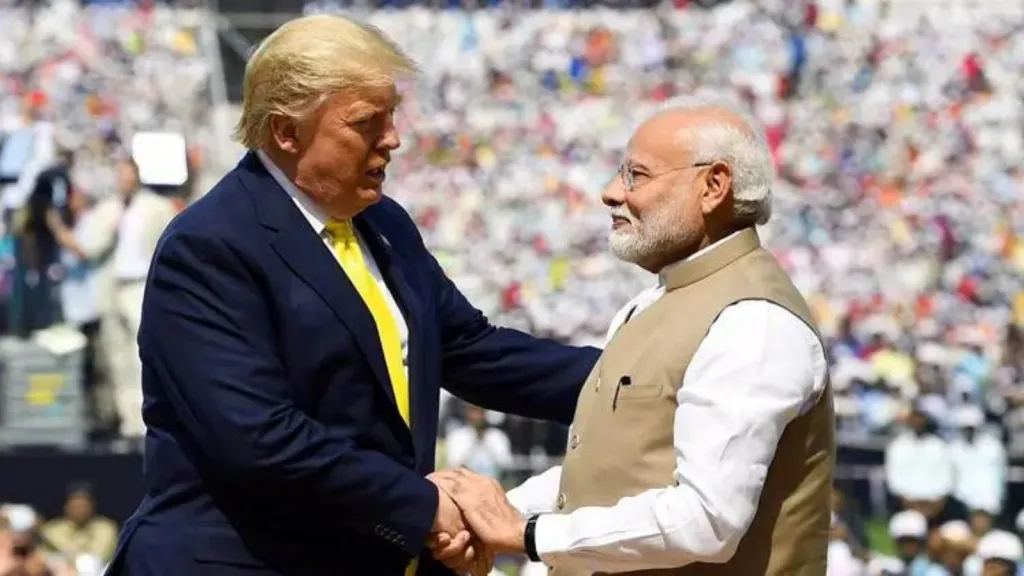
Despite the disagreements over immigration, energy and trade, Aghi maintained that the personal relationship between Modi and Trump remained respectful.
He argued that Trump had not publicly berated the Indian prime minister and that Modi had refrained from reacting to the tensions in a way that would undermine the relationship. Aghi interpreted this restraint as a sign of maturity and stability between the two leaders.
His assessment draws a distinction between personal diplomacy and the policy differences that can emerge between governments. Leaders may maintain cordial relations while their administrations disagree over tariffs, immigration restrictions, energy purchases or other national interests.
Personal rapport can help sustain communication during difficult periods, but it does not remove the need for negotiations or guarantee that both sides will reach the same conclusions. The durability of a bilateral relationship ultimately depends on its institutions, shared interests and ability to manage disagreements.
Aghi also said he saw a high possibility of Trump visiting India in 2027, noting that the US president had received an invitation from Modi. This was his assessment of a possible future visit, rather than confirmation of a scheduled trip.
A potential presidential visit could provide an opportunity to discuss strategic cooperation and outstanding trade issues. However, any concrete outcomes would depend on the agenda, preparations and decisions made by the two governments.
India may need to recalibrate its relationship with the United States
The interview came after Jaishankar said that countries increasingly needed to recalculate their relationships with the United States. Asked about the comment, Aghi argued that international politics was shaped by possibilities and national interests.
He said countries would take decisions based on what served their interests and might reduce dependencies to limit uncertainty and risk. In his view, such recalibration was not unique to India but part of a wider process through which governments respond to changing international conditions.
Recalibration does not necessarily mean abandoning a strategic partnership. It can involve diversifying trade relationships, strengthening domestic capabilities, seeking alternative suppliers or reassessing exposure to policy changes in another country.
For India, managing its relationship with the United States requires balancing cooperation with the need to preserve strategic flexibility. The two countries have important areas of convergence, but their economic and foreign-policy interests do not always align completely.
The same calculation applies to Washington. The United States must weigh the interests of its domestic workforce and industries against the benefits of trade, investment and cooperation with India. Decisions taken in one policy area can also affect confidence in other parts of the relationship.
The challenge for both governments is to manage differences without allowing individual disputes to overwhelm areas of shared interest.
What the latest comments mean for India-US relations
Aghi’s remarks present a pragmatic view of the current relationship: the United States will continue to pursue its domestic economic priorities, while India must protect its own interests and assess how policy changes affect its workers, businesses and strategic objectives.
On H-1B visas, his argument is that Washington’s employment concerns should be understood even as India continues to advocate talent mobility. On trade, he sees the tariff situation and ongoing investigations as important factors that could shape negotiations. On diplomacy, he believes the personal relationship between Modi and Trump remains intact despite differences between their governments.
These issues are interconnected. Immigration rules influence the movement of skilled workers; tariffs affect exporters and investment decisions; energy ties shape economic security; and diplomatic engagement can determine how disagreements are managed.
Nevertheless, Aghi’s views represent an assessment of the relationship rather than a definitive account of future US policy. The direction of H-1B rules, the final terms of a trade agreement and the timing of any presidential visit will depend on decisions that remain separate from his comments.
For India and the United States, the central task is to preserve cooperation where interests overlap while addressing disagreements through sustained engagement. The relationship’s strength will ultimately be measured not only by the personal rapport between their leaders, but also by their ability to deliver practical outcomes for workers, businesses and both countries.
For breaking news and live news updates, like us on Facebook or follow us on Twitter and Instagram. Read more on Latest India on thefoxdaily.com.





COMMENTS 0