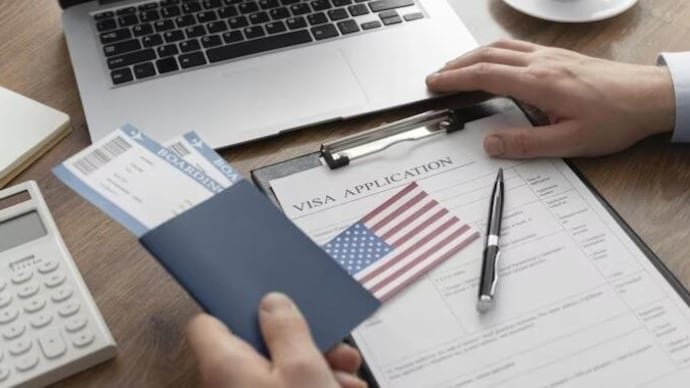
The United States has paused or rescheduled visa appointments at American embassies and consulates around the world as the Trump administration intensifies its immigration enforcement and screening policies. The State Department says the immediate reason is a global training initiative for consular officers, but the move comes against a wider backdrop of tougher visa screening, higher immigration-related costs and new restrictions affecting foreign workers and prospective immigrants.
Applicants whose interviews had already been scheduled have received cancellation notices and been told that they will receive new appointment dates. The State Department has not given a firm timetable for when all affected appointments will resume, adding uncertainty for people WHO may have already made Travel, employment, Education or relocation plans.
The department said the training is intended to help consular officers identify applicants who could become dependent on US public benefits and to make sure visa applications are evaluated comprehensively and consistently. It has not publicly provided detailed information about the training programme or explained how long the appointment adjustments will last.
Why has the US paused visa appointments?
The State Department has described the disruption as an administrative adjustment linked to worldwide training at US embassies and consulates. Consular officers are responsible for interviewing applicants and determining whether they qualify for visas under US Immigration law, making their training directly relevant to how applications are reviewed.
The focus on applicants who might rely on public benefits is particularly significant because it reflects the administration’s renewed emphasis on the financial circumstances of people seeking to enter the United States. The State Department has said the training is intended to strengthen officers’ ability to apply screening standards consistently rather than simply announcing a blanket suspension of visa eligibility.
That distinction matters. A pause in appointments is not the same thing as a permanent ban on visas. For applicants whose interviews were cancelled, the immediate consequence is delay and uncertainty rather than an automatic refusal of their applications.
However, the absence of a clear restart date means the practical impact could extend beyond a short administrative interruption. Applicants may have to rearrange international travel, postpone employment or education plans, reconsider family relocation arrangements and absorb additional costs if appointments are moved significantly later.
What happens to applicants with cancelled interviews?
Applicants who already had interviews scheduled have been notified that their appointments were cancelled and that they would be given new dates. The Financial Times reported that applicants were told they would be informed of the replacement appointment.
For people navigating the US visa system, an interview date is often only one part of a much longer process. Applicants may have already paid application fees, assembled supporting documents, arranged medical examinations where required, booked accommodation and travel, or made plans around a proposed start date for a job or academic programme.
A rescheduled interview therefore does not simply mean finding another afternoon on a calendar. A lengthy delay can affect an entire chain of decisions.
The situation is also important because US embassies and consulates already manage different workloads and appointment systems. The State Department publishes visa wait-time information and notes that appointment availability can vary by location.
Applicants should therefore distinguish between a temporary cancellation caused by the new training programme and a formal refusal of a visa. A cancelled appointment does not by itself establish that an applicant has been found ineligible.
The pause comes as legal immigration faces tighter scrutiny
The appointment disruption is taking place during a much broader change in US immigration policy. President Donald Trump returned to the White House after campaigning on tougher immigration enforcement, and his administration has pursued measures affecting both illegal and legal immigration.
The administration has argued that stronger screening is necessary for national security, public safety and the protection of US taxpayers. Critics, including civil rights and immigration organisations, have challenged several policies and argued that some measures go too far or risk discriminating against particular groups.
The latest visa pause is consequently being viewed in the context of several simultaneous policy changes rather than as an isolated scheduling issue.
Among the most important themes is the administration’s increased emphasis on whether prospective immigrants could become dependent on government benefits. That issue is now being incorporated into consular training and comes alongside other efforts to increase scrutiny of visa applicants.
Up to 200,000 B1 and B2 visas could face revocation
Another development has added to concerns among people already in the United States or planning to travel there. The administration is preparing to revoke the B1 and B2 Business and tourist visas of as many as 200,000 foreign nationals who have applied for or are seeking asylum in the United States, according to State Department documents obtained by The Associated Press and two US officials.
The proposed action would target B1 and B2 visas issued between 2016 and 2026 to people who have sought asylum, with the State Department coordinating the effort with the Department of Homeland Security.
Visa revocation, however, should not automatically be confused with immediate deportation. Losing a business or tourism visa can change a person’s immigration status and ability to travel, but the consequences for someone with a pending asylum case can involve separate immigration proceedings.
If implemented on the reported scale, the measure would represent an unusually broad use of visa revocation and would further demonstrate how the administration is using existing immigration mechanisms to increase pressure on people whose cases fall under scrutiny.
H-1B visa rules add another layer of uncertainty
Foreign skilled workers are also facing a significant proposed change. The Department of Homeland Security has proposed an additional $103,265 fee for H-1B petitions subject to the annual cap, including petitions eligible for the advanced-degree exemption.
The proposal is separate from other applicable H-1B fees and would be paid by the employer when the petition is filed. DHS says the additional charge is intended to recover government costs associated with administering the lawful immigration system, including adjudication, fraud detection, national security vetting, immigration court operations and consular processing. The agency estimates the fee could generate about $8.8 billion annually based on an assumed volume of 85,000 cap-subject petitions.
There is an important point for H-1B applicants: the $103,265 charge is a proposal, not a fee that applicants are currently required to pay. It must go through the federal rulemaking process before it can become a final requirement.
The proposal would apply to the regular H-1B cap of 65,000 visas as well as the additional 20,000 places available to people with qualifying US master’s degrees or higher. Certain cap-exempt petitions, including those filed by eligible universities and research organisations, would not be subject to the proposed fee.
Why the H-1B proposal matters to Indian professionals
The H-1B programme is particularly important for Indian Technology professionals because Indian workers represent a major share of the programme’s beneficiaries. A dramatic increase in employer costs could influence how companies decide which foreign workers to sponsor, particularly for positions where employers have alternative hiring options.
The likely effect is not simply that individual workers would receive a $103,265 bill. The proposed charge is an employer-side cost. The larger question is whether companies would be willing to absorb such a cost when deciding whether to hire or sponsor a foreign professional.
That could encourage employers to become more selective about H-1B sponsorship, particularly for lower-margin positions, while making highly specialised candidates comparatively more attractive. It could also affect international students who complete advanced degrees in the US and later seek H-1B status through the cap.
A recent court ruling shows the limits of the administration’s immigration strategy
The Trump administration’s immigration measures are not being implemented without legal resistance. On August 21, a federal judge in New York struck down a State Department policy that had suspended immigrant visa processing for nationals of 75 countries.
Judge Jeannette Vargas ruled that the policy exceeded Secretary of State Marco Rubio’s statutory authority. The court also rejected the use of nationality-based restrictions in the manner adopted by the administration and ordered the policy vacated.
The ruling is significant because it highlights an important constraint on executive immigration policy: even when an administration seeks to impose tougher screening or restrictions, those measures must remain within the authority granted by Congress and existing immigration law.
That does not mean every new Trump administration immigration measure will be struck down. It does mean that major restrictions can face litigation, and the final outcome of some policies may depend on federal courts.
What is changing for people seeking US visas?
For prospective travellers, students, workers and immigrants, the broader picture is one of a US visa system placing greater emphasis on scrutiny rather than simply processing applications as quickly as possible.
The changes can affect applicants in different ways depending on their visa category.
- Immigrant visa applicants: Delays can affect people preparing to move permanently to the United States, including family-based and employment-based applicants.
- Business and tourist travellers: Visa cancellations or additional scrutiny can create uncertainty for people relying on B1 or B2 visas.
- Foreign skilled workers: H-1B policy changes could make sponsorship substantially more expensive if proposed fees become final.
- International students: Students seeking to transition from US education into employment may face additional uncertainty if employers become more selective about sponsorship.
- Families: Delayed interviews can disrupt relocation plans and create additional financial and administrative burdens.
The common thread is uncertainty. Immigration decisions are often time-sensitive, and even a temporary interruption can have consequences when employment contracts, university programmes, family arrangements or travel plans depend on a particular date.
What applicants should understand about the current pause
The most important distinction is between an appointment disruption and a change in eligibility rules. The State Department has attributed the current worldwide scheduling changes to consular training. It has not announced that all visa applicants are being permanently denied or that all visa categories have been abolished.
At the same time, the training is not occurring in a policy vacuum. It is specifically connected to screening for potential reliance on US public benefits, making it part of a larger immigration strategy focused on more intensive evaluation.
Applicants should therefore avoid treating a cancelled appointment as a final decision on their case. The immediate issue is rescheduling, while the eventual visa decision will depend on the applicant’s category, circumstances and applicable US immigration rules.
What happens next?
The next major question is when normal appointment scheduling will resume and how much the new training will change the way consular officers evaluate applications. The State Department has not announced a definitive end date for the worldwide adjustments.
The outcome will also depend on developments in the courts and on whether proposed immigration measures become final rules. The proposed H-1B fee, for example, remains subject to the federal rulemaking process, while other immigration restrictions are already facing legal challenges.
For applicants, the practical lesson is straightforward: a visa appointment is increasingly becoming one stage in a more demanding screening process. Delays, additional documentation requirements, policy changes and litigation can all affect the timetable.
The worldwide pause therefore matters beyond the cancelled appointments themselves. It is another sign that the Trump administration’s immigration policy is extending into the administration of legal immigration, with consular screening, visa costs and eligibility rules all becoming areas of heightened scrutiny.
Whether the changes produce the administration’s stated goal of stronger security while maintaining an effective legal immigration system will depend on how the new screening standards are applied, how quickly consular services return to normal and how courts respond to policies that are challenged.
For breaking news and live news updates, like us on Facebook or follow us on Twitter and Instagram. Read more on Latest World on thefoxdaily.com.





COMMENTS 0