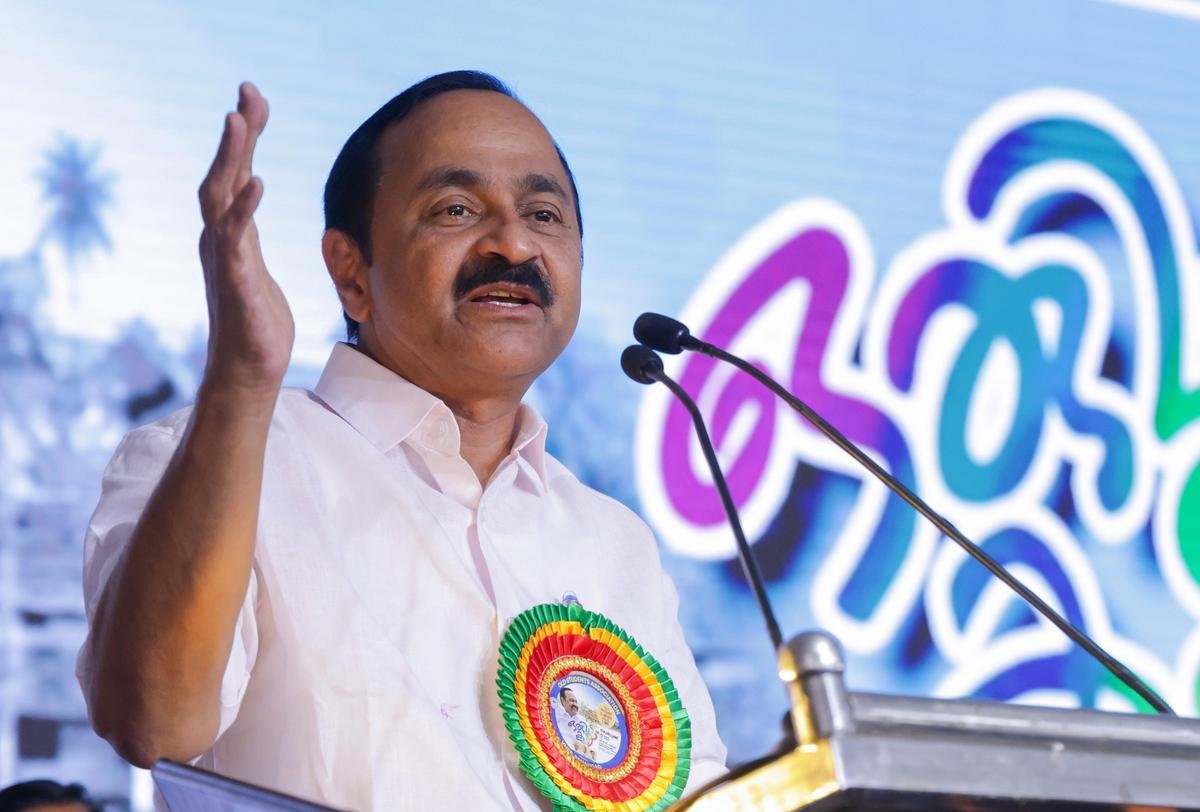
Keralam Chief Minister V D Satheesan has said the Loka Kerala Sabha (LKS) was disbanded because it failed to achieve its intended objectives, triggering a political dispute over the state government’s approach to expatriate welfare.
Speaking in the state Assembly on Thursday, Satheesan said the United Democratic Front (UDF) had consistently opposed the LKS because its recommendations were not being implemented. He said the government intended to replace it with a stronger and more effective mechanism through which expatriates could raise their concerns and seek solutions.
The opposition Left Democratic Front (LDF), however, condemned the decision, describing the dissolution of the LKS as a “cruelty” towards the expatriate community. Opposition leaders argued that the government had not established an alternative forum, leaving overseas Keralites without a dedicated platform to communicate their grievances.
The dispute emerged during an Assembly discussion covering several issues affecting expatriates, including higher insurance premiums, delayed pension payments from the Pravasi Welfare Board, rising airfares on routes between the Gulf region and Keralam, and the loss of welfare board membership when contributions remain unpaid for several months.
Why Did the Government Disband the Loka Kerala Sabha?
Satheesan said the decision to disband the Loka Kerala Sabha was based on its failure to fulfil the purpose for which it was established. According to the chief minister, the forum’s recommendations were not being implemented effectively, limiting its ability to address the concerns of expatriates.
The UDF had opposed the LKS, and Satheesan maintained that continuing the existing arrangement would not resolve the problems faced by overseas Keralites. Instead, the government intends to establish a more effective mechanism for expatriates to communicate their grievances and seek action.
However, the chief minister’s statement did not provide details of the proposed replacement mechanism, including its structure, timeline or how expatriates would participate in it.
This absence of a clearly outlined alternative became a central point of criticism from the opposition. LDF leaders argued that disbanding the existing forum without establishing a replacement could leave expatriates without an institutional platform to raise issues affecting their lives and livelihoods.
The disagreement reflects a broader debate over how the state government should engage with its overseas population. While the government has questioned the effectiveness of the LKS, the opposition has emphasised the importance of retaining a formal channel for expatriate representation.
LDF Calls the Decision Unfair to Expatriates
Opposition leader Pinarayi Vijayan criticised the decision to disband the Loka Kerala Sabha, describing it as a “cruelty” towards expatriates from the state.
During his walkout speech in the Assembly, Vijayan argued that the government had not introduced an alternative mechanism to replace the LKS. He said the absence of a new forum meant expatriates had been left without a dedicated space to present their concerns.
Vijayan also accused the UDF government of having an unfavourable attitude towards the expatriate community. He linked this criticism to the reduction in the budget allocation for the Department of Non-Resident Keralites Affairs (NORKA).
According to Vijayan, the allocation for NORKA had been reduced to ₹112 crore, compared with the ₹154 crore provided for it in the LDF’s budget for 2026-27.
He argued that the reduction reflected the government’s priorities and questioned whether expatriates were receiving adequate recognition for their contribution to the state and the country.
Vijayan maintained that overseas Keralites play an important role in economic development but do not receive sufficient support from either the central or state governments.
The opposition also demanded the withdrawal of the increased insurance premiums, arguing that the higher rates had created an excessive financial burden for expatriates and their families.
Pravasi Welfare Board Faces a ₹700 Crore Funding Shortfall
The financial position of the Kerala Pravasi Welfare Board was another major issue raised during the Assembly discussion. Satheesan said contributions to the board’s fund were short of ₹700 crore, forcing the government to provide additional money to cover pension payments.
The board is responsible for providing welfare benefits to eligible expatriates and other members covered by its schemes. However, the difference between the money collected through contributions and the amount required for pensions has created pressure on its finances.
Satheesan said the board had disbursed ₹163 crore in benefits during 2026-27, including ₹102 crore in pension payments.
He added that the government had paid a shortfall of ₹32 crore to cover three months of pension payments. Pension arrears for another three months remained outstanding, according to the chief minister.
The figures highlight the financial difficulties facing the welfare board as its membership has expanded without a corresponding increase in contribution income.
Monthly Pension Expenses Exceed Contributions
Satheesan said the board needed approximately ₹35 crore every month to meet its pension obligations but received only around ₹16 crore in contributions.
This gap between monthly income and expenditure has made it difficult for the board to meet its payment commitments without additional government assistance.
The chief minister urged expatriates and organisations representing them to contribute to the welfare board fund, arguing that stronger financial participation would help address delays in pension disbursement.
He said the board’s membership had increased significantly over recent years. In 2020-21, it had approximately 17,000 members, compared with more than one lakh at the time of the Assembly discussion.
However, Satheesan said the growth in membership had not been matched by a corresponding rise in income because contributions had declined.
The situation presents a challenge for a welfare system that must balance its obligations to members with the funds available to finance those benefits.
For expatriates who depend on pension payments, delays can create financial uncertainty, particularly when they have limited alternative sources of income. The opposition’s concerns over arrears therefore form part of a wider debate about the sustainability and reliability of the state’s expatriate welfare arrangements.
Government Promises Changes to Welfare Board Membership Rules
The Assembly discussion also addressed the loss of welfare board membership when expatriates fail to pay their contributions for three or four months.
CPI MLA K K Valsaraj raised concerns about members who become unable to make payments because of financial difficulties, including job losses linked to conflicts in West Asia.
For workers facing an interruption in employment, missed contributions can create a risk of losing access to welfare benefits at a time when financial support may be especially important.
Satheesan acknowledged the issue and assured the Assembly that necessary changes would be made to the relevant rules. Under the proposed changes, expatriates who default on contributions for three or four months would be allowed to renew their membership by paying the outstanding amount.
The proposed adjustment could provide a way for members to restore their eligibility without permanently losing their connection to the welfare system because of a temporary payment default.
However, the practical impact will depend on the final rules, including the conditions for reinstatement and the process members must follow to clear their arrears.
NORKA Care Insurance Premiums Increased After Heavy Claims
The increase in insurance premiums under NORKA Care and NORKA Care Plus was another major source of disagreement between the government and the opposition.
Satheesan defended the decision, saying the original insurance scheme had a structural problem because it covered existing illnesses. He argued that the design led to a large volume of claims and made the earlier premium rates financially unsustainable for insurance providers.
According to the chief minister, ₹145 crore was collected under the NORKA Care scheme, while claims of approximately ₹210 crore had to be paid.
Of the total claims, around ₹120 crore related to the treatment of diseases such as cancer, he said.
Satheesan also stated that the insurance company recorded losses equivalent to 160% under NORKA Care and 350% under NORKA Care Plus.
These figures formed the basis of the government’s explanation for increasing premiums. The chief minister said insurance companies had not submitted quotations for providing coverage at the earlier rates, leaving the government with limited options if it wanted the schemes to continue.
He maintained that the premium increase was therefore necessary to secure insurance coverage for expatriates and their families.
Why the Government Says Higher Premiums Were Necessary
Satheesan argued that the original insurance arrangements created financial pressure because they included coverage for pre-existing illnesses, which he described as a structural mistake in the scheme’s design.
When claims substantially exceed the premiums collected, insurance providers may be unwilling to continue offering coverage at the same rates. The chief minister said this had happened with the NORKA schemes, with the gap between collections and claims making the earlier premiums difficult to sustain.
He added that the scheme would cover people aged between 18 and 110 years. According to Satheesan, obtaining insurance coverage for people over 60 can generally be difficult, making the scheme’s broad age range an important consideration.
However, the opposition challenged the government’s justification for the increase. Vijayan argued that the revised premiums were considerably higher than rates available in the open market and demanded that the government withdraw the increase.
The disagreement centres on two competing concerns: keeping insurance coverage financially viable and ensuring that premiums remain affordable for expatriates and their families.
For overseas workers, particularly those facing employment uncertainty or supporting dependants, a substantial increase in premiums can add to existing financial pressures. The government, meanwhile, has argued that maintaining the earlier rates was not possible without insurance providers willing to offer coverage under those terms.
Opposition Demands Withdrawal of Insurance Premium Hike
Vijayan said the higher insurance premiums had imposed an unbearable financial burden on expatriates. He called on the government to reverse the increase, arguing that the revised rates exceeded those available through the wider insurance market.
The opposition’s criticism reflects concerns that expatriates could face higher costs while also dealing with pension delays, rising travel expenses and uncertainty over welfare arrangements.
The government has defended the premium revision on the grounds that claims under the existing schemes substantially exceeded the amount collected. However, the Assembly exchange did not establish whether further changes to the schemes or alternative insurance arrangements would be considered.
The issue remains significant for expatriates who rely on the schemes for medical protection for themselves and their families. The long-term sustainability of the programmes will depend on the relationship between premiums, claims, coverage conditions and the ability of members to afford the revised rates.
Rising Airfares Between the Gulf and Keralam Raise Concerns
Exorbitant airfares charged by airlines when expatriates travel from the Gulf region to Keralam were also raised during the Assembly discussion.
CPI MLA K K Valsaraj highlighted the financial burden faced by expatriates returning home, particularly when travel costs increase during periods of disruption or uncertainty.
Satheesan said successive state governments, including the previous LDF administration and the current UDF government, had repeatedly urged the central government to regulate airlines and place limits on airfares.
He criticised the high fares charged to expatriates and argued that action was needed to address the problem.
However, the state government’s appeal for intervention does not itself establish a cap on fares. The chief minister’s remarks indicated that the state had sought action from the Centre, while the broader question of how airline pricing should be regulated remained unresolved in the Assembly discussion.
For expatriates travelling between Gulf countries and Keralam, airfares can be a significant expense. High ticket prices can be particularly difficult for workers travelling with family members or returning home during periods of job loss and economic uncertainty.
West Asia Conflicts Add to Expatriate Financial Pressure
The opposition also raised concerns about expatriates who have lost their jobs amid conflicts in West Asia and subsequently struggled to maintain their welfare board contributions.
Valsaraj argued that members who miss payments for three or four months can lose their membership, potentially weakening their access to welfare benefits during periods of financial hardship.
The issue connects the welfare board’s funding difficulties with the economic circumstances of the people it serves. When workers lose employment, they may find it harder to pay regular contributions even as their need for financial protection increases.
The government’s assurance that defaulting members would be allowed to renew their membership by paying outstanding contributions could help address part of this problem.
Nevertheless, the measure would not directly resolve the board’s wider funding shortfall or eliminate delays in pension payments. Those challenges will require the board and government to address the difference between contribution income and monthly expenditure.
Assembly Speaker Rejects Adjournment Notice
The issues surrounding the Loka Kerala Sabha, insurance premiums and welfare board pensions were brought together in an adjournment notice moved by CPI MLA K K Valsaraj.
The notice sought an Assembly discussion on what the opposition viewed as urgent concerns affecting expatriates and their families.
Satheesan responded by outlining the government’s reasons for disbanding the LKS, explaining the financial difficulties facing the welfare board, defending the insurance premium increases and promising changes to the membership rules.
He argued that the House did not need to suspend its proceedings to discuss the issues. Based on the chief minister’s position, Speaker Thiruvanchoor Radhakrishnan denied permission for the adjournment notice.
The opposition objected to the decision and staged a walkout. During the protest, Vijayan reiterated his criticism of the government’s approach to expatriate welfare and demanded the withdrawal of the insurance premium increase.
The walkout underscored the political disagreement over whether the government’s explanations and assurances were sufficient to address the concerns raised by the opposition.
What the Dispute Means for Expatriates From Keralam
The Assembly debate highlighted several interconnected issues affecting Keralam’s expatriate community: representation in government decision-making, the affordability of health insurance, the timely payment of pensions, access to welfare benefits and the cost of international travel.
The dispute over the Loka Kerala Sabha concerns the institutional mechanism through which expatriates can raise their grievances. The government says the existing forum failed to meet its objectives and promises a more effective replacement, while the opposition argues that no alternative has been provided.
At the same time, the Pravasi Welfare Board faces a substantial gap between monthly pension expenses and contribution income. The government has covered part of the shortfall, but arrears remain, according to the chief minister.
The insurance premium increase presents a separate challenge. The government says the previous rates could not be sustained because claims exceeded collections and insurance providers were unwilling to offer coverage at the earlier prices. The opposition, however, argues that the higher premiums are unaffordable and should be withdrawn.
Rising airfares and the loss of welfare membership after missed contributions add further pressure, particularly for expatriates affected by job losses or economic disruption in West Asia.
Conclusion
Keralam’s decision to disband the Loka Kerala Sabha has triggered a wider political debate about how the state supports its overseas community. Chief Minister V D Satheesan has argued that the forum failed to deliver its intended results because its recommendations were not being implemented, and he has promised a stronger mechanism for expatriates to raise their concerns.
The LDF opposition has condemned the decision, arguing that the government has left expatriates without a replacement forum. It has also demanded the withdrawal of higher insurance premiums and questioned the reduction in the NORKA budget allocation.
Meanwhile, the Pravasi Welfare Board’s funding shortfall, pension arrears, insurance costs and high airfares remain important concerns for expatriates and their families. The government has promised changes to allow members who missed several months of contributions to restore their membership by paying the outstanding amount.
The impact of these assurances will depend on their implementation. A replacement for the Loka Kerala Sabha, sustainable welfare board finances, affordable insurance and reliable pension payments will be central to addressing the concerns raised in the Assembly.
For breaking news and live news updates, like us on Facebook or follow us on Twitter and Instagram. Read more on Latest India on thefoxdaily.com.




COMMENTS 0