US lawmakers have introduced proposals targeting payments made by American businesses to overseas service providers, raising questions about the future of India’s technology and outsourcing industry. One proposal, introduced by Ohio Republican Senator Bernie Moreno, seeks to impose a 25% excise tax on certain outsourcing payments made by US taxpayers to foreign service providers.
The proposal has gained attention ahead of the November 3, 2026, US midterm elections, particularly because India is a major supplier of software and IT-enabled services to American businesses. A related bill introduced in the House of Representatives by Georgia Republican Representative Austin Scott also seeks to restrict tax deductions for qualifying outsourcing payments.
Neither proposal has become law. However, the measures highlight a growing debate over overseas outsourcing, domestic employment and the economic relationship between the United States and India.
The issue is particularly significant because Indian companies also employ thousands of people within the United States. A 2023 industry survey recorded 26,133 employees at Indian companies operating in Ohio and Georgia, illustrating how Indian businesses contribute to the American economy through local hiring and investment.
What Is the Proposed 25% US Outsourcing Tax?
In October 2025, Ohio Republican Senator Bernie Moreno introduced the Halting International Relocation of Employment (HIRE) Act. The proposed legislation seeks to impose a 25% excise tax on specified outsourcing payments made by US taxpayers to foreign persons for work that benefits consumers in the United States.
Alongside the proposed excise tax, the bill would prevent American businesses from claiming income-tax deductions for qualifying outsourcing payments.
The proposal aims to make overseas outsourcing more expensive for US companies and encourage them to retain employment opportunities within the country. According to Moreno’s announcement, revenue generated through the proposed tax would support domestic workforce training programmes and apprenticeships.
The measure does not propose a blanket 25% tax on every payment made to an Indian company. Its provisions focus on qualifying payments for services benefiting US consumers, and its potential impact would depend on how the legislation defines covered transactions.
Georgia Introduces a Separate Bill Targeting Outsourcing Payments
In February 2026, Republican Representative Austin Scott of Georgia introduced a related proposal in the US House of Representatives.
Scott’s bill seeks to deny income-tax deductions for qualifying payments made by American businesses for outsourced work performed overseas. Unlike Moreno’s Senate proposal, the House measure does not include a 25% excise tax.
Both proposals seek to change the tax treatment of certain outsourcing arrangements, but they approach the issue differently.
- HIRE Act: Proposes a 25% excise tax on specified outsourcing payments and disallows related income-tax deductions.
- Georgia House proposal: Seeks to deny income-tax deductions for qualifying outsourcing payments but does not include the proposed 25% excise tax.
The Senate proposal was referred to the Finance Committee, while the House measure was sent to the Ways and Means Committee. Neither bill has cleared Congress, meaning the proposed changes are not currently law.
How Many Jobs Do Indian Companies Support in Ohio and Georgia?
Indian companies have established a substantial presence in several US states through local employment, business operations and investments. The Confederation of Indian Industry’s (CII) seventh Indian Roots, American Soil survey collected responses from 163 Indian companies operating across the United States.
These companies reported a combined workforce of 425,960 employees and more than $40 billion in tangible investments across the country.
Ohio and Georgia were among the states where Indian businesses reported significant employment figures.
- Georgia: Indian companies reported 13,945 employees and investments worth $7.47 billion.
- Ohio: Indian companies reported 12,188 employees and investments worth $291 million.
- Combined employment: The two states accounted for 26,133 reported jobs.
These figures come from a 2023 industry survey and are based on company responses. They should not be treated as a verified estimate of employment levels in November 2026.
Indian Companies Contribute Beyond the IT Sector
The employment figures also cover a wider range of industries than information technology alone. Indian companies surveyed by CII operate across pharmaceuticals, manufacturing, technology and services.
This distinction matters when assessing the potential impact of outsourcing legislation. The reported 26,133 jobs in Ohio and Georgia represent employment across different industries, not exclusively IT and business-process outsourcing positions.
Indian companies can also operate through US-based subsidiaries that hire American workers while other parts of their businesses deliver services from India. Local employment and cross-border outsourcing are therefore separate activities that can exist within the same corporate structure.
Why the Proposed Tax Matters for India’s IT Industry
The United States is a major destination for India’s software and IT-enabled services exports. According to the Reserve Bank of India’s September 2026 survey, the US purchased $119.7 billion worth of Indian software services in FY26, compared with $108.3 billion in the previous financial year.
The US share of India’s software services exports increased from 52.9% to 54.1% over the same period.
The figures underline the importance of the American market for Indian technology companies, including businesses providing software development, IT support and business-process outsourcing services.
Most Indian Software Services Exports Are Delivered Remotely
The RBI survey found that 91.7% of India’s software services exports across all destinations were delivered off-site rather than at clients’ premises.
This delivery model allows Indian technology companies to provide services to overseas customers through teams operating from India. It also explains why changes to the tax treatment of cross-border service payments could attract attention across the Indian IT sector.
However, the proposed US legislation would not automatically apply to every dollar of Indian software exports. Its scope is based on qualifying payments made by American taxpayers for services benefiting US consumers, rather than being limited to Indian suppliers or technology companies.
The eventual effect on Indian businesses would depend on the final legislative language, the types of services covered and how US companies respond to any additional tax costs.
What Can the November 3 US Midterm Elections Change?
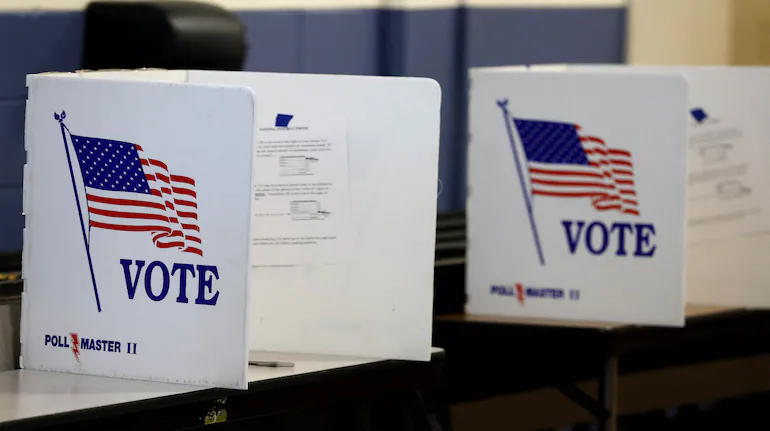
The November 3, 2026, midterm elections will determine the political composition of the US Congress for the next legislative period. All 435 seats in the House of Representatives and 35 Senate contests are scheduled to be on the ballot, according to election tracker Ballotpedia.
Republicans currently control both chambers of Congress. The election results will determine which party controls the House and Senate and, consequently, the leadership of congressional committees responsible for considering legislation.
However, the midterm elections will not directly decide whether either outsourcing proposal becomes law.
Why Congressional Control Matters for the Outsourcing Bills
Moreno, who was elected to the Senate in 2024, is not facing re-election in 2026. Scott’s House seat, however, is among those being contested.
The election could influence the future of the proposals by changing committee leadership and the legislative agenda when the next Congress begins in January 2027.
If the bills are not enacted before the current Congress ends, lawmakers would need to introduce them again in the next Congress. Any proposed tax change would have to pass both the House and Senate before receiving the president’s signature. Congress could also override a presidential veto if the required votes were secured.
Therefore, the election results may influence the political environment in which the proposals are considered, but they will not automatically turn either measure into law.
What the Proposed US Tax Could Mean for Indian Businesses
The debate over outsourcing highlights two important parts of the India-US economic relationship: services that American customers purchase from overseas providers and investments Indian companies make within the United States.
The proposed legislation focuses on the tax treatment of qualifying payments for work performed overseas. Meanwhile, the CII survey documents the employment and investments generated by Indian companies operating in America.
For India’s IT industry, the central concern is whether additional costs for American businesses could affect demand for services supplied from India. If the proposals advance, companies may need to review their outsourcing arrangements, service contracts and delivery models to understand the potential financial implications.
At the same time, Indian companies’ US-based operations demonstrate that the relationship extends beyond cross-border outsourcing. Their local workforce and investments form another part of their contribution to the American economy.
What Happens Next?
Both outsourcing proposals remain at the congressional committee stage, and neither has cleared Congress. Their future will depend on legislative support, committee action and the priorities of the next Congress following the November 3 midterm elections.
For now, the proposed 25% tax is a legislative proposal rather than an existing charge on Indian IT exports. Nevertheless, the debate is important for Indian technology companies because the United States accounts for more than half of India’s software services exports.
The distinction between overseas service payments and local investment will remain central to the discussion as US lawmakers consider measures intended to discourage offshore outsourcing while Indian companies continue to employ workers and invest across American states.
For breaking news and live news updates, like us on Facebook or follow us on Twitter and Instagram. Read more on Latest India on thefoxdaily.com.






COMMENTS 0