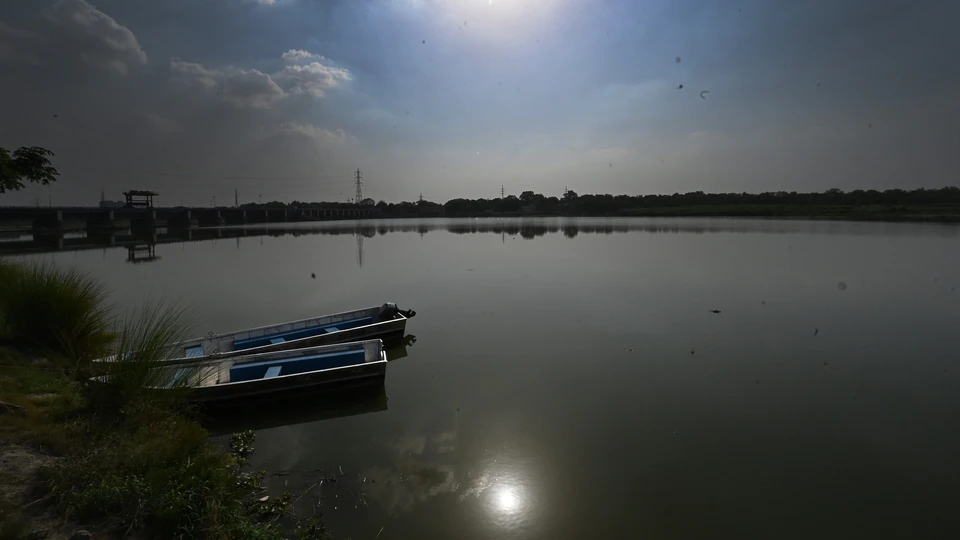
A proposed 52-km Yamuna riverfront development project in Delhi, modelled on Ahmedabad’s Sabarmati riverfront, has drawn opposition from environmentalists, researchers, former government officials and citizen groups. The coalition has warned that replicating the Sabarmati model along the Yamuna could threaten the river’s flood-carrying capacity and increase flood risks in the national capital.
In a letter addressed to Union Jal Shakti Minister CR Patil, Union Environment Minister Bhupender Yadav, Delhi Lieutenant Governor Taranjit Singh Sandhu and Chief Minister Rekha Gupta, 18 signatories urged the Centre and Delhi government to reconsider the proposal.
They argued that the Yamuna has significantly different ecological and hydrological characteristics from the Sabarmati and that any development must account for these differences before construction begins.
What Is the Proposed 52-Km Yamuna Riverfront Project?
The objections follow the Delhi government’s announcement on October 21 that it was initiating the process of signing a memorandum of understanding with the Sabarmati Riverfront Development Corporation Limited (SRFDCL) for the proposed project.
The development is planned across 52 km in two phases:
- Phase 1: From Palla to Wazirabad.
- Phase 2: From Wazirabad to Kalindi Kunj.
The proposal draws inspiration from Ahmedabad’s Sabarmati riverfront development. However, the coalition has questioned whether a similar approach would be suitable for the Yamuna, particularly given its role in carrying floodwaters through Delhi and downstream regions.
Why Environmentalists Oppose the Sabarmati Model for the Yamuna
The signatories include former water resources secretary Shashi Shekhar, scientist Ravi Chopra and members of organisations such as Yamuna Jiye Abhiyan, the South Asia Network on Dams, Rivers and People (SANDRP) and New Delhi Nature Society.
They said the Sabarmati and Yamuna have fundamentally different hydrological characteristics. The Sabarmati is a seasonal river whose urban stretch in Ahmedabad is sustained by regulated water from the Narmada canal system and impounded by the Vasna barrage.
The Yamuna, by contrast, is a glacier-fed Himalayan river that carries substantial silt and experiences significant seasonal variations in water flow. According to the coalition, these differences make it difficult to apply the same riverfront development model to both rivers.
Differences in Pollution and Water Management
The letter also highlighted differences in how pollution is managed along the two rivers. Most polluting drains have been diverted away from the Sabarmati riverfront stretch, the signatories said.
They argued that the same arrangement cannot simply be replicated along the Yamuna, which flows through several states downstream of Delhi. The river’s pollution and water-management challenges therefore require a different approach.
How Could Construction on the Yamuna Floodplain Increase Flood Risks?
The coalition warned that additional construction on the Yamuna floodplain could reduce the river’s ability to accommodate and carry floodwaters. It cited the floods of 2023 and 2025 as examples of the risks facing areas along the river.
According to the letter, accumulated silt, encroachments and infrastructure such as bridges, roads and barrages have already reduced the river’s cross-sectional area. The signatories argued that these changes could make the Yamuna more vulnerable to flooding even at comparatively lower flows.
They also pointed out that the floods inundated large areas of the Delhi Development Authority’s (DDA) biodiversity parks developed along the floodplain.
“Notably, the floods also inundated large areas of the Delhi Development Authority’s (DDA) biodiversity parks created along the floodplain. Under such a scenario, further development in the form of a riverfront project on the floodplain without a comprehensive assessment of its cumulative impacts on the river’s flood absorption and carrying capacity has the potential to aggravate flood risks and damages in future,” the communication added.
The coalition has called for a comprehensive assessment of the project’s cumulative effects on the river’s flood absorption and carrying capacity before any development proceeds.
Environmentalists Cite National Green Tribunal’s 2015 Judgment
The signatories also referred to the National Green Tribunal’s January 2015 judgment in the Mailey Se Nirmal Yamuna case. The tribunal had rejected an earlier riverfront proposal by the Delhi Development Authority over concerns about the river’s flood-carrying capacity and the protection of its floodplain.
The coalition cited the judgment as a reason for caution, arguing that the proposed development should account for the environmental and flood-management concerns raised in earlier proceedings.
What Are the Signatories Demanding?
The 18 signatories have urged the Centre and Delhi government to make key project documents publicly available. Their demands include disclosure of:
- The project’s pre-feasibility report.
- The detailed project report.
- Project cost estimates.
- Environmental assessments.
They have also called on the government to prioritise restoring environmental flows, reducing pollution and completing the scientific demarcation of the Yamuna floodplain.
According to the coalition, these measures should take priority over large-scale riverfront construction because they address the underlying causes of the river’s degradation and flood risks.
“We urge the concerned Central Government Ministries and Government of Delhi to ensure that no project compromises the integrity of the Yamuna River, its floodplain and long-term flood security of the national capital. Public resources should be directed towards addressing the causes of the river’s degradation and flood risks, rather than undertaking large-scale riverfront development plans,” the letter stated.
Yamuna Riverfront Project Faces Questions Over Environmental Impact
The proposed 52-km development has brought renewed attention to the challenge of balancing urban infrastructure plans with river conservation and flood management. While the Delhi government has initiated the process of working with the Sabarmati Riverfront Development Corporation, environmentalists and citizen groups are demanding greater transparency and scientific scrutiny.
The central concern raised by the coalition is that a development model designed for one river may not be suitable for another with different ecological and hydrological conditions. The project’s environmental assessments, floodplain impact and implications for Delhi’s long-term flood security are therefore key issues in the debate.
For breaking news and live news updates, like us on Facebook or follow us on Twitter and Instagram. Read more on Latest India on thefoxdaily.com.






COMMENTS 0