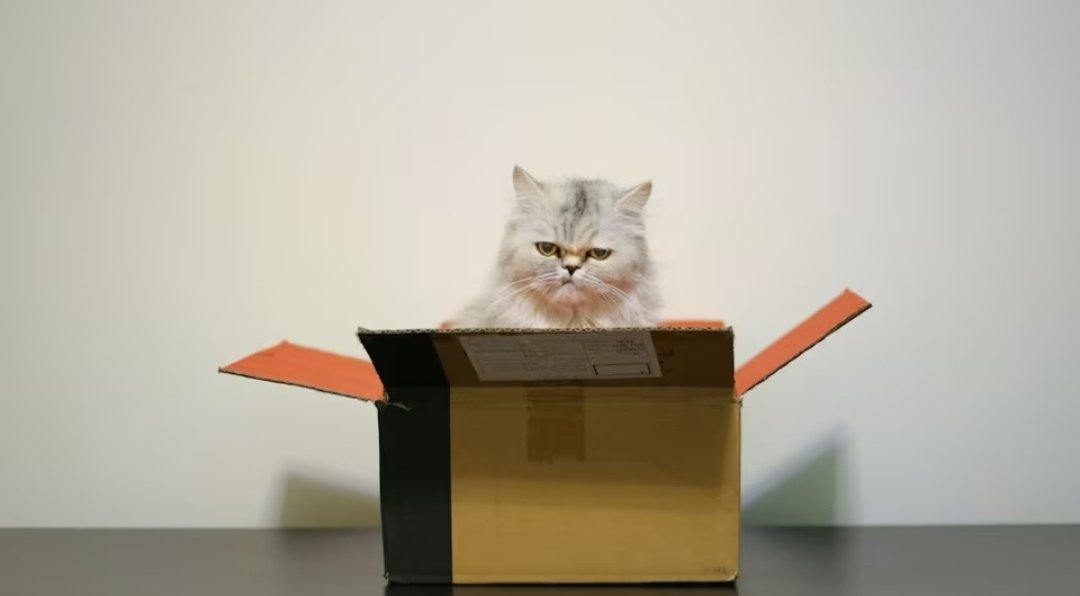
If you have ever bought your cat a soft, expensive bed only to find them happily curled up inside an old cardboard box, you are certainly not alone. Cats seem to have a special fascination with boxes, whether they are large delivery cartons, small shoe boxes or simple packaging left on the floor.
While the behaviour looks amusing, there are several logical reasons behind it. From creating a sense of security to providing warmth and satisfying their natural instinct to hide and observe, a cardboard box can offer cats something that even the most luxurious pet bed cannot.
In this edition of HT Lifestyle’s ‘Everyday Explained’, here’s a closer look at why cats love cardboard boxes and why your pet may repeatedly choose a humble carton over its expensive sleeping space.
Why Do Cats Love Cardboard Boxes?
The simple answer is that a box can make a cat feel safe, comfortable and in control of its surroundings. Cats are both predators and potential prey in the wild, so enclosed spaces provide a natural place from which they can hide, rest and observe what is happening around them.
A cardboard box offers many of these advantages in one package. It has walls that block some visual distractions, a relatively confined space that can feel secure and a surface that can be scratched, bitten or explored.
For a cat, therefore, an ordinary cardboard box is not necessarily just rubbish. It can become a hiding place, sleeping area, observation post and play space.
1. Boxes Make Cats Feel Safe
One of the biggest reasons cats are attracted to boxes is the feeling of security they provide. An enclosed space gives a cat somewhere to retreat when it feels uncomfortable, frightened or overstimulated.
Instead of resting in an exposed location where people, other pets or unfamiliar noises can approach from different directions, a cat inside a box has fewer sides to monitor.
This can be particularly appealing in a busy household. If your cat retreats into a box when guests arrive, children are playing nearby or there is a sudden noise, it may simply be seeking a quiet and protected place.
2. Cats Like to Hide and Observe
Cats are naturally curious animals. They often prefer to watch their surroundings from a position where they feel protected.
A box provides an excellent observation point. Your cat can sit inside and monitor people, other animals and activity around the room while remaining partially concealed.
This combination of visibility and concealment can be especially attractive to a feline. The cat does not have to choose between hiding completely and being exposed; it can do both at the same time.
3. Cardboard Helps Keep Cats Warm
Temperature can also play a role. Cats generally enjoy warm, cosy spaces, and cardboard provides some insulation from cooler surfaces.
When a cat curls up inside a relatively small box, its body heat can help warm the enclosed space. The surrounding cardboard may also reduce contact with a cold floor.
This may explain why cats sometimes become particularly attached to boxes during colder weather. A small carton can feel surprisingly cosy compared with a large, open bed.
4. The Confined Space Can Be Comfortable
Humans may look at a tiny cardboard box and wonder how a cat could possibly find it comfortable. Cats, however, often seem to prefer spaces where their bodies fit snugly.
A box can provide physical boundaries around the body, creating a sense of enclosure. This may make it appealing as a resting spot, particularly when the cat can curl up comfortably inside.
This is one reason a cat may ignore a large, open bed in favour of a smaller container. The expensive bed may offer more room, but the box may provide the enclosed feeling the cat prefers.
5. Boxes Can Reduce Stress
Having access to a hiding place can be useful for cats because it gives them somewhere to retreat when they experience stress.
Changes such as moving house, introducing a new pet, having visitors or rearranging furniture can make some cats uneasy. A familiar hiding spot can provide a sense of control while they adjust to their surroundings.
Research involving cats in shelter environments has also explored the benefits of hiding spaces. Providing cats with appropriate hiding opportunities may help them cope with stressful surroundings and adapt more easily.
That does not mean every cat needs a cardboard box specifically. A covered cat bed, enclosed cat house or another safe hiding area can serve a similar purpose.
6. Cats Enjoy Scratching and Exploring Cardboard
A cardboard box isn’t only useful for sleeping. It can also become a source of entertainment.
Cats naturally investigate new objects using their senses. They may sniff, paw, scratch, bite and climb into a box as they explore it.
The texture of cardboard can also be satisfying to scratch. If your cat enjoys shredding the edges of a carton, it may simply be engaging in normal exploratory and scratching behaviour.
This makes boxes particularly attractive because they combine several activities in one object: hiding, climbing, scratching, chewing and playing.
7. A New Box Smells Interesting
Cats rely heavily on their sense of smell to understand their environment. A newly introduced cardboard box carries unfamiliar scents that can immediately attract a curious cat.
The box may smell of cardboard, packaging materials, storage areas or the environment through which it has travelled. Those unfamiliar smells give the cat something new to investigate.
After exploring the box, the cat may begin rubbing against it or spending time inside. This can also allow the animal to leave its own scent on the object, making it increasingly familiar.
8. Cats Like Having Their Own Space
Cats are often portrayed as independent, and many do value having spaces where they can retreat without being disturbed.
A cardboard box can effectively create a small private territory. If it is placed somewhere quiet, the cat may begin treating it as a personal resting area.
This can be especially useful in homes with multiple cats. Having several safe resting and hiding locations can give individual animals more opportunities to avoid unwanted interactions.
Why Does My Cat Ignore Its Expensive Bed?
There is a simple reason: your cat does not care about the price tag.
When choosing a resting place, cats are responding to factors such as location, temperature, texture, smell, security and comfort rather than the monetary value of an object.
An expensive cat bed might be soft and beautifully designed, but if it is positioned in an exposed, noisy or inconvenient location, your cat may simply prefer something else.
Meanwhile, a cardboard box may be placed in a quiet corner with a comfortable temperature and a good view of the room. From your cat’s perspective, that could make it the better bed.
Why Do Cats Sit in Boxes That Are Too Small?
This is one of the funniest parts of feline behaviour. Cats often attempt to squeeze themselves into containers that appear far too small for them.
A snug space can provide physical boundaries around the body and create a cosy feeling. However, there is a limit. If a cat cannot comfortably turn around, stretch, enter or exit the container, the box should not be used as a regular resting space.
The safest option is to provide boxes large enough for the cat to enter and leave easily without becoming trapped.
Do All Cats Like Cardboard Boxes?
No. Individual cats have individual personalities and preferences.
Some cats will immediately investigate every box that enters the house, while others may completely ignore cardboard. A cat may also prefer a particular type of box depending on its size, location, texture or smell.
There is no need to force a cat to use a box. The goal is simply to provide safe options and allow the animal to choose where it feels most comfortable.
Are Cardboard Boxes Safe for Cats?
Generally, a clean and sturdy cardboard box can be a simple enrichment item for a cat. However, pet owners should inspect boxes before giving them to their animals.
- Remove staples, tape, plastic wrapping and loose packaging materials.
- Make sure there are no sharp edges that could cause injury.
- Discard boxes that become wet, mouldy or heavily damaged.
- Choose a box that is large enough for the cat to enter and leave comfortably.
- Keep the box away from hazards such as exposed wires, heaters or unstable furniture.
- Supervise cats that aggressively chew and swallow cardboard.
If a cat repeatedly eats cardboard or other non-food objects, consult a veterinarian, particularly if the behaviour is new or excessive.
How to Make a Cardboard Box More Interesting for Your Cat
You don’t need expensive accessories to turn a cardboard box into useful enrichment. A plain box can already be entertaining, but a few simple changes can make it more engaging.
Try placing the box in a quiet area where your cat already likes to spend time. You can also put a familiar blanket inside, provided the cat is comfortable with it.
For play, consider placing a safe cat toy near the entrance or allowing your cat to discover the box naturally. Avoid forcing your pet inside, as the goal is to make the space feel safe rather than restrictive.
Does a Box Replace a Proper Cat Bed?
Not necessarily. A cardboard box can be a useful addition to a cat’s environment, but it does not have to replace a suitable sleeping area.
The most important thing is to provide your cat with safe, clean and comfortable choices. Some cats may alternate between a bed, sofa, blanket, windowsill and cardboard box depending on the temperature, time of day and mood.
Giving cats multiple appropriate resting options can also allow them to choose where they feel most comfortable.
Final Take
Your cat’s love for cardboard boxes isn’t as mysterious as it seems. Boxes can offer security, warmth, privacy and a comfortable enclosed space while also satisfying a cat’s natural curiosity and desire to explore.
That expensive pet bed may still be useful, but your cat is unlikely to understand or care how much you paid for it. What matters is whether the resting spot feels safe, comfortable and interesting.
So the next time your cat abandons its fancy new bed for an old delivery box, don’t take it personally. From a feline point of view, that humble piece of cardboard may simply offer everything it is looking for: a cosy hideout, a lookout point and a playground rolled into one.
For breaking news and live news updates, like us on Facebook or follow us on Twitter and Instagram. Read more on Latest Lifestyle on thefoxdaily.com.


COMMENTS 0