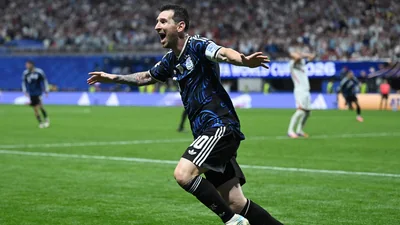
Few athletes in sporting history have carried the weight of expectation that Lionel Messi faced throughout his international career. For years, every achievement, record, and trophy was measured against one question: could he win the FIFA World Cup?
That question followed Messi through triumphs and heartbreaks, from Copa América disappointments to the painful defeat in the 2014 World Cup final. Despite becoming one of football’s greatest players, many critics insisted that his legacy could never be complete without lifting the sport’s most prestigious trophy.
Everything changed in Qatar in 2022.
By leading argentina to World Cup glory, Messi achieved the final objective of a career already overflowing with success. Now, heading into another World Cup final against Spain in 2026, the Argentine icon finds himself in a rare position: competing on football’s biggest stage with nothing left to prove.
His recent comment that he had already “completed the game” by winning the World Cup perfectly captures the mindset of a player who no longer needs validation from trophies, statistics, or public opinion.
Why Messi’s ‘Completed Football’ Comment Resonated Around the World
Modern sports often revolve around relentless achievement. Athletes are constantly challenged to win more, score more, and break more records.
Messi’s statement offered a different perspective.
Rather than focusing on what remains to be achieved, he emphasized satisfaction with what has already been accomplished.
For many fans, the remark reflected a truth that has become increasingly clear over the past several years: Messi’s legacy was secured long before the 2026 World Cup began.
The World Cup victory in Qatar removed the final argument often used against him in debates about football greatness.
Everything since then has felt less like a pursuit of validation and more like a celebration of an extraordinary career.
The Long Journey to World Cup Glory
To understand the significance of Messi’s current mindset, it is important to revisit the journey that led him here.
His relationship with the World Cup has always been one of football’s most compelling stories.
From a young prodigy carrying the hopes of Argentina to a seasoned leader guiding a new generation, Messi experienced every emotion international football could offer.
| World Cup | Outcome |
|---|---|
| 2006 | Quarterfinal Exit |
| 2010 | Quarterfinal Exit |
| 2014 | Runner-Up |
| 2018 | Round of 16 Exit |
| 2022 | Champion |
| 2026 | Finalist |
The progression illustrates why the 2022 triumph carried such emotional significance. It was not simply a tournament victory—it was the culmination of nearly two decades of ambition, perseverance, and resilience.
What Makes Lionel Messi’s Career Unique?
Football has produced countless legends, but few have combined longevity, consistency, creativity, and success the way Messi has.
His career has been defined by an ability to influence matches in virtually every possible way.
While goal-scoring often dominates headlines, Messi’s greatness extends far beyond statistics.
His vision, passing, dribbling, decision-making, and understanding of space transformed the way many people view attacking football.
Perhaps most impressively, he maintained elite performance levels across multiple generations of players.
Key Elements of Messi’s Legacy
- World Cup winner.
- Multiple continental titles.
- Numerous league championships.
- Record-breaking individual awards.
- Longevity at the highest level.
- Global influence on football culture.
Very few athletes in any sport can match the breadth of accomplishments he has accumulated throughout his career.
The Freedom of Playing Without Pressure
One of the most fascinating aspects of Messi’s comments is what they reveal about his current mentality.
For much of his career, every international tournament carried enormous pressure.
Fans expected him to replicate club success with Argentina. Critics questioned whether he could inspire his country to major titles. Every defeat generated intense scrutiny.
Today, those expectations have largely disappeared.
Winning the World Cup changed the narrative entirely.
Instead of playing to complete his legacy, Messi is now playing to enjoy the game he has loved since childhood.
This freedom can be a powerful advantage for elite athletes. Without the burden of proving themselves, they often perform with greater creativity, confidence, and clarity.
Messi’s Philosophy: Enjoyment Before Pressure
During discussions ahead of the final, Messi reflected on the joy that first attracted him to football.
His memories centered on playing in the streets, at school, and with neighborhood teams.
These experiences shaped a philosophy that has remained remarkably consistent despite decades of fame.
While many athletes become consumed by expectations, Messi continues emphasizing enjoyment, teamwork, and personal growth.
His comments about learning through defeat are particularly revealing.
They highlight a mindset focused not solely on outcomes but on development and resilience.
This perspective helps explain how he remained motivated through setbacks that might have discouraged others.
How Argentina Benefited From a Relaxed Messi
One intriguing aspect of Argentina’s recent success has been the evolution of Messi’s leadership style.
Earlier in his career, he often appeared burdened by responsibility.
Today, he projects calmness.
That composure has influenced teammates and contributed to a stronger collective identity.
Successful teams frequently reflect the personality of their leaders.
Argentina’s ability to remain united and resilient in high-pressure situations mirrors many of the qualities Messi now displays.
His experience allows younger players to compete with confidence rather than fear.
What Winning Another World Cup Would Mean
From a legacy standpoint, Messi may not need another World Cup title.
However, that does not mean a victory would be insignificant.
Winning a second World Cup would place Argentina among the most successful teams in modern football history and add another remarkable chapter to Messi’s career.
It would also strengthen his standing in one of sport’s most enduring debates: identifying the greatest footballer of all time.
While opinions will always differ, additional achievements inevitably become part of the conversation.
The Spain Challenge: A Different Kind of Final
Standing between Argentina and another world title is Spain, a nation with its own rich footballing tradition.
Spain’s technical excellence, tactical sophistication, and ability to control possession make them one of the most difficult opponents in international football.
The matchup presents an intriguing contrast.
| Argentina | Spain |
|---|---|
| Experience and Leadership | Technical Control |
| Counterattacking Threat | Possession Dominance |
| World Cup Experience | Emerging Generation |
| Messi’s Influence | Collective Structure |
The tactical battle promises to be one of the most fascinating aspects of the final.
An Overlooked Insight: Messi’s Greatest Achievement May Not Be a Trophy
Most discussions about Messi focus on titles, goals, and records.
Yet one of his most important contributions may be cultural rather than statistical.
Throughout his career, he demonstrated that greatness can coexist with humility.
In an era often dominated by self-promotion, Messi consistently allowed performances to speak louder than words.
His approach influenced countless young players who grew up viewing him as both a footballer and a role model.
That impact may ultimately outlast any trophy.
How Messi Changed Football Forever
Every generation produces players who redefine expectations.
Messi belongs in that category.
His style of play challenged traditional assumptions about size, strength, and leadership.
He demonstrated that intelligence, creativity, and technical excellence can be just as influential as physical dominance.
Future generations will study his career not only because of what he achieved but because of how he achieved it.
His influence can already be seen in the development of young players around the world.
Could This Be Messi’s Final World Cup Match?
At 39 years old, every major tournament inevitably prompts questions about the future.
Whether or not this becomes Messi’s final World Cup appearance, it represents another extraordinary chapter in an unparalleled career.
Few players have remained relevant at the highest level for so long.
Even fewer have done so while continuing to influence matches on the sport’s biggest stage.
Regardless of what happens in the final, Messi has already secured a place among football’s greatest figures.
Conclusion: A Legacy Already Complete, Yet Still Growing
Lionel Messi’s claim that he already “completed football” by winning the World Cup in 2022 captures the essence of his current journey. For years, he chased the one trophy that seemed necessary to complete his legacy. Once he achieved that goal, everything else became a bonus.
As he prepares for another World Cup final, the pressure that once defined his international career has largely disappeared. What remains is the opportunity to enjoy the game, inspire teammates, and add another chapter to an already extraordinary story.
Whether Argentina defeats Spain or falls short, Messi’s place in football history is secure. Yet the beauty of sport lies in its unpredictability, and even for a player who has seemingly completed the game, there may still be one more unforgettable achievement waiting to be unlocked.
For breaking news and live news updates, like us on Facebook or follow us on Twitter and Instagram. Read more on Latest Sports on thefoxdaily.com.






COMMENTS 0