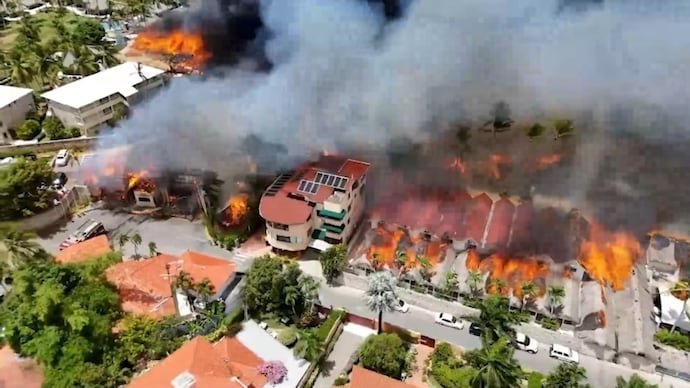
A devastating fire at the Viva Wyndham Dominicus Beach Hotel in Bayahibe, Dominican Republic, has left one tourist dead and forced the evacuation of approximately 1,700 guests and visitors. The incident unfolded at one of the Caribbean nation’s most popular beach destinations, sending thick plumes of smoke into the sky and prompting a large-scale Emergency Response.
Authorities confirmed that the fire, which rapidly spread through sections of the resort, resulted in the death of a 46-year-old Italian tourist, while several others required medical attention. Although firefighters eventually brought the blaze under control, the incident has drawn attention to the unique fire risks facing tropical resorts built with traditional architectural materials.
As investigators work to determine the exact cause, the tragedy serves as a reminder of the challenges faced by emergency responders in protecting guests at large hospitality complexes that host thousands of visitors each year.
What Happened at the Bayahibe Resort?
The fire broke out at the Viva Wyndham Dominicus Beach Hotel, a well-known all-inclusive beachfront resort located in Bayahibe on the southeastern coast of the Dominican Republic.
According to emergency officials, flames quickly engulfed parts of the resort’s roofing structures. Videos shared by local media showed large columns of dark smoke rising above the Caribbean coastline as firefighters battled the blaze.
The rapid spread of the fire forced authorities to launch an immediate evacuation operation involving nearly 1,700 tourists, hotel staff, visitors, and support personnel.
Emergency teams worked throughout the incident to move guests away from danger zones and coordinate transportation to alternative accommodations.
Fatality and Injuries Confirmed
Authorities identified the deceased victim as Francesca Valentino, a 46-year-old tourist from Italy.
The loss of life has added a tragic dimension to what could have become an even larger disaster given the number of people present at the resort during the emergency.
Emergency officials reported that:
- One person died in the incident.
- Three individuals were transported to medical facilities.
- Six others received treatment at the scene.
- Those affected included guests, visitors, and emergency responders.
The relatively limited number of injuries compared with the scale of the evacuation suggests that emergency procedures and evacuation efforts were implemented quickly once the fire was detected.
Why Did the Fire Spread So Quickly?
Preliminary assessments from Dominican Republic emergency authorities indicate that construction materials played a major role in the fire’s rapid spread.
Investigators noted that portions of the resort’s roof incorporated palm-based materials commonly used in tropical architecture.
While these materials contribute to the aesthetic appeal of Caribbean resorts, they can also increase fire risks under certain conditions.
Officials identified several contributing factors:
- Highly flammable palm roofing materials.
- Strong coastal winds.
- Open resort-style architecture.
- Rapid flame propagation across roof structures.
- Potential challenges in accessing elevated sections of the property.
Wind conditions appear to have accelerated the movement of flames across interconnected sections of the resort, making containment more difficult during the initial stages of the emergency.
The Challenges of Fire Safety in Tropical Resorts
The incident highlights a broader issue faced by many tourism destinations across the Caribbean, Southeast Asia, and other tropical regions.
Many luxury resorts intentionally incorporate traditional building materials such as:
- Palm thatch.
- Wooden structures.
- Bamboo features.
- Natural fiber roofing.
- Open-air designs.
These materials help create an authentic tropical atmosphere that appeals to travelers. However, they may also require enhanced fire prevention systems and specialized emergency planning.
Modern resorts often balance traditional aesthetics with fire-resistant construction techniques, but older structures can present additional challenges.
How the Evacuation Was Managed
Evacuating nearly 1,700 people from a large beachfront resort is a complex logistical operation.
Emergency responders had to coordinate multiple priorities simultaneously:
- Removing guests from immediate danger.
- Providing medical assistance.
- Managing traffic and transportation.
- Preventing panic among tourists.
- Securing unaffected areas.
Authorities later confirmed that guests were successfully relocated to nearby accommodations, minimizing disruption to their travel plans while ensuring their safety.
The neighboring Viva Wyndham Dominicus Palace, which belongs to the same hospitality group, reportedly escaped damage.
The Dominican Republic’s Importance to Global Tourism
The fire occurred in one of the Caribbean’s most important tourism markets.
The Dominican Republic has become the region’s leading tourist destination thanks to its combination of beaches, resorts, cultural attractions, and accessibility.
Tourism plays a vital role in the country’s Economy by supporting:
- Employment generation.
- Foreign exchange earnings.
- Infrastructure investment.
- Local business growth.
- Regional development.
The country’s tourism industry has demonstrated strong growth in recent years, attracting millions of international visitors annually.
Bayahibe: One of the Caribbean’s Premier Beach Destinations
Bayahibe is widely regarded as one of the Dominican Republic’s most picturesque coastal destinations.
Located near some of the country’s most famous marine attractions, the area is known for:
- Crystal-clear waters.
- White sand beaches.
- Coral reef ecosystems.
- Scuba diving opportunities.
- Island excursions.
Its reputation as a tourism hub has attracted significant investment in hospitality infrastructure, making incidents such as this particularly significant for both local businesses and tourism authorities.
Economic Impact of the Fire
Although authorities emphasized that tourism activities in the region remain unaffected, the fire will likely result in substantial economic costs.
Potential impacts include:
- Property damage and reconstruction expenses.
- Temporary room inventory reductions.
- Insurance claims.
- Operational disruptions.
- Potential booking adjustments.
However, the quick relocation of guests and the continued operation of nearby tourism facilities may help limit broader economic fallout.
Comparison: Resort Fire Risks vs Urban Hotel Risks
| Tropical Resort Properties | Urban Hotel Properties |
|---|---|
| Often use natural roofing materials | Typically use concrete and steel structures |
| Open-air architecture | Enclosed building designs |
| Exposure to strong coastal winds | Less weather-driven fire spread |
| Larger outdoor spaces | Vertical evacuation challenges |
| Fire may spread horizontally | Fire often spreads vertically |
This comparison illustrates why emergency planning must be tailored to the specific risks associated with different hospitality environments.
Investigation Underway
Authorities have confirmed that the fire’s exact cause remains under Investigation.
Investigators are expected to examine multiple possibilities, including:
- Electrical system failures.
- Mechanical equipment malfunctions.
- Kitchen-related incidents.
- Human error.
- External environmental factors.
The findings could influence future fire safety recommendations for resorts throughout the region.
A Missing Insight: Climate and Construction Trends May Increase Future Risks
One aspect often overlooked in discussions about resort fires is the interaction between climate conditions and tourism architecture.
As tourism destinations continue emphasizing authentic local design, many resorts incorporate natural materials to enhance guest experiences.
At the same time, rising temperatures, prolonged dry conditions in some regions, and stronger weather patterns can increase fire vulnerability.
This means future resort development may increasingly focus on combining traditional aesthetics with advanced fire-resistant technologies.
The challenge for the hospitality industry will be preserving the unique character that attracts visitors while ensuring the highest possible safety standards.
What Authorities Are Saying
Emergency officials have stressed that the fire has been contained and that the broader tourism sector in Bayahibe remains fully operational.
Authorities emphasized that:
- The blaze is under control.
- Guests have been safely relocated.
- Nearby tourism facilities continue operating normally.
- Investigations are ongoing.
- Tourist activities in the region remain unaffected.
These reassurances are important for maintaining traveler confidence in one of the Caribbean’s most important tourism destinations.
Future Outlook
The immediate focus will remain on supporting affected guests, assisting the victim’s family, and completing the investigation into the cause of the fire. Hotel operators and tourism authorities are also likely to review safety protocols and emergency response procedures to identify lessons from the incident.
While the tragedy may prompt renewed discussions about fire safety standards in tropical resorts, the Dominican Republic’s tourism industry is expected to continue operating normally. Authorities have emphasized that Bayahibe remains a safe destination and that tourism services throughout the region continue without interruption.
Conclusion
The deadly fire at the Viva Wyndham Dominicus Beach Hotel in Bayahibe represents one of the most significant tourism-related emergencies in the Dominican Republic this year. The loss of one life and the evacuation of nearly 1,700 people underscore both the dangers posed by rapidly spreading resort fires and the importance of effective emergency response systems.
Although authorities successfully contained the blaze and relocated guests, the incident serves as a powerful reminder that even world-class tourism destinations must continually adapt their safety measures to evolving risks. As investigators work to determine exactly what happened, the focus will remain on preventing similar tragedies in the future while maintaining confidence in one of the Caribbean’s most important travel destinations.
For breaking news and live news updates, like us on Facebook or follow us on Twitter and Instagram. Read more on Latest World on thefoxdaily.com.


COMMENTS 0