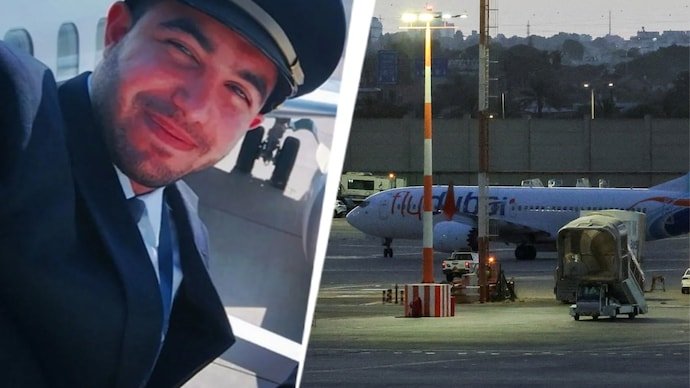
A chain of missed warnings, incomplete information-sharing and aviation-security gaps across Oman, the United Arab Emirates and Israel allowed Flydubai co-pilot Hamam al-Hammami to continue flying despite earlier concerns about his alleged radical leanings, according to an investigation by The Wall Street Journal.
Al-Hammami, a 29-year-old Omani national, is accused of attacking Captain Smit Machchhar inside the cockpit of flydubai Flight FZ1073 while the aircraft was travelling from Dubai to Tel Aviv on September 30. Authorities later described the incident as an attempted terrorist attack and said the co-pilot tried to seize control of the Boeing 737 MAX 8.
The incident has raised questions not only about what happened inside the cockpit, but also about how al-Hammami was able to reach that cockpit in the first place. According to the Wall Street Journal report, authorities in Oman had previously identified concerns about his behaviour, while flydubai apparently did not obtain a full employment history from Oman. Israel, meanwhile, had access to crew information submitted before international flights but did not use the system to independently vet the nationality and background of foreign pilots.
The result was a series of separate gaps that, when combined, left multiple opportunities to identify or stop a potential security threat.
Oman Had Already Raised Concerns About Al-Hammami
The earliest known warning reportedly emerged while al-Hammami was working for Oman Air.
According to people familiar with the matter cited by the Wall Street Journal, Omani authorities examined his online activity and concluded that he had demonstrated an excessive interest in radical ideology. The concerns were serious enough that he was reportedly removed from flying duties.
Al-Hammami was subsequently banned from flying, placed into a deradicalisation programme and transferred to a desk position, according to the report.
Those measures meant that concerns about his suitability for flight operations had already been identified within Oman before he joined flydubai. But the information appears not to have followed him into his subsequent employment.
People familiar with the matter told the newspaper that Oman did not broadly communicate its concerns to other authorities or airlines. That meant a decision made by one aviation system remained largely contained within that system.
For aviation-security specialists, the episode highlights the importance of information-sharing when an individual has previously been removed from safety-sensitive duties for security reasons. A restriction imposed by one employer or national authority may have limited value if a future employer does not know why the restriction occurred.
Flydubai Did Not Contact Oman During Hiring, Report Says
The next significant gap reportedly appeared when al-Hammami was recruited by flydubai.
He joined the airline in February this year, several months before the cockpit attack. According to people familiar with the hiring process cited by the Wall Street Journal, flydubai did not contact Oman to investigate his previous employment with Oman Air.
The airline did conduct a criminal background check, according to one person familiar with the process. However, a criminal-record check and an employment-security investigation are not necessarily the same thing.
A criminal background check can identify certain legal records, but it may not reveal an internal aviation-security decision, an employer’s concerns about an employee’s behaviour or restrictions imposed without a criminal conviction. In al-Hammami’s case, the critical information reportedly existed within his previous aviation employment and the Omani security system.
After joining flydubai, al-Hammami was eventually assigned to the Dubai-Tel Aviv route and flew it multiple times.
Emirati authorities are now investigating employees involved in the hiring process, according to the report. Flydubai declined to comment while the investigation remains ongoing.
Why Israel’s Aviation-Security System Is Also Under Scrutiny
The chain of missed opportunities did not end with Oman and flydubai.
Israel also had a separate opportunity to identify an issue before the flight arrived, according to the Wall Street Journal investigation.
Israel has restrictions concerning pilots from countries that do not maintain diplomatic relations with the country. Oman does not have diplomatic relations with Israel, yet al-Hammami, an Omani national, was permitted to operate the Dubai-Tel Aviv route as a flydubai pilot.
Foreign airlines are required to submit passenger and crew information before arriving in Israel. Flydubai submitted the manifest for Flight FZ1073, according to Israel’s Tax Authority, which maintains the country’s passenger-information database.
However, the Israeli Transportation Ministry reportedly said it did not believe it had the authority or expertise to independently vet foreign-airline crews. The ministry also said it had never requested passenger or crew lists since the database was established in 2023 and was unaware that it could access the information.
Instead, the ministry said flydubai had agreed in writing to verify the backgrounds and nationalities of its pilots.
That arrangement effectively left an important layer of security screening with the airline itself, even though Israeli authorities already possessed information that could potentially have been relevant to the route.
A 2024 Security Warning Had Already Identified Deficiencies
The reported lapse is particularly significant because it came after an earlier warning about security procedures involving foreign carriers.
According to the Wall Street Journal, a classified Israeli report from 2024 had identified deficiencies in security measures for foreign airlines operating flights into the country.
The existence of that warning raises a broader question about how aviation-security recommendations are translated into operational procedures. Identifying a vulnerability in a report is only one stage of the process. Authorities must also determine WHO is responsible for acting on it, establish procedures and ensure that available information can be used effectively.
In the case of Flight FZ1073, the information apparently existed in different places. Oman had previously identified concerns about al-Hammami. Flydubai had information about his employment history but reportedly did not contact his former employer. Israel received the crew manifest but did not use its passenger-information system to independently examine the crew.
Each individual gap may have appeared limited. Together, they created a much larger security failure.
Why the Dubai-Tel Aviv Route Was Particularly Sensitive
The incident also occurred on a route with significant security sensitivity.
The Dubai-Tel Aviv connection links the United Arab Emirates and Israel, two countries whose aviation systems have extensive security requirements. The route also involves international passengers, foreign crews and multiple national authorities.
Security experts cited by the Wall Street Journal questioned how the different layers of information and intelligence failed to produce a warning before al-Hammami operated the flight.
The issue is not simply whether one agency or one airline made a mistake. International Aviation Security depends on several institutions working together. Airlines recruit and vet personnel. National authorities establish aviation rules. Security agencies evaluate threats. Border and transportation authorities process passenger and crew information.
When those systems operate independently, an important warning can remain invisible to the organization that needs it most.
What Happened Inside Flydubai Flight FZ1073?
Flight FZ1073 was travelling from Dubai to Tel Aviv on September 30 when al-Hammami allegedly attacked Captain Smit Machchhar in the cockpit.
Israeli and UAE authorities subsequently described the incident as an attempted terrorist attack. Authorities said al-Hammami used the cockpit’s emergency crash axe during an attempt to take control of the aircraft.
The confrontation had an immediate effect on the aircraft’s flight path. The Boeing 737 MAX 8 entered a steep descent and lost more than 16,000 feet in slightly more than 30 seconds before recovering.
The aircraft transmitted emergency signals indicating both a general emergency and unlawful interference.
There were 174 people aboard the flight, most of them Israeli passengers. The situation became critical as the struggle between the two pilots unfolded inside the cockpit.
Captain Machchhar Managed to Open the Cockpit Door
Despite being wounded during the confrontation, Captain Machchhar managed to open the cockpit door.
Passengers then rushed toward the cockpit and helped overpower al-Hammami. Two off-duty flydubai pilots who were travelling as passengers on the same flight also became involved in the response and took control of the aircraft.
The pilots ultimately landed the aircraft safely at Tabuk airport in Saudi Arabia.
The passengers were subsequently transported to Israel aboard a replacement aircraft. Al-Hammami was detained in Saudi Arabia before being transferred to the UAE, where the investigation into the attack and his motive is continuing.
Machchhar was taken to a hospital in Dubai to recover from his injuries and has been widely praised for his actions during the emergency.
How Multiple Security Gaps Combined
The reported sequence is significant because no single missed warning explains the entire incident.
Omani authorities had reportedly identified concerns about al-Hammami during his earlier employment and removed him from flying duties. But those concerns were not broadly shared with other airlines or authorities.
When flydubai later recruited him, the airline reportedly carried out a criminal background check but did not contact Oman about his previous employment. That meant information about his earlier removal from flying duties apparently did not become part of the hiring process.
After he joined flydubai, he was able to operate international flights, including the Dubai-Tel Aviv route.
Israel, meanwhile, had access to crew information submitted by the airline but reportedly did not independently use its database to check foreign airline pilots. The Transportation Ministry said it did not believe it had the authority or expertise to conduct such checks and relied on the airline’s written commitment to verify its pilots.
The security system therefore contained several separate layers, but those layers did not connect effectively enough to identify the reported warning signs before the flight.
Questions Over the Alleged Test-Tube Incident
Another unresolved part of the case concerns how al-Hammami’s alleged radicalisation was identified and what happened during his previous employment.
The Wall Street Journal reported that al-Hammami had previously come to the attention of Omani authorities because of his online activity. The report also cited people familiar with the matter who said he had told medical staff that he accidentally broke a test tube containing live bacteria during an earlier period of illness.
That account has been questioned by epidemiologist Mikhal Favorov, who told the newspaper that he found the explanation difficult to reconcile with the protective procedures normally used by workers handling dangerous biological materials.
The circumstances surrounding that episode remain part of the broader investigation and should not be treated as established evidence of a deliberate act without further confirmation.
Similarly, claims about an alleged cover-up or comparisons with disputes surrounding the origins of the COVID-19 pandemic remain unverified. The available information does not establish such claims as fact.
Authorities Continue to Investigate the Attack
The investigation has involved authorities in several countries because the flight, crew and suspected attack crossed multiple jurisdictions.
UAE authorities are examining the circumstances surrounding al-Hammami’s recruitment and his actions aboard the aircraft. Israeli authorities are also reviewing the security implications of allowing an Omani national to operate a flight into Israel.
Omani authorities’ earlier handling of the reported concerns is another important part of the chain of events.
The case also comes as aviation authorities continue to face the challenge of balancing employment privacy, security screening, intelligence-sharing and international aviation requirements. Airlines cannot independently access every security record held by foreign governments, while governments may not routinely share sensitive information with commercial companies unless formal mechanisms exist.
That makes clear procedures for sharing relevant security information particularly important when an individual has previously been removed from safety-sensitive duties.
What the Flydubai Case Could Mean for Aviation Security
The most important issue raised by the incident is how aviation systems handle warnings that fall between traditional security categories.
A person may have no criminal conviction but still have been removed from a sensitive aviation role because of security concerns. A criminal background check may therefore produce a clean result while leaving out information that another aviation authority considers significant.
The case also demonstrates the limitations of relying exclusively on airlines to conduct international crew-security checks. Airlines have extensive responsibilities for employee screening, but national authorities may possess intelligence or Immigration information that airlines cannot access.
Effective aviation security requires those systems to complement one another rather than operate as isolated checkpoints.
The reported failures involving Oman, flydubai and Israel are now likely to face greater scrutiny because the consequences became visible inside an aircraft at cruising altitude. The attack was ultimately stopped after Captain Machchhar managed to open the cockpit door and passengers and off-duty pilots intervened.
But the investigation is now focused on the events that happened long before the cockpit struggle: the warnings that were identified, the information that was not shared, the checks that were not conducted and the databases that were not used.
Those unanswered questions will determine how authorities assess the security breakdown surrounding Flight FZ1073 and whether international aviation procedures need to change to prevent similar gaps from appearing again.
For breaking news and live news updates, like us on Facebook or follow us on Twitter and Instagram. Read more on Latest World on thefoxdaily.com.





COMMENTS 0