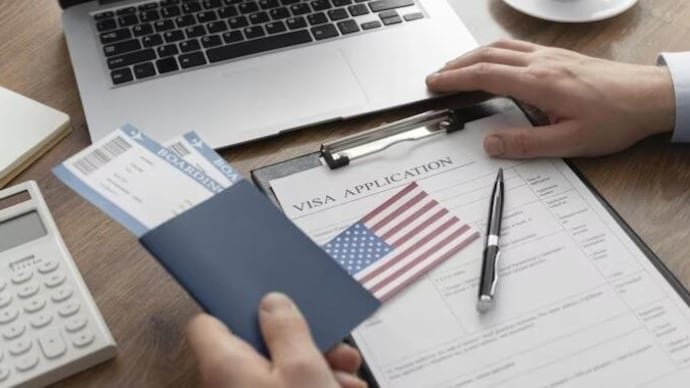
For decades, the H-1B Visa program has been one of the primary pathways for highly skilled professionals seeking to work in the United States. Engineers, software developers, researchers, scientists, healthcare professionals, and technology specialists have relied on the program to contribute to some of America’s most innovative industries.
Now, many applicants are encountering a question that goes beyond technical qualifications:
“Why can’t an American do this job instead of you?”
On the surface, the question appears straightforward. In reality, it touches on one of the most controversial and politically sensitive issues in modern American immigration policy.
For visa officers, the question helps evaluate whether an employer genuinely requires specialized foreign talent. For applicants, however, it can be difficult to answer without sounding dismissive of American workers or appearing unprepared.
The growing prominence of this question reflects broader shifts in immigration enforcement, labor market priorities, and the continuing debate over the role of foreign professionals in the US Economy.
Why This Question Is Becoming More Common
The renewed focus appears linked to efforts aimed at ensuring employment-based visas are used for genuine skill shortages rather than as a substitute for domestic hiring.
Immigration attorneys report that consular officers are increasingly examining whether employers have legitimate reasons for hiring foreign workers instead of candidates available within the United States.
The approach echoes policies associated with the “Buy American, Hire American” philosophy, which emphasized prioritizing American workers while tightening scrutiny of employment-based immigration programs.
Although visa eligibility rules remain largely unchanged, the interpretation and enforcement of those rules can significantly influence application outcomes.
This means applicants are now expected to demonstrate not only that they are qualified but also why their specific skills are uniquely valuable.
What Visa Officers Are Really Asking
Many applicants misunderstand the purpose of the question.
Visa officers are generally not asking applicants to claim Americans are incapable of performing the work.
Instead, they are seeking to understand:
- Whether the role requires specialized expertise
- What unique qualifications the applicant possesses
- Why the employer selected that individual
- How the applicant’s experience aligns with business needs
- Whether the position genuinely qualifies as a specialty occupation
The distinction is important.
A strong response focuses on the applicant’s specific qualifications rather than suggesting American workers lack ability or talent.
The History Behind the H-1B Program
Understanding the debate requires understanding why the H-1B visa exists in the first place.
The program was created through the Immigration Act of 1990 to help employers fill positions requiring specialized knowledge when suitable talent could not be readily found within the domestic labor market.
The visa was designed primarily for occupations requiring:
- Advanced technical knowledge
- Specialized education
- Professional expertise
- Industry-specific experience
Typical H-1B occupations include:
- Software engineering
- Artificial Intelligence
- Data science
- Cybersecurity
- Biotechnology
- Engineering
- Research and development
- Healthcare specialties
The program was never intended to replace American workers broadly. Instead, its purpose was to address skill gaps in critical sectors of the economy.
The Numbers Behind H-1B Demand
The scale of the program illustrates its importance to the US economy.
Hundreds of thousands of H-1B petitions receive approval each year, with technology-related occupations accounting for the majority of beneficiaries.
Computer-related professions remain the largest category because digital transformation continues to create demand for specialized technical skills.
Many employers argue that the pace of technological change often exceeds the available supply of experienced workers in emerging fields.
| Major H-1B Employment Areas | Typical Roles |
|---|---|
| Technology | Software Engineers, AI Specialists, Developers |
| Engineering | Mechanical, Civil, Electrical Engineers |
| Healthcare | Medical Researchers, Specialists |
| Education | Professors, Researchers |
| Scientific Research | Scientists, Data Analysts |
The concentration of approvals in specialized sectors reflects the program’s original purpose: addressing talent shortages in high-skill industries.
Can Americans Actually Do These Jobs?
This question sits at the heart of the political debate.
Critics of the H-1B program argue that many positions can indeed be filled by American workers and that some employers use foreign labor primarily to reduce costs.
Supporters counter that the issue is not whether Americans can do the jobs, but whether enough qualified workers are available at the time employers need them.
The distinction is significant.
A labor shortage does not necessarily mean no Americans possess the required skills. It often means employers cannot find sufficient numbers of candidates with the right combination of expertise, experience, location preferences, and availability.
This challenge becomes particularly acute in rapidly evolving fields such as artificial intelligence, cloud computing, machine learning, semiconductor design, and cybersecurity.
The Skills Gap Debate
Business leaders frequently point to what they describe as a growing skills gap.
The term refers to a mismatch between employer requirements and available workforce capabilities.
Several factors contribute to this phenomenon:
- Rapid technological advancement
- Changing industry requirements
- Emergence of entirely new professions
- Insufficient specialized training pipelines
- Regional talent shortages
For example, artificial intelligence has evolved so quickly that educational institutions often struggle to produce graduates with experience in the latest tools and frameworks.
As a result, companies frequently compete for a relatively small pool of highly specialized professionals.
Why Indian Professionals Dominate the H-1B System
Indian professionals represent the largest group of H-1B beneficiaries by a significant margin.
Several factors explain this trend.
- Strong STEM education systems
- Large engineering graduate population
- Global technology industry integration
- English-language proficiency
- Established multinational employment networks
India’s technology sector has developed deep connections with American businesses over several decades.
Many professionals gain experience working on global projects before seeking opportunities in the United States.
This has created a substantial talent pipeline linking the two countries.
How Applicants Should Approach the Question
Immigration attorneys generally advise applicants to avoid framing their answers as comparisons between themselves and American workers.
Instead, strong responses focus on:
- Unique technical expertise
- Industry-specific experience
- Specialized certifications
- Project accomplishments
- Domain knowledge
- Global business experience
For example, an applicant might explain that they possess experience implementing a specific enterprise platform across multiple international markets or have expertise in a niche technology critical to the employer’s project.
The emphasis should remain on qualifications rather than nationality.
The Rising Focus on Fraud Prevention
Another reason for increased scrutiny is ongoing concern about fraud within certain visa categories.
Governments worldwide continually attempt to ensure immigration systems are used as intended.
This often results in:
- More detailed interviews
- Additional document verification
- Enhanced background reviews
- Closer examination of employer practices
For legitimate applicants, these measures can create additional complexity even when they fully comply with program requirements.
The challenge lies in distinguishing genuine cases from fraudulent ones without unnecessarily delaying qualified professionals.
The Economic Importance of H-1B Workers
The H-1B debate often focuses on competition for jobs, but another important perspective involves economic contribution.
Research has linked highly skilled immigration to several positive outcomes, including:
- Innovation growth
- Patent development
- Business expansion
- Technology advancement
- Startup creation
- Global competitiveness
Many of America’s largest technology companies employ substantial numbers of H-1B professionals.
Supporters argue that limiting access to specialized talent could reduce the country’s ability to compete in emerging technologies such as artificial intelligence, quantum computing, biotechnology, and advanced manufacturing.
The Global Competition for Talent Is Intensifying
An often-overlooked aspect of the discussion is that the United States is no longer the only destination competing for highly skilled professionals.
Countries including Canada, Australia, Germany, Singapore, and the United Kingdom have introduced policies designed to attract Global Talent.
This creates a competitive international market for skilled workers.
If immigration processes become excessively difficult, some professionals may choose alternative destinations.
This has led many economists to argue that immigration policy increasingly functions as an economic competitiveness policy.
The Insight Most Coverage Misses
The question “Why can’t an American do this job?” often gets framed as a choice between foreign workers and American workers.
In reality, the issue is usually more nuanced.
Modern companies operate in global markets where specialized expertise can be a critical competitive advantage.
The key question is often not whether Americans can perform the work but whether employers can access the exact combination of skills needed at the required time.
In sectors evolving at extraordinary speed, talent shortages can emerge even in countries with large workforces.
The debate therefore centers less on nationality and more on how economies develop, attract, and deploy specialized human capital.
What the Future Holds for H-1B Applicants
Most immigration experts expect employment-based visa scrutiny to remain elevated in the near future.
Applicants should anticipate:
- More detailed questioning
- Greater documentation requirements
- Closer examination of employer relationships
- Increased focus on specialty occupations
- Longer processing timelines in some cases
Preparation will likely become increasingly important.
Applicants who thoroughly understand their role, employer, project responsibilities, and professional qualifications will generally be better positioned to navigate intensive interviews.
Conclusion: A Question That Reflects a Larger Immigration Debate
The growing use of the question “Why can’t an American do this job?” reflects far more than a visa interview tactic. It captures one of the most important policy debates in the modern economy: how to balance protection of domestic workers with the need to attract global talent.
For H-1B applicants, the challenge is not proving that Americans are incapable of performing their jobs. Rather, it is demonstrating why they possess a unique combination of knowledge, experience, and expertise that makes them the right candidate for a specialized role.
As technological innovation accelerates and competition for skilled professionals intensifies worldwide, this debate is unlikely to disappear. Instead, it will continue shaping immigration policy, labor markets, and the future of global talent mobility.
For many aspiring H-1B professionals, success may increasingly depend on one critical skill: clearly explaining not just what they do, but why their expertise creates value in an increasingly competitive and interconnected world.
For breaking news and live news updates, like us on Facebook or follow us on Twitter and Instagram. Read more on Latest World on thefoxdaily.com.






COMMENTS 0