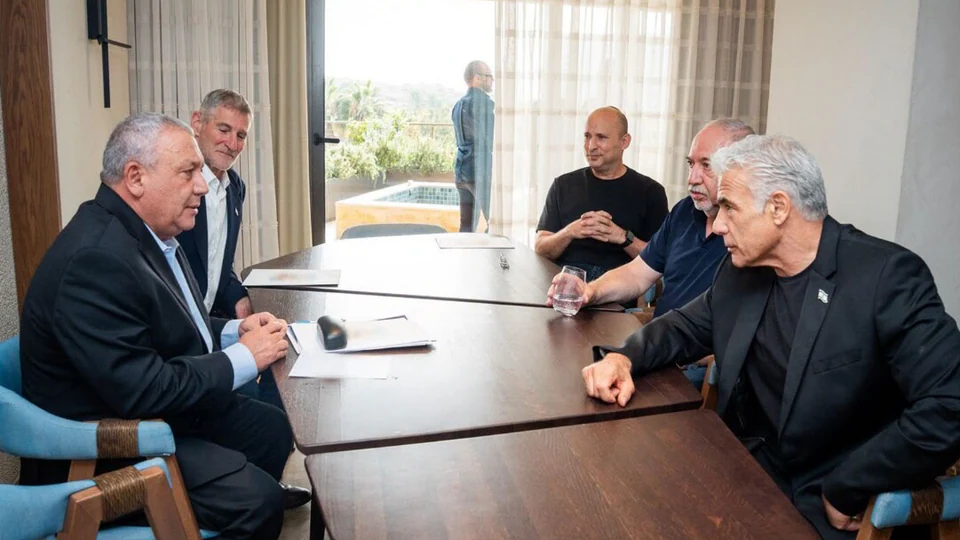
Israel’s opposition parties have united behind Yashar party leader Gadi Eisenkot as their candidate to form the next government, setting the stage for a major political contest with Prime Minister Benjamin Netanyahu. The opposition alliance plans to use its parliamentary strength in the newly elected 26th Knesset to establish Israel’s 38th government and bring an end to Netanyahu’s administration.
The agreement was reached during a meeting of opposition leaders in Herzliya. The participating parties decided to jointly recommend Eisenkot to President Isaac Herzog for the first mandate to form a government, with the stated aim of completing the process quickly and avoiding another election.
In their joint statement, the opposition leaders described Netanyahu’s administration as the ‘7/10 government’, referring to the October 7 attacks, and pledged to work together to establish a new administration. They also committed to respecting what they described as the electorate’s clear decision in favour of political change.
The development brings together several prominent opposition figures, including Yashar chief Gadi Eisenkot, B’Yachad leader Naftali Bennett, Yair Lapid, Yisrael Beytenu leader Avigdor Liberman and Democrats chairman Yair Golan.
The alliance’s announcement marks the beginning of negotiations over the composition and policy framework of a possible new government. However, the opposition will still need to translate its political agreement into a functioning parliamentary coalition.
Opposition Parties Agree to Recommend Gadi Eisenkot for Prime Minister
The leaders of the opposition’s Change bloc agreed to recommend Gadi Eisenkot to President Isaac Herzog as the candidate who should receive the first opportunity to form Israel’s next government.
The decision was announced after their meeting in Herzliya, where the leaders discussed how to use their majority in the newly elected 26th Knesset to establish the country’s 38th government.
In a statement shared by Eisenkot on X, the participating parties confirmed that they would jointly support his nomination for the first mandate to form a government.
“In accordance with the agreement of the heads of the parties, all the parties will recommend to the President of the State MK from the Yesh! Party Gadi Eisenkot, to receive the first mandate to form the government, with the aim of establishing a government as quickly as possible and preventing Israel from being dragged into additional elections,” the statement shared by Eisenkot on X read.
The agreement is intended to establish a coordinated opposition position before the formal government-formation process advances. By selecting a common candidate, the participating parties are seeking to demonstrate that they can work together rather than pursue separate political arrangements.
The leaders also said they were committed to respecting the electorate’s decision in favour of political change. They agreed to coordinate their next steps during the opening days of the Knesset to convert their parliamentary position into a new administration.
Their immediate priority is to begin negotiations and establish the political and policy arrangements required for a government led by Eisenkot.
Who Is Backing Eisenkot in the Opposition Alliance?
The meeting in Herzliya brought together leaders from several opposition parties that have agreed to cooperate in the effort to replace Netanyahu’s government.
- Gadi Eisenkot: Leader of the Yashar party and the opposition alliance’s proposed candidate for prime minister.
- Naftali Bennett: Leader of the B’Yachad party and a participant in the opposition discussions.
- Yair Lapid: B’Yachad’s number two and a prominent opposition political figure.
- Avigdor Liberman: Leader of Yisrael Beytenu and a participant in the agreement.
- Yair Golan: Chairman of the Democrats party and another signatory to the opposition’s political understanding.
The presence of these leaders reflects the opposition’s attempt to create a common political platform around Eisenkot’s candidacy. Their agreement to recommend one person for the first mandate is also intended to simplify negotiations over the formation of the next administration.
However, agreeing on a candidate is only one part of the government-formation process. The parties must also settle policy differences, determine the distribution of responsibilities and establish arrangements that can sustain the proposed government in the Knesset.
The participating leaders have therefore instructed their negotiating teams to begin discussions immediately. These negotiations are expected to focus on the policy framework and agreements necessary to establish the 38th government.
Four National Principles to Guide the Proposed Government
The opposition leaders said the proposed government would follow four national principles outlined by Eisenkot. They described the intended administration as a ‘Zionist government’, presenting it as a political alternative to Netanyahu’s current administration.
The principles are expected to provide the foundation for negotiations between the participating parties. By agreeing on a common framework, the alliance hopes to establish shared priorities before finalising the coalition arrangements.
The announcement also signals that the proposed government is being presented as more than a temporary parliamentary arrangement. The opposition parties have emphasised the need for a coordinated administration with an agreed political direction.
However, the specific details of the four principles and the final policy programme will need to be addressed through the negotiations between the parties. Their ability to reach agreement on these issues will be important to the formation of a stable government.
Opposition Accuses Netanyahu and Likud of Undermining Election Results
The opposition’s joint statement also criticised Prime Minister Benjamin Netanyahu and his Likud party over what the alliance described as attempts to undermine the election results and the credibility of the Central Elections Committee.
The leaders accused Netanyahu and Likud of conducting a campaign to delegitimise the election outcome. They said protecting the results and the democratic process would remain a central commitment of their alliance.
“The heads of the parties discussed the dangerous and outrageous delegitimisation campaign that Likud and Netanyahu are carrying out against the election results and the Central Elections Committee, and expressed their unwavering commitment to protecting the election results and the democratic process,” the statement affirmed.
The criticism adds another dimension to the political confrontation between Netanyahu’s Likud party and the opposition alliance. While the opposition is focusing on forming a new government, it has also sought to challenge what it describes as attempts to discredit the electoral process.
The Central Elections Committee has become part of the dispute because of its role in administering and overseeing the electoral process. The opposition leaders have argued that the election results and the institutions responsible for them must be respected.
Their statement also reinforces the alliance’s intention to move forward with government formation rather than allow the political disagreement to lead to another election.
Negotiations Begin to Establish Israel’s 38th Government
Following the agreement on Eisenkot’s candidacy, negotiating teams from the participating opposition parties have been instructed to begin discussions immediately.
The negotiations are expected to focus on finalising the policy framework, resolving differences between the parties and reaching the agreements needed to establish the 38th government.
The leaders have also pledged to maintain close coordination until the new administration is sworn in. This commitment is intended to prevent disagreements during the negotiations from disrupting the broader effort to replace Netanyahu’s government.
Coalition negotiations can involve several complicated issues, including policy priorities, ministerial responsibilities and the distribution of political influence. The participating parties will need to reach an understanding on these matters before a new administration can take office.
The alliance’s decision to recommend Eisenkot for the first mandate provides a common starting point. However, the final composition of the government will depend on the agreements reached during the negotiations and the formal government-formation process.
The opposition has presented its goal as an early transfer of power that would prevent Israel from being drawn into another election. Whether it can achieve that objective will depend on its ability to maintain unity and secure the necessary parliamentary support.
Netanyahu Open to Broad Government but Rejects Arab Party Support
Meanwhile, Benjamin Netanyahu has said he is willing to consider forming a broad national government but has ruled out an administration dependent on Arab-led parties.
In a post on X on Monday local time, the Israeli prime minister claimed that the public did not want a government reliant on Ra’am and the Joint List. He accused the parties of supporting terrorism and rejecting the existence of the Jewish state.
Netanyahu’s remarks reflect his position on which political groups should be included in any future governing arrangement. His comments also underline the differences between his approach to coalition formation and the opposition alliance’s attempt to establish an alternative government.
The prime minister cited Likud’s position as the largest party following the election and said he had been willing from the beginning to form a broad government with his natural political partners and any party that did not support terrorism.
His statement indicates that Netanyahu remains interested in exploring a broader political arrangement, but with conditions regarding the parties that could participate in it.
The opposition’s agreement to recommend Eisenkot has added pressure to these efforts by presenting a coordinated alternative. The competing approaches now place the focus on which political grouping can assemble the support needed to form the next administration.
Why the Political Battle Could Shape Israel’s Next Government
The effort to replace Netanyahu represents a significant political development following the election. The opposition alliance has moved to consolidate its position around a single candidate and begin negotiations for a new government.
For the participating parties, the immediate challenge is maintaining cooperation despite their different political backgrounds and priorities. Their agreement to recommend Eisenkot demonstrates a shared objective, but a successful government will require a broader understanding on policy and administration.
Netanyahu, meanwhile, continues to defend Likud’s position and has indicated that he remains open to a broad national government under conditions he considers acceptable. His rejection of an arrangement dependent on Arab-led parties further illustrates the political divisions surrounding coalition formation.
The dispute also reflects the importance of the newly elected Knesset. Its parliamentary composition will determine the political options available to the parties and shape the negotiations over the country’s next administration.
The opposition alliance has said it wants to establish a government as quickly as possible and prevent another election. Its negotiating teams must now translate the agreement reached in Herzliya into a detailed coalition framework.
What Happens Next in Israel’s Government Formation Process?
The next stage will involve the opposition parties formally recommending Gadi Eisenkot to President Isaac Herzog for the first mandate to form a government. The alliance will also continue negotiations on the policy framework and political agreements required to establish the 38th administration.
The participating leaders have pledged to coordinate their efforts throughout the process and remain committed to forming a new government without another election.
At the same time, Netanyahu’s position on a broad national government and his rejection of reliance on Arab-led parties will remain part of the political debate. His remarks indicate that the prime minister is continuing to consider possible governing arrangements even as the opposition advances its own proposal.
The decisive question is whether the opposition parties can maintain their agreement and turn their parliamentary strength into a functioning coalition. Their ability to resolve differences and agree on the proposed government’s priorities will determine the next steps.
For now, the opposition has united behind Eisenkot and begun preparations to replace Netanyahu’s administration. The coming negotiations and the formal mandate process will determine whether the alliance can establish Israel’s next government and bring the political transition it has promised.
For breaking news and live news updates, like us on Facebook or follow us on Twitter and Instagram. Read more on Latest World on thefoxdaily.com.




COMMENTS 0