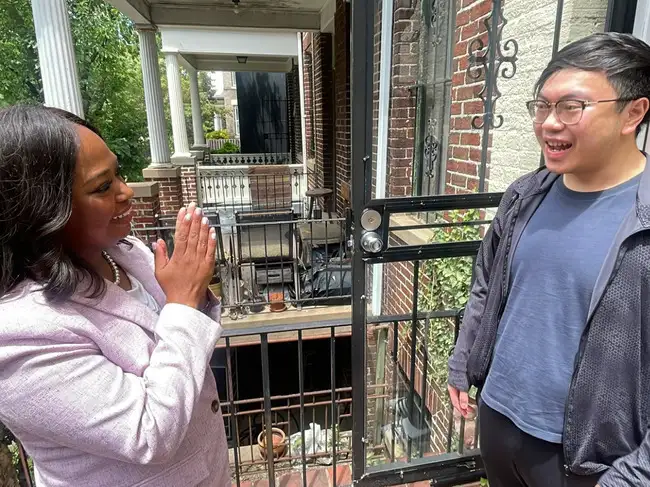
Washington, DC, is preparing for a significant political transition after Janeese Lewis George won the mayoral election. She is scheduled to take office on January 2, beginning a new administration at a time when the US capital faces economic uncertainty, local governance challenges and growing political tensions with the federal government.
Lewis George’s victory represents an opportunity to reshape the city’s policy direction, particularly on affordability and the financial pressures affecting residents. However, her administration will inherit a complicated situation. Job losses have raised concerns about the city’s economic outlook, while the possibility of declining tax revenues has brought potential tax changes into discussions.
Her political approach will also be tested by the influence of President Donald Trump, whose administration and political priorities could have significant consequences for the District of Columbia. As a democratic socialist mayor, Lewis George will have to balance her policy ambitions with the city’s limited autonomy and its dependence on decisions made at the federal level.
Janeese Lewis George prepares to lead Washington into a new political era
The mayoral election has placed Lewis George at the centre of Washington’s next political chapter. Her incoming administration will be expected to address everyday concerns, including the rising cost of living, economic uncertainty and the financial challenges facing the city.
Affordability is expected to be one of the defining issues of her mayoralty. Residents facing pressure from living costs will look to the new administration for policies that make housing, essential services and daily expenses more manageable.
Lewis George has an opportunity to give affordability a central place in the city’s political agenda. However, translating campaign priorities into practical policies will require difficult decisions about public spending, revenue and the services the city can realistically support.
The economic environment makes the transition particularly challenging. Following a period of job losses, concerns have emerged about the possibility of reduced government revenue. A weaker revenue outlook could restrict the resources available for public programmes and force the administration to reconsider its financial priorities.
The capital city doesn’t have full autonomy
One of the biggest challenges facing Washington’s incoming mayor is the District of Columbia’s unusual political status. Although the city has its own elected leadership and Local Government, it does not enjoy the same level of autonomy as a US state.
Congress retains significant authority over the District, giving federal lawmakers the ability to influence important aspects of its governance. This creates a political environment in which local leaders must consider not only the preferences of Washington residents but also decisions made in Congress and by the federal government.
For Lewis George, this limitation could affect how far her administration can go in implementing its policy agenda. Even when local officials have a clear mandate from voters, their ability to turn political promises into lasting changes can depend on the wider federal political environment.
The situation becomes particularly complicated when the mayor’s political priorities differ from those of the president or congressional leadership. A disagreement over local policies could develop into a broader dispute about the District’s authority and the extent to which federal institutions can intervene in its affairs.
Lewis George will therefore need to navigate both local responsibilities and Washington’s complicated relationship with the federal government. Her ability to build political support beyond the city could become an important part of governing effectively.
Control of Congress will shape the city’s future
The balance of power in Congress will be an important factor in determining the political environment in which Lewis George governs. Because Congress has authority over the District, changes in congressional leadership and political priorities can have direct implications for Washington’s local administration.
The relationship between the mayor’s office and federal lawmakers could become especially important if disagreements emerge over taxation, public spending, local regulations or the city’s broader policy direction.
For a mayor seeking to pursue an ambitious affordability agenda, congressional support or opposition could influence the scope of available options. Federal decisions may also affect the city’s financial planning and its ability to maintain programmes and services.
The political situation could become more difficult if Lewis George and the Trump administration pursue sharply different approaches to governance. Such differences would place additional pressure on the mayor to defend the District’s interests while working within the constitutional and legal framework that limits its independence.
Congressional control will consequently matter beyond national political calculations. It could help determine how much room the new administration has to implement its priorities and how frequently local policy decisions become part of larger political disputes.
District of Columbia faces financial challenges
Washington’s financial outlook presents another major challenge for the incoming administration. After a period of job losses, concerns about potential revenue declines have raised questions about how the city will maintain its financial position and fund public services.
Tax revenue is particularly important because it helps support local government operations and public programmes. If economic activity weakens and revenues fall, the administration could face difficult choices about spending, taxation and budget priorities.
Discussions about possible tax changes reflect the pressure on city officials to identify ways of protecting public finances. However, any decision to raise or restructure taxes would need to be considered alongside the affordability concerns facing residents and businesses.
This creates a difficult balancing act for Lewis George. Her administration will be expected to address the cost-of-living crisis while ensuring that Washington has sufficient revenue to deliver essential services. Policies designed to increase government income could create additional pressure on taxpayers, while avoiding tax changes could leave the city with fewer resources if revenues decline.
The new mayor will also have to consider how economic uncertainty affects employment, investment and the city’s long-term financial stability. Decisions made during the early months of her administration could shape the direction of its economic policies for years.
Affordability crisis will test the new mayor’s priorities
Lewis George has placed affordability at the centre of her political message, making it one of the most important issues her administration will need to address. For residents, the challenge is not simply the overall cost of living but whether wages, employment opportunities and public services can keep pace with everyday expenses.
Addressing affordability will require the administration to identify which problems demand immediate attention and which require longer-term policy changes. It will also need to consider how local resources can be used effectively when the city’s financial outlook remains uncertain.
The mayor’s democratic socialist approach could shape how her administration thinks about the role of government in tackling economic inequality and supporting residents. However, the practical impact of that approach will depend on available funding, political cooperation and the limits imposed by the District’s relationship with Congress.
There is also a political challenge in managing expectations. A mayoral election gives the winner a mandate to pursue an agenda, but it does not automatically provide the financial or institutional power needed to implement every proposal.
A potential showdown with Trump looms over Washington
The relationship between Lewis George and President Donald Trump could become one of the defining features of her administration. Their differing political approaches create the possibility of disagreements over the District’s policies, governance and financial priorities.
Washington’s limited autonomy makes such tensions particularly significant. Unlike mayors in states with broader independent authority, the District’s elected leadership must operate within a system in which Congress retains substantial control.
This means that disputes between the mayor’s office and the federal government could have consequences beyond political statements. They could influence the administration’s ability to pursue local priorities and determine how much control Washington can exercise over its own affairs.
For Lewis George, the challenge will be to defend the interests of District residents without allowing political conflict to undermine the city’s ability to function. Maintaining working relationships with federal institutions may be necessary even when the two sides disagree on major policy questions.
Washington enters a consequential transition
Janeese Lewis George takes office at a moment when Washington faces several interconnected challenges. The affordability crisis, concerns about falling revenue, job losses and the District’s limited autonomy will all shape the early direction of her administration.
Her election creates an opportunity to introduce a different policy approach and place residents’ economic concerns at the centre of local government. But the success of that agenda will depend on more than the mayor’s political vision. Financial resources, congressional decisions and the relationship with the Trump administration will all influence what can be achieved.
Washington’s next chapter will therefore be shaped by two overlapping political struggles: the effort to address problems within the city and the continuing debate over how much control the District should have over its own future. Lewis George’s ability to navigate both could determine the lasting impact of her mayoralty.
For breaking news and live news updates, like us on Facebook or follow us on Twitter and Instagram. Read more on Latest World on thefoxdaily.com.





COMMENTS 0