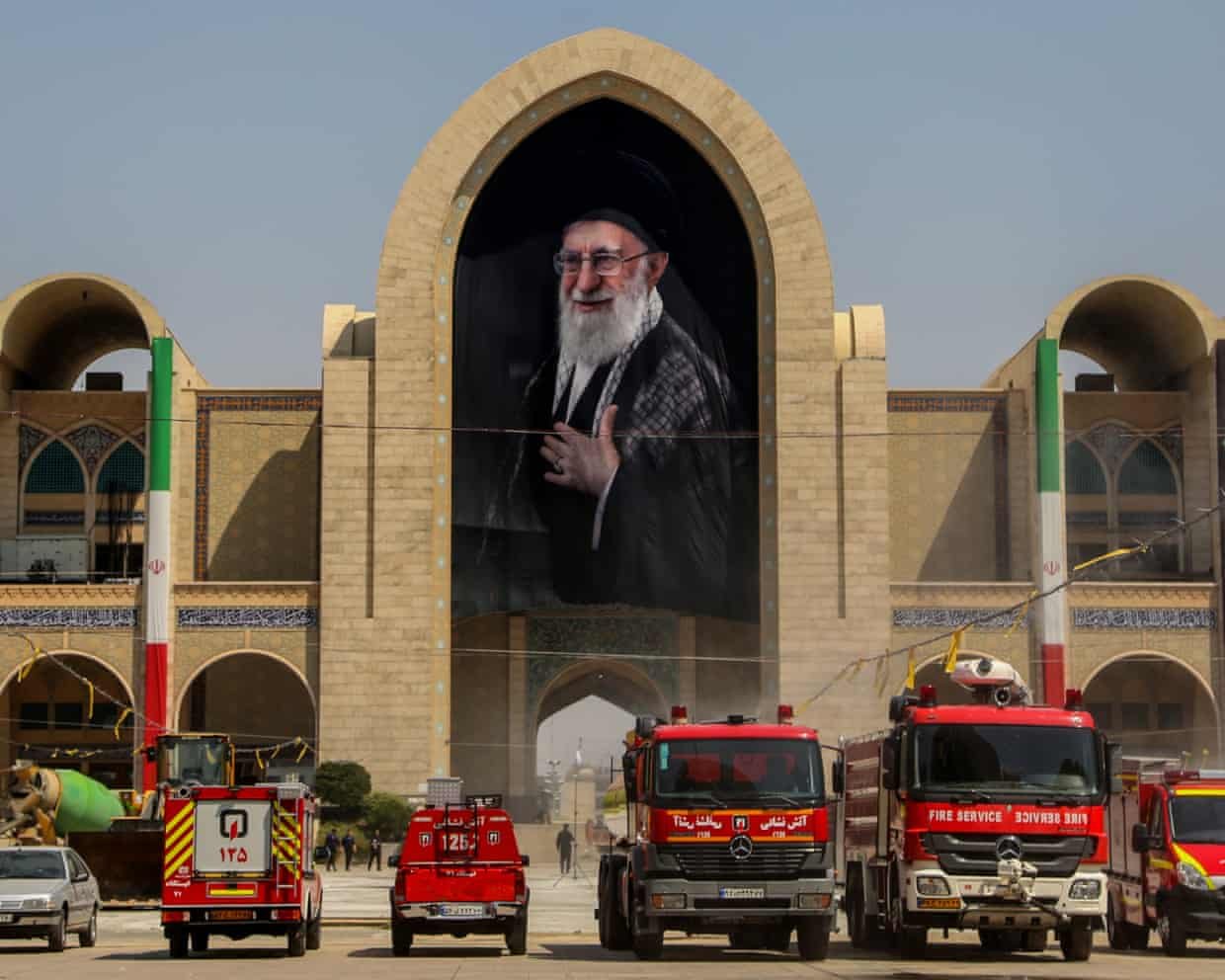
The funeral of Ayatollah Ali Khamenei in Tehran became more than a national moment of mourning for many attendees. Throughout the ceremonies, mourners invoked the story of Imam Hussain and the Battle of Karbala, framing Khamenei’s death within one of the most enduring narratives in Shia Islam—the struggle against oppression, sacrifice for justice, and martyrdom. The widespread display of red flags, religious chants, and references to Karbala highlighted how centuries-old religious symbolism continues to shape contemporary public expression in Iran.
WHO gathered? Thousands of mourners from across Iran attended the funeral ceremonies. What message dominated the event? Many participants connected Khamenei’s death with the Shia tradition of martyrdom inspired by Imam Hussain. When? The symbolism emerged during the funeral ceremonies held following the Supreme Leader’s death. Where? The events took place in Tehran, with religious sites displaying prominent Shia symbols. Why is the symbolism important? It illustrates how religious history continues to influence Iranian public life, national identity, and political discourse. How was this expressed? Through speeches, religious references, red flags, chants, and invocations of Karbala’s legacy.
Understanding the Historical Significance of Karbala
To understand the symbolism seen during the funeral, it is important to understand the central place of Karbala in Shia Islam.
The Battle of Karbala took place in 680 CE in present-day iraq.
Imam Hussain, the grandson of the Prophet Muhammad, refused to pledge allegiance to the Umayyad ruler Yazid, believing that doing so would compromise principles of justice and legitimate leadership.
He and a small group of family members and companions were killed during the battle.
For Shia Muslims, this event became the defining symbol of moral courage, sacrifice, and standing against perceived injustice.
Why Imam Hussain Holds a Unique Place in Shia Islam
Imam Hussain’s legacy extends far beyond historical remembrance.
His story is commemorated annually during the month of Muharram, particularly on the day of Ashura.
Within Shia theology, Karbala represents:
- Commitment to justice.
- Moral integrity.
- Sacrifice for faith.
- Resistance against oppression.
- Spiritual perseverance.
- Devotion to religious principles.
These themes continue to influence religious education, literature, public commemorations, and cultural traditions across Shia communities worldwide.
Martyrdom (Shahadat) in Islamic Tradition
During the funeral, several attendees referred to the concept of Shahadat, or martyrdom.
In Islamic tradition, martyrdom generally refers to individuals who are believed to have sacrificed their lives while defending faith, justice, or their community, although interpretations vary across different Islamic schools of thought.
Within Shia theology, the martyrdom of Imam Hussain occupies a uniquely central position, serving as the model for later generations.
For many participants at the funeral, references to Shahadat reflected this longstanding religious understanding.
The Symbolism of the Red Flag
One of the most visible features during the funeral was the presence of red flags flying above religious sites.
In many Shia traditions, red flags symbolize:
- The memory of martyrdom.
- The pursuit of justice.
- Remembrance of Karbala.
- Resistance against oppression.
- Religious devotion.
Although interpretations can differ among communities, these flags are widely recognized within Shia religious symbolism as reminders of Imam Hussain’s sacrifice.
Why Many Mourners Drew Parallels Between Khamenei and Karbala
Several attendees interviewed during the funeral interpreted Ayatollah Ali Khamenei’s death through the religious framework established by Karbala.
For those mourners, the comparison reflected their personal belief that contemporary struggles should be understood through the moral lessons associated with Imam Hussain.
These views represent the perspectives expressed by participants at the event rather than independently established historical or theological conclusions.
Public mourning often reflects deeply held religious interpretations that are shaped by faith and communal identity.
Religion and National Identity in Iran
Since the 1979 Islamic Revolution, Shia religious symbolism has played an important role in Iran’s political Culture.
Public ceremonies frequently incorporate historical narratives drawn from Islamic history.
These narratives often emphasize:
- Sacrifice.
- National resilience.
- Religious devotion.
- Justice.
- Community solidarity.
The funeral ceremonies demonstrated how these religious themes continue to influence public expressions of mourning.
How Religious Narratives Shape Public Ceremonies
Throughout history, societies have used religious stories to provide meaning during moments of national loss.
In Iran, references to Karbala frequently appear during:
- Religious commemorations.
- Funeral ceremonies.
- Public speeches.
- Cultural processions.
- Memorial gatherings.
Such symbolism connects contemporary events with historical narratives familiar to many members of the community.
Timeline: From Karbala to Contemporary Iran
| Period | Historical Event | Long-Term Significance |
|---|---|---|
| 680 CE | Battle of Karbala | Martyrdom of Imam Hussain becomes central to Shia tradition. |
| Following centuries | Development of Muharram commemorations | Karbala becomes a defining religious narrative. |
| 1979 onward | Islamic Republic established | Religious symbolism assumes greater public prominence. |
| Present | Funeral ceremonies for Ayatollah Ali Khamenei | Mourners invoke Karbala symbolism and religious concepts. |
Understanding the Difference Between Faith and Historical Analysis
It is important to distinguish between religious belief and historical analysis.
Faith traditions often interpret historical events through theological frameworks that carry profound spiritual meaning for believers.
Historians, meanwhile, generally examine events using documentary evidence, political context, and historical methodology.
The symbolism observed during the funeral reflects the religious convictions expressed by many attendees rather than a universally shared historical interpretation.
Comparison: Historical Event vs. Religious Symbolism
| Historical Perspective | Religious Perspective |
|---|---|
| Focuses on documented historical events. | Focuses on spiritual meaning and moral lessons. |
| Examines political circumstances. | Emphasizes faith, sacrifice, and devotion. |
| Uses historical evidence. | Draws upon religious teachings and tradition. |
| Seeks objective reconstruction. | Provides ethical and spiritual guidance for believers. |
| Studies historical consequences. | Inspires contemporary religious identity. |
How Karbala Continues to Influence Shia Communities Worldwide
The legacy of Imam Hussain extends well beyond Iran.
Shia communities in numerous countries continue to commemorate Karbala through religious gatherings, educational programmes, charitable activities, and annual observances during Muharram.
The themes commonly emphasized include compassion, courage, justice, patience, and service to humanity.
Although political interpretations may differ among communities, the religious significance of Imam Hussain remains central to Shia identity across diverse cultural settings.
A Unique Insight: Why Historical Narratives Remain Powerful in Modern Politics
One reason historical narratives continue influencing contemporary societies is their ability to provide moral frameworks during periods of uncertainty.
Events that occurred centuries ago can continue shaping public identity because they offer communities shared stories through which present-day experiences are interpreted.
The repeated references to Karbala during the funeral illustrate how collective memory, religious tradition, and cultural identity often become deeply interconnected.
Such symbolism is not unique to Iran; many nations draw upon historical events, religious figures, or founding narratives to strengthen collective identity during moments of national significance.
Future Outlook
The legacy of Karbala is likely to remain a prominent feature of Shia religious life regardless of changing political circumstances. Annual commemorations, educational institutions, and religious scholarship continue to preserve the story of Imam Hussain as a central component of Shia theology.
In Iran, public ceremonies are expected to continue incorporating historical and religious symbolism that reflects the country’s cultural and spiritual traditions. How these narratives interact with future political developments will depend on evolving domestic and regional circumstances, but their religious significance is likely to endure.
Conclusion
The funeral of Ayatollah Ali Khamenei demonstrated how deeply the story of Imam Hussain and the Battle of Karbala remains embedded in Shia religious consciousness. Through red flags, religious chants, and references to martyrdom and justice, many mourners interpreted the occasion using symbols that have shaped Shia belief for more than thirteen centuries.
While individuals and communities may hold differing political views and theological interpretations, the ceremonies highlighted the enduring influence of Karbala as a powerful religious narrative. For many believers, the story of Imam Hussain continues to represent moral courage, steadfast faith, and the pursuit of justice values that remain central to Shia tradition and continue to resonate across generations.
For breaking news and live news updates, like us on Facebook or follow us on Twitter and Instagram. Read more on Latest World on thefoxdaily.com.





COMMENTS 0