- Why the Strait of Hormuz Matters
- What Happened: The Shalamar Voyage Explained
- Timeline: Escalation and Maritime Disruption
- Why Shalamar’s Transit Is Significant
- The Bigger Picture: Declining Traffic in Hormuz
- Comparison: Pre-Blockade vs Current Situation
- How Ships Are Still Managing to Pass
- Global Impact: Why This Matters
- Unique Insight: The Blockade Is Becoming a “Filter,” Not a Barrier
- What Happens Next?
- Prediction: A Prolonged Period of Controlled Uncertainty
- Conclusion: One Ship, Many Signals
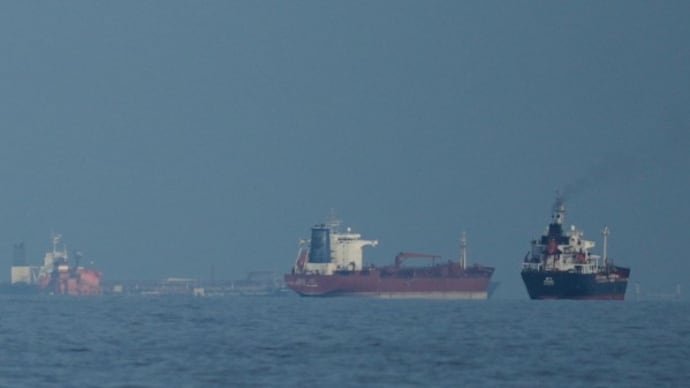
In a development that could reshape perceptions of control in one of the world’s most critical Shipping lanes, a Pakistan-flagged oil tanker has successfully exited the Strait of Hormuz, despite an ongoing US naval blockade. The vessel, Shalamar, has become the first tanker in several days to complete an outbound journey raising serious questions about the effectiveness of the blockade and the future of global energy flows.
Who: Pakistan National Shipping Corp-operated tanker Shalamar. What: First successful outbound transit amid blockade. When: During escalating US-Iran tensions. Where: Strait of Hormuz, Persian Gulf. Why: Continued oil movement despite restrictions. How: Strategic navigation, partial loading, and possible selective clearances.
This is more than a single ship’s journey it is a signal that even the most powerful naval operations face limits in a complex, high-traffic maritime Environment.
Why the Strait of Hormuz Matters
The Strait of Hormuz is one of the most strategically vital chokepoints in the Global Economy. Connecting the Persian Gulf to the Gulf of Oman, it serves as a gateway for oil exports from major producers.
- Handles nearly 25% of global oil trade
- Critical for energy imports across Asia, including India
- A key pressure point in geopolitical conflicts
Any disruption here has immediate consequences affecting oil prices, shipping costs, and global economic stability.
What Happened: The Shalamar Voyage Explained
The tanker Shalamar, an Aframax-class vessel, carried approximately 450,000 barrels of crude oil loaded from the UAE’s Das Island. Despite heightened restrictions, it managed to:
- Enter the Persian Gulf after an earlier aborted attempt
- Load crude cargo
- Exit via the Strait of Hormuz into the Gulf of Oman
- Signal Karachi as its destination
Its relatively smooth transit stands out at a time when most vessels are either avoiding the route or turning back mid-journey.
Timeline: Escalation and Maritime Disruption
| Event | Impact |
|---|---|
| US-Iran Talks Collapse | Diplomatic breakdown increases tensions |
| Naval Blockade Announced | Strict controls on ship movement |
| Traffic Drops Sharply | Only a handful of vessels attempt crossings |
| Ships Reverse Course | Multiple vessels abandon transit |
| Shalamar Exit | First successful outbound transit in days |
Why Shalamar’s Transit Is Significant
1. Cracks in Blockade Enforcement
Despite strong Military presence, the successful exit suggests that complete control over maritime traffic is difficult to achieve.
2. Selective Movement Still Possible
The fact that some vessels are allowed or able to pass indicates a layered enforcement system rather than an absolute shutdown.
3. Psychological and Market Impact
Even a single successful transit can influence market sentiment, signaling that oil flows are not entirely blocked.
The Bigger Picture: Declining Traffic in Hormuz
Since the blockade began, ship traffic has dropped dramatically:
- Only a few vessels per day attempting transit
- Multiple ships reversing course mid-journey
- Iran-linked exports significantly reduced
This sharp decline reflects both security risks and regulatory hurdles, including the need for approvals from multiple authorities.
Comparison: Pre-Blockade vs Current Situation
| Aspect | Before Blockade | Current Scenario |
|---|---|---|
| Daily Ship Traffic | High volume | Severely reduced |
| Approval Requirements | Standard procedures | Multiple clearances needed |
| Risk Level | Moderate | High |
| Oil Flow | Stable | Disrupted |
How Ships Are Still Managing to Pass
The Shalamar’s journey highlights several possible factors enabling transit:
- Partial Cargo Loads: Reducing risk and exposure
- Strategic Timing: Moving during lower surveillance windows
- Selective Permissions: Possible coordination with regional authorities
- Non-Iranian Cargo: Avoiding direct sanctions triggers
This suggests that maritime movement has not stopped it has simply become more selective and strategic.
Global Impact: Why This Matters
1. Energy Market Volatility
Uncertainty in Hormuz directly affects oil prices, with even minor disruptions causing fluctuations.
2. Regional Power Dynamics
The ability or inability to enforce the blockade shapes perceptions of influence between global and regional powers.
3. Trade and Supply Chains
Shipping delays and rerouting increase costs, impacting industries far beyond energy.
Unique Insight: The Blockade Is Becoming a “Filter,” Not a Barrier
One overlooked aspect of the current situation is that the blockade is not functioning as a complete stop but rather as a filtering mechanism.
Instead of halting all movement, it is:
- Allowing selective transit
- Discouraging high-risk shipments
- Reshaping shipping behavior
This creates a new kind of maritime control less visible, but equally influential.
What Happens Next?
The situation remains fluid, with several possible scenarios:
- Stricter Enforcement: Increased naval presence and tighter controls
- Diplomatic Breakthrough: Talks leading to eased restrictions
- Continued Evasion: More ships attempting strategic crossings
Each outcome will have significant implications for global Energy Security.
Prediction: A Prolonged Period of Controlled Uncertainty
Rather than a clear resolution, the Strait of Hormuz may enter a phase of managed instability:
- Intermittent ship movements
- Fluctuating oil flows
- Ongoing geopolitical tension
This “new normal” could redefine how global trade routes operate under conflict conditions.
Conclusion: One Ship, Many Signals
The successful transit of the Pakistan-flagged tanker Shalamar is more than a logistical event it is a strategic signal.
It ցույցs that even in heavily militarized zones, complete control is elusive, and adaptability remains a powerful force.
As the world watches the Strait of Hormuz, the key question is no longer whether ships can pass but under what conditions, and at what cost.
In that sense, Shalamar’s journey is not just about النفط it’s about the evolving nature of power, trade, and resilience in a complex global system.
For breaking news and live news updates, like us on Facebook or follow us on Twitter and Instagram. Read more on Latest World on thefoxdaily.com.





COMMENTS 0