Somalia‘s trading community is beginning to rethink how goods reach the country as escalating conflict around the Bab al-Mandab Strait and the Strait of Hormuz disrupt established maritime routes. The shift is particularly important for Somalia because much of the country’s trade depends on ships carrying food, fuel, consumer products and other essential commodities.
For years, Somali importers have relied heavily on established commercial networks connecting Asian suppliers with Gulf hubs such as the United Arab Emirates, Oman and Saudi Arabia before cargo reaches Somalia. But rising security concerns across key Middle Eastern waterways are encouraging some businesses and port operators to look for more direct alternatives.
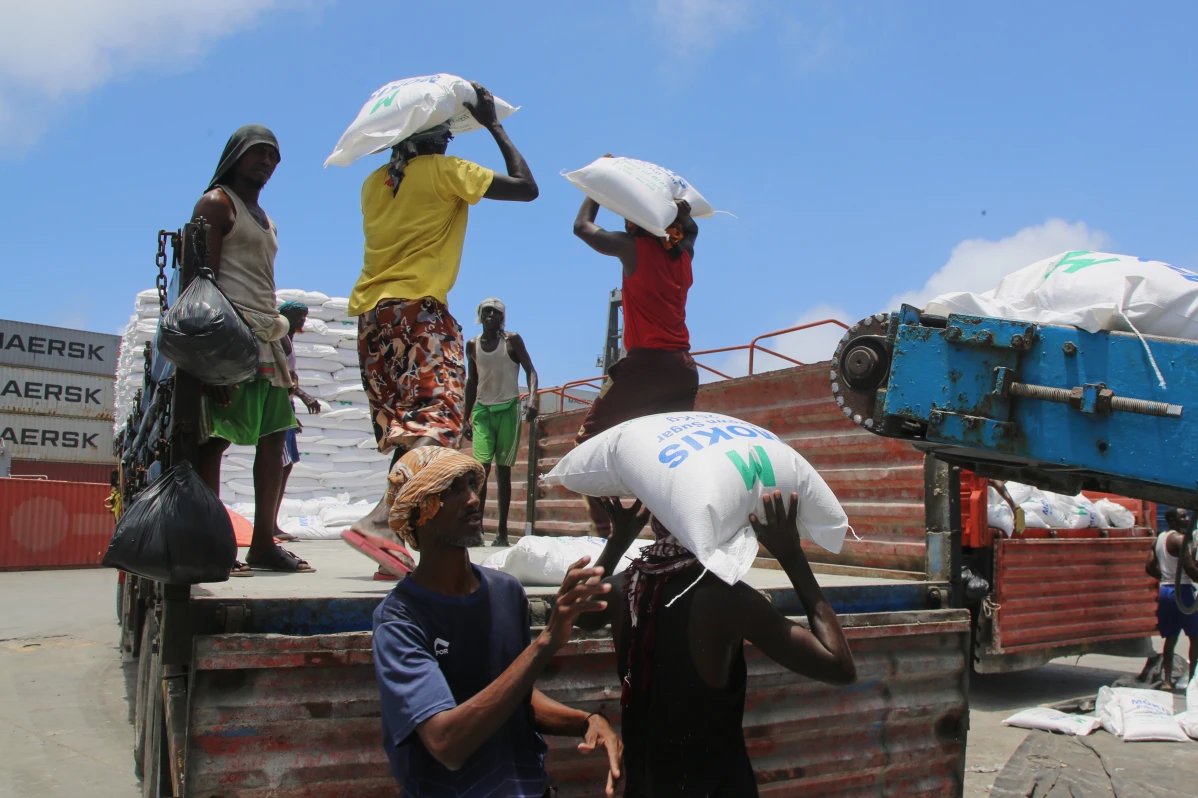
The change is already visible at Mogadishu Port, where officials say exporters and shipping companies are exploring different routes to reduce exposure to regional disruptions. One of the clearest examples was the arrival of a sugar shipment directly from Sri Lanka, rather than following a more traditional route through Gulf countries.
The development illustrates how a conflict thousands of kilometres away can quickly affect businesses and consumers in East Africa. When shipping lanes become dangerous or unpredictable, traders have to reconsider routes, carriers and delivery schedules. Those decisions can eventually influence the price and availability of goods in local markets.
Why Somalia is looking for alternative shipping routes
The Bab al-Mandab is one of the world’s most strategically important maritime chokepoints. It connects the Red Sea with the Gulf of Aden and provides a maritime link between the Indian Ocean and the Suez Canal route toward Europe.
For Somalia, the strait has an additional geographical significance. The country sits directly on the Gulf of Aden, close to one of the major approaches to the Red Sea. That makes Somali ports both strategically important and exposed to disruptions elsewhere along the shipping network.
Recent Houthi advances along Yemen’s Red Sea coast have increased those concerns. Houthi forces captured the strategic port city of Mocha and moved onto territory and islands near the Bab al-Mandab, dramatically raising the security risks around the waterway.
At the same time, instability around the Strait of Hormuz has created another potential source of disruption for ships moving between Asia, the Gulf and the Red Sea region.
The result is a difficult environment for companies that depend on predictable maritime transport. Even when ships are still able to travel, uncertainty can affect insurance, freight planning, vessel availability and delivery times.
Mogadishu Port turns to direct cargo connections
Mohamed Ali Nur, director of Mogadishu Seaport, said the latest tensions around the two major waterways had negatively affected Somali traders and shipping activity.
But rather than simply waiting for regional conditions to improve, the port has been working with exporters to find alternative ways of moving cargo.
One notable example was a ship carrying sugar that traveled directly from Sri Lanka to Mogadishu. Nur described the shipment as a strategy developed in response to the regional tensions.
The importance of the move goes beyond a single sugar shipment.
Direct shipping can potentially reduce the number of intermediate points through which cargo must pass. If importers can establish reliable direct connections with suppliers in Asia and elsewhere, they may have greater control over delivery schedules and less exposure to disruptions affecting Gulf transshipment hubs.
However, direct routes are not automatically cheaper or safer. Their viability depends on cargo volumes, vessel availability, port Infrastructure, shipping schedules and security conditions along the route.
For Somali traders, the immediate objective is therefore flexibility. Having several possible supply routes gives importers more options if one corridor becomes too risky or expensive.
How Yemen’s conflict is affecting East African trade
The renewed fighting in Yemen has transformed what was already a complicated maritime-security environment.
Yemen’s internationally recognized government and the Houthi movement have been locked in conflict for years. A ceasefire had significantly reduced large-scale fighting since 2022, but the latest escalation has reopened major security concerns along Yemen’s western coastline.
The Houthi advance toward the Bab al-Mandab has given the conflict a much greater maritime dimension.
Control or influence around the narrow waterway can affect commercial shipping far beyond Yemen itself. Shipping companies must consider whether vessels can safely pass through the Red Sea, whether crews face a heightened threat and whether insurance and security costs make a particular route commercially viable.
When companies decide that a route is too risky, ships can be diverted around the southern tip of Africa. That alternative avoids the immediate danger around the Red Sea but adds significant distance and sailing time.
For Somali traders, however, the effects can be more complicated. A large-scale rerouting of international shipping can change traffic patterns around the Somali coastline and place additional pressure on regional maritime security.
Somalia’s dependence on maritime trade makes the disruption important
Somalia relies heavily on maritime transport for imported goods. From food products to household items, a significant portion of what reaches consumers arrives through the country’s ports.
Mogadishu is therefore not simply a place where ships unload cargo. The port is an important part of the country’s broader supply chain.
When vessels arrive late, shipping costs rise or established routes become unavailable, the effects can move through the entire Economy.
An importer may initially absorb higher freight expenses to maintain supplies. If disruptions continue, however, those additional costs can eventually be passed to wholesalers, retailers and consumers.
That means a maritime security crisis in the Red Sea can eventually become a market issue in Mogadishu.
Imported food is particularly sensitive because traders cannot always delay purchases indefinitely. Essential commodities have to keep moving even when transportation becomes more expensive or unpredictable.
This creates a difficult choice for businesses: accept the risks associated with established routes, pay more for alternative shipping, or try to establish new direct supply chains.
Why the Sri Lanka-to-Mogadishu route matters
The direct sugar shipment from Sri Lanka provides an example of how trade networks can change under pressure.
Sri Lanka sits along major Indian Ocean shipping routes, making direct connections with East African ports geographically feasible. Establishing such links can reduce dependence on traditional Gulf-based transshipment arrangements.
For Somalia, this could eventually encourage more direct commercial relationships between Asian suppliers and Somali importers.
But one successful shipment does not mean an entirely new trade system has already been established. Regular direct services require sufficient cargo demand and dependable shipping schedules. Businesses also need confidence that vessels can continue using the route without facing sudden security disruptions.
The significance of the Sri Lankan shipment is therefore less about replacing every existing route and more about demonstrating that Somali importers have alternatives when traditional supply lines become uncertain.
Shipping uncertainty is becoming a business problem
Ali Jemdi, a Syrian captain involved in transporting sugar cargoes, described the security situation around the Arabian Gulf and surrounding waters as a concern for vessels operating in the region.
His comments illustrate a problem that shipping companies face whenever conflict spreads near major maritime corridors: even before a vessel is attacked, the perception of increased risk can change commercial decisions.
Ship operators must consider crew safety, insurance, route planning, fuel consumption and the possibility of delays. A route that is normally efficient can become less attractive if vessels require additional security measures or if insurers increase premiums.
For smaller traders, those costs can be particularly difficult to absorb.
Large international companies may have more options for negotiating freight contracts or shifting cargo between different ports. Smaller importers often have fewer alternatives and may be more exposed to sudden changes in transport costs.
The humanitarian crisis adds another layer of pressure
The maritime disruption is unfolding alongside a rapidly worsening humanitarian situation in Yemen.
More than 85,000 people were reported to have been displaced since the beginning of the latest escalation, while more than 2,000 people had reached Djibouti, the East African country located across the Gulf of Aden from Yemen.
The movement of people into Djibouti is significant for Somalia because it demonstrates how the conflict is affecting countries on the opposite side of the maritime corridor.
Djibouti and Somalia are both positioned along critical approaches to the Red Sea. Continued displacement could place additional pressure on regional humanitarian systems, ports and border infrastructure.
The humanitarian consequences also show why the shipping issue cannot be separated entirely from the wider conflict. Every military advance around a major port or maritime chokepoint can have consequences for civilians, commercial operators and neighboring countries.
Bab al-Mandab is more than a regional shipping route
The strategic importance of the Bab al-Mandab comes from its geography.
The narrow waterway connects the Red Sea to the Gulf of Aden. Ships traveling between the Indian Ocean and the Mediterranean can use the corridor to reach the Suez Canal and avoid the much longer journey around Africa.
That makes the strait an important part of the global shipping network.
When vessels cannot safely use the Red Sea, the alternative is often to sail around the Cape of Good Hope. That can add thousands of nautical miles and substantially increase voyage times.
For Somalia, the situation is particularly complex because its coastline sits close to the alternative maritime routes as well. More ships moving around southern Africa can mean greater commercial traffic in waters near Somalia, while reduced traffic through the Red Sea can weaken the advantages of ports that depend on that corridor.
The security environment also matters because Somalia has historically faced serious piracy problems. Any major change in regional shipping patterns must therefore be considered alongside maritime security risks.
Could Somali ports benefit from changing trade patterns?
The disruption creates risks for Somalia, but it could also create opportunities for its ports if the country can improve infrastructure, security and logistics.
Somalia’s location gives its ports access to major Indian Ocean shipping routes. If traders increasingly seek alternatives to the Red Sea and Gulf transshipment hubs, East African ports could become more relevant to certain supply chains.
But geography alone is not enough.
Ports need reliable cargo-handling systems, storage facilities, customs procedures, road connections and security arrangements. Shipping companies also need confidence that cargo can move efficiently after reaching the port.
Mogadishu’s efforts to develop direct connections therefore fit into a much broader question about Somalia’s ability to turn its strategic coastline into an economic advantage.
Consumers may eventually feel the impact
The most immediate concern for ordinary Somali consumers is the potential effect on prices.
When transportation becomes more expensive, importers have to decide whether to absorb the increase or pass it on to customers. If the disruption lasts for an extended period, higher logistics costs can become part of the final retail price.
Delays can also affect availability. A shipment arriving weeks later than expected can create temporary shortages, particularly for goods that are imported regularly and stored in limited quantities.
This is why shipping routes matter even to people who have no direct connection to international trade. The journey of a container or bulk cargo can eventually influence what appears on store shelves and how much consumers pay for it.
Somalia’s traders are adapting rather than waiting
The emerging response from Mogadishu reflects a broader reality in global trade: companies rarely depend on a single route when geopolitical risks become severe.
Instead, they look for redundancy.
That can mean finding direct connections, using different ports, changing suppliers or negotiating alternative shipping arrangements. The objective is to ensure that one disrupted maritime corridor does not completely cut off access to essential goods.
For Somalia, that strategy could become increasingly important if instability around Yemen and the Red Sea continues.
The direct Sri Lankan sugar shipment is therefore best understood as an early example of supply-chain adaptation rather than a complete replacement of Somalia’s traditional trading system.
What happens next for Somali shipping
The future of Somalia’s maritime trade will depend heavily on how the conflict around Yemen develops and whether security conditions around the Bab al-Mandab and Strait of Hormuz stabilize.
If the waterways become safer, traditional shipping routes may regain their importance. If instability continues, more companies could seek direct services and alternative corridors.
For Mogadishu Port, the challenge will be maintaining reliable cargo operations while helping traders diversify their supply chains. For importers, the priority will be balancing cost, speed and security.
The broader lesson is that Somalia’s trade network is closely connected to events far beyond its borders. A military advance on Yemen’s Red Sea coast can influence shipping decisions in Mogadishu. A security concern in the Gulf can change the price of imported goods in East Africa. And a decision by a shipping company to avoid one chokepoint can reshape cargo flows across an entire region.
The latest tensions around the Bab al-Mandab are therefore forcing Somali traders to think beyond their traditional routes. The move toward direct shipments, including the Sri Lanka-to-Mogadishu sugar connection, shows how businesses are beginning to adapt to a more uncertain maritime environment.
Whether those alternatives become permanent will depend on how long the regional instability lasts. But for Somalia’s import-dependent economy, the ability to switch routes quickly could become just as important as the cost of shipping itself.
For breaking news and live news updates, like us on Facebook or follow us on Twitter and Instagram. Read more on Latest World on thefoxdaily.com.




COMMENTS 0