US President Donald Trump has revived his push for a negotiated settlement to the war in Ukraine by suggesting a major new security agreement that could extend beyond the two countries and involve Europe as a whole. His remarks followed a meeting with Kirill Dmitriev, a senior Russian envoy and head of Russia‘s sovereign wealth fund, at the White House on Thursday.
Trump described the proposed arrangement as a “big, beautiful agreement” and suggested that European countries could become part of it. However, he did not explain which countries would participate, what security commitments might be included or how the proposal would address the central disagreements between Moscow and Kyiv.
The comments have introduced another layer of uncertainty into diplomatic efforts to end Russia’s war against Ukraine. While the Trump administration appears interested in developing a wider European security framework, officials in several European capitals have indicated that they do not yet understand what the US president is proposing.
Ukrainian President Volodymyr Zelensky has also expressed caution, warning that a security arrangement involving Russia and European countries could become dangerous if the interests and security of Ukraine are not properly protected.
The timing is significant because the United States, Ukraine and Russia are preparing for another round of negotiations in Abu Dhabi. The discussions could become an important test of whether Washington can turn its latest diplomatic initiative into a framework acceptable to the countries directly involved in the conflict.
Trump’s European Security Proposal Follows Meeting With Putin’s Envoy
Trump’s latest comments came after he met Kirill Dmitriev, who serves as an envoy for Russian President Vladimir Putin and leads Russia’s sovereign wealth fund.
Dmitriev has played a role in diplomatic contacts between Moscow and Washington. His meeting with Trump brought renewed attention to the possibility that discussions about ending the Ukraine War could expand into negotiations over Europe’s wider security arrangements.
Speaking to reporters after the meeting, Trump indicated that the proposed agreement would involve more than Ukraine and might include all of Europe. He described the prospective arrangement in highly positive terms but offered no detailed explanation of its proposed structure.
This absence of detail is important. A European security agreement could cover several different areas, including military cooperation, territorial security, diplomatic commitments, arms limitations and mechanisms for preventing future conflict. These are not interchangeable issues, and each would require separate negotiations.
For Ukraine, the central question is whether any broader agreement would strengthen its security or create arrangements that could limit its ability to defend itself. For European governments, the challenge is ensuring that negotiations about continental security do not undermine existing defence commitments or allow decisions affecting their countries to be made without their participation.
Trump’s remarks have therefore generated interest without establishing a clear negotiating framework. Until the administration provides specific proposals, European governments and Ukraine will have limited information about what Washington intends to achieve.
Jared Kushner Calls for a Broader European Security Architecture
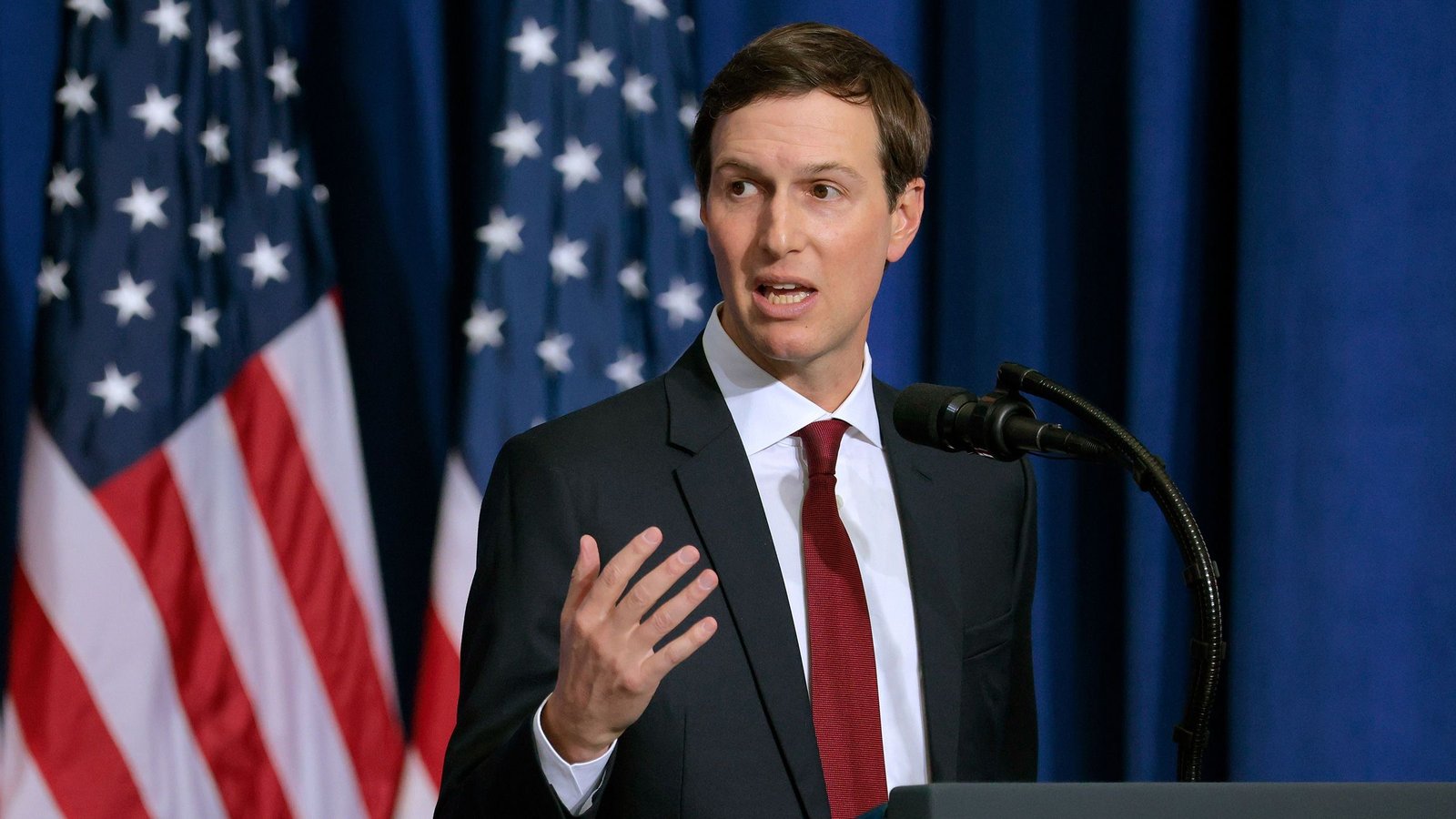
Another indication of the administration’s thinking emerged through a statement posted on X by Trump’s son-in-law Jared Kushner on Thursday.
Kushner argued that Europe needed a broader security architecture capable of addressing the concerns of different sides, reducing the possibility of future conflict and creating a more predictable security environment.
He described the relationship between Europe and Russia over the previous three decades as one marked by mistrust and competing security interests. He also acknowledged that the consequences of the war had made efforts to establish a sustainable security framework particularly difficult.
His statement suggested that the US approach could extend beyond negotiating a ceasefire or stopping the immediate fighting in Ukraine. Instead, it could involve discussions about the wider military and diplomatic relationship between Russia and European countries.
Kushner also referred to greater military transparency and reciprocal measures intended to reduce escalation risks.
These ideas could become significant in any future negotiations because military transparency and communication mechanisms are often relevant to reducing the risk of misunderstandings between countries with competing security interests.
However, the language also raises difficult questions about how such measures would be implemented. Russia has repeatedly objected to NATO‘s military presence and activities in eastern Europe. Consequently, discussions about reducing escalation risks could become contentious if Moscow seeks restrictions that European governments consider necessary for their defence.
Another important aspect of Kushner’s statement was its description of the negotiations. He said the United States had recently held discussions with Ukraine, NATO and other European partners, while Trump had advanced conversations about security with European leaders.
Yet several European officials familiar with the conflict told CNN that they did not know what Trump was referring to. This gap between Washington’s public description of diplomatic progress and the understanding of European officials highlights the uncertainty surrounding the proposed agreement.
Zelensky Warns That a European Security Deal Could Be Dangerous
Ukrainian President Volodymyr Zelensky has welcomed diplomatic efforts to end the war but warned that a wider security arrangement involving Russia and Europe could create serious risks if its terms are not carefully designed.
Speaking to CNN’s Jake Tapper on Friday, Zelensky said he had limited information about the framework Trump was discussing. He explained that he had learned more about the potential initiative through a telephone conversation with US special envoys Steve Witkoff and Jared Kushner on Thursday.
The conversation was intended to prepare Ukraine for the upcoming US-led negotiations involving Russia and Ukraine in Abu Dhabi.
Zelensky’s central concern was the possibility that negotiations over European security could move ahead without first resolving the war itself. He argued that ending the conflict should come before establishing the longer-term security arrangements intended to prevent another war.
His position reflects Ukraine’s concern that a broader agreement could become problematic if it focuses on accommodating Russian security demands without providing Kyiv with credible protection against future military aggression.
For Ukraine, security guarantees are not simply diplomatic commitments. They concern whether the country would receive meaningful assistance if Russia launches another attack after a ceasefire or peace settlement.
A declaration supporting Ukraine’s sovereignty would have limited practical value if the countries offering guarantees did not establish how those commitments would work during a future crisis.
Why Ukraine Wants Security Guarantees Before Accepting a Settlement
Ukraine’s experience of the war has made the question of postwar security central to its negotiating position.
Kyiv needs an arrangement that addresses the possibility of renewed Russian aggression rather than simply stopping the immediate fighting. This could involve military assistance, diplomatic commitments, continued defence cooperation and clearly defined responses to violations of an agreement.
There is also a question of enforcement. Security guarantees need to establish which countries would provide assistance, what form that assistance would take and under what circumstances commitments would be activated.
Without these details, Ukraine could face the risk of entering a settlement that temporarily reduces fighting but leaves its long-term security unresolved.
Zelensky’s caution therefore highlights an important difference between negotiating an end to hostilities and creating a durable peace arrangement. The first requires agreement on stopping the fighting, while the second requires a broader understanding of how future security risks will be managed.
Brussels Meetings Bring the US, Ukraine, NATO and European Partners Together
Trump’s proposal emerged alongside a series of diplomatic meetings in Brussels involving American, Ukrainian, NATO and European representatives.
NATO spokesperson Allison Hart confirmed that discussions involving these parties took place on Thursday ahead of the planned trilateral negotiations in Abu Dhabi.
Hart said the meeting aimed to advance efforts towards a just and sustainable end to the war in Ukraine but did not disclose the detailed discussions.
The Brussels consultations are important because a European security arrangement cannot be developed solely through discussions between Washington and Moscow. European governments and NATO members have direct interests in the continent’s military balance and the security of countries bordering Russia.
The discussions also indicate that the Trump administration is attempting to connect two related diplomatic objectives: establishing security guarantees for Ukraine and developing a wider framework for managing tensions between Russia and Europe.
These objectives may overlap, but they are not necessarily identical. Ukraine’s immediate security requirements concern its ability to defend itself after the war, while a wider European framework would need to address military relations and potential escalation risks across multiple countries.
Germany’s Response to Trump’s Latest Initiative
Trump also spoke with German Chancellor Friedrich Merz on Thursday. Germany is among the important European supporters of Ukraine and has played a significant role in discussions about European security and assistance to Kyiv.
A German government official declined to provide extensive details about the conversation but indicated that the ideas being discussed by the Trump administration were connected to negotiations conducted over previous months.
This suggests that the proposed framework may not represent an entirely new diplomatic initiative. Instead, it could be an attempt to bring existing discussions about Ukraine’s security and Europe’s future relationship with Russia into a broader negotiating structure.
However, uncertainty remains over the extent of European participation. The available information does not establish whether Trump consulted all major European leaders or whether the proposed arrangement has received formal support from European governments.
That distinction matters because European countries would need to consider the consequences of any agreement affecting NATO, military deployments and their relationships with Russia.
Five Areas That Could Shape the Proposed European Security Framework
Kushner’s statement provides some insight into the possible subjects being discussed by American and European representatives. Although a complete agreement has not been publicly presented, his remarks identified several areas that could form the basis of a wider security arrangement.
1. Permanent Security Consultations
Regular consultations between relevant countries could provide a mechanism for discussing security concerns before they develop into larger confrontations.
Such discussions could help governments communicate their positions, identify disagreements and maintain diplomatic contact even during periods of heightened tension.
2. Reliable Crisis Communication
Direct communication channels could help reduce the possibility of military incidents escalating because of misunderstandings or incorrect assessments.
For countries operating in close proximity to one another, reliable crisis communication can be particularly important when military activity increases or unexpected incidents occur.
3. Greater Military Transparency
Military transparency could involve clearer communication about certain defence activities and measures intended to reduce uncertainty surrounding military movements.
However, the practical scope of transparency would need to be negotiated carefully. Countries are unlikely to accept arrangements that expose sensitive defence information or weaken their ability to protect national security.
4. Reciprocal Measures to Reduce Escalation Risks
Kushner also referred to reciprocal measures designed to reduce the possibility of military escalation between Russia and European countries.
The word reciprocal is important because it suggests that any proposed arrangements would need commitments from multiple sides rather than placing obligations on only one group of countries.
Nevertheless, disagreements could emerge over which military activities should be restricted and whether Russia and European governments would interpret escalation risks in the same way.
5. A Long-Term European Security Framework
The final objective would be to establish a more enduring structure for European security and stability.
This is the broadest and potentially most complicated part of the proposal. It could require negotiations about the relationship between Russia and NATO, the security of eastern European countries and the principles governing national sovereignty and military alliances.
Any arrangement would need to account for the interests of countries that may have different threat perceptions and defence priorities.
Why NATO’s Role Could Become a Major Point of Disagreement
NATO’s position is likely to be one of the most sensitive issues in any broader European security negotiation.
Russia has repeatedly criticised NATO’s expansion and military presence near its borders. Moscow has also demanded changes to the European security environment as part of its broader position on the Ukraine conflict.
European governments, meanwhile, regard NATO as a central element of their collective defence arrangements. Countries in eastern Europe, particularly those concerned about Russian military pressure, place significant importance on the alliance’s security commitments.
This creates a fundamental disagreement over the meaning of European security.
Russia has historically argued that its security concerns should be taken into account when NATO makes decisions about military deployments and expansion. Ukraine and several European governments reject the idea that Moscow should have the authority to determine the security choices of independent countries.
Any proposal involving military transparency or reciprocal reductions in escalation risks would therefore need to address this disagreement.
The question is not simply whether Russia and NATO can establish better communication. It is whether they can agree on security arrangements without compromising the sovereignty and independent decision-making of European countries.
For Ukraine, this issue is particularly important because its future security arrangements are closely connected to its ability to determine its own defence and international partnerships.
Russia’s Demands Remain a Major Obstacle to a Peace Agreement
Despite renewed diplomatic activity, the central disagreements between Moscow and Kyiv remain substantial.
Russian President Vladimir Putin has maintained demands involving control over the entire eastern Donbas region, restrictions on the size of Ukraine’s military and an end to Kyiv’s ambitions of joining NATO.
These demands are particularly difficult for Ukraine because they concern territory, national defence and the country’s future foreign policy.
Kyiv considers the continued independence of its territory and its ability to maintain sufficient military strength essential to national security. Accepting restrictions that leave Ukraine vulnerable to future attacks would therefore be difficult to reconcile with its negotiating position.
Territorial questions also remain among the most complicated aspects of any potential settlement. A ceasefire may stop fighting along existing front lines, but it does not automatically resolve competing claims over occupied territories.
The difference between an agreement to stop military operations and a comprehensive peace settlement is therefore significant.
A temporary arrangement could reduce immediate violence while leaving the underlying political and territorial disputes unresolved. A lasting agreement would need to address those disputes or establish a framework through which they could be managed peacefully.
Oleshky Ceasefire and Melania Trump’s Separate Humanitarian Initiative
Another development surrounding the diplomatic activity involved US First Lady Melania Trump, who hosted representatives from Russia and Ukraine at the White House on Thursday.
The event was connected to a temporary ceasefire in Oleshky, a Ukrainian settlement under Russian control, which Melania Trump had helped facilitate through humanitarian contacts.
The initiative brought representatives from the two sides together around efforts concerning civilians affected by the conflict.
Trump later confirmed that he had met Dmitriev separately but said he had not met the Ukrainian delegation.
The distinction is important because the humanitarian meeting and the president’s discussions about a wider European security agreement were separate developments.
Humanitarian arrangements can sometimes create opportunities for limited cooperation even when broader political negotiations remain blocked. Issues involving civilians, displaced people and humanitarian assistance may allow communication between opposing sides without requiring agreement on territorial or military questions.
However, the temporary ceasefire in Oleshky should not be confused with a broader ceasefire covering the entire war. A localised humanitarian arrangement does not establish that Russia and Ukraine have reached a comprehensive agreement to stop fighting.
Abu Dhabi Talks Could Test Trump’s Latest Peace Initiative
The next major diplomatic development is expected to come from the planned trilateral negotiations in Abu Dhabi, where representatives of the United States, Ukraine and Russia are scheduled to meet on November 10 and 11, 2026.
US special envoys Steve Witkoff and Jared Kushner are expected to play important roles in the American negotiating effort.
The discussions are expected to cover security arrangements, de-escalation, humanitarian issues and possible steps towards ending the war.
The meeting will provide an opportunity to determine whether Trump’s latest comments can be translated into more specific proposals.
Several issues will be particularly important during the negotiations:
- Ukraine’s security guarantees: Kyiv will want clarity about the protection it could receive after a settlement.
- Territorial disagreements: Russia and Ukraine remain divided over occupied territories, particularly the Donbas region.
- NATO’s future role: The parties will need to address disagreements involving Ukraine’s security partnerships and European defence arrangements.
- Military restrictions: Any proposal involving limitations on military capabilities will face difficult questions about implementation and enforcement.
- Monitoring a ceasefire: A sustainable agreement would require mechanisms to identify and respond to violations.
European governments will also be watching the discussions closely because decisions made during the negotiations could affect the continent’s long-term security environment.
What Could Prevent a Breakthrough?
Trump’s confidence about reaching a major agreement contrasts with the difficult issues that remain unresolved.
The first obstacle is the difference between Russia’s territorial demands and Ukraine’s position on sovereignty. Neither side has publicly demonstrated that it is prepared to abandon its fundamental claims.
The second obstacle concerns security guarantees. Ukraine wants arrangements that provide meaningful protection against another Russian attack, while Russia has its own demands regarding NATO and the military balance in Europe.
The third challenge involves European participation. Countries that would be affected by a wider security agreement need to have a meaningful role in shaping its terms. An arrangement negotiated primarily between Washington and Moscow could face difficulties if European governments believe their interests have not been adequately considered.
Finally, there is the question of enforcement. Even if negotiators agree on a framework, its long-term effectiveness would depend on whether the participating countries comply with their commitments.
These obstacles mean that diplomatic progress should not automatically be interpreted as evidence that a comprehensive peace agreement is close.
What Trump’s European Security Deal Could Mean for Ukraine and Europe
Trump’s proposal could become an important diplomatic initiative if it produces a framework that addresses Ukraine’s security needs while reducing the possibility of a wider confrontation between Russia and European countries.
For Ukraine, the most important outcome would be a settlement that protects its sovereignty and provides credible safeguards against renewed aggression.
For European governments, the priority would be ensuring that any new security arrangement strengthens stability without undermining NATO’s collective defence responsibilities or the independence of individual countries.
For Russia, negotiations could provide an opportunity to discuss its long-standing security demands and its relationship with European powers. However, those discussions would need to account for the sovereignty and security interests of neighbouring countries.
The proposed agreement could therefore have consequences extending far beyond the immediate battlefield. Its terms could influence military cooperation, diplomatic relations and the future security structure of the European continent.
At present, however, Trump has offered a description of an ambitious agreement rather than a complete proposal. Kushner’s comments provide some indication of the subjects under discussion, but major questions about participation, enforcement and the treatment of Ukraine’s security remain unresolved.
The upcoming Abu Dhabi negotiations will be an important opportunity to assess whether the different sides can move beyond broad diplomatic statements and begin addressing their disagreements through concrete commitments.
Until those details emerge, the prospect of a major European security deal remains an evolving diplomatic initiative rather than an established agreement. The central test will be whether any eventual settlement can deliver a secure and independent Ukraine while creating a European security framework that participating countries are prepared to respect.
For breaking news and live news updates, like us on Facebook or follow us on Twitter and Instagram. Read more on Latest World on thefoxdaily.com.


COMMENTS 0