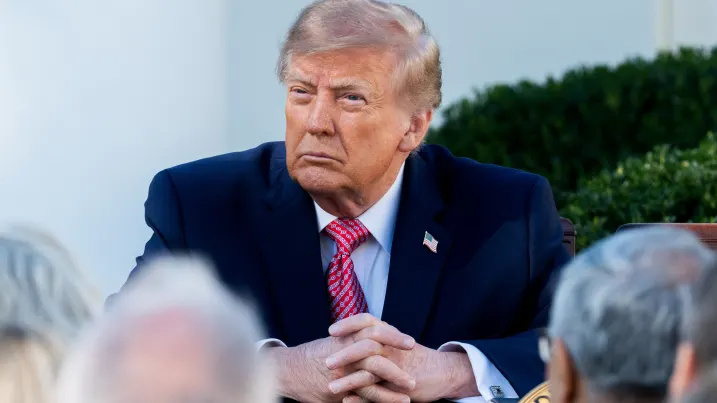
US President Donald Trump has renewed his claim that threats of steep tariffs on India and Pakistan helped stop their four-day military conflict in May 2025, once again taking credit for preventing further escalation between the two nuclear-armed neighbours. India, however, has consistently rejected claims of US mediation, maintaining that the understanding to cease military action was reached directly between the two countries’ military officials.
Speaking at a midterm election rally in Florida on Friday, Trump said he had warned both countries that they would lose access to trade with the United States if they continued fighting. According to news agency Press Trust of India (PTI), he claimed his warning prompted the countries to stop firing after days of military hostilities.
The remarks repeat Trump’s longstanding assertion that economic pressure played a decisive role in ending the confrontation. India has maintained that the ceasefire understanding was reached through direct communication between the Directors General of Military Operations (DGMOs) of India and Pakistan on May 10, 2025.
Trump Says Threat of 250% Tariffs Stopped India and Pakistan
At the Florida rally, Trump described how he claimed to have intervened as tensions escalated between India and Pakistan. He said he warned both countries that continued fighting would have consequences for their economic relationship with Washington.
“You stop India and Pakistan, two nuclear nations… I said, ‘Fellas, if you guys are going to do that, you’re not going to trade with the United States… I’m going to put massive tariffs on both of you, 250 per cent, so you won’t be able to do any business’,” Trump said, according to PTI.
Trump said the two countries were “very upset” and “very angry” following his warning but stopped firing afterward. He also referred to aircraft losses during the conflict while presenting his account of the episode.
“Eleven planes were shot down. I stopped all these wars, and it’s really an honour to do so…” he said.
His remarks presented the tariff threat as a central factor in halting the military confrontation. However, the statement reflects Trump’s account of events, which India has repeatedly disputed. The supplied information does not independently establish that the tariff warning caused the cessation of hostilities.
India Rejects Trump’s Claim of US Mediation
India has consistently maintained that the understanding to stop military action was reached directly between the Indian and Pakistani military leadership. According to India’s position, the agreement was established on May 10, 2025, through communication between the Directors General of Military Operations of the two countries.
India has also stated that no trade-related discussions took place with the United States during the conflict. This directly contradicts Trump’s repeated suggestion that threats involving tariffs and access to the American market were instrumental in bringing the fighting to an end.
The difference between the two accounts remains central to the dispute over who helped bring the military confrontation to a close. Trump has repeatedly credited himself with preventing escalation, while India has attributed the ceasefire understanding to direct military-level communication between the two countries.
The distinction matters because the competing claims describe different explanations for how hostilities ended. Trump’s version emphasises economic pressure from Washington, while India’s position places the agreement within direct bilateral military communication.
The available information does not provide independent evidence resolving the disagreement. Trump’s latest remarks therefore renew an existing dispute rather than establish a new, mutually accepted account of the ceasefire.
Operation Sindoor Followed the Pahalgam Terror Attack
The military confrontation took place after a terror attack in Pahalgam on April 22, 2025, in which 26 people were killed. India launched Operation Sindoor on May 7, targeting what it described as terrorist infrastructure in Pakistan and Pakistan-occupied Jammu and Kashmir.
The operation marked a major escalation in tensions between the two nuclear-armed neighbours. The ensuing military confrontation lasted four days, according to the account provided, before the two sides reached an understanding to stop military action on May 10.
The conflict drew international attention because of the risk that sustained military exchanges between India and Pakistan could lead to a wider confrontation. Both countries possess nuclear weapons, making the management of escalation a significant regional and international concern.
Trump has repeatedly used the episode to support his broader claim that he has helped prevent or resolve international conflicts. His latest comments again linked the end of the India-Pakistan fighting to his willingness to threaten major economic penalties.
India’s account, however, maintains that the military understanding was reached directly by the two countries’ senior military officials. Its stated position also rejects the suggestion that trade negotiations with Washington formed part of the process.
Trump Says the United Nations Played No Role
During the Florida rally, Trump also said he had not sought assistance from the United Nations while dealing with international conflicts. He used the statement to emphasise his claim that he had helped stop several wars without relying on the international organisation.
“I’d never made one phone call to the United Nations. But we got them all stopped, and a couple more left. I had no idea when I was running, I had no idea that they had so many wars,” Trump said, according to PTI.
The comments formed part of his broader argument that his administration had played an important role in preventing or resolving international hostilities. His reference to the India-Pakistan conflict was consistent with his previous statements crediting tariff threats for the end of the May 2025 fighting.
However, his remarks about the United Nations do not independently establish what role, if any, different international actors played in the episode. The account supplied does not provide additional evidence to assess Trump’s broader claims about his role in resolving other conflicts.
Trump Renews Claim That He Deserves the Nobel Peace Prize
Trump has repeatedly argued that his efforts to resolve international conflicts make him deserving of the Nobel Peace Prize. At the Florida rally, he expressed disappointment that he had not received the award despite claiming to have settled multiple wars.
“I’ve settled eight wars. Did I get the Nobel Prize? No,” Trump said.
His comments reflect his repeated attempts to frame his foreign policy record around conflict resolution and the prevention of further fighting. The India-Pakistan confrontation remains one of the episodes he has cited when arguing that his approach has helped stop international conflicts.
His latest remarks also connect his claims about diplomacy with his broader political messaging ahead of the US midterm elections. By presenting tariff threats as an effective tool for influencing the decisions of foreign governments, Trump highlighted the role he believes economic pressure can play in international relations.
India’s rejection of his account, however, remains an important qualification to his claims about the May 2025 ceasefire understanding.
US Midterm Elections Scheduled for November 3
Trump made the remarks as the United States prepares for its midterm elections on November 3. All 435 seats in the House of Representatives and approximately one-third of the Senate seats are scheduled to be contested.
The midterm elections will determine the composition of Congress and are a major political test for the president and his party. Trump’s Florida rally was part of the wider political campaign surrounding the elections.
His comments on India and Pakistan placed his claims about international conflict resolution alongside his broader efforts to promote his record to voters. By repeating the assertion that threatened tariffs stopped the fighting, he again presented economic pressure as evidence of his effectiveness in foreign policy.
However, the underlying disagreement over the May 2025 ceasefire remains unresolved in the accounts provided. Trump continues to claim that his tariff warning helped stop the conflict, while India maintains that the understanding was reached directly between the two countries’ military chiefs.
Why the Disagreement Over the Ceasefire Matters
The competing accounts highlight a broader disagreement over the role of economic pressure and direct military communication in ending the India-Pakistan confrontation. Trump’s version emphasises the potential influence of access to the US market, while India’s position stresses the direct understanding reached between the two countries’ military leadership.
Because the confrontation involved two nuclear-armed neighbours, the circumstances surrounding the cessation of hostilities remain important to how the episode is understood. Claims about the role of outside pressure should be distinguished from the documented positions of the governments involved.
Trump’s latest statement is consistent with his previous assertions that tariff threats helped end the fighting. India has not accepted that explanation and has maintained that no trade-related discussions with the United States took place during the conflict.
For now, the two accounts continue to differ on what brought the military hostilities to an end. Trump’s remarks at the Florida rally have renewed attention to that disagreement, but they do not alter India’s stated position that the ceasefire understanding was reached directly between the Indian and Pakistani military chiefs on May 10, 2025.
With PTI inputs
For breaking news and live news updates, like us on Facebook or follow us on Twitter and Instagram. Read more on Latest World on thefoxdaily.com.




COMMENTS 0