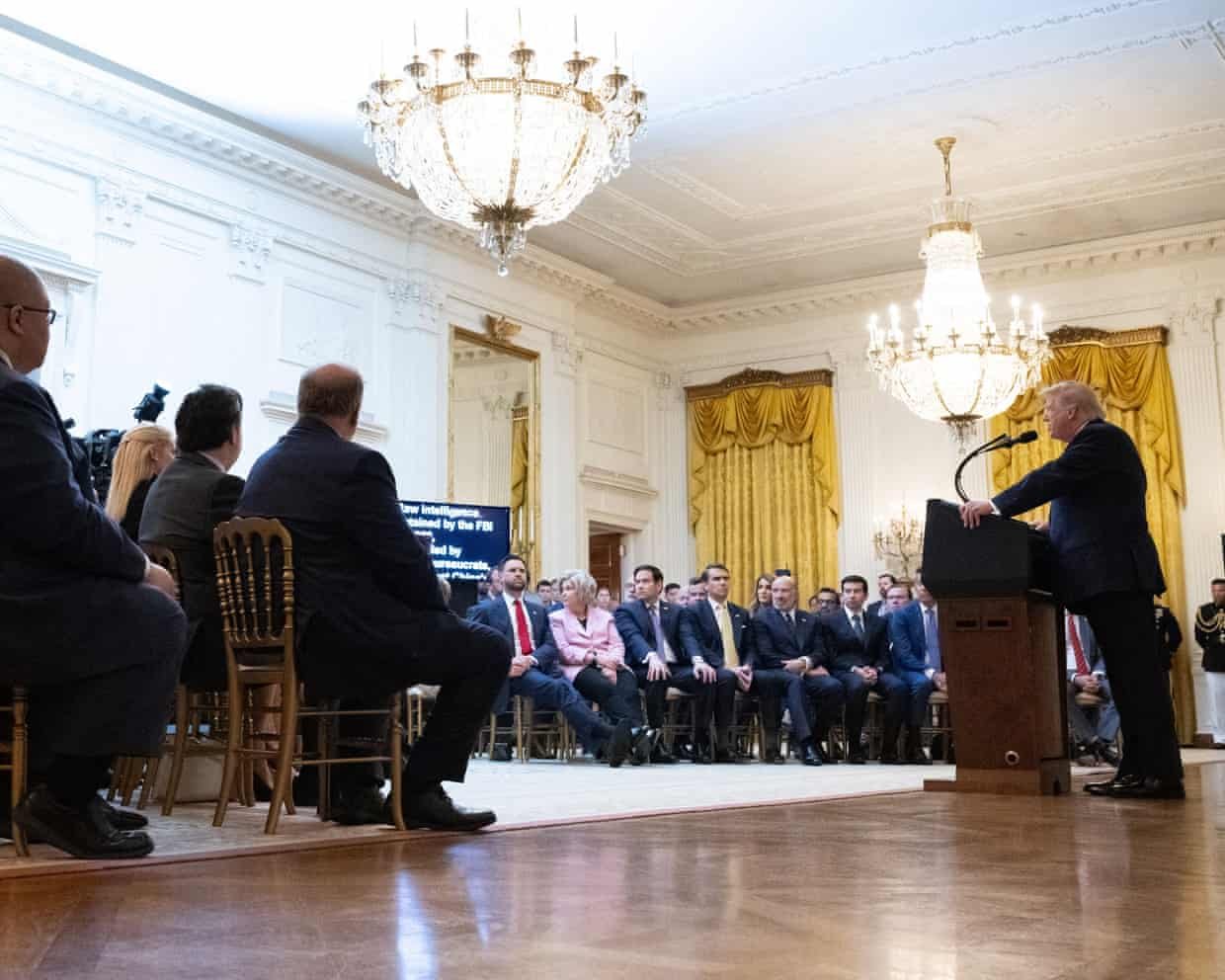
President Donald Trump used a nationally televised address from the White House to argue that America’s election system contains significant vulnerabilities that require immediate reform. During the speech, he cited newly declassified government documents, alleged weaknesses involving foreign influence, questioned voter registration systems, and pledged additional federal action aimed at strengthening election integrity.
The address quickly became one of the most discussed political events of the week. Supporters described it as an overdue effort to improve Election Security, while critics argued that it revisited previously examined allegations without presenting new evidence that certified election outcomes had been altered. The speech has intensified discussion about the balance between protecting election integrity and maintaining public confidence ahead of the 2026 midterm elections.
What Trump Said During His Address
Throughout the speech, Trump argued that safeguarding elections should be a national priority and claimed the current system contains vulnerabilities that deserve closer examination. He announced the release of previously classified materials related to election intelligence and maintained that additional reforms are necessary to ensure confidence in future elections.
Among the major themes of the address were:
- Concerns about foreign influence targeting American elections.
- Questions surrounding voter registration systems.
- Calls for stricter election security measures.
- Support for stronger voter identification requirements.
- Plans for additional federal reviews involving election infrastructure.
Trump argued that restoring public trust requires addressing every potential weakness before future elections take place.
The Declassified Documents Explained
Following the address, the White House published a collection of previously classified documents connected to intelligence assessments, agency correspondence, and election-related investigations.
The release immediately attracted attention because many documents contained redactions, limiting public visibility into portions of the underlying intelligence. Analysts also noted that intelligence documents frequently include preliminary assessments, competing viewpoints, and evolving conclusions rather than definitive findings.
As a result, experts emphasized that individual excerpts should be interpreted within the broader context of completed investigations and official intelligence assessments.
Foreign Influence and Election Security
Election security specialists distinguish between attempts to influence public opinion and efforts to directly alter election administration.
| Foreign Influence Operations | Election Administration |
|---|---|
| Social media campaigns, propaganda, online misinformation, and public messaging. | Voting machines, ballot counting, voter registration systems, certification, and audits. |
| Designed to influence public opinion. | Responsible for administering and counting votes. |
| Can shape political narratives. | Determines official election outcomes. |
Modern intelligence agencies monitor both categories because each presents different national security challenges.
Previous Intelligence Findings
Over multiple election cycles, U.S. intelligence agencies have reported that foreign governments have attempted to influence American political discourse through cyber operations, disinformation campaigns, and online messaging.
At the same time, previous official assessments concluded that there was no credible evidence establishing that foreign actors successfully manipulated certified vote totals in the 2020 presidential election.
Numerous state audits, recounts, court proceedings, and election reviews also examined allegations concerning the election before certified results remained unchanged.
Questions About Voter Registration Rolls
Another major focus of Trump’s address involved voter registration databases and concerns regarding noncitizens appearing on voter rolls.
Election administrators have long acknowledged that voter registration systems require continuous maintenance because individuals relocate, become ineligible, or die over time. States routinely conduct list maintenance procedures designed to improve the accuracy of voter rolls while complying with federal election laws.
Election experts note that appearing on a voter registration database does not necessarily indicate that an individual has voted or cast an illegal ballot. Verification procedures, eligibility requirements, and ballot validation remain separate parts of election administration.
Federal Versus State Authority Over Elections
One of the constitutional questions raised by the speech concerns the division of election responsibilities between federal and state governments.
The U.S. Constitution assigns primary responsibility for administering elections to individual states. State election officials oversee voter registration, polling locations, ballot counting, certification, recounts, and many aspects of election administration.
The federal government, meanwhile, plays supporting roles involving election security, cybersecurity assistance, intelligence sharing, voting rights enforcement, and protection against foreign threats.
This balance has long shaped debates over how much influence federal agencies should have in state-run elections.
The Department of Homeland Security’s Role
During the address, Trump indicated that the Department of Homeland Security would conduct additional briefings concerning election vulnerabilities and work with states regarding voter registration concerns.
DHS has increasingly participated in election security efforts over the past decade by sharing cyber threat intelligence, supporting state election officials, and coordinating responses to potential foreign interference targeting election infrastructure.
Any expanded federal involvement in election administration would likely generate additional legal and constitutional discussions regarding the respective powers of federal and state governments.
Why Public Confidence Matters
Election security extends beyond technology. Public confidence is widely considered one of the foundations of democratic governance.
Political scientists frequently observe that citizens are more likely to accept election outcomes when they believe the process is transparent, secure, and fairly administered.
Maintaining that confidence requires:
- Secure election infrastructure.
- Transparent vote-counting procedures.
- Independent audits where appropriate.
- Accurate public communication.
- Clear explanations of election processes.
Both election officials and policymakers generally agree that protecting confidence is essential regardless of political outcomes.
Why Election Security Has Become More Complex
Modern elections face challenges that extend far beyond polling stations.
Today’s election systems involve cybersecurity, cloud-based voter registration databases, electronic poll books, absentee ballot processing, supply chain security, artificial intelligence, and rapidly evolving social media platforms.
At the same time, technological advances have made it easier for misinformation, manipulated content, and coordinated online influence campaigns to spread quickly, increasing the importance of digital resilience alongside traditional election safeguards.
The Political Context Before the 2026 Midterms
The timing of Trump’s address is significant because the United States is entering a critical election cycle. Midterm elections historically determine control of Congress and often influence the direction of national policy for the remainder of a presidential term.
Election administration, voting access, cybersecurity, and voter identification laws are expected to remain central campaign issues as candidates from both major parties seek to persuade voters in competitive states and congressional districts.
Expert Insight: Transparency Is Becoming a Competitive Advantage
One emerging trend in election administration is the increasing importance of transparency. Election officials across the country have expanded public demonstrations of voting equipment, post-election audits, observation opportunities, and educational outreach designed to explain how ballots are counted and certified.
Experts suggest that transparency can strengthen confidence by allowing voters to better understand how elections operate. Clear communication before, during, and after Election Day has become just as important as technological safeguards in maintaining trust.
What to Watch Going Forward
The release of additional government records is likely to generate continued analysis from intelligence specialists, election administrators, lawmakers, and legal experts. Congressional debates surrounding voter identification, election cybersecurity, voter registration procedures, and federal-state responsibilities may also intensify ahead of November.
Meanwhile, election officials nationwide will continue preparing for the 2026 midterms through security testing, poll worker training, equipment certification, and cybersecurity coordination with federal agencies.
Conclusion
President Trump’s White House address has renewed national discussion about election integrity, foreign influence, voter registration systems, and the future of election policy in the United States. By combining the release of previously classified materials with proposals for additional election reforms, the speech has ensured that election security will remain a defining political issue throughout the 2026 campaign season.
As policymakers debate the appropriate balance between federal involvement, state authority, election accessibility, and security, the broader challenge remains unchanged: preserving public confidence while protecting the integrity of one of democracy’s most important institutions. How those discussions evolve in the months ahead could shape not only the upcoming midterm elections but also future approaches to election administration across the country.
For breaking news and live news updates, like us on Facebook or follow us on Twitter and Instagram. Read more on Latest World on thefoxdaily.com.




COMMENTS 0