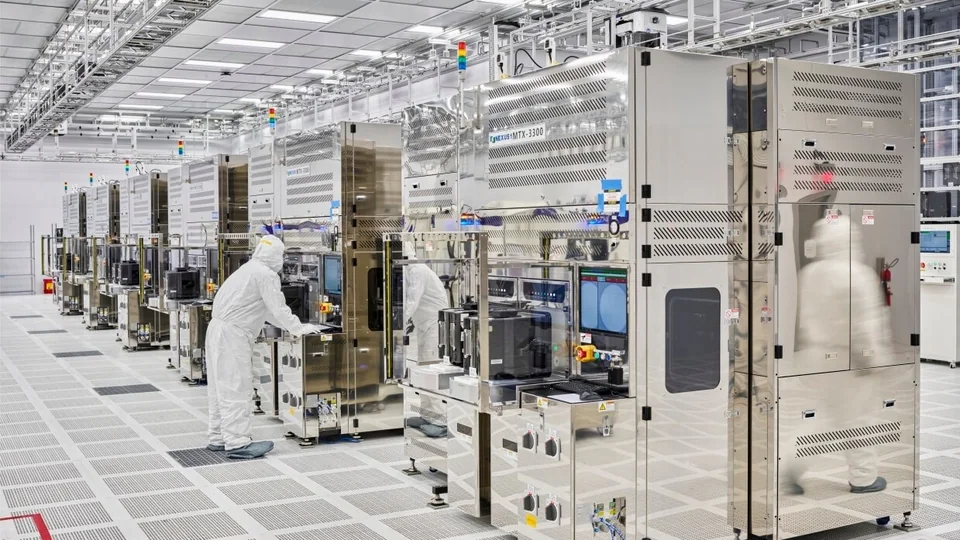
The U.S. Manufacturing sector is showing signs of an Employment recovery, but the types of workers factories need are changing. As manufacturers adopt Automation, robotics and data-driven production systems, many new positions increasingly require engineering qualifications, technical training or experience with advanced equipment.
U.S. manufacturers have added 72,000 workers since December, offering a potential sign of improvement after years of declining employment. However, the recovery is not simply bringing back the traditional factory jobs associated with earlier decades. Companies are increasingly hiring engineers, analysts, technicians and employees in management and business operations, changing the skills workers need to enter the sector.
The shift has significant implications for the American economy. Higher-skilled manufacturing positions can offer better wages and help businesses improve productivity and profitability. But as educational and technical requirements rise, employers face a challenge: finding enough qualified workers to fill the jobs they are creating.
Manufacturing employers are looking for a different kind of worker
The changing requirements are visible at Swift Coat, a Phoenix-based startup that manufactures antireflective coatings for applications including satellite-powered solar panels. The company plans to hire two or three additional employees by the end of the year, and all the positions will require an engineering degree.
Swift Coat uses complex machinery to transform tiny particles known as nanomaterials into specialised coatings. Its work involves computer simulations, data analysis, equipment design and testing, requiring a combination of scientific knowledge and practical technical expertise.
According to chief executive Peter Firth, the company’s seven full-time employees include a physics Ph.D., two people with master’s degrees in mechanical engineering and one employee with a bachelor’s degree in chemical engineering.
The educational profile of its technicians is more varied. Of the three shop-floor workers who handle and inspect samples, one has an associate degree and another attended college for some time. Experience is also important because the technicians must identify and prevent problems rather than simply carry out routine tasks.
Firth explained that a person might be able to perform the basic work when every system operates correctly, but effective technicians need the experience to recognise when something is going wrong. That requirement helps explain why employers may seek trained workers even for positions that appear straightforward from the outside.
The company’s planned expansion also demonstrates how automation can change hiring decisions. Swift Coat is investing in a new assembly line where robots will load and unload samples while a small number of employees supervise operations.
Instead of hiring five technicians for the line, the company may employ one technician and two engineers, Firth said. The arrangement would shift the balance of the workforce toward higher-skilled positions rather than necessarily reducing overall spending on employees.
Automation is reshaping factory employment
The transformation extends beyond individual startups. Data from the U.S. Labor Department show that between 2015 and 2025, manufacturers eliminated 244,000 jobs in production occupations, including positions such as assemblers and machine operators.
Over the same period, the sector added 358,000 jobs in management and business and financial operations. The figures point to a substantial change in the composition of manufacturing employment, even as the industry continues to rely on people working directly with products and equipment.
Automation is one factor behind this change. Robots can take over certain repetitive production tasks, while companies still need engineers, managers and analysts to design systems, oversee operations and interpret the information generated by increasingly sophisticated machinery.
Modern factories use sensors and digital monitoring systems to track equipment performance and identify potential faults. Analysing that information requires employees who understand data and can recognise patterns that might indicate a problem. Automated equipment also needs technicians who can maintain machinery and troubleshoot failures.
Binil Starly, director of Arizona State University’s School of Manufacturing Systems and Networks, said manufacturing returning to the United States is different from the industry that existed during the 1970s, 1980s and 1990s. Today’s factories increasingly need workers who are comfortable with technology.
That does not mean every manufacturing job requires an advanced degree. The qualifications depend on the work being performed, the equipment involved and the employer’s operational needs. However, the broader direction is clear: familiarity with automated systems and technical processes is becoming more important across a growing range of roles.
Higher-skilled manufacturing jobs can offer better opportunities
The changing skills mix is particularly evident in industries that rely heavily on technology and specialised equipment. While traditional sectors such as furniture manufacturing have been shrinking, knowledge-intensive industries including aerospace, computers, electrical equipment and heating and cooling systems have added workers this year, according to the supplied report.
Data from the U.S. Census Bureau indicate that more than half of workers in airplane manufacturing have at least a bachelor’s degree. A LinkedIn analysis cited in the report also found that semiconductor manufacturers are more likely than other manufacturing employers to hire college graduates.
These trends suggest that education and technical expertise are becoming important routes into parts of the manufacturing economy. Jobs involving engineering, equipment maintenance, data analysis and production management can require a different combination of qualifications and responsibilities from the assembly-line roles that once defined much of the sector.
Higher-skilled jobs may also offer improvements in the nature of the work itself. Susan Houseman, an economist at the W.E. Upjohn Institute for Employment Research, noted that such positions can involve less repetitive and monotonous work than traditional assembly-line jobs.
For workers, the potential benefits include access to better-paid roles and opportunities to develop specialised expertise. For employers, workers who can operate, maintain and improve advanced production systems can help businesses use equipment more effectively and respond to technical problems.
These advantages, however, are not automatic. The value of a particular job depends on its wages, training requirements, working conditions and opportunities for advancement. Nor does the growth of technical positions mean that every displaced production worker can move directly into an engineering or analytical role.
Higher entry barriers raise concerns about access to jobs
As manufacturing jobs become more technically demanding, workers without college degrees or specialised training may find it harder to enter certain parts of the industry. In the past, some people could move directly from high school into factory employment and learn many tasks on the job. That pathway is becoming less common in workplaces built around complex automated systems.
Susan Helper, an economist at Case Western Reserve University’s Weatherhead School of Management, has raised concerns about access to good jobs as skill requirements increase.
The issue is not simply whether manufacturing employment grows. It is also whether workers can obtain the qualifications needed to benefit from that growth. If employers create positions that require engineering degrees or specialised technical credentials, people without access to relevant education and training may be unable to compete for them.
This creates a challenge for communities that have historically depended on manufacturing as a route to stable employment. A factory can add jobs while offering fewer opportunities to people who lack the educational background demanded by its new production systems.
Workers may need access to technical colleges, apprenticeships, employer-sponsored programmes and other forms of practical instruction. Employers also need to make clear which positions genuinely require university degrees and which can be filled by candidates with vocational training and relevant experience.
The available information does not establish how many workers are being excluded from manufacturing employment because of higher qualifications. It does, however, identify access to training as an important concern as the industry changes.
Manufacturers expand training to address the skills gap
Manufacturers and industry organisations are responding by expanding efforts to prepare workers for more technical roles. Their challenge is to build a pipeline of employees whose skills can keep pace with the growing use of automation and advanced equipment.
SME, a manufacturing trade group, has a workforce development division with approximately 125 employees. Its programmes include sending equipment such as drone-coding kits and 3D printers to middle schools to introduce younger students to manufacturing-related technology.
The initiative reflects an effort to broaden awareness of modern factory careers before students make decisions about further education and employment. Manufacturing increasingly combines practical production with digital systems, engineering and technical problem-solving, making early exposure to these fields potentially valuable.
SME chief executive Jeannine Kunz has warned that technology is advancing faster than the available workforce’s skills. She said the manufacturing sector is struggling to find enough talent, highlighting the pressure employers face as production methods change.
Training efforts are also targeting workers who can support semiconductor manufacturing, one of the technology-intensive industries expanding in the United States.
Arizona State University prepares technicians for semiconductor manufacturing
In Mesa, Arizona State University’s School of Manufacturing Systems and Networks is training people to become equipment technicians at Taiwan-based chipmaker TSMC’s expanding Arizona facility.
The school is training around 170 people for these roles and plans to increase that number to 800 next year. It also has approximately 370 students pursuing bachelor’s, master’s and doctoral degrees.
Founded five years ago, the school is building programmes around the skills required by advanced manufacturing employers. Equipment technicians are particularly important in facilities where production depends on complex machinery that must operate reliably and be maintained by trained staff.
The expansion illustrates the connection between industrial investment and workforce preparation. Building a manufacturing facility is only part of the process; companies also need people who can operate and maintain the equipment once production begins.
Training programmes can help close the gap between employer requirements and the skills available in the local labour market. However, the planned increase in technician training also indicates the scale of the preparation that may be needed as semiconductor manufacturing expands.
Ohio faces a similar challenge as advanced industry grows
The need for manufacturing training is not limited to Arizona. In the Columbus, Ohio, region, workforce development organisation Aspyr Workforce Innovation has increasingly focused on preparing local residents for industrial employment.
When Aspyr launched a decade ago, factory work was not a major focus of its activities. That changed as more advanced industries moved into the area, increasing demand for workers with manufacturing-related skills.
Chief executive Lisa Patt-McDaniel said existing regional training programmes are currently keeping pace with demand from employers and workers. However, she cautioned that the situation could change if industrial growth continues.
Intel has announced plans for two factories east of Columbus with a combined workforce of 3,000 people, according to the supplied report. Such projects can increase the need for equipment technicians and other workers with specialised manufacturing skills.
The scale of the training challenge will depend on how quickly industrial projects progress, what positions employers ultimately need to fill and how many qualified workers are available locally. Patt-McDaniel said the region was managing demand at present but suggested that its position could look different in two years.
The experience of Arizona and Ohio points to a common issue: manufacturing investment and workforce development must advance together. If companies expand faster than training programmes can prepare workers, employers may struggle to fill positions even as new facilities create opportunities.
What the manufacturing jobs recovery means for the U.S. economy
The return of manufacturing job growth offers a positive signal after years of declining employment, but the changing nature of the work complicates the picture. Adding workers to the sector does not necessarily restore the same types of jobs that disappeared in previous decades.
Instead, the industry is increasingly combining automated production with engineering, data analysis, technical maintenance and management. These positions can support productivity and business growth, but they also demand investment in education and training.
For employers, the challenge is to recruit workers with the right mix of technical knowledge and practical experience. For educational institutions and workforce organisations, the task is to develop programmes that match the needs of expanding industries. For workers, understanding the qualifications required for different roles may become an increasingly important part of preparing for a manufacturing career.
The sector’s future growth will therefore depend not only on factories, machinery and investment but also on whether enough people can acquire the skills needed to run modern production systems.
The central shift is that manufacturing employment is becoming more technology-intensive. New jobs are emerging, but the route into them is changing. Without sufficient training opportunities, the United States risks facing a shortage of qualified workers even as manufacturers look to expand their workforce.
For breaking news and live news updates, like us on Facebook or follow us on Twitter and Instagram. Read more on Latest World on thefoxdaily.com.






COMMENTS 0