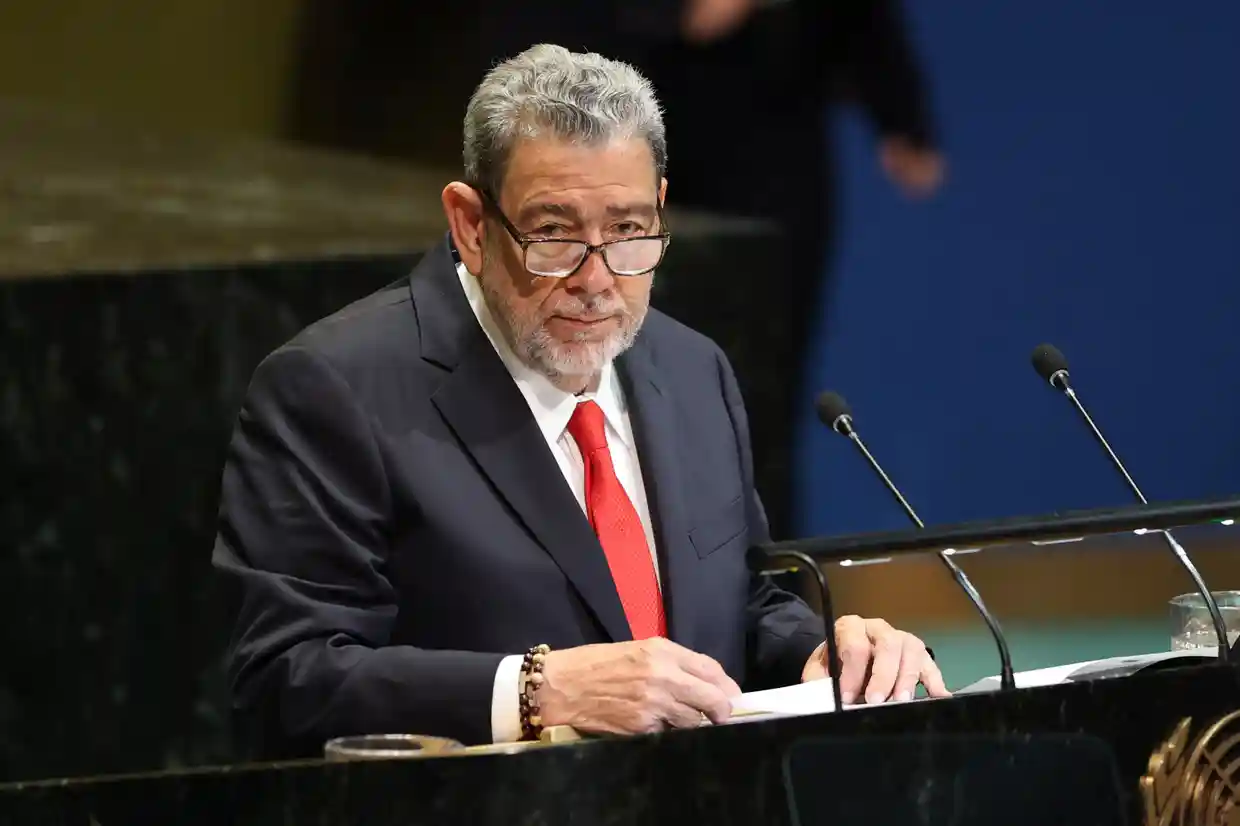
British officials strongly opposed placing Slavery Reparations on the formal agenda of the Commonwealth Heads of Government Meeting (CHOGM) in Antigua and Barbuda, even reportedly raising the possibility that the UK prime minister would not attend if the issue were included, according to former St Vincent and the Grenadines prime minister Ralph Gonsalves.
The dispute comes as the British government has agreed to enter structured dialogue on reparatory justice, marking a significant shift in its approach. However, slavery reparations remain absent from the summit’s official agenda, despite sustained pressure from Caribbean governments and campaigners.
Gonsalves, a senior figure in the reparatory justice movement Repair Campaign, welcomed Britain’s decision to engage in discussions but said the government had approached the issue reluctantly. He described the UK as coming to the negotiating table “kicking and screaming”.
UK Officials Reportedly Opposed Adding Reparations to the Agenda
Gonsalves told the Guardian that British officials had been particularly firm in opposing the inclusion of slavery reparations in the formal CHOGM agenda. He also claimed Canadian officials supported that position and that British representatives had raised the possibility of the prime minister not attending if the issue became an official agenda item.
“My understanding from informed circles is that Britain was vehement not to have the matter on the agenda.”
He further alleged that officials had circulated claims suggesting India did not want reparations discussed at the summit. Gonsalves rejected that account, pointing to India’s support for a United Nations General Assembly resolution on 25 March 2026.
There was no immediate comment from the British government on his claims.
Reparatory Justice Remains a Major Issue at CHOGM
The Commonwealth Heads of Government Meeting brings together leaders from 56 countries across Africa, Asia, the Caribbean, the Americas, the Pacific and Europe. The summit’s stated priorities include trade, climate resilience, finance, sustainable debt, democracy and investment in opportunities for young people.
Although reparations are not listed on the formal agenda, Gonsalves said pressure from Caribbean countries and the wider international movement had made the issue difficult for leaders to avoid.
He pointed to developments at the United Nations, growing discussions in Africa and the Caribbean, and campaigning within the British Parliament and Labour Party as factors that had pushed reparatory justice into the centre of political debate.
Gonsalves warned that excluding the subject from the official agenda would not prevent leaders from discussing it privately. He expected the issue to arise during the leaders’ retreat, where the format and details of the proposed structured dialogue could be considered.
UK Prime Minister Agrees to Structured Dialogue on Reparations
In a significant development ahead of the summit, the British prime minister announced a willingness to enter structured dialogue on reparatory justice and consider an apology. The announcement, made in an opinion article for the Guardian, represented a notable change in Britain’s approach compared with previous governments.
Caribbean governments and campaigners welcomed the move but stressed that agreeing to dialogue was only an initial step. They continue to seek discussions on the forms reparations could take and how historical injustices have shaped economic and social conditions across the region.
Gonsalves said the structured dialogue itself was unlikely to take place during the summit. Instead, he expected Commonwealth leaders to discuss how the process should be organised and what it should cover.
Guyana Calls for a Commonwealth Subcommittee
Guyana’s President, Irfaan Ali, welcomed the British government’s decision to engage in structured discussions. He proposed establishing a Commonwealth subcommittee to develop the details of the dialogue over the following six to 12 months.
Ali said the discussions should move beyond simply calculating a financial value for the suffering caused by slavery. He argued that reparatory justice should also address the long-term developmental consequences experienced by affected countries.
“How do we identify a system of support where the UK government, with its financial institutions, can sit with countries … and work on a development pathway, identify development gaps, whether in health, education, social services, infrastructure?”
His proposal places development support, public services and infrastructure among the areas that could form part of future discussions.
Mia Mottley and Philip Davis Set Out Caribbean Priorities
Barbados Prime Minister Mia Mottley thanked the British prime minister for what she described as “breaking new ground”, while making clear that the two sides continued to hold different positions on reparations.
Mottley identified several areas where progress could be possible, including an apology, investment in health and education, action against systemic poverty and inequality, and fairer debt arrangements.
Bahamas Prime Minister Philip Davis also emphasised that reparatory justice should not be limited to remembering historical events. He said the discussions needed to recognise the continuing consequences of slavery and address questions of justice, acknowledgment and meaningful redress.
The statements reflect a broader Caribbean position that the legacy of slavery continues to affect development and economic conditions in the region.
King Charles Faces Calls for an Apology During Antigua Visit
The summit is taking place as Antigua and Barbuda marks the 45th anniversary of its independence from British colonial rule. King Charles is expected to attend CHOGM events alongside the British prime minister, but the monarch is not expected to offer a full apology for Britain’s role in the transatlantic slave trade.
Protests are expected as the royal and political leaders travel through the capital, St John’s. Campaigners have used billboards, placards, T-shirts, letters and a candlelight vigil to call attention to the thousands of Africans trafficked to Antigua and Barbuda during the transatlantic slave trade.
The demonstrations are expected to reinforce demands for an apology and reparations during the Commonwealth gathering.
Kemi Badenoch Calls an Apology a Distraction
The debate has also exposed differences within British politics over whether the country should formally apologise for its role in the transatlantic slave trade.
On Sunday, Conservative Party leader Kemi Badenoch described an apology as a “navel-gazing distraction”. She also called slavery an evil in which people from every continent and region participated.
Gonsalves responded by saying he would welcome an opportunity to discuss the issue with Badenoch. He argued that reparatory justice could also contribute to addressing divisions linked to Britain’s multicultural and ethnic tensions.
Why the Reparations Debate Remains Unresolved
Britain’s agreement to structured dialogue has opened a new phase in discussions between the UK and Caribbean governments, but it has not resolved their differences over what reparations should involve.
Caribbean leaders are seeking more than recognition of historical wrongdoing. Their proposals include an apology, development assistance, investment in public services, action against inequality and changes to financial arrangements that affect the region.
Britain’s reported opposition to placing reparations on the formal CHOGM agenda also highlights the political sensitivity surrounding the issue. Although the subject may be discussed privately during the summit, the absence of a formal agenda item leaves questions about the scope, timing and outcome of the proposed dialogue unresolved.
As Commonwealth leaders gather in Antigua and Barbuda, Caribbean campaigners are continuing to press for acknowledgment, an apology and meaningful action. The agreement to begin structured dialogue represents a change in Britain’s position, but the wider reparations debate remains far from settled.
For breaking news and live news updates, like us on Facebook or follow us on Twitter and Instagram. Read more on Latest World on thefoxdaily.com.






COMMENTS 0