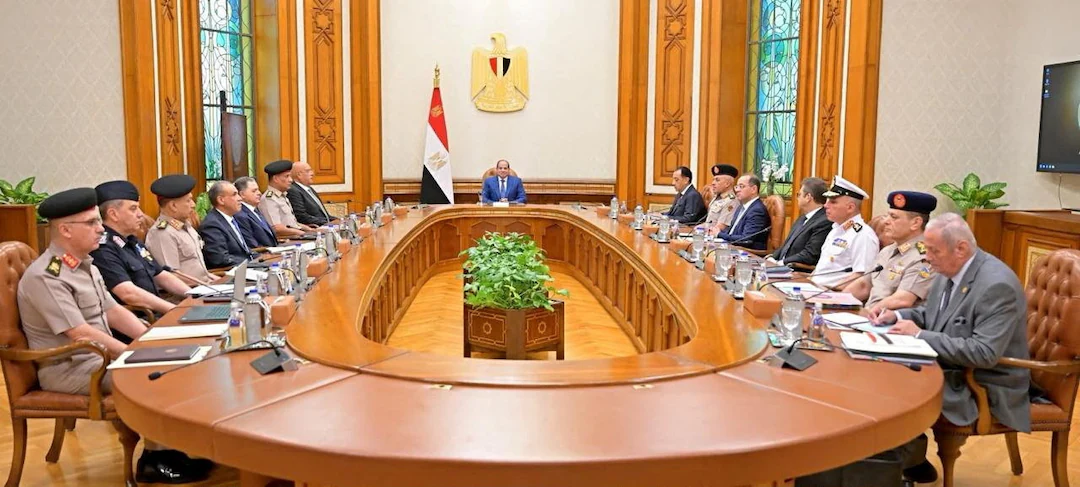
Egypt is moving closer to possible military involvement in the widening Middle East conflict, with parliament expected to vote on whether to authorise the armed forces to help defend Saudi Arabia against attacks by Yemen’s Houthi movement if Riyadh requests assistance.
President Abdel Fattah al-Sisi called for parliamentary approval in a speech on Saturday, signalling a more assertive position as attacks on Saudi infrastructure raise concerns about regional security, energy supplies and shipping routes. His remarks also underscored Egypt’s long-standing ties with Gulf Arab states, which have faced growing security pressures amid the conflict triggered by the US-Israeli air assault on Iran in February.
Sisi said Egypt would “never, never forget our brothers in the Gulf” and assured Saudi Arabia’s leaders that Cairo would “take any measure to protect you”. However, the precise nature of any Egyptian military contribution remains unclear, and the proposed parliamentary authorisation does not, by itself, establish that Egyptian forces will be deployed.
The potential shift reflects several overlapping considerations. Egypt depends heavily on economic ties with Gulf countries, shares an interest with Saudi Arabia in protecting Red Sea shipping and faces the risk that regional hostilities could increasingly affect its own territory and infrastructure.
Egypt also possesses one of the Arab world’s largest militaries and has previously participated in regional military operations. Yet a direct deployment into Yemen would carry significant risks, particularly given the Houthis’ ability to use missiles, drones and dispersed forces to challenge more conventionally equipped militaries.
Why is Egypt considering military support for Saudi Arabia?
Egypt’s possible involvement follows an escalation in Houthi attacks targeting Saudi oil facilities and other infrastructure. The attacks have increased pressure on Riyadh to strengthen its defences and prompted Cairo to reconsider how far it can remain outside the conflict.
Since the Iran war began in February, Egyptian authorities have generally maintained a measured public position. Cairo has repeatedly expressed support for its Gulf allies but stopped short of openly committing to a direct combat role in the conflict.
Sisi’s latest comments represent a shift towards a more explicit willingness to consider military assistance. By seeking parliamentary approval, the president has placed the question of support for Saudi Arabia more directly on Egypt’s political agenda.
The move also reflects the strategic importance of the Saudi-Egyptian relationship. Both countries have substantial interests in regional stability, energy security and the safety of maritime routes linking the Red Sea to international markets.
Saudi Crown Prince Mohammed bin Salman visited Egypt last month, where discussions included the need to preserve freedom and security of navigation in the Bab el-Mandeb Strait and the Red Sea. The talks highlighted concerns shared by the two countries over threats to shipping and the potential economic consequences of a prolonged regional conflict.
Egypt’s position is also shaped by its relationship with the wider US-led regional security system. Cairo has long been a partner of Washington, while Gulf countries have relied on international security cooperation to help protect their territory and critical infrastructure.
As the conflict puts that security framework under pressure, Egypt faces a difficult calculation: how to support its allies without becoming deeply entangled in a potentially prolonged and costly military confrontation.
What is Egypt’s position on the Iran war?
Since the start of the Iran war, Egypt has expressed support for its Gulf partners while avoiding a public commitment to direct combat operations. The possibility of assisting Saudi Arabia would mark a more active approach, although the precise extent of any involvement has not been announced.
There have been indications of growing Egyptian security engagement in the region. In May, Egyptian Rafale fighter jets in the United Arab Emirates were disclosed in Emirati state media coverage of an official visit by Sisi. Egyptian media coverage of the visit did not mention the deployment.
Egypt also did not join the joint defence agreement signed by Saudi Arabia with Turkey and Pakistan in August, although Cairo said it was considering joining the arrangement. These developments illustrate how Egypt has been weighing different forms of regional security cooperation without immediately committing to every proposed initiative.
The tone began to shift more clearly after the Houthis increased attacks on Saudi oil facilities and other infrastructure. Such attacks have consequences beyond the immediate targets because they can threaten energy production, maritime trade and the confidence of countries and businesses operating across the region.
For Cairo, the challenge is to determine whether continued restraint remains sufficient to protect its interests. The potential parliamentary vote suggests that the government wants the option of providing military support if Saudi Arabia requests it.
However, the vote’s expected consideration should not be confused with a confirmed deployment or a declaration that Egypt has entered the conflict. Any actual military contribution would depend on subsequent political and operational decisions.
Why does Egypt depend on Saudi Arabia and the Gulf states?
Economic ties with the Gulf are a major factor behind Egypt’s calculations. Remittances from Egyptian citizens working in Gulf countries provide an important source of foreign currency and household income, particularly at a time when Egypt has been grappling with high inflation and rising food and fuel prices.
Saudi Arabia, the United Arab Emirates and other Gulf countries have also been important financial backers of the Egyptian government. Since the military removed President Mohamed Morsi in 2013, Gulf partners have provided tens of billions of dollars through aid, central bank deposits and investments.
Morsi was a senior figure in the Muslim Brotherhood. His removal and the political changes that followed marked a significant turning point in Egypt’s domestic politics and its relationships with regional partners.
Sisi has explicitly linked Egypt’s current position to that history of financial and political support. In his speech, he said Cairo could not forget how Gulf countries had stood by Egypt during that period.
The financial relationship remains significant. Central bank data cited in the report showed that Saudi Arabia had a $5.3 billion deposit at Egypt’s central bank due in October, alongside $267 million in interest.
Such financial ties give regional stability direct importance for Egypt’s economy. A prolonged conflict affecting Gulf countries could disrupt economic activity, undermine confidence and create additional uncertainty for Egyptian households and businesses that depend on the region.
However, financial interdependence does not automatically determine military policy. Cairo must also consider the costs of intervention, the likelihood of retaliation and the possibility that involvement could expose Egyptian forces to a drawn-out conflict.
Egypt’s decision therefore involves balancing its obligations and interests as a regional partner against the economic and security risks of becoming more directly involved.
How could the conflict threaten Egypt’s own security?
Growing security concerns have added urgency to Cairo’s deliberations. Egypt cannot assume that hostilities involving Iran, Gulf countries and the Houthis will remain geographically contained, particularly when attacks affect energy infrastructure and important maritime routes.
A drone strike targeting two gas vessels at the Mediterranean port city of Damietta in July underscored the potential for the conflict to affect Egypt directly. The incident highlighted concerns about the vulnerability of energy-related infrastructure and maritime assets as regional hostilities intensify.
H. A. Hellyer, a scholar at the Royal United Services Institute, said Egypt was increasingly recognising that it could not remain on the sidelines indefinitely. He also argued that the country’s economic and security concerns were closely connected.
The relationship between those concerns is especially apparent in the Red Sea. Saudi Arabia relies on maritime routes to move energy and other goods, while Egypt earns substantial revenue from vessels passing through the Suez Canal.
Disruption to shipping can increase costs, complicate trade and affect economic activity far beyond the immediate conflict zone. For Egypt, any sustained decline in canal traffic could put additional pressure on an economy already dealing with inflation and other financial challenges.
Saudi Arabia and Egypt also share an interest in protecting shipping through the Red Sea and the Bab el-Mandeb Strait. The strait connects the Red Sea with the Gulf of Aden and the wider Indian Ocean, making it a critical passage for international maritime trade.
Egyptian political researcher and journalist Sherif Aref described Saudi security as a dimension of Egyptian national security, reflecting the strategic connection between the two countries’ interests.
These overlapping vulnerabilities help explain why Cairo may view support for Saudi Arabia as more than a diplomatic gesture. Protecting Saudi infrastructure and maritime routes could also help safeguard Egypt’s own economic and security interests.
What military capabilities can Egypt offer?
Egypt has one of the Arab world’s largest armed forces, with hundreds of thousands of active personnel and substantial air, land and naval capabilities, according to military analysts.
Its military equipment comes from several countries, giving its armed forces a diverse inventory. The Egyptian air force operates US-made F-16 fighter jets, French Rafales and Russian-made MiG-29 aircraft.
Egypt also receives approximately $1.3 billion annually in US military aid, which helps finance purchases of American military equipment. Washington waived human rights conditions on a tranche of the funding this year, citing what it described as Cairo’s “helpful role” since the Iran war began.
The military has experience in operations beyond Egypt’s borders. It contributed air and naval forces to the Saudi-led coalition that intervened in Yemen in 2015 and conducted airstrikes against Islamic State targets in Libya during that country’s civil war.
Within Egypt, the armed forces fought a counterinsurgency campaign against Islamist militants in the Sinai Peninsula following the 2011 uprising that removed President Hosni Mubarak.
Nevertheless, Egypt has not undertaken a large-scale foreign ground deployment since the 1991 Gulf War, when its troops joined the US-led coalition that drove Iraqi forces out of Kuwait.
The country’s earlier intervention in Yemen also provides an important historical warning. Nearly three decades before the 1991 Gulf War, President Gamal Abdel Nasser sent Egyptian forces into Yemen in a costly military campaign. The intervention was later compared to the US involvement in the Vietnam War because of the difficulties and expenses associated with a prolonged conflict.
That experience may inform contemporary calculations about the risks of deploying ground forces into Yemen. A large military can possess substantial conventional capabilities and still struggle against an adversary that relies on dispersed forces, difficult terrain and relatively inexpensive weapons.
Will Egypt send troops into Yemen?
Despite Sisi’s strong public statements, Egypt has not specified what forces it might deploy or what operational role they would perform if Saudi Arabia requested assistance.
Military analysts consider a large-scale deployment of Egyptian ground troops inside Yemen unlikely. More limited forms of support, particularly air defence and naval operations, are viewed as more plausible options.
Samir Ragheb, a retired Egyptian military officer who heads the Arab Foundation for Development and Strategic Studies, said the threats posed by missiles and drones required air-defence and air-force capabilities.
He also identified possible naval roles, including protecting commercial shipping, conducting operations against piracy and safeguarding the Saudi coastline.
Such activities could allow Egypt to contribute to Saudi Arabia’s defence without committing large numbers of ground troops to operations inside Yemen. Air-defence support could help address incoming aerial threats, while naval deployments could strengthen maritime security and help protect important shipping routes.
However, the precise scale and form of any contribution would depend on the threat assessment, Saudi Arabia’s requirements and the decisions made by Egypt’s political and military leadership.
There is also a difference between protecting Saudi territory and attempting to defeat the Houthis inside Yemen. The former could involve defensive operations focused on missiles, drones and maritime security, while the latter could require a much broader and more difficult military campaign.
Why defeating the Houthis could prove difficult
The Houthis have demonstrated an ability to use missiles, drones and dispersed forces to threaten targets beyond the areas under their direct control. Their capabilities and Yemen’s geography complicate efforts by larger conventional militaries to neutralise the movement through airstrikes alone.
Andreas Krieg, a senior lecturer in security studies at King’s College London, argued that the arrival of another large conventional Arab military would not automatically resolve the Houthi threat.
He said the movement’s ability to create disproportionate effects through missiles, drones, dispersed forces and geography made it difficult to defeat through conventional military power alone.
This presents a significant challenge for any potential Egyptian involvement. Even if Cairo provides additional air-defence or naval capabilities, such support may reduce vulnerabilities without eliminating the underlying sources of the threat.
The Houthis’ use of relatively inexpensive aerial systems can also force defenders to expend resources protecting important facilities and infrastructure. The cost and complexity of intercepting repeated attacks can place pressure on military planning and defence budgets.
Krieg suggested that Egypt could instead help strengthen Saudi Arabia’s resilience, improve control of Red Sea routes, share the defensive burden and increase the political cost of continued attacks.
That approach would focus on limiting the damage caused by Houthi operations and improving Saudi Arabia’s ability to withstand them rather than assuming that military intervention could quickly end the conflict.
What Egypt’s possible intervention means for the wider Middle East conflict
Egypt’s consideration of military support for Saudi Arabia signals how the consequences of the Iran war are extending across regional security relationships. A conflict that initially centred on Iran and the US-Israeli assault has created additional pressures for countries concerned about energy infrastructure, maritime trade and the security of their allies.
For Cairo, the decision involves a combination of economic dependence, strategic partnership and direct security concerns. Gulf financial support and remittances make regional stability important to Egypt’s economy, while threats to the Red Sea and the Suez Canal could affect national revenue and trade.
At the same time, a direct military role would carry risks. The experience of earlier interventions, particularly Egypt’s costly campaign in Yemen under Nasser, illustrates the danger of becoming involved in a conflict that proves difficult to contain or conclude.
The most plausible forms of Egyptian assistance identified by analysts involve air defence, naval protection and support for maritime security rather than a large ground deployment into Yemen. Even those measures, however, could draw Egypt more deeply into the regional confrontation if attacks intensify or the scope of operations expands.
The expected parliamentary vote will therefore be an important step in determining how much flexibility the Egyptian government has to respond to a possible Saudi request. It does not guarantee that Egyptian forces will be deployed, nor does it establish the nature of any future operation.
Ultimately, Egypt’s calculations reflect the growing difficulty of separating national economic interests from regional security. Cairo wants to protect its Gulf partnerships and critical maritime routes while avoiding an open-ended military commitment. Whether it can achieve that balance will depend on the course of the conflict, the scale of any threat to Saudi Arabia and the decisions taken by both governments.
For breaking news and live news updates, like us on Facebook or follow us on Twitter and Instagram. Read more on Latest World on thefoxdaily.com.






COMMENTS 0