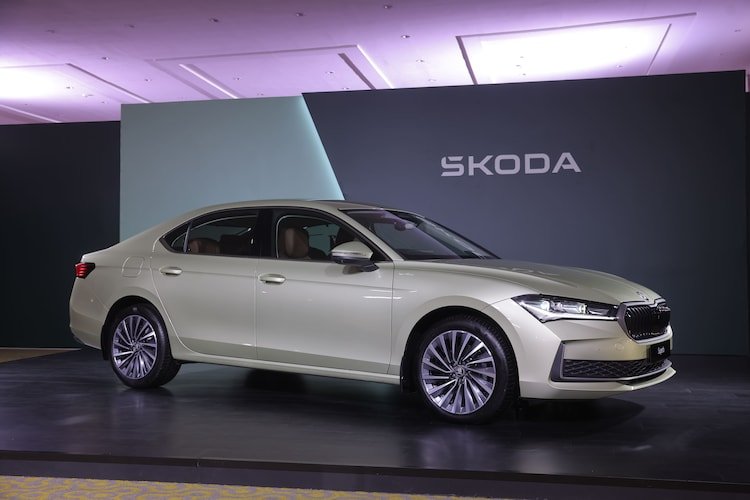
Skoda is preparing to make a significant return to India‘s premium sedan market with the fourth-generation Superb, and this time the flagship model will bring back something Indian Skoda enthusiasts have not seen in years: a TDI diesel engine.
The new Skoda Superb has been showcased in India ahead of its planned launch in the first half of 2027. The India-spec model will arrive as a completely built-up unit, or CBU, and will be offered in the range-topping Laurin & Klement trim. Skoda has also revealed the facelifted Slavia alongside the new Superb.
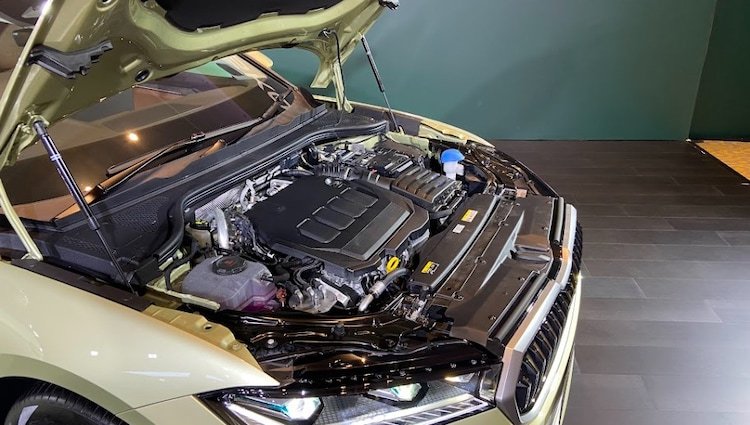
While the Superb’s large dimensions, Technology-loaded cabin and executive-sedan positioning are important, the engine choice is likely to attract the most attention. The India-bound car will use a 2.0-litre turbo-diesel producing 150bhp and 360Nm, paired with a seven-speed DSG automatic gearbox and front-wheel drive.
That decision marks a notable change from the more powerful all-wheel-drive version showcased in India previously. Skoda is also evaluating whether local assembly could eventually make sense, depending on how customers respond to the new-generation sedan.
Skoda Superb diesel returns after a six-year gap
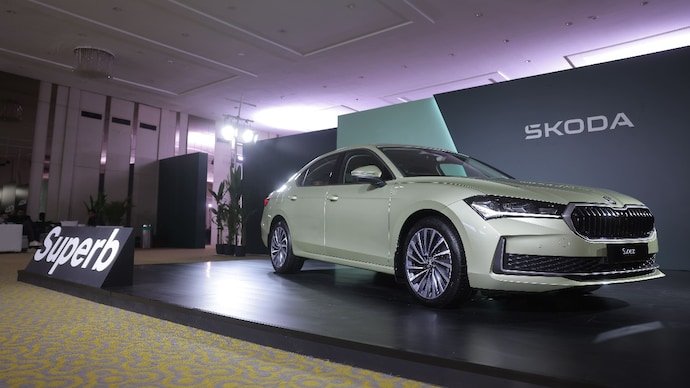
The biggest significance of the new Superb is not simply that it is a new-generation luxury sedan. It represents the return of a Skoda TDI engine to the Indian market.
Volkswagen Group brands moved away from diesel passenger cars in India around the transition to BS6 emission norms. Since then, Skoda’s Indian portfolio has largely focused on petrol-powered models.
The new Superb changes that equation.
Its 2.0-litre turbo-diesel develops 150bhp and 360Nm and sends power to the front wheels through a seven-speed dual-clutch automatic transmission. Skoda claims the car can accelerate from 0-100kmph in 9.2 seconds, while its electronically limited top speed is 225kmph.
For a large executive sedan, the engine specification points toward a balance between long-distance cruising and efficiency rather than outright performance.
The diesel engine also gives the Superb a character that differs from many newer premium sedans, where petrol, hybrid and electric powertrains have increasingly become the focus.
Why is the India-spec Superb different from the 2025 version?
There is an important distinction between the Superb displayed at the 2025 Bharat Mobility Global Expo and the production-specification car now planned for India.
The earlier car was shown with a 193hp diesel engine and all-wheel drive. The version planned for launch will instead use the 150hp configuration with front-wheel drive.
That means Indian buyers will not receive the highest-output diesel configuration seen in the earlier showcase.
The change could be viewed as a practical decision for a relatively small premium sedan market. A simpler front-wheel-drive configuration can potentially make the model easier to position in terms of cost and specification while still retaining the torque characteristics expected from a diesel engine.
However, the final price and customer response will determine whether the configuration works commercially.
Skoda is bringing back the Superb as a CBU
The fourth-generation Superb will initially be imported into India as a CBU, meaning the cars will be fully built overseas and shipped to the country.
This approach is commonly used for premium vehicles with relatively limited expected sales volumes. It allows a manufacturer to introduce a model without immediately Investing in local production Infrastructure, tooling and assembly processes.
There is a potential downside: CBU imports can make a vehicle substantially more expensive than a locally assembled equivalent.
Skoda is therefore keeping an eye on the market response. The company is evaluating the possibility of local assembly if demand justifies such a move.
This creates an interesting long-term possibility for the Superb. If customer interest is strong enough, local assembly could potentially improve the model’s commercial positioning, although Skoda has not committed to such a move.
2027 Skoda Superb: Design becomes sharper and more restrained
The fourth-generation Superb retains the understated design language that has traditionally been associated with the nameplate.
Rather than adopting an aggressively styled exterior, Skoda has focused on making the large sedan look clean, modern and sophisticated.
The car measures 4,912mm in length, 1,849mm in width and 1,511mm in height. Its wheelbase stretches to 2,841mm, giving the Superb a substantial footprint and supporting its positioning as a spacious executive sedan.
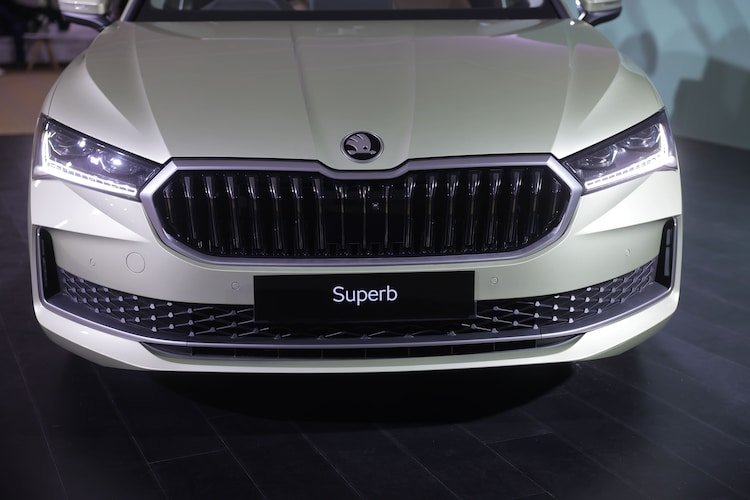
At the front, the car gets Skoda’s familiar grille with chrome detailing, accompanied by Matrix LED headlights and a sculpted bonnet.
The side profile is relatively clean, with chrome window surrounds and 18-inch dual-tone alloy wheels adding a premium touch without making the design excessively flashy.
At the rear, wraparound LED tail-lights feature C-shaped detailing that gives the sedan a more contemporary appearance.
The overall design appears deliberately mature. That is important for a car positioned above Skoda’s mainstream models, where buyers are likely to value road presence and sophistication more than aggressive styling.
Superb gets technology-focused driving hardware
Skoda has also equipped the new Superb with hardware designed to make a large sedan easier and more comfortable to drive.
The car gets Progressive Dynamic Steering along with Dynamic Chassis Control, or DCC. These systems allow aspects of the steering and suspension behaviour to be adjusted depending on the selected driving mode and road conditions.
For an executive sedan, such technology is particularly relevant because buyers are likely to expect two different characteristics from the same car: comfortable long-distance Travel and controlled handling when the driver wants a more engaging experience.
The combination of adaptive chassis technology and a high-torque diesel engine should suit the Superb’s intended role as a long-distance luxury sedan.
Kodiaq-inspired cabin brings a more premium experience
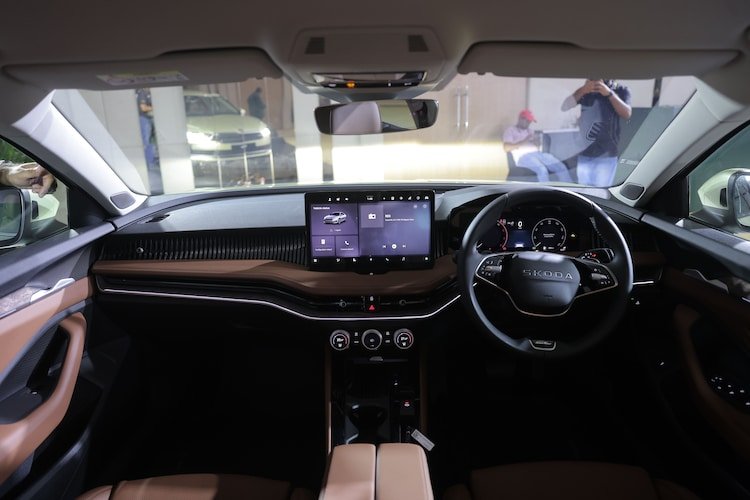
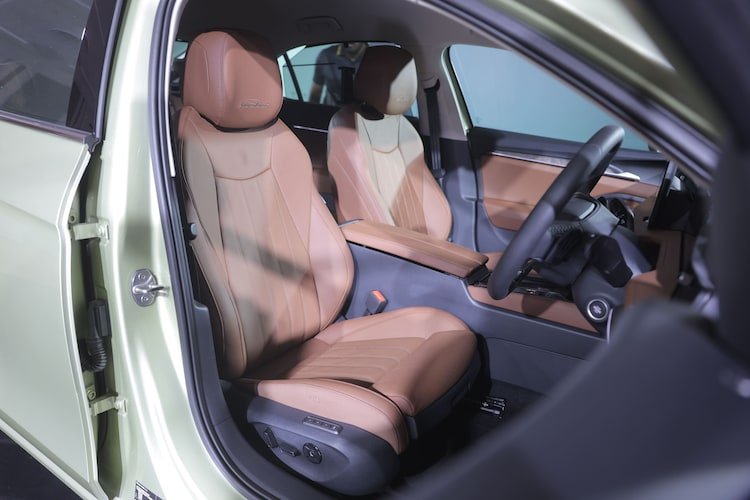
The cabin of the fourth-generation Superb borrows several design elements from the Kodiaq, but Skoda has given the sedan a distinctly premium atmosphere.
The India-spec model gets a black-and-Cognac colour combination, soft-touch materials and additional insulation intended to reduce road and engine noise.
The emphasis on insulation is particularly relevant because diesel refinement can be an important consideration in a premium vehicle. Skoda is clearly attempting to make the Superb feel more like a luxury executive car rather than simply a large family sedan.
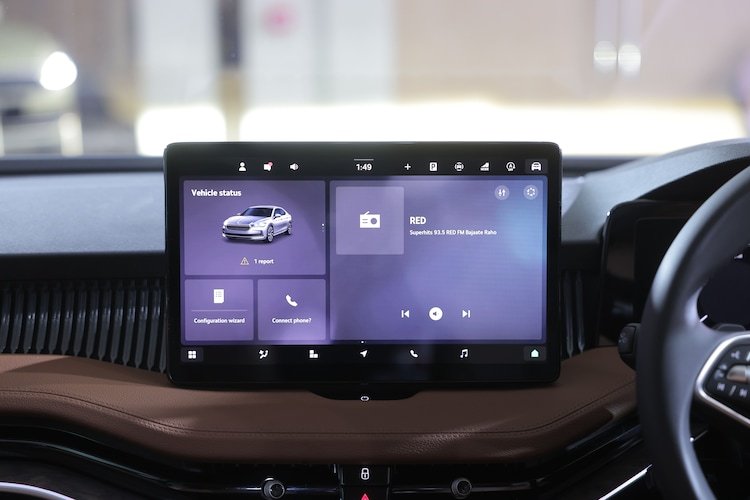
At the centre of the dashboard is a 12.9-inch touchscreen, while a 10-inch digital instrument cluster provides information directly in front of the driver.
Skoda’s Smart Dials continue to combine physical controls with small digital displays. This approach gives the driver direct controls for functions such as climate and audio settings instead of relying entirely on the touchscreen.
Rear-seat comfort is a major part of the Superb’s appeal
The Superb’s size is not merely about exterior presence. Much of its appeal is expected to come from the passenger compartment, particularly the rear seats.
The front seats offer electric adjustment along with heating, ventilation, massage and memory functions. Rear passengers receive their own climate zone and sunblinds.
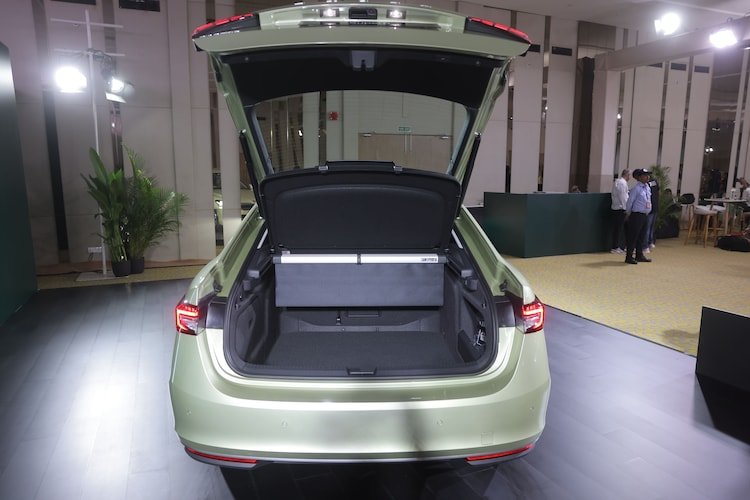
A through-loading facility behind the centre armrest adds practicality when carrying longer objects without sacrificing the ability to use the boot.
The standard Sleep Package adds adjustable rear headrests and blankets, reinforcing the car’s focus on long-distance passenger comfort.
These features make it clear that Skoda is positioning the Superb as more than a driver’s car. It is also designed for owners WHO may spend considerable time being driven in the rear seat.
Premium features and safety technology
The equipment list is extensive for the India-spec Superb.
The sedan gets a 14-speaker Canton audio system, wireless smartphone charging and a powered tailgate with gesture control. A 360-degree Camera is also included to help with manoeuvring the large car in tight spaces.
Safety equipment includes 10 airbags, Level 2 advanced driver assistance systems, an electronic parking brake, tyre-pressure monitoring and automated parking assistance.
Level 2 driver assistance does not mean the car can drive itself. Such systems combine functions such as steering assistance and adaptive cruise control under driver supervision. The driver remains responsible for monitoring the road and the vehicle.
One unusual omission is the sunroof. Despite the extensive luxury and technology equipment, the India-spec Superb will not receive one.
That may surprise buyers in a segment where panoramic and conventional sunroofs have become common selling points, but Skoda has chosen to prioritise other areas of equipment.
Expected Skoda Superb price in India
Skoda has not finalised an official launch price for the new Superb in the information provided. However, the model is expected to sit in the premium Rs 55 lakh-60 lakh range, ex-showroom.
That would put the Superb firmly into premium territory and considerably above Skoda’s more mainstream products in India.
The CBU route will be an important factor in its pricing. Fully importing the vehicle allows Skoda to bring the latest-generation model to India without establishing local production immediately, but it can also make the car more expensive than a locally assembled rival.
Skoda is already accepting registrations of interest at dealerships, with deliveries expected to begin in the second quarter of 2027.
Could the diesel Superb lead to a diesel Kodiaq?
Perhaps the most interesting question surrounding the new Superb is what happens after it arrives.
Skoda’s decision to reintroduce a diesel engine could have implications beyond this single model. The company is evaluating the market response to the Superb, and customer demand could influence future decisions about diesel-powered products.
One possibility being discussed is a diesel-powered Kodiaq.
That does not mean a diesel Kodiaq has been confirmed. The important point is that the Superb will effectively serve as a test of whether there is still meaningful demand in India’s premium market for a modern diesel vehicle.
The result could provide Skoda with useful information about customer preferences after several years in which petrol engines have dominated its Indian portfolio.
Why diesel still makes sense for a large executive sedan
The return of diesel is particularly interesting in a large car such as the Superb.
Diesel engines are known for producing strong torque at relatively low engine speeds, which can be useful in heavy vehicles and during highway cruising. The new Superb’s 360Nm output is therefore well suited to a car designed for long-distance travel.
However, modern buyers are also considering emissions regulations, fuel prices, urban usage patterns and the long-term direction of automotive technology.
That makes the Superb’s diesel comeback more complicated than simply bringing back an old engine. Skoda is effectively testing whether the traditional strengths of diesel still have enough appeal in a premium segment that is gradually moving toward electrification.
What the new Superb means for Skoda in India
The Superb has traditionally occupied an important place in Skoda’s Indian story. It offers the brand an opportunity to compete for buyers who want the space and comfort of a luxury sedan without necessarily choosing a traditional luxury-brand badge.
The fourth-generation car takes that formula further with a more modern cabin, advanced safety technology, adaptive chassis systems and a long list of comfort features.
The return of the diesel engine adds another layer to the proposition.
Skoda is not simply reviving an old nameplate. It is bringing back a type of powertrain that disappeared from its Indian range while testing whether there is still enough demand for it at the premium end of the market.
Skoda Superb 2027: What buyers should know
| Key detail | India-spec Skoda Superb |
|---|---|
| Expected launch | First half of 2027 |
| Expected deliveries | Second quarter of 2027 |
| Engine | 2.0-litre turbo-diesel |
| Power | 150bhp |
| Torque | 360Nm |
| Gearbox | 7-speed DSG automatic |
| Drivetrain | Front-wheel drive |
| 0-100kmph | 9.2 seconds |
| Top speed | 225kmph, electronically limited |
| India-spec trim | Laurin & Klement |
| Import format | Completely Built-Up Unit |
| Expected price | Rs 55 lakh-60 lakh, ex-showroom |
The diesel comeback will be the real test
The fourth-generation Skoda Superb arrives in India with a combination of familiar strengths and an unusually important new-old feature.
Its large dimensions, premium cabin, rear-seat comfort and extensive technology make it a significant upgrade over previous generations. But the 2.0-litre TDI is likely to dominate conversations around the car because it represents the return of a Skoda diesel engine to India after a six-year absence.
For now, Skoda is taking a cautious approach. The Superb will be imported as a CBU, offered in a single high-spec L&K guise and powered by the 150hp front-wheel-drive diesel configuration.
The company’s next move could depend heavily on how buyers respond.
If the Superb finds enough customers despite its expected premium price, it could demonstrate that diesel still has a place in India’s executive-car market. If demand is strong enough, Skoda could also have a reason to revisit local assembly and potentially consider diesel power for other models.
That makes the 2027 Superb more than just the return of a familiar sedan. It could become a test case for whether India’s premium car buyers are ready to give diesel another chance.
For breaking news and live news updates, like us on Facebook or follow us on Twitter and Instagram. Read more on Latest Automobile on thefoxdaily.com.

COMMENTS 0