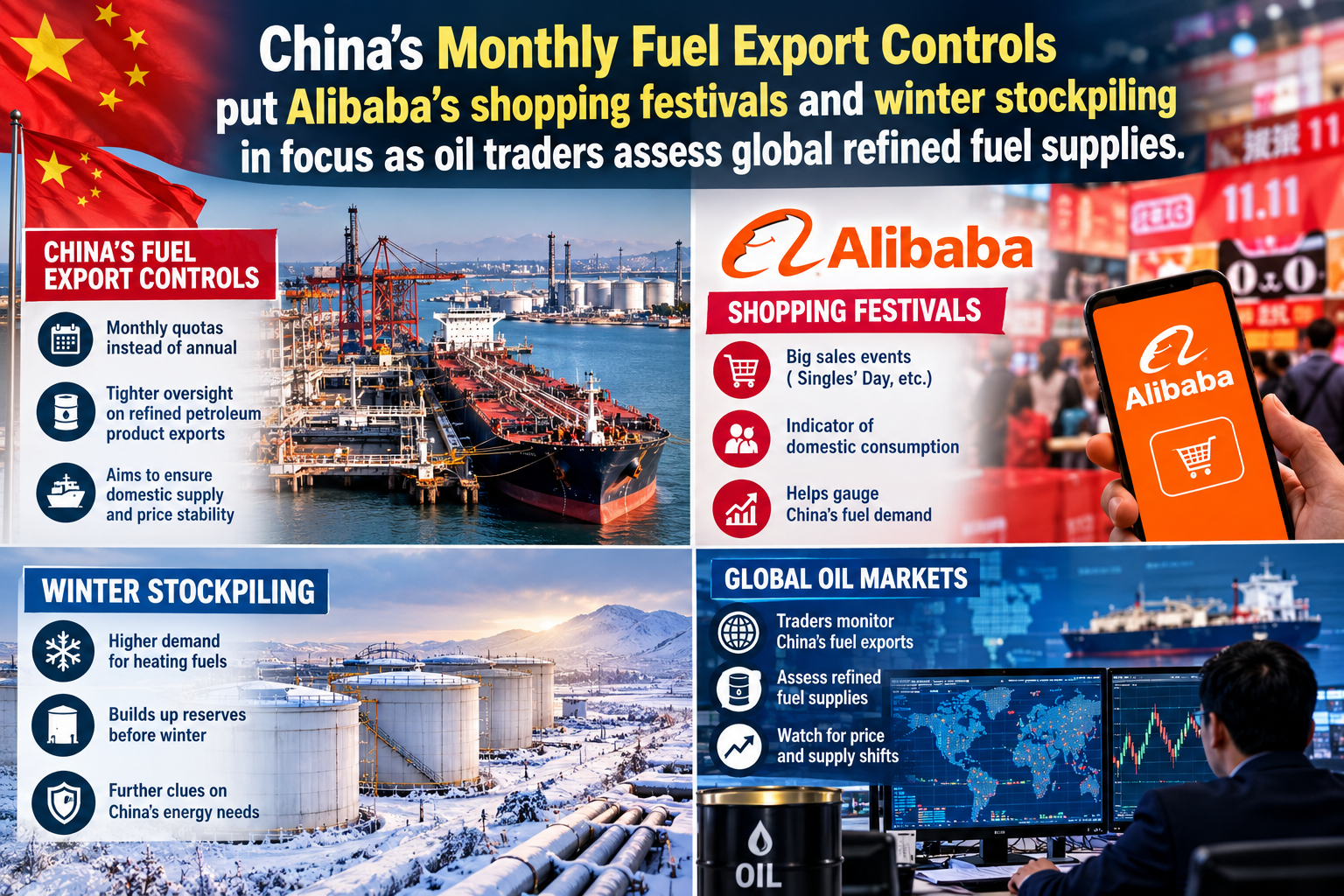
Global oil traders are increasingly watching China’s domestic demand and fuel-export policies as Beijing shifts to a more frequent system for managing overseas shipments of refined petroleum products. Alibaba‘s major shopping festivals could provide clues about domestic consumption, while winter fuel stockpiling may offer further insight into China’s energy needs and the availability of supplies for international markets.
China, which accounts for nearly 20% of global refining capacity, has restricted fuel exports twice this year. The government has also moved from annual export quotas to a monthly system for managing shipments of diesel, gasoline and jet fuel, making changes in domestic demand increasingly important for international Oil Markets.
China’s Fuel Export Policy Puts Domestic Demand in Focus
Beijing’s decision to manage refined fuel exports on a monthly basis means traders must pay closer attention to changes in China’s domestic energy consumption. Shopping festivals, seasonal travel and preparations for winter can influence demand for fuel, potentially affecting the volumes available for export.
China’s large refining industry makes its export decisions significant for global petroleum markets. When domestic demand rises or the government restricts overseas shipments, fewer refined products may be available to international buyers. Conversely, a relaxation of restrictions could increase export availability and influence regional fuel prices.
For oil traders, monitoring China’s consumption patterns is therefore becoming an important part of assessing the global supply outlook. Monthly export controls also mean that market participants may need to adjust their expectations more frequently as Beijing responds to changing domestic and international conditions.
China Expected to Resume Refined Fuel Exports After Golden Week
China was expected to resume refined fuel exports after a brief halt during its Golden Week holiday in the first week of October, Reuters reported on October 9, citing traders familiar with the matter.
The expected resumption follows a year of changes in Beijing’s approach to fuel shipments. In March, China restricted exports after the outbreak of the US-Iran war disrupted crude oil supplies from the Middle East.
The government subsequently relaxed the restrictions in July before moving to a system that manages diesel, gasoline and jet fuel exports on a monthly rather than annual basis.
These changes have increased uncertainty for international buyers and traders, who must assess not only global crude oil availability but also China’s domestic refining requirements and government decisions about export volumes.
Why Alibaba’s Shopping Festivals Matter to Oil Traders
Alibaba’s major shopping festivals are relevant to the broader assessment of China’s domestic economic activity because they provide a window into consumer spending and commercial demand. Changes in retail activity can help traders evaluate the wider economic environment in which fuel consumption takes place.
Strong consumer activity can coincide with increased transportation, delivery and logistics requirements, potentially affecting demand for diesel and other fuels. However, shopping activity alone does not determine petroleum consumption, which is also influenced by industrial production, travel, freight movements and seasonal factors.
For oil-market participants, Alibaba-related shopping activity is therefore one of several indicators worth monitoring alongside refinery operations, fuel inventories and official export decisions.
Winter Stockpiling Could Influence Global Fuel Supply
Winter preparations are another important factor for traders assessing China’s energy requirements. Seasonal changes in transportation, industrial activity and heating demand can influence the country’s broader energy consumption and the amount of refined fuel available for export.
If domestic requirements absorb more refinery output, export availability could become more limited. If domestic demand remains manageable and the government permits larger shipments, additional supplies could reach international markets.
The timing and scale of winter stockpiling could consequently influence traders’ expectations for refined fuel supplies across Asia and other regions that depend on international petroleum markets.
Monthly Export Quotas Add Uncertainty to Oil Markets
China’s shift from annual to monthly export quotas represents a change in how traders assess the country’s contribution to global refined fuel supplies. Under the monthly system, export availability can be adjusted more frequently in response to domestic requirements and changing market conditions.
The restrictions introduced in March, their partial relaxation in July and the expected resumption of exports after Golden Week illustrate how China’s policies have evolved during a year of disruption to crude oil supplies.
For international markets, the key question is how much refined fuel China will allow its refineries to send overseas as domestic demand changes. The answer could influence regional supply balances, competition among buyers and expectations for diesel, gasoline and jet fuel prices.
What China’s Fuel Decisions Mean for Global Oil Markets
China’s position as a major refining centre means its export decisions can have consequences beyond its domestic energy market. Changes in available supplies may affect traders, fuel importers and refiners seeking products from international markets.
With Beijing now managing shipments monthly, traders will need to track domestic consumption indicators, seasonal stockpiling and government policy decisions more closely. Alibaba’s shopping festivals may offer one useful signal of economic activity, although they must be considered alongside other indicators of fuel demand.
The expected resumption of refined fuel exports after Golden Week provides a near-term development for market participants to monitor. More broadly, China’s evolving export policy means that global oil-market assessments will increasingly depend on understanding how Beijing balances domestic energy needs against the availability of fuel for overseas buyers.
For breaking news and live news updates, like us on Facebook or follow us on Twitter and Instagram. Read more on Latest Business on thefoxdaily.com.






COMMENTS 0