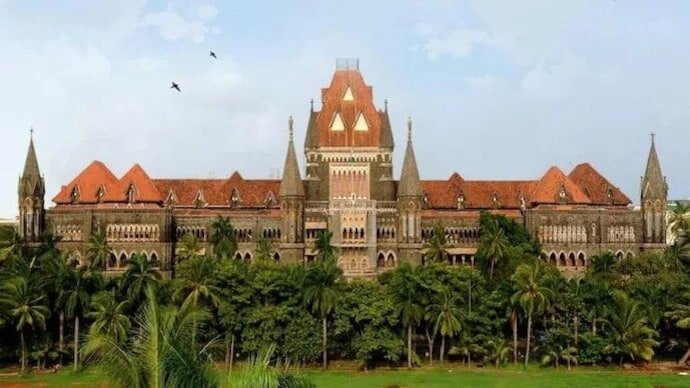
In a significant ruling for civil liberties and democratic participation, the Bombay High Court has quashed an externment order issued by Mumbai Police against political activist Saeed Ahmad Abdul Wahid Chaudhary. The court held that participating in peaceful demonstrations, organising marches, or raising slogans against government policies cannot, by themselves, constitute valid grounds for forcing a citizen to leave their own city.
The judgment is notable not only because it provides relief to the petitioner but also because it reiterates an important constitutional principle: democratic dissent is an integral part of India‘s constitutional framework. While governments possess powers to maintain public order, those powers must be exercised within constitutional limits and cannot be used to suppress lawful political expression.
The ruling is expected to become an important reference point in future cases involving preventive police powers, peaceful protests, and the balance between public order and individual freedoms.
What Was the Case About?
The case arose after Mumbai Police initiated externment proceedings against Saeed Ahmad Abdul Wahid Chaudhary, General Secretary of the Socialist Democratic Party of India (SDPI).
Authorities issued an externment order directing him to remain outside Mumbai city, its suburban areas, and adjoining regions for one year under provisions of the Maharashtra Police Act.
The police cited multiple First Information Reports (FIRs) registered between 2019 and 2024, alleging that his activities posed a threat to public order.
Chaudhary challenged both the original externment order and the appellate order before the Bombay High Court.
What Is Externment?
Externment is a preventive legal measure that allows authorities to prohibit a person from entering or remaining within a specified geographical area for a limited period if there are reasonable grounds to believe that their presence poses a threat to public peace or safety.
Unlike criminal punishment, externment is preventive rather than punitive.
Authorities generally rely on externment powers when they believe ordinary criminal proceedings may not sufficiently prevent future disturbances.
However, because externment directly affects fundamental freedoms, courts closely examine whether such powers have been exercised lawfully and proportionately.
Purpose of Externment Under the Law
| Purpose | Explanation |
|---|---|
| Prevent serious threats | Reduce the risk of anticipated criminal activities. |
| Maintain public order | Protect public peace in exceptional situations. |
| Temporary restriction | Applies only for a specified duration. |
| Preventive measure | Not intended as criminal punishment. |
Courts have consistently emphasized that these powers should be used sparingly and only when supported by credible evidence.
Why the High Court Set Aside the Order
While examining the case, the Bombay High Court concluded that the externment order had been based primarily on Chaudhary’s participation in protests and demonstrations concerning government policies.
The court observed that peaceful political dissent is protected under the Constitution and cannot automatically be treated as a threat to public order.
Accordingly, the High Court held that the authorities had failed to establish legally sufficient grounds for invoking the extraordinary power of externment.
The Constitutional Rights Involved
The judgment centers on several important constitutional guarantees.
- Freedom of speech and expression.
- Right to assemble peacefully.
- Freedom of movement.
- Protection of personal liberty.
- Due process under the Constitution.
These rights are fundamental to India’s democratic system and may only be restricted in accordance with constitutionally valid laws and reasonable limitations.
Articles 19 and 21 Explained
| Constitutional Provision | Protection |
|---|---|
| Article 19(1)(a) | Freedom of speech and expression. |
| Article 19(1)(b) | Right to assemble peacefully without arms. |
| Article 19(1)(d) | Freedom of movement throughout India. |
| Article 21 | Protection of life and personal liberty according to law. |
Although these rights are not absolute, any restrictions must satisfy constitutional standards of legality, necessity, and reasonableness.
Can Peaceful Protest Be Restricted?
Indian law recognizes that citizens have the right to express disagreement with government policies through lawful and peaceful means.
Governments may regulate protests to ensure public safety, traffic management, or law and order. However, restrictions cannot be imposed solely because individuals criticize the government or express unpopular political opinions.
Courts have repeatedly emphasized that peaceful dissent is an essential feature of a constitutional democracy.
Understanding the Difference Between Protest and Public Disorder
The legal distinction between peaceful protest and conduct that genuinely threatens public order is significant.
| Peaceful Protest | Public Disorder |
|---|---|
| Lawful assembly. | Violence or rioting. |
| Peaceful slogans. | Incitement to violence. |
| Political criticism. | Criminal intimidation. |
| Democratic participation. | Threats to public safety. |
The distinction is important because constitutional protections generally apply to peaceful political activity, whereas unlawful conduct may attract criminal or preventive action.
Role of the Judiciary in Protecting Civil Liberties
One of the Judiciary‘s primary constitutional responsibilities is ensuring that executive authorities exercise statutory powers within legal limits.
When courts review preventive measures such as externment, detention, or movement restrictions, they typically examine:
- Whether legal procedures were followed.
- Whether sufficient evidence exists.
- Whether Constitutional Rights were respected.
- Whether the action was proportionate.
- Whether authorities acted in good faith.
This process helps maintain the constitutional balance between public safety and individual freedoms.
Why the Judgment Matters Beyond One Case
Although the ruling directly concerns one individual’s externment order, its broader significance lies in reaffirming constitutional safeguards applicable to all citizens.
The judgment reinforces several important principles:
- Political disagreement alone cannot justify preventive restrictions.
- Police powers remain subject to judicial review.
- Fundamental rights continue to protect peaceful democratic participation.
- Administrative actions must be supported by lawful reasons.
These principles strengthen public confidence that extraordinary state powers will remain subject to constitutional oversight.
Expert Insight: Democratic Dissent Is a Constitutional Value
Constitutional scholars frequently note that democracies function effectively when citizens can openly question government decisions without fear of arbitrary restrictions. Peaceful criticism, public demonstrations, and organized political participation allow governments to remain accountable while enabling citizens to engage in democratic processes.
At the same time, governments retain the authority to address genuine threats to public order, provided their actions comply with constitutional safeguards and statutory requirements.
Possible Administrative and Legal Implications
The judgment may encourage authorities to exercise greater caution before invoking preventive measures such as externment in cases primarily involving peaceful political activity.
It may also influence future judicial scrutiny of administrative decisions affecting:
- Freedom of movement.
- Political participation.
- Preventive policing.
- Public demonstrations.
- Exercise of executive discretion.
Each future case, however, will continue to depend on its own facts, evidence, and applicable legal provisions.
Future Outlook
The ruling is likely to be closely studied by legal practitioners, civil rights organizations, law enforcement agencies, and constitutional scholars because it reiterates the importance of balancing public order with individual liberties. It may also contribute to future discussions on the appropriate use of preventive police powers in democratic societies.
As public demonstrations continue to play an important role in democratic participation, courts will remain central in ensuring that constitutional freedoms and legitimate law enforcement objectives coexist within the framework established by the Constitution.
Conclusion
The Bombay High Court’s decision to quash the Mumbai Police externment order serves as a strong reaffirmation of India’s constitutional commitment to free speech, peaceful assembly, and personal liberty. By holding that peaceful protests and criticism of government policies cannot, by themselves, justify banishing a citizen from their own city, the court has reinforced an important democratic principle: dissent, when expressed lawfully, is protected by the Constitution.
While governments retain legitimate powers to preserve public order, those powers must always be exercised within constitutional boundaries. The judgment highlights that preventive measures such as externment require clear legal justification and cannot substitute for democratic tolerance of peaceful political expression. In doing so, the ruling strengthens both the rule of law and the constitutional rights that underpin India’s democratic system.
For breaking news and live news updates, like us on Facebook or follow us on Twitter and Instagram. Read more on Latest India on thefoxdaily.com.






COMMENTS 0